How to Integrate Fastio API with LangChain Tools
Connect Fastio's API to LangChain tools. AI agents then get lasting file storage, RAG across multiple files, and handoffs to humans. Fastio workspaces let developers add secure file operations to LangChain agents without running their own servers. This guide covers building tools to list, read, and upload files. It also shows RAG integration.

Why Integrate Fastio with LangChain?
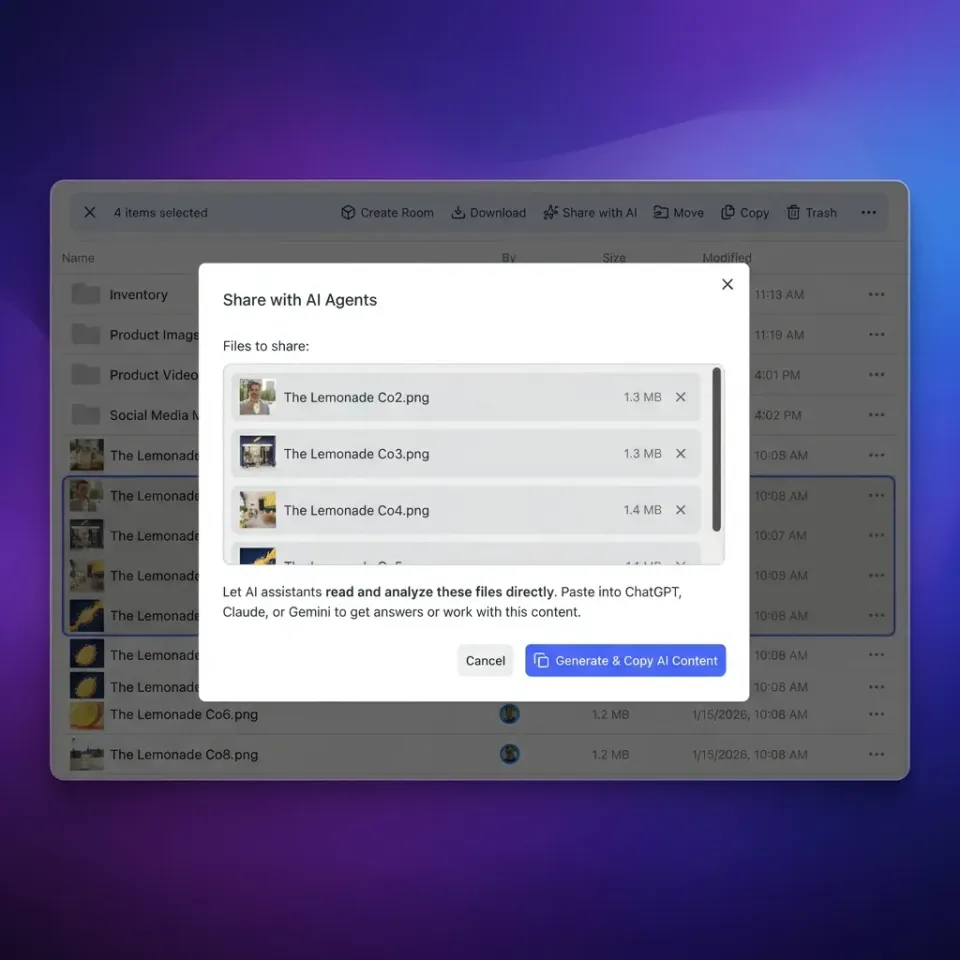
LangChain agents need file storage that lasts longer than short-term memory. Fastio gives API-first workspaces. Built-in features include RAG, versioning, and ownership transfers to people. Agents set up project folders, search docs by meaning, and send branded shares.
Other storage means you handle indexing or vector DBs. Turn on intelligence mode in Fastio, and it indexes files on its own. Fastio provides scalable workspaces with granular permissions, versioning, and built-in AI indexing.
Developers find this easier when building tools for production.
Helpful references: Fastio Workspaces, Fastio Collaboration, and Fastio AI.

Related guides
- How to Integrate the Fastio API with n8n WorkflowsGuide to integrate fast api with n8n workflows: Connect n8n workflows to Fastio's API to automate file storage and...
- How to Integrate Fastio API with CrewAI WorkflowsSet up Fastio API with CrewAI workflows to create a shared workspace for agents. They upload outputs, acquire advisory...
- LangChain Google Drive: Efficient Document Retrieval Without API ThrottlingConnecting LangChain to Google Drive allows retrieval chains to access cloud documents, but recursive loaders often...
- How to Connect LangChain to Dropbox Files: Direct Loader vs. Remote MCPA LangChain Dropbox integration connects autonomous agent workflows to cloud files, enabling models to query documents...
- How to Integrate Fastio API with Next.js ApplicationsGuide to integrating fast api with next applications: Integrate Fastio API with Next.js to manage agentic workspaces...
- Fastio API Presigned URLs Implementation GuideFastio API presigned URLs allow your applications to grant secure, time-limited, direct access to files without...
More on this subject: Agent Integrations and APIs (191 guides)
What to check before scaling Integrate Fastio API with LangChain tools
Sign up for a Fastio account. Create an API key in Settings > API Keys.
Install dependencies:
pip install langchain langchain-community requests python-dotenv
Set your API key:
FASTIO_API_KEY=your_key_here
FASTIO_BASE_URL=https://api.fast.io/current
Base URL for API calls is https://api.fast.io/current/.


Add Fastio to Your LangChain Agents
Start your 14-day Business Trial. Connect LangChain agents to Fastio workspaces with built-in version history, granular permissions, and AI indexing.
Create a Basic Fastio Tool
Extend LangChain's BaseTool for Fastio operations. Start with listing workspace files.
from langchain.tools import BaseTool
from typing import Optional
import requests
import os
from dotenv import load_dotenv

load_dotenv()

class FastIOLister(BaseTool):
    name = "fastio_list_workspace_files"
    description = "List files in a Fastio workspace. Useful for finding documents to analyze."

def _run(self, workspace_id: str) -> str:
        headers = {"Authorization": f"Bearer {os.getenv('FASTIO_API_KEY')}"}
        url = f"{os.getenv('FASTIO_BASE_URL')}/workspace/{workspace_id}/storage/root/list/"
        resp = requests.get(url, headers=headers)
        resp.raise_for_status()
        data = resp.json()
        files = [node['name'] for node in data['nodes']['items'] if node['type'] == 'file']
        return f"Files: {', '.join(files[:10])}"  # First 10
Authenticate with GET /current/user/auth/ using Basic Auth first to get JWT, but API keys work directly as Bearer.

Authenticate and Get Workspace ID
Create a workspace with POST /current/org/{org_id}/create/workspace/. List orgs via GET /current/orgs/list/ and GET /current/orgs/list/external/.
Build a File Reader Tool
Next, define a FastIOReader tool.
class FastIOReader(BaseTool):
    name = "fastio_read_file"
    description = "Read content from a file in Fastio workspace. Input workspace_id and node_id."

def _run(self, workspace_id: str, node_id: str) -> str:
        headers = {"Authorization": f"Bearer {os.getenv('FASTIO_API_KEY')}"}
        url = f"{os.getenv('FASTIO_BASE_URL')}/workspace/{workspace_id}/storage/{node_id}/content/"
        resp = requests.get(url, headers=headers)
        resp.raise_for_status()
        return resp.text[:5000]  # Truncate for context
Use storage/{node_id}/content/ for text files, /preview/ for rendered.
Integrate Tools into LangChain Agent
Combine tools in an agent.
from langchain_openai import ChatOpenAI
from langchain.agents import create_tool_calling_agent, AgentExecutor
from langchain_core.prompts import ChatPromptTemplate

llm = ChatOpenAI(model="gpt-4o")
tools = [FastIOLister(), FastIOReader()]
prompt = ChatPromptTemplate.from_messages([("system", "You manage files in Fastio."), ("human", "{input}"), ("placeholder", "{agent_scratchpad}")])
agent = create_tool_calling_agent(llm, tools, prompt)
agent_executor = AgentExecutor(agent=agent, tools=tools)
result = agent_executor.invoke({"input": "List files in the Reports workspace and read the first report."})
Agents now handle file ops natively.
Advanced: RAG Pipelines with Intelligence Mode
Enable intelligence on workspace via POST /current/workspace/{id}/update/ with intelligence=true. Files auto-index for semantic search.
Use AI chat endpoint POST /current/workspace/{id}/ai/agent/ for RAG queries. Create custom tool:
class FastIORAG(BaseTool):
    ### Implementation for POST /ai/agent/ with references
    pass
Get context from multiple files right away. Search across docs with citations.

Troubleshooting Common Issues
- 401 Unauthorized: Check API key permissions.
- File Too Large: Chunk uploads for files of 4 MB or more via
/upload/. - No RAG results: Verify
ai_state: readyon files. - Rate limits: Headers show remaining calls.
Sources
References used to verify factual claims in this guide.
-
Fastio offers a 14-day Business Trial
-
Fastio provides a consolidated MCP toolset
Frequently Asked Questions
How do I connect LangChain to Fastio?
Create custom BaseTool subclasses calling Fastio REST API with your Bearer token. Authenticate via API key from dashboard.
Can I use Fastio as a LangChain document loader?
Yes, build a custom loader using `storage/{node_id}/content/` endpoints. For RAG, use workspace intelligence for auto-indexing.
What plans does Fastio offer for agent workflows?
Fastio offers Starter, Business, and Enterprise plans, with a 14-day Business Trial requiring a credit card for evaluating workspaces.
Does Fastio support multi-agent file locks?
Yes. Fastio provides advisory file locks that agents can acquire before writing, heartbeat while working, and release when finished. Other agents that try to lock the same file receive an HTTP 409, and automatic version history preserves every change.
Related Resources

Add Fastio to Your LangChain Agents
Start your 14-day Business Trial. Connect LangChain agents to Fastio workspaces with built-in version history, granular permissions, and AI indexing.