How to Set Up a Data Room for Insurance Underwriting
An insurance underwriting data room is a secure virtual workspace where carriers, MGAs, and brokers exchange loss runs, actuarial analyses, risk surveys, and policy documents during the underwriting process. This guide walks through how to structure folders by risk type, set broker and carrier permissions, and build a Q&A workflow that keeps submissions moving.


What an Insurance Underwriting Data Room Actually Does
Commercial insurance underwriting runs on documents. A single large commercial risk submission typically includes 15 to 25 supporting documents: loss runs spanning three to five years, ACORD applications, financial statements, property schedules, fleet lists, inspection reports, and supplemental questionnaires. Underwriters at carriers need all of this before they can quote.
The traditional workflow looks like this: a broker emails a ZIP file or a stack of PDFs to three carriers. Each carrier downloads the files, re-uploads them into their own system, and starts asking questions by email. Version control breaks down fast. Carriers work from stale documents. Brokers answer the same question three times.
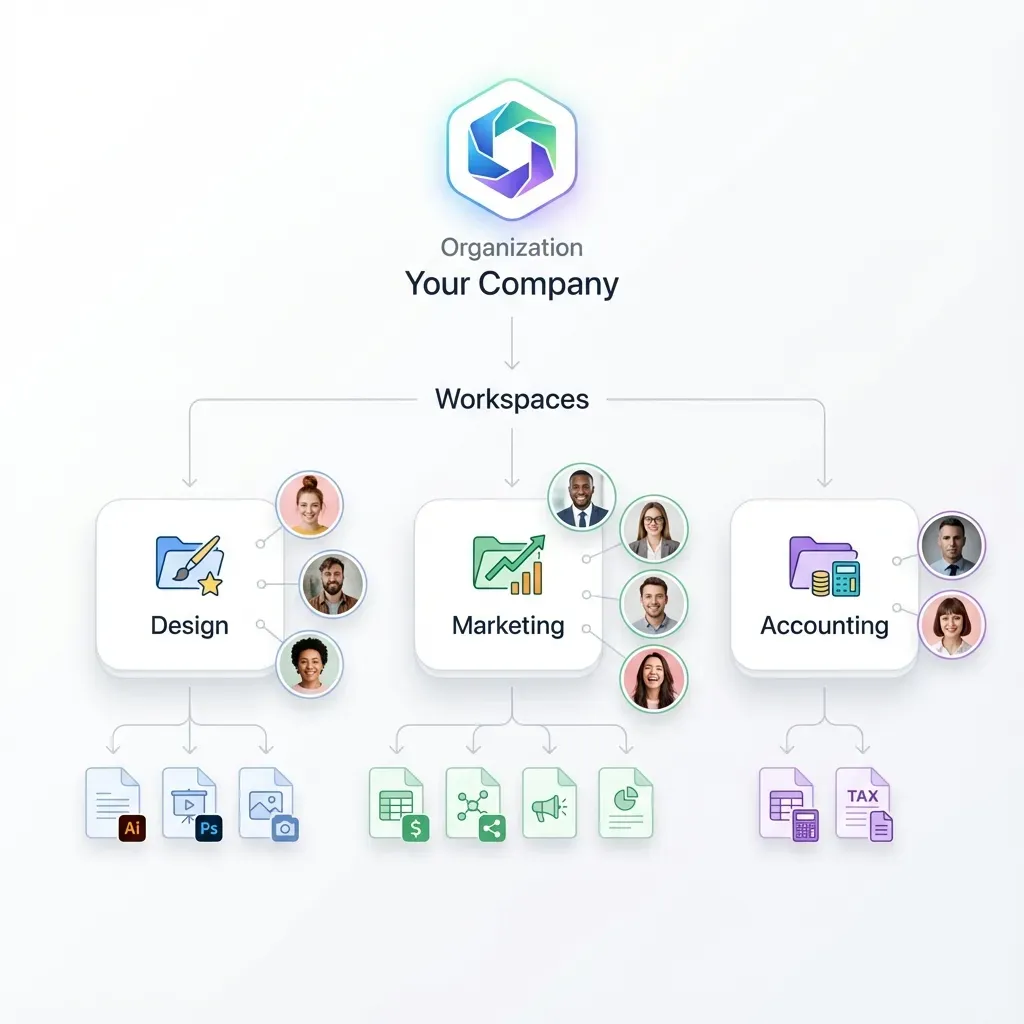
An insurance underwriting data room replaces that workflow with a single workspace. The broker uploads the submission package once, sets permissions so each carrier sees only what they should, and manages Q&A in one place. When the broker updates a loss run, every carrier with access sees the current version immediately.
This matters at scale. Global commercial insurance premiums now exceed $900 billion annually, and underwriters report spending up to 40% of their time on repetitive document tasks like downloading submissions, categorizing emails, and manually entering data into underwriting platforms. A well-organized data room cuts that overhead .
Helpful references: Fastio Workspaces, Fastio Collaboration, and Fastio AI.
Related guides
- How to Set Up a Private Placement Data RoomA private placement data room is a secure virtual workspace where issuers share private placement memorandums,...
- How to Set Up a Data Room for Renewable Energy ProjectsRenewable energy transactions involve dozens of specialized documents that generic file-sharing tools weren't built to...
- How to Set Up a Data Room for InvestorsAn investor data room is a secure online workspace where founders organize financial statements, cap tables, legal...
- How to Set Up a Data Room for Private Credit TransactionsA data room for private credit is a secure virtual workspace where direct lenders and borrowers share loan...
- How to Set Up a Debt Financing Data Room for Lender Due DiligenceA debt financing data room is a secure virtual workspace where borrowers share financial statements, credit agreements,...
- How to Set Up a Secure Data Room for Confidential TransactionsA secure data room protects confidential documents during M&A deals, fundraising rounds, and legal proceedings. This...
More on this subject: Data Rooms and Due Diligence (53 guides)
Documents You Need in an Underwriting Data Room
Before you build your folder structure, know what goes inside it. The core submission package for a commercial risk typically includes these documents:
Application and ACORD forms. The ACORD 125 (commercial insurance application) and line-specific supplements like the ACORD 126 (general liability) or ACORD 140 (property) form the backbone of any submission. These standardized forms give underwriters the basic risk profile.
Loss runs. Detailed claims history reports from the current and previous carriers, usually covering three to five years. Loss runs include claim dates, types, amounts paid, reserves, and current status. They are often the fast way for underwriters to validate a submission, pressure-test pricing, and decide where they need tighter terms.
Financial statements. Audited financials, income statements, and balance sheets help underwriters assess the financial stability of the insured and size the risk appropriately.
Property and asset schedules. For property risks, this includes building valuations, construction details, square footage, occupancy types, and business personal property values. For auto, it is fleet lists with vehicle details.
Inspection and engineering reports. Third-party risk surveys, fire protection reports, and engineering assessments that document physical hazards and loss prevention measures.
Actuarial analyses. For larger or self-insured risks, actuarial loss projections, reserve studies, and experience modification worksheets.
Supplemental questionnaires. Line-specific questionnaires for cyber, environmental, professional liability, or other specialty coverages that need risk details beyond what ACORD forms capture.
Certificates and endorsements. Current certificates of insurance, policy endorsements, and any manuscripted coverage forms from the expiring program.
How to Structure Folders by Risk Type
Folder structure matters because underwriters across multiple carriers will navigate your data room independently. A disorganized room slows down quoting and invites follow-up questions that a clear layout would have prevented.
Start with a top-level folder for each risk type or coverage line. For a commercial package submission, that might look like:
- General Liability: ACORD forms, claims history, supplemental questionnaires
- Property: Schedules of values, inspection reports, building details, COPE data
- Auto/Fleet: Vehicle schedules, MVR reports, fleet safety programs
- Workers Compensation: Payroll data, experience modification worksheets, loss runs
- Umbrella/Excess: Underlying policy summaries, required limits analysis
- Specialty Lines: Cyber questionnaires, environmental assessments, D&O applications
Inside each risk-type folder, create subfolders for document categories: Applications, Loss Runs, Financial, Inspections, and Supplemental. This two-level hierarchy (risk type, then document category) lets underwriters go straight to what they need without scrolling through a flat list of 25 files.
Add a top-level Shared folder for documents that apply across all lines: financial statements, organizational charts, and the broker's submission cover letter. This avoids duplicating the same financials in every risk-type folder.
Finally, use a naming convention that includes dates: LossRuns_GL_2021-2025_v2.pdf tells an underwriter exactly what they are looking at without opening the file.


Stop emailing underwriting submissions
Set up a secure data room for your next commercial submission. Fastio gives you granular permissions, audit trails, and AI-powered document search with generous storage. Built for insurance underwriting data room workflows.
Setting Broker and Carrier Permissions
Permissions are where a data room earns its keep over email and shared drives. In an underwriting submission, the broker typically shares documents with multiple competing carriers. Each carrier should see the submission materials but not each other's questions or the broker's internal notes.
Set up permissions in three tiers:
Broker team (full access). The producing broker and their support staff get read-write access to everything, including internal folders for strategy notes, target pricing, and carrier correspondence. This is the control layer.
Carrier underwriters (scoped read access). Each carrier gets access only to the submission documents relevant to the lines they are quoting. A property-only market should not see your cyber questionnaire. Use folder-level permissions to control this. If a carrier needs additional documents mid-process, the broker grants access to specific folders rather than sharing the entire room.
Guest reviewers (time-limited access). Loss control engineers, actuarial consultants, or reinsurance contacts sometimes need temporary access to specific documents. Use expiring access links so you do not have to remember to revoke access after the review window closes.
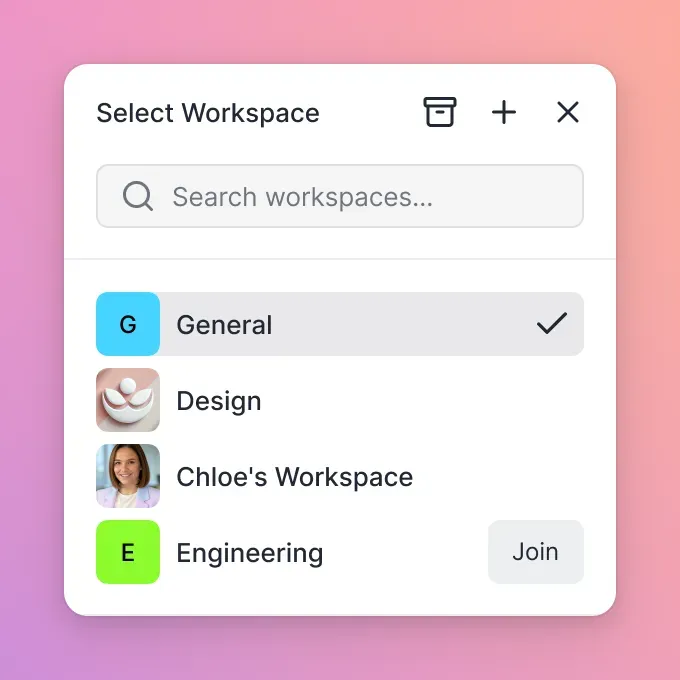
Platforms like Fastio support granular permissions at the workspace, folder, and file level, along with branded portals where clients access documents without creating an account. Auto-expiring access links handle the time-limited sharing that underwriting workflows demand. The audit trail logs every document view and download, which matters when you need to demonstrate that a carrier received updated terms.
For sensitive items like actuarial analyses with proprietary pricing models, consider watermarking or download restrictions. Some documents should be viewable but not downloadable outside the data room.
Building a Q&A Workflow That Keeps Submissions Moving
Questions are inevitable during underwriting. A carrier reviews loss runs and wants clarification on a large claim from 2023. Another carrier needs updated financials. Without a structured Q&A process, these questions scatter across email threads and get lost.
A good data room Q&A workflow works like this:
- Carrier submits a question tied to a specific document or folder. The question is visible only to the broker team, not to other carriers.
- Broker reviews and responds with a written answer, an updated document, or both. If the answer benefits all carriers, the broker can publish it to everyone at once.
- Questions are tracked to completion. Each question has a status (open, answered, closed) so nothing falls through the cracks during a busy submission cycle.
This structure prevents the common failure mode where Carrier A gets an updated loss run by email but Carrier B does not, leading to quotes based on different data.
Fastio workspaces support this through comments anchored to specific files and pages, and activity summaries that give the broker a quick view of what changed and what is still outstanding. When intelligence is enabled on a workspace, the built-in AI can summarize documents and answer questions about uploaded files, which helps brokers quickly verify details before responding to carrier queries.
The goal is a single source of truth. When a carrier asks "where is the updated Schedule of Values?", the answer is always "in the data room" rather than "check your email from Tuesday."
Practical Steps: Setting Up Your First Underwriting Data Room
Here is a step-by-step process for getting an underwriting data room running for a new commercial submission:
Step 1: Create the workspace and set the scope. Define which lines of business the submission covers and create your top-level folder structure accordingly. Name the workspace : "Acme Corp - 2026 Property & Casualty Renewal" is better than "Submission Q2."
Step 2: Upload the complete submission package. Get every document in before inviting carriers. Uploading a partial package and adding files later creates confusion about what is current. If you are migrating from Google Drive, Dropbox, or another cloud service, platforms like Fastio offer cloud import that preserves your existing folder structure.
Step 3: Set permissions before sharing. Assign carrier-specific access to each folder. Double-check that internal strategy documents, target pricing notes, and competing carrier information are restricted to the broker team only. Test by logging in as a carrier-level user to verify they see only what they should.
Step 4: Send access invitations. Give each carrier underwriter a direct link to the data room with their scoped permissions already applied. Include a brief index document at the top level that describes the folder structure and where to find key documents.
Step 5: Establish the Q&A protocol. Tell carriers how to ask questions (through the data room, not email) and set response time expectations. A 24 to 48 hour turnaround on standard questions keeps the process moving.
Step 6: Monitor engagement. Track which carriers have accessed the room, which documents they have viewed, and whether they have downloaded key files. If a carrier has not opened the room three days after receiving access, a follow-up call is warranted. Audit trails on platforms like Fastio log every view and download automatically.
Step 7: Manage versions through the room. When loss runs get updated or the insured provides new financials, upload the new version to the same location. File versioning keeps the history intact while ensuring everyone sees the latest document. Never send updated documents by email outside the room.
Sources
References used to verify factual claims in this guide.
-
Global commercial insurance premiums exceeded $900 billion
-
Underwriters spend up to 40% of their time on repetitive document tasks
-
Global virtual data room market valued at $2.1 billion in 2023, projected to reach $5.6 billion by 2029
Frequently Asked Questions
What documents are needed for insurance underwriting?
A standard commercial underwriting submission includes ACORD application forms, three to five years of loss runs from current and prior carriers, audited financial statements, property or asset schedules, inspection and engineering reports, supplemental line-specific questionnaires, and certificates of insurance from the expiring program. Larger or self-insured risks also require actuarial analyses and experience modification worksheets.
How do insurance carriers share underwriting data?
Traditionally, brokers email document packages to each carrier separately, which leads to version control problems and scattered Q&A. A data room centralizes documents in one workspace where each carrier gets scoped access to the submission materials relevant to the lines they are quoting, with built-in Q&A tracking and audit trails.
What is a virtual data room for insurance?
A virtual data room for insurance is a secure cloud workspace where brokers, carriers, and MGAs exchange underwriting documents with granular permissions, version control, and activity tracking. Unlike general file sharing tools, data rooms are built for controlled multi-party access where each participant sees only the documents they are authorized to view.
How should I organize folders in an underwriting data room?
Organize by risk type at the top level (General Liability, Property, Auto, Workers Comp, Umbrella, Specialty Lines), with subfolders for document categories (Applications, Loss Runs, Financial, Inspections, Supplemental) inside each. Add a shared folder for cross-line documents like financial statements. Use date-based file naming so underwriters can identify documents without opening them.
Can AI help with insurance underwriting document review?
Yes. When workspace intelligence is enabled, platforms like Fastio automatically index uploaded documents for semantic search and AI-powered Q&A. Brokers can ask questions about loss runs or policy documents and get answers with citations to specific pages, which speeds up the review process when responding to carrier queries.
Related Resources

Stop emailing underwriting submissions
Set up a secure data room for your next commercial submission. Fastio gives you granular permissions, audit trails, and AI-powered document search with generous storage. Built for insurance underwriting data room workflows.