How to Set Up Identity-Locked Character Asset Management for AI Video
Identity-locked character asset management is the secure storage and retrieval of the digital DNA, including models, weights, and references, that ensure a character looks the same in every frame of an AI video. This guide walks through the folder structures, access controls, versioning strategies, and tooling that professional AI video teams use to prevent identity drift and protect character IP.

What Identity-Locked Character Asset Management Actually Means
Every AI-generated character is built from a stack of digital artifacts: training images, LoRA weights, trigger words, recommended inference settings, and reference documents that describe the character's visual traits. When these artifacts are scattered across local drives, Slack threads, and random cloud folders, teams run into identity drift. One editor uses an outdated LoRA. Another changes the classifier-free guidance scale. The character's jawline shifts, the hair color drifts a shade, and suddenly your protagonist looks like a different person in Scene 12.
Identity-locked character asset management solves this by treating character data as a single, versioned, access-controlled unit. Think of it as a "character vault" where every artifact that defines a character's appearance lives together, is versioned together, and is secured together.
The concept borrows from traditional VFX pipeline management, where studios have long maintained asset libraries for 3D models and textures. The difference with AI video is that the core asset is a trained model file, typically a .safetensors LoRA ranging from 50 MB to 200 MB depending on rank and base model. That single file can reproduce a character's face across unlimited generations, which makes it both incredibly valuable and uniquely vulnerable.
A custom-trained LoRA can be the primary IP for an entire video production. If someone outside your team gets access to it, they can generate content featuring your character without your permission. This is why "identity-locked" is not just a description of consistency controls. It describes the security posture required to protect character IP at the model level.
Related guides
- How to Clean Video Metadata and Remove PII for AI Model TrainingGuide to video metadata cleaning: Video datasets for AI model training often contain hidden personal information and...
- Video Editing Storage Solutions: Best Options for EditorsVideo editing storage solutions are specialized systems designed to handle the massive bandwidth and file sizes...
- Best Iconik Alternatives for Video Teams in 2026Iconik is a powerful hybrid cloud media management hub, but its complexity and pricing don't fit every video team. This...
- Building AI-Native Video Storage InfrastructureGuide to native video storage infrastructure: Traditional storage treats video as a playback stream. AI agents treat it...
- How to Automate High-Volume AI Video Review via APIHigh-volume AI video review APIs help developers submit and analyze video assets generated by AI models at scale. As...
- How to Edit and Modify Video Metadata TagsVideo metadata tags control how files are titled, organized, and discovered across players and platforms. This guide...
More on this subject: Video and Media Production (36 guides)
Anatomy of a Character Asset Stack
A professional character asset is not a single file. It is a collection of related artifacts that need to stay synchronized. Here is how to structure the stack from bottom to top.
Training Dataset Layer
The foundation is the set of reference images used to train the character LoRA. For most production-quality characters, this means 30 to 50 high-resolution images showing the character from different angles, in different lighting conditions, and with varied expressions. Store these as lossless PNGs or high-quality JPGs in a dedicated subfolder.
Why keep them? If your team needs to retrain the LoRA for a newer base model (say, migrating from SDXL to Flux or a future architecture), the original training set is irreplaceable. Without it, you are starting from scratch.
Model Weights Layer
This is the LoRA file itself, typically in .safetensors format. The .safetensors format is the industry standard because it prevents arbitrary code execution during loading, unlike older .ckpt files that can contain embedded Python code.
Tag each LoRA with metadata:
- Base model it was trained against (e.g., SDXL 1.0, Flux.1 Dev)
- Training rank (common values: 16, 32, 64, 128)
- Trigger word(s) used during training
- Recommended weight for inference (e.g., 0.7 for photorealism, 0.85 for stylized work)
- Training date and dataset version
- Seed values used for any reproducibility benchmarks
Character Bible Layer
A character bible is a text document or PDF that describes the character's physical attributes, wardrobe rules, color palette, personality notes, and any generation constraints. This is the human-readable companion to the model weights.
When stored in a workspace with Intelligence Mode enabled, character bibles become searchable through AI chat. A team member can ask "What is the hex code for Maya's eye color?" and get a cited answer pulled directly from the document, instead of scrolling through a 40-page PDF.
Output Samples Layer
Keep a curated set of approved generation outputs alongside the model. These serve as a visual reference for what the character should look like and help new team members calibrate their expectations before generating anything.


Build Your Secure Character Vault on Fastio
Get shared workspaces with granular permissions, Intelligence Mode for searchable character bibles, and audit trails for every file access.
Access Controls That Protect Character IP
Unauthorized access to character models is a top security concern for AI studios. A leaked LoRA does not just expose a file. It exposes the ability to generate unlimited content featuring your character. Traditional DAM systems were designed to protect finished media assets like logos and brand photos. Character model files require a different security model because the risk is generative, not just distributive.
Role-Based Permissions for Model Files
Not everyone on a production team needs the same level of access. A practical permission structure looks like this:
- Lead Character Artist: Full read/write access to training datasets, model weights, and character bibles. Can upload new versions and deprecate old ones.
- Animators and Editors: Read access to model weights and character bibles. Can load LoRAs into their inference pipeline but cannot download the raw .safetensors file or modify the master copy.
- Directors and Producers: Read access to character bibles and output samples. Can review and approve character designs without touching the technical files.
- External Collaborators: Access only to output samples and style guides. No access to model weights or training data.
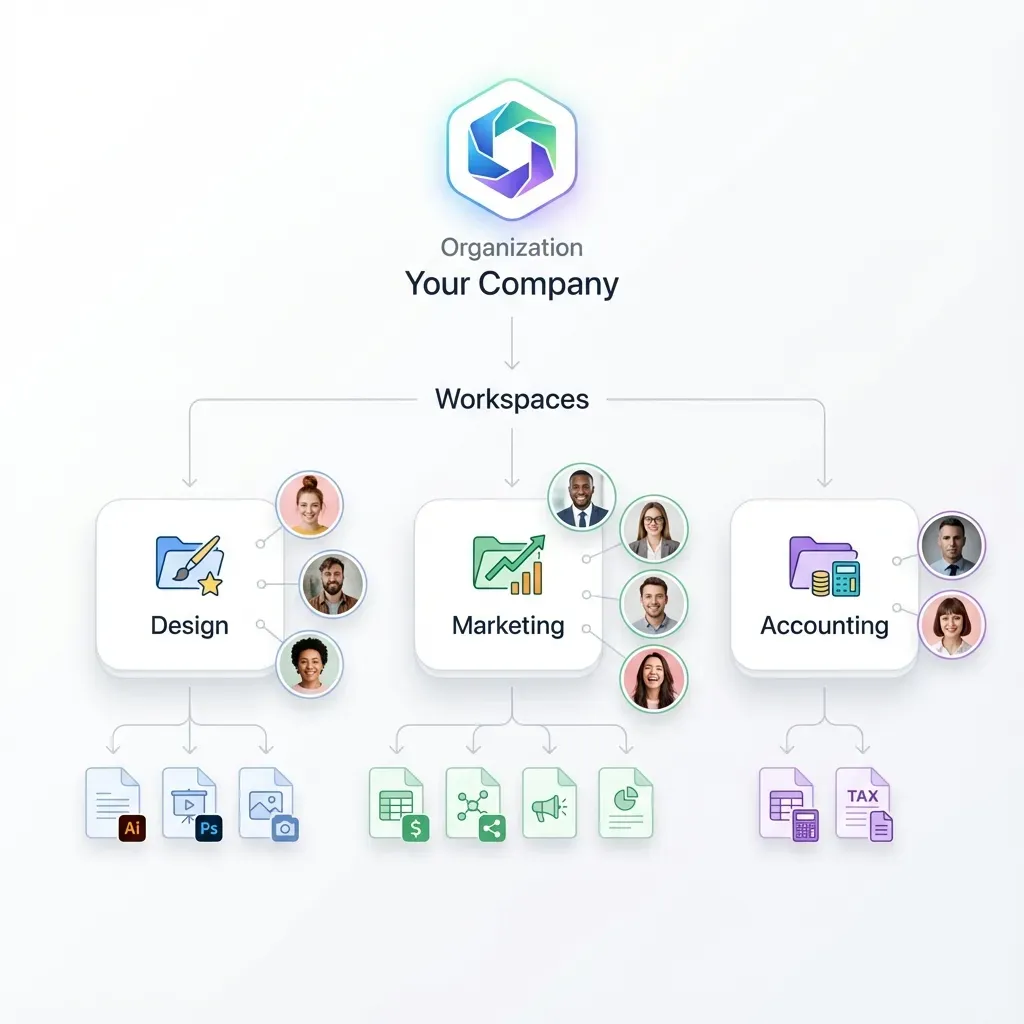
Fastio's granular permissions work at the organization, workspace, folder, and file level, which maps cleanly to this kind of tiered access structure. You can give an external colorist access to reference images in one folder while keeping the model weights in a locked subfolder they cannot see.
Audit Trails for IP Protection
Every interaction with a character model should be logged. If a character LoRA leaks, you need to trace who accessed it, when, and from where. This is not paranoia. It is standard practice in any production where character IP has commercial value.
Fastio's audit trails cover file operations, memberships, and access changes, giving studios the paper trail needed for IP enforcement. If a dispute arises over unauthorized character usage, timestamped access logs are the first thing a legal team will ask.
File Locks for Concurrent Access
When multiple team members work with the same character assets, advisory file locks coordinate updates cleanly. An artist or training agent can acquire an advisory file lock before retraining a LoRA and renew it with heartbeats so collaborators know work is in progress; other agents or users attempting to lock the file receive an HTTP 409 and can wait. If a collaborator leaves a file locked, anyone with write permission can override it, while version history preserves every uploaded revision.

Versioning Strategies for Evolving Characters
Characters change over the course of a production. A protagonist might age, get a new hairstyle, or switch to a different wardrobe in Act 3. Each change requires a new LoRA or an updated training set, and your asset management system needs to handle this without breaking the older versions that are still needed for earlier scenes.
Semantic Versioning for LoRAs
Borrow from software development and use semantic versioning for character models:
- Major version (v2.0): Base model migration (e.g., SDXL to Flux) or significant character redesign
- Minor version (v1.1): New outfit, hairstyle change, or aging adjustment
- Patch version (v1.0.1): Training refinement to fix a specific artifact like hand rendering or profile angle consistency
Store each version as a separate file with a clear naming convention: maya-v1.0.0-sdxl-rank32.safetensors. This makes it obvious at a glance which character, version, base model, and training configuration the file represents.
Maintaining Parallel Versions
In a production with flashbacks or time jumps, you may need to generate the same character at different ages simultaneously. Keep parallel version branches in separate subfolders:
/characters/maya/
  /v1-young/
    maya-v1.2.0-flux-rank32.safetensors
    training-data/
    character-bible-young.pdf
  /v2-adult/
    maya-v2.0.0-flux-rank64.safetensors
    training-data/
    character-bible-adult.pdf
  /approved-outputs/
    maya-young-reference-grid.png
    maya-adult-reference-grid.png
Deprecation Workflow
When a new version replaces an old one, do not delete the previous version immediately. Move it to an archive folder. Old versions may be needed for reshoots of earlier scenes, and storage is cheaper than re-training a LoRA from scratch.
Tag deprecated versions with a note explaining why they were replaced (e.g., "Replaced by v1.1.0: fixed left-profile artifact at CFG > 7").
Connecting AI Agents to Your Character Vault
AI agents can automate the repetitive parts of character asset management. Instead of manually looking up trigger words, checking version numbers, or verifying that everyone is using the approved LoRA, an agent connected to your workspace handles these tasks on demand.
What Agents Can Do With Character Data
When your character vault lives in a workspace with Intelligence Mode enabled, agents can:
- Search character bibles using natural language. Ask "What are Maya's trigger words for the rain scene outfit?" and get a cited answer from the indexed PDF.
- Check version compliance. An agent can compare the LoRA filename an editor is using against the latest approved version in the workspace and flag mismatches.
- Generate character briefs. Pull metadata from multiple character files and compile a production-ready summary for a new team member or external collaborator.
- Monitor access patterns. Use activity summaries to flag unusual access to sensitive model files, like a download from an IP address that has never accessed the workspace before.
MCP Integration
Fastio's remote MCP server provides agents with a consolidated toolset for storage, AI, and workspace management through Streamable HTTP at /mcp. An agent can authenticate, list files in a character workspace, read metadata, and even trigger Intelligence Mode queries, all through a standardized protocol that works with Claude, GPT-4, Gemini, or any MCP-compatible client.
For teams already using agent workflows, the Fastio MCP documentation covers the full tool surface. The agent onboarding guide is a good starting point for connecting a new agent to your workspace.
Ownership Transfer for Client Work
Studios that build character assets for clients can use ownership transfer to hand off the finished vault. An agent creates the workspace, organizes the character stack, enables Intelligence Mode for searchability, and then transfers the entire organization to the client. The studio can retain admin access for ongoing support while the client takes full ownership of their character IP.

Practical Setup Checklist
Here is a step-by-step process for setting up identity-locked character asset management, whether you are a solo creator or running a multi-person production.
Step 1: Choose Your Storage Platform
You need a platform that supports granular permissions, file versioning, and ideally AI-powered search. General-purpose options like Google Drive or Dropbox handle basic file storage but lack the permission granularity and intelligence features that character management demands. S3 gives you raw storage with fine-grained access policies, but you will need to build metadata, search, and collaboration layers yourself.
Fastio provides a middle ground: shared workspaces with folder-level permissions, Intelligence Mode for AI-powered search over uploaded documents, and audit trails that log every access event. The 14-day Business Trial provides access to shared workspaces and granular permissions for independent productions.
Step 2: Create Your Folder Structure
Organize each character as a self-contained unit. A proven structure:
/characters/{name}/model/for .safetensors files/characters/{name}/training-data/for reference images/characters/{name}/bible/for character description documents/characters/{name}/outputs/for approved generation samples/characters/{name}/archive/for deprecated versions
Step 3: Upload and Tag Assets
Upload your character stack and add metadata. At minimum, each LoRA file should have its trigger words, base model, rank, and recommended weight documented in the character bible or in a companion README file within the same folder.
Step 4: Enable Intelligence Mode
Turn on Intelligence Mode for the workspace. This indexes your character bibles and any text-based files, making them searchable through semantic search and AI chat. Your team can then query character details without opening individual files.
Step 5: Set Permissions
Configure folder-level permissions based on the role structure described earlier. Lock the model weights folder to authorized artists only. Keep output samples accessible to the broader team.
Step 6: Establish a Version Protocol
Document your versioning convention and deprecation rules. Share this as a pinned note or top-level README in the character workspace so every team member follows the same process.
Step 7: Connect Agent Tooling
If your production uses AI agents for pipeline automation, connect them to the workspace via MCP or API. Test that agents can query character metadata and retrieve the correct file versions before going into full production.
Sources
References used to verify factual claims in this guide.
-
LoRA file sizes for SDXL range from approximately 50 MB (rank-8) to 200 MB (rank-32)
-
The .safetensors format prevents arbitrary code execution during model loading
-
Production-quality character LoRAs are typically trained on 30 to 50 reference images
Frequently Asked Questions
How do I protect AI character models from being stolen?
Use role-based access control to separate who can use a model from who can download it. Store LoRA files in a workspace with folder-level permissions so animators can load models into their inference pipeline without being able to export the raw .safetensors file. Enable audit trails to log every access event, and use granular permissions and version history to prevent unauthorized modifications. The .safetensors format itself adds a layer of safety by preventing embedded code execution.
What is the best way to store LoRAs for a distributed team?
A centralized cloud workspace eliminates the version mismatch problems that come with local storage. Upload each LoRA with its trigger words, recommended inference weight, and base model documented in a companion file. Enable AI-powered search so team members can find the right model by describing what they need instead of remembering exact filenames. Fastio's 14-day Business Trial provides shared workspaces, granular access controls, and Intelligence Mode for semantic search across uploaded documents.
How do I manage character consistency when switching base models?
Always store your original training dataset alongside the LoRA. When migrating to a new base model, you retrain the LoRA using the same reference images, which preserves the character's core visual identity. Use semantic versioning to track which base model each LoRA targets, and keep the previous version archived in case you need to regenerate scenes that were produced on the older model.
Can AI agents help with character asset management?
Yes. Agents connected to a workspace with Intelligence Mode can search character bibles, retrieve trigger words, check that team members are using the latest approved LoRA version, and compile character briefs from indexed metadata. Fastio's remote MCP server gives agents access to storage and AI search through a consolidated toolset compatible with Claude, GPT-4, Gemini, and other MCP-capable clients.
What file formats should I use for character model storage?
Use .safetensors for model weights. It is the current standard because it prevents arbitrary code execution during loading, unlike older .ckpt or .pt formats. Store training images as high-resolution PNGs or JPGs. Character bibles work best as PDFs or markdown files, since both are easily indexed by AI search tools for metadata retrieval.
How large are LoRA files and how much storage do I need?
LoRA file sizes depend on the training rank and base model. For SDXL, a rank-32 LoRA is roughly 200 MB, rank-16 is about 100 MB, and rank-8 is around 50 MB. A typical character stack including the LoRA, training dataset, character bible, and output samples runs 500 MB to 1 GB. A small studio managing 10 to 20 characters needs 5 to 20 GB of dedicated storage.
Related Resources

Build Your Secure Character Vault on Fastio
Get shared workspaces with granular permissions, Intelligence Mode for searchable character bibles, and audit trails for every file access.