Fastio API vs Azure Blob Storage for AI Agents
Choosing the right storage API determines how quickly your AI agents can interact with files and human users. While Azure Blob Storage provides raw object storage for cloud infrastructure, the Fastio API delivers structured, intelligent workspaces optimized for AI assistants. This comparison evaluates both platforms based on developer velocity, native intelligence, and Model Context Protocol integration.

The Core Difference: Workspaces vs Object Storage
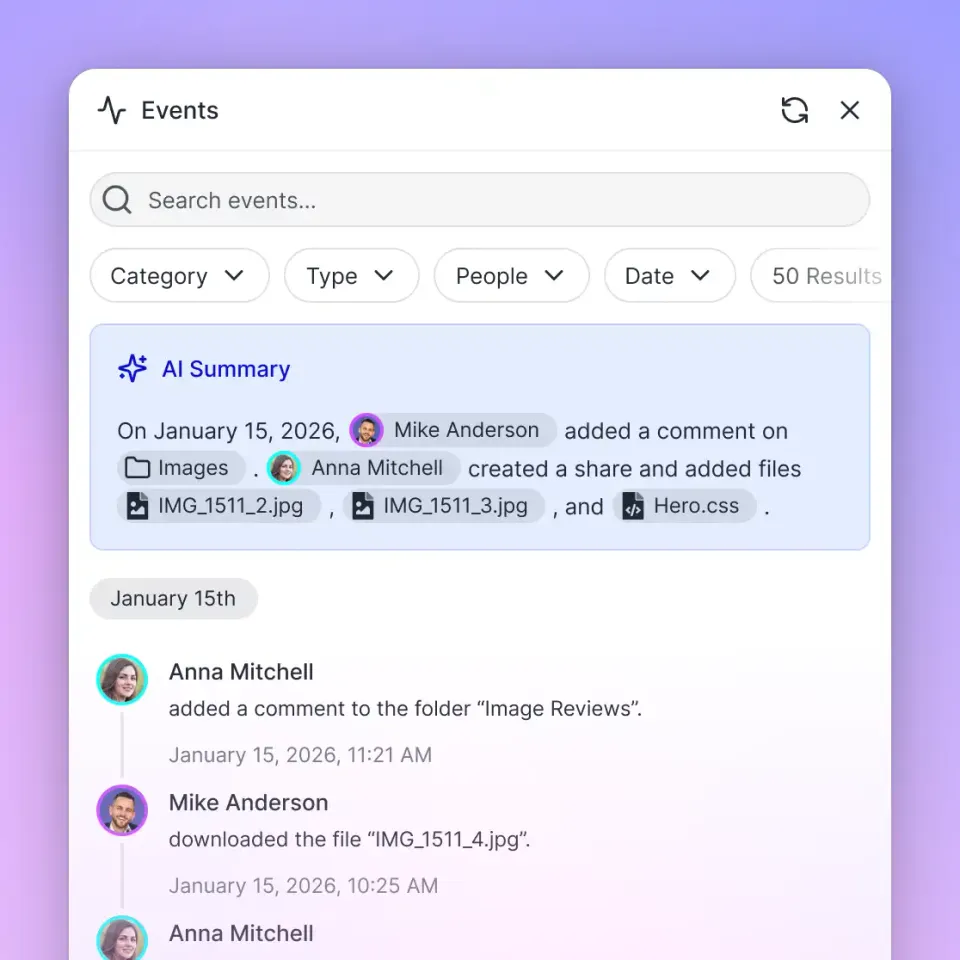
The fundamental difference between these two platforms lies in their primary data abstractions. Azure Blob Storage provides raw object storage designed for backend cloud infrastructure. Developers must build their own abstractions for file metadata, semantic search, and access control. In contrast, the Fastio API delivers structured, intelligent workspaces optimized for Model Context Protocol tools and AI agents.
Azure stores binary data in flat containers that lack inherent meaning. Fastio organizes files into collaborative environments where both human teams and AI agents interact naturally. This architectural divergence fundamentally changes how you build AI applications.
Feature Comparison Table
Fastio provides a complete workspace infrastructure for AI agents. Azure Blob Storage requires developers to build the intelligence and collaboration layers entirely from scratch.
Related guides
- How to Choose: Fastio API vs Dropbox API for Agent StorageWhen evaluating the Fastio API vs Dropbox API for agent storage, developers face a distinct choice between an...
- How to Choose Between Fastio API vs Box API for Agent WorkspacesBox API handles traditional enterprise document management, while Fastio API provides native vector search and...
- How to Architect Medical Imaging AI Storage for ResearchMedical imaging AI storage provides scalable, performant infrastructure for storing DICOM files, annotations, and model...
- How to Implement Persistent Storage for AutoGen using Fastio APIAdding persistent storage to AutoGen via Fastio API allows multi-agent conversations to share and modify files reliably...
- Connecting Azure AI Search to Blob Storage: Indexer Setup & ArchitectureConnecting Azure AI Search to Azure Blob Storage uses automated indexers to extract, chunk, and index unstructured...
- Fastio API vs Google Cloud Storage for AI Agents: 2026 ComparisonWhen building persistent memory for AI agents, developers often start with a raw object store. While Google Cloud...
More on this subject: Agent Memory and Storage (261 guides)
Why AI Agents Struggle with Raw Blob Storage
Building AI assistants on top of standard object storage introduces significant friction. When an agent needs to retrieve a specific document from a massive Azure container, it cannot simply ask for the file by meaning or context.
Custom wrapper requirements slow down development. Developers must implement custom integration layers to translate LLM intents into specific Azure API calls. The blobs lack semantic context without an external vector database. You must ingest the files, chunk the text, generate embeddings, and store them in a separate system like Pinecone or Weaviate.
Collaboration barriers also limit the user experience. Passing access from an AI agent back to a human user requires building a custom application interface. Azure does not provide a native frontend for end users to view or comment on the files that your AI agent generates.
How Fastio Accelerates Agent Development
Fastio approaches file storage as a native intelligence layer. When you upload a file through the Fastio API, the system automatically indexes the content for immediate retrieval.
Intelligence Mode and Built-in RAG
Toggle Intelligence Mode on any workspace to automatically process documents for Retrieval-Augmented Generation. The platform handles the chunking, embedding, and vector storage automatically. Your AI agent can then query the workspace in natural language and receive answers with exact source citations.
According to Fastio Pricing, Fastio provides tiered plans (Starter $9.99/mo, Business $49.99/mo, Enterprise $199.99/mo) and a 14-day Business Trial requiring a credit card. This allows developers to build and test intelligent workflows without managing complex infrastructure.
URL Import and Streamable Transport
Agents frequently need to ingest files from external sources. The Fastio URL Import feature pulls files directly from Google Drive, OneDrive, Box, or any public URL without requiring local I/O operations. The platform handles large payloads via streamable HTTP and Server-Sent Events, ensuring reliable performance even with massive datasets.


Ready to upgrade your agent storage?
Connect your agents to intelligent workspaces with a consolidated MCP toolset and built-in RAG today.
Comparing MCP Tooling and Integration
The Model Context Protocol has become the standard for connecting AI assistants to external data sources. The quality of this integration determines how effectively your agent can manipulate files.
The Fastio MCP Advantage
According to Fastio MCP Documentation, Fastio includes a consolidated MCP toolset for AI agents directly out of the box. These tools cover core capabilities available in the user interface. Your agent can create folders, upload files, manage permissions, and generate sharing links using standardized protocols.
The Azure Integration Burden
Azure Blob Storage requires developers to write custom MCP servers from scratch. You must define the tools, handle the authentication flows, and manage the session state manually. If your agent needs to list files in a container, you must write the integration code to translate that request into an Azure REST API call. Fastio provides this infrastructure natively, providing zero-friction file access.

Human-Agent Collaboration Workflows
Most AI storage solutions isolate agents in separate backend silos. Fastio treats agents as first-class workspace members who work alongside human teams.
Ownership Transfer and Client Portals
An AI agent can create an organization, build a complete data room, and populate it with generated files. The agent can then transfer ownership of that workspace directly to a human user while retaining administrative access. This shared environment eliminates the need to build separate user interfaces.
For example, an agent can compile a research report, save it to a Fastio workspace, and generate a branded client portal link. The human client views the document in a professional interface with HLS streaming for media and waveform navigation for audio, while the agent continues to update the files in the background.
Architecture and Performance Benchmarks
Performance in AI applications relies heavily on how quickly agents can read and write context. Both platforms offer strong enterprise-grade performance, but their architectural focus differs.
File Locks, Version History, and Concurrency
Fastio provides advisory file locks alongside file version history, granular permissions, and a detailed activity log. An agent can acquire an advisory lock on a file before writing so other agents and users know work is underway. If concurrent writes land anyway, version history preserves every iteration, ensuring reliable collaboration when multiple models coordinate on a single document.
Activity Feeds and WebSocket Events
Modern agent systems require reactive architectures. Fastio provides a WebSocket events feed and a pollable realtime activity feed. You receive alerts when files are uploaded, modified, or accessed. This allows you to trigger downstream actions automatically without constantly polling the API blindly.
Which Storage API Should You Choose?
The decision depends entirely on your project scope and the type of application you are building.
If you are building foundational cloud infrastructure that requires pure object storage for millions of tiny application logs, Azure Blob Storage remains a standard, cost-effective choice. It excels at raw data persistence where human visibility is not required.
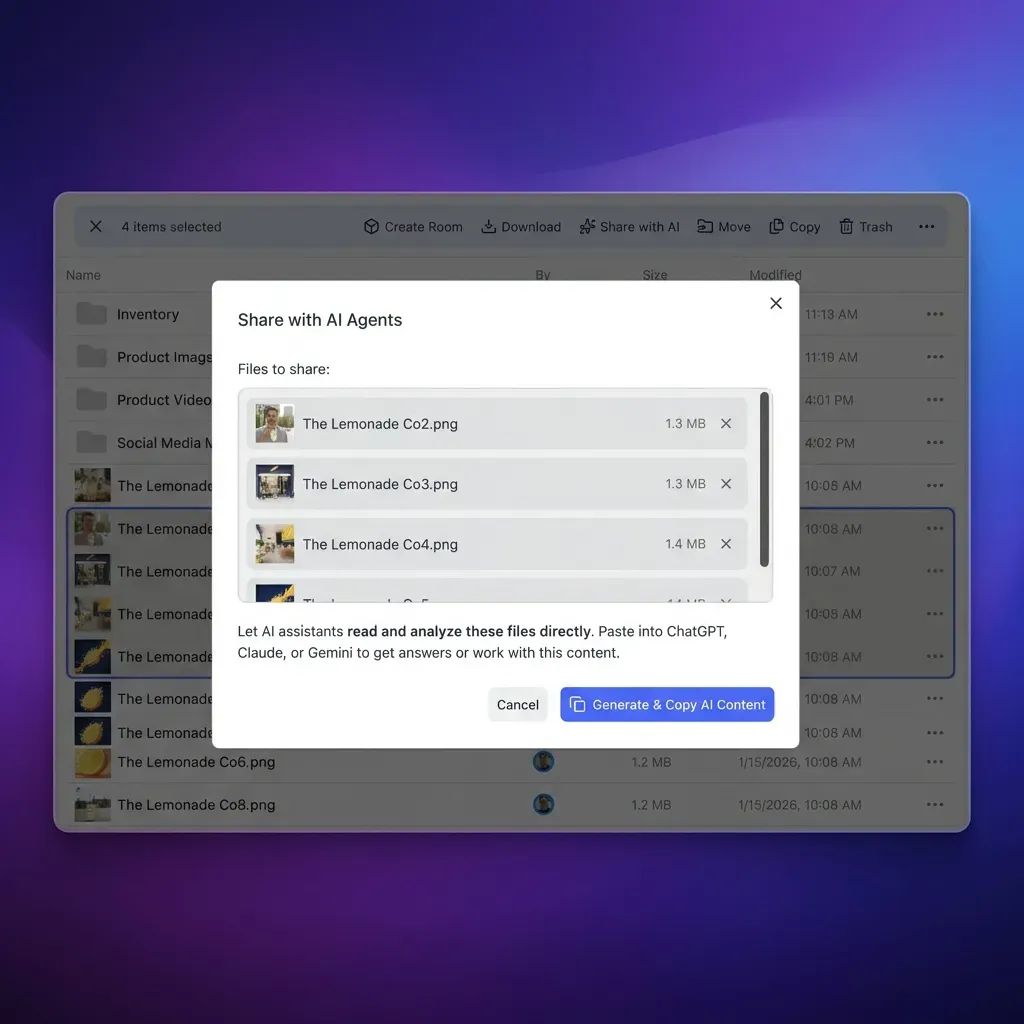
If you are developing AI assistants that need to read, write, and share files with human users, Fastio provides the fastest path to production. The combination of native RAG, comprehensive MCP tools, and collaborative workspaces eliminates weeks of backend development. By choosing an intelligent workspace over raw storage, your agents can focus on reasoning rather than file management.
Sources
References used to verify factual claims in this guide.
-
Fastio includes a consolidated MCP toolset for AI agents
-
Fastio provides a 14-day Business Trial with tiered plans for agentic workflows
Frequently Asked Questions
Why use Fastio instead of Azure Blob Storage for AI agents?
Fastio provides built-in Model Context Protocol tools, native RAG indexing, and shared workspaces where agents and humans can collaborate. Azure Blob Storage requires you to build these intelligence and collaboration layers yourself.
What is the best storage API for AI agents?
The best storage API for AI agents depends on the use case. Fastio excels for collaborative agent workflows requiring native intelligence and MCP support. Azure Blob Storage is better suited for raw, backend application data storage.
Does Fastio support the Model Context Protocol?
Yes, Fastio provides a remote MCP server with a consolidated MCP toolset. This allows AI assistants to manage files, search workspaces, and update permissions using standard natural language commands.
Can AI agents transfer file ownership to human users?
Yes, Fastio supports ownership transfer. An AI agent can build a complete workspace or data room and transfer ownership to a human client while retaining administrative access to update the files.
How does Fastio handle document indexing for AI?
Fastio uses Intelligence Mode to automatically index workspace files for RAG once Intelligence is enabled for the workspace. It handles chunking, embedding, and semantic search internally, eliminating the need for a separate vector database like Pinecone.
Related Resources

Ready to upgrade your agent storage?
Connect your agents to intelligent workspaces with a consolidated MCP toolset and built-in RAG today.