How to Test the Fastio API with Postman
Testing the Fastio API with Postman lets developers validate Bearer authentication, inspect /current/ route schemas with OPTIONS, and verify multipart uploads without writing application code. Proper API testing isolates integration issues in minutes rather than hours. This guide walks you through a Postman collection for Fastio storage, Ripley, and MCP tools.

Why Test the Fastio API Before Writing Code?
Testing the Fastio API with Postman allows developers to easily validate authentication, inspect route schemas, and verify file upload configurations without writing code.
According to Postman, their platform is used by over 40 million developers and 500,000 organizations worldwide. The primary reason for this massive adoption is predictability. When you test endpoints manually before writing application logic, you isolate the variables. If a request fails in your codebase, you might wonder if the problem lies in your HTTP client library, your payload formatting, or the API itself. By verifying the exact request structure in Postman first, you eliminate that ambiguity entirely.
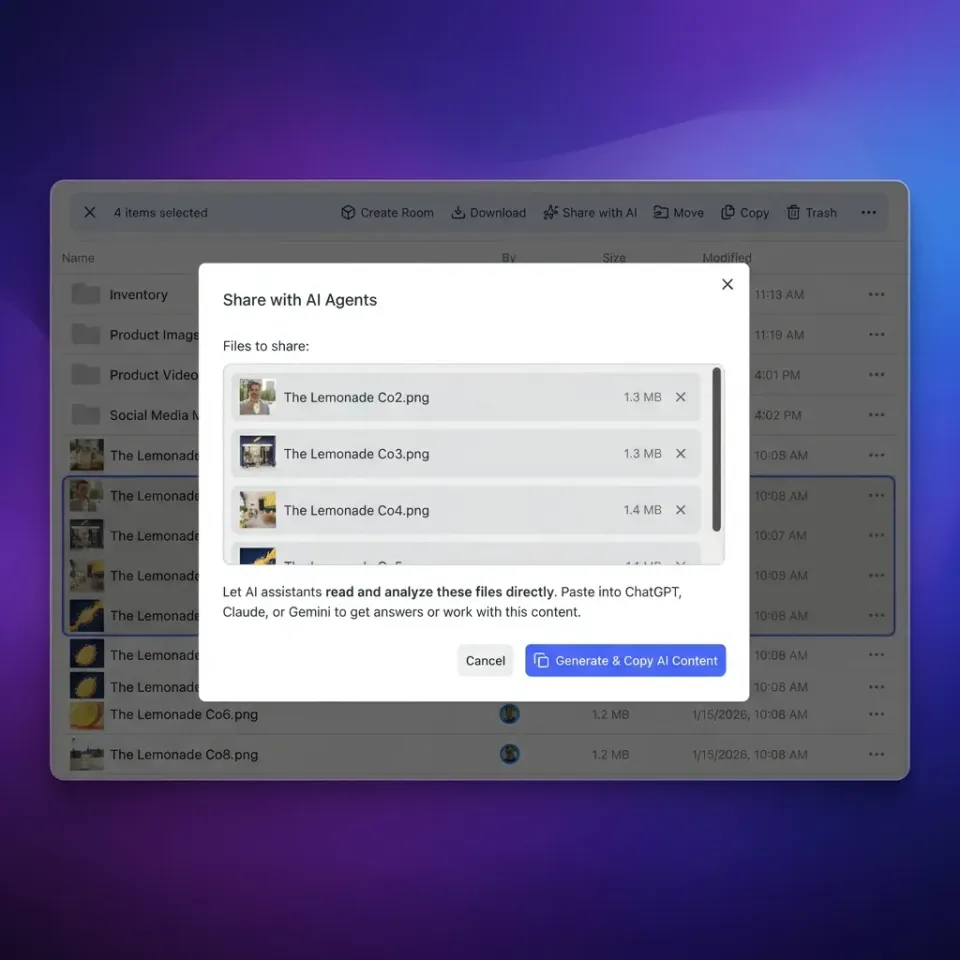
For Fastio specifically, testing early is essential because of the platform's focus on agentic storage. You are not just pushing bytes to a bucket; you are interacting with an intelligent workspace where files are auto-indexed upon upload. An improperly formatted upload request might succeed at the file level but fail to trigger the built-in RAG (Retrieval-Augmented Generation) pipeline correctly. A quick test confirms that your metadata and file formats align with the intelligence engine's expectations.
The Postman State of the API report shows that 63% of developers using an API-first approach can produce an API within a week. That speed comes from establishing clear contracts and verifying them immediately. Testing first guarantees you understand the required parameters and expected responses before committing to architectural decisions.
Related guides
- How to Mock Fastio API Endpoints for Unit TestingBuilding reliable AI agent workflows means testing without active network connections. Mocking Fastio API endpoints...
- How to Test Fastio Event Bridges Locally with ngrokTesting webhooks locally saves time when building file event integrations. This guide shows how to use ngrok to expose...
- Best Tools for AI Agent Testing and EvaluationAgent testing tools automate the evaluation of agent performance, checking for accuracy, loop detection, and goal...
- How to Build a Prompt Regression Testing Pipeline for AI AgentsA single token change in a system prompt can shift agent behavior as dramatically as a logic rewrite. Catching those...
- Best AI QA and End-to-End Testing Tools for Web and Mobile AppsAI QA tools write, run and repair end-to-end tests of your web and mobile apps, so a test suite can keep up as the...
- Why ChatGPT OneDrive Is Slow: Graph API Limits & Pre-Indexed StorageWhen ChatGPT OneDrive search is slow, the latency is primarily caused by on-demand Microsoft Graph API traversal, where...
More on this subject: Agent Observability and Evaluation (24 guides)
Setting Up Your Fastio Postman Environment
An environment in Postman acts as a set of variables you can reference across multiple requests. Instead of hardcoding your API key or the base URL into every single endpoint call, you define them once. This practice makes it easy to switch between staging and production environments safely.
To begin, open Postman and click on the Environments tab in the left sidebar. Create a new environment and name it "Fastio Production". You will need to define a few core variables. First, add base_url and set its initial value to https://api.fast.io/current. Next, add api_key and paste your Fastio secret token. Generate that key in the UI under Settings > Devices & Agents > API Keys, or create one with a POST to {{base_url}}/user/auth/key/. Finally, add a workspace_id variable. Fastio organizes files into shared workspaces, and workspace IDs are 19-digit numeric strings. A GET to {{base_url}}/workspaces/all/ returns the list you can copy from.
Once you save the environment, ensure it is selected in the top-right dropdown menu of the Postman interface. You can now reference these variables in any request using the double-curly-brace syntax, like {{base_url}} or {{api_key}}. This setup keeps your credentials secure and out of your request URLs. If you ever need to rotate your API key, you only have to update it in one place, preventing frustrating authorization errors scattered across your collection. Keep the trailing slash on every route you add. {{base_url}}/upload/ is correct; {{base_url}}/upload is not.
Configuring Bearer Token Authentication
Authentication is the first hurdle in API integration. Fastio relies on standard Bearer Token authentication for server-to-server communication. This means every request you send must include an Authorization header containing your API key.
In Postman, you do not need to manually type out the header for every request. Instead, you can configure it at the collection level. Create a new Collection named "Fastio Agentic Storage". Click on the collection name to open its settings, then navigate to the Authorization tab. In the Type dropdown menu, select "Bearer Token". In the Token field, enter your environment variable: {{api_key}}.
By setting this at the collection level, every request you create inside this collection will automatically inherit the authentication header. This ensures you never accidentally send an unauthenticated request while testing new endpoints. When you test a simple GET request to {{base_url}}/user/me/details/, the Fastio server will validate the inherited token and return your account details. Follow it with GET {{base_url}}/workspaces/all/ to confirm workspace access. If you receive a 401 Unauthorized response (error code 1650 Auth Invalid), check that your environment is active and that the API key value does not contain accidental whitespace.
Before you fill in a POST body, send OPTIONS to the same route (for example OPTIONS {{base_url}}/upload/). The response is the route schema, which is the fastest way to see required fields inside Postman.


Ready to build with agentic storage?
Get scalable workspace storage and a consolidated MCP toolset during your trial. Explore plans and get started at /pricing/.
Testing Multipart/Form-Data File Uploads
File uploads are often the most complex part of integrating a storage API. Unlike simple JSON payloads, uploading files requires multipart/form-data encoding. This format splits the request body into discrete sections, allowing you to send binary file data alongside text fields in a single HTTP call. Fastio uploads use multipart/form-data. Most other POST bodies use application/x-www-form-urlencoded.
To test a file upload to Fastio, create a new POST request in your collection pointing to {{base_url}}/upload/. In the Headers tab, you might be tempted to manually set the Content-Type to multipart/form-data. Do not do this. Postman will automatically calculate and append the correct Content-Type header along with the necessary boundary string when you configure the body.
Navigate to the Body tab and select the "form-data" radio button. You will see a table with Key and Value columns. Add these rows:
name: the file name, such asreport.pdfsize: the file size in byteschunk: change the type from Text to File, then select the local documentaction:createinstance_id:{{workspace_id}}folder_id:root
When you click Send, Postman constructs the multipart payload and streams the file to Fastio. A successful small upload returns HTTP 201 with {"result":true,"id":"<upload_id>","new_file_id":"<node_id>"}. Keep new_file_id for later reads, shares, and Ripley queries. Same-name upload into the same folder overwrites in place and keeps the old content as a recoverable version, so the node_id stays stable. This successful test confirms your application logic can safely mimic the same multipart structure.
Verifying Agentic Storage and MCP Tools
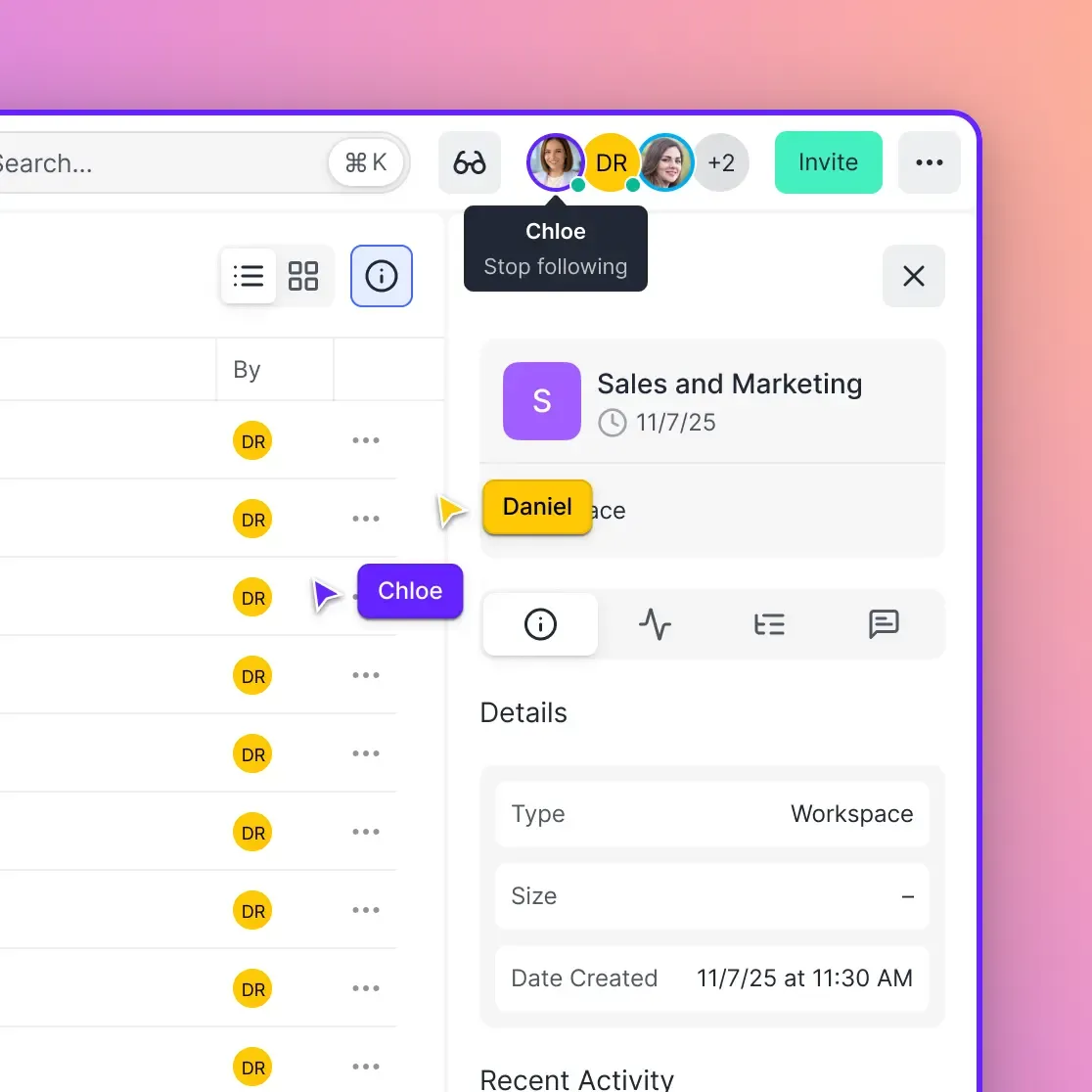
Fastio operates as an intelligent workspace, not just commodity storage. When you upload a file, the platform automatically indexes it for semantic search and retrieval. Testing the API means verifying that these intelligence features are working correctly for your uploaded documents.
After a successful upload, list the folder with GET {{base_url}}/workspace/{{workspace_id}}/storage/root/list/. You should see the new node_id. Confirm the record with GET {{base_url}}/workspace/{{workspace_id}}/storage/{{node_id}}/details/. Start Ripley, the built-in RAG agent, with POST {{base_url}}/workspace/{{workspace_id}}/ai/agent/, then send a message with POST {{base_url}}/workspace/{{workspace_id}}/ai/agent/{{chat_id}}/message/. Send OPTIONS on those routes first if you want Postman to show the request schema before you fill the body.
If you are building an AI agent, prefer the Model Context Protocol (MCP) over raw HTTP. Connect at https://mcp.fast.io/mcp/tools, sending a Bearer token from headless clients. Named mode exposes a consolidated MCP toolset, including upload, storage, find, ai, share, fileshare, and event, with changes going to the matching _manage tool. In Postman, POST a JSON-RPC body to https://mcp.fast.io/mcp/tools with the same Bearer token. A typical tools/call looks like this:
{"jsonrpc":"2.0","id":1,"method":"tools/call",
 "params":{"name":"upload_manage","arguments":{"action":"web-import","url":"https://example.com/report.pdf",
 "profile_type":"workspace","profile_id":"1234567890123456789"}}}
The ai_manage tool (ask) returns a cited answer from workspace documents and requires profile_type. The storage tool lists and searches when profile_type is workspace or share. Verifying these calls in Postman ensures your agents will have uninterrupted access to their shared memory before you implement the integration in Claude Desktop, Cursor, or a custom script.
Testing Event Payloads for Reactive Workflows
Modern applications rely on event-driven architectures. After an upload, your application can watch the workspace instead of guessing when the file is ready.
In Postman, send the multipart upload you configured earlier. Then create a GET request to {{base_url}}/events/search/ to read the audit log, or long-poll {{base_url}}/activity/poll/{{entity_id}}?wait=95&lastactivity={{last_activity}} until the next activity event. The JSON that comes back is the payload your backend will parse. Send OPTIONS on either route first so you can see the schema before you write routing logic.
Use the same collection to replay that GET after each upload. You move from assuming a file landed to reading the event that proves it did. That is the contract your reactive code should implement.
Troubleshooting Common Fastio API Errors
Even with careful setup, you will inevitably encounter errors during API integration. Understanding how to interpret Fastio's error responses in Postman will save you hours of debugging. The platform returns standard HTTP status codes along with descriptive JSON error messages.
Error code 1605 Invalid Input indicates a client-side error, usually a missing required parameter or an invalid data format. If you receive 1605 when uploading a file, double-check that your form-data keys are exactly name, size, chunk, action, instance_id, and folder_id. Ensure you have not accidentally included trailing spaces in the workspace_id variable. Error code 1609 Not Found means the workspace or folder ID is wrong.
Error code 1680 Access Denied means your authentication token is valid, but you lack permission to perform the requested action. This often happens if you try to write to a workspace where the key only has read access. Verify the permissions granted to your specific API key in the Fastio dashboard. Error code 1650 Auth Invalid is the 401 case: the Bearer token is missing or not accepted.
HTTP 429 Too Many Requests with error code 1671 means you have hit a rate limit. Check the response headers for x-ve-limit-expires and wait until that time before sending another request. Long-polling GET {{base_url}}/activity/poll/{{entity_id}}?wait=95&lastactivity={{last_activity}} is the efficient way to watch for new files without a tight request loop.
By methodically testing each endpoint and understanding the error shapes in Postman, you build a solid foundation for your application code. You move from guessing what the API might do to knowing exactly how it behaves under various conditions.
Sources
References used to verify factual claims in this guide.
-
Postman is used by over 40 million developers and 500,000 organizations worldwide
-
63% of developers using an API-first approach can produce an API within a week
-
Small file upload is POST https://api.fast.io/current/upload/ with multipart fields name, size, chunk, action=create, instance_id, and folder_id. A successful small upload returns HTTP 201 with result, id, and new_file_id. File activity is read with GET /current/events/search/ or GET /current/activity/poll/{entityId}?wait=95&lastactivity={timestamp}.
Frequently Asked Questions
How do I test Fastio API endpoints?
Set up a Postman collection with Bearer Token authentication against https://api.fast.io/current/. Define api_key and workspace_id as environment variables, apply the token at the collection level, send OPTIONS on a route to read its schema, then call GET /current/user/me/details/ and POST /current/upload/.
Is there a Postman collection for Fastio?
Build one from the official routes at https://api.fast.io/current/. Start with GET /current/user/me/details/, GET /current/workspaces/all/, and POST /current/upload/. Send OPTIONS on each path so Postman shows the schema before you add form fields.
How do I upload a file to Fastio using Postman?
Create a POST to https://api.fast.io/current/upload/. In the Body tab, select form-data and add name, size, chunk (type File), action=create, instance_id set to your workspace ID, and folder_id set to root. Postman handles the multipart boundary. HTTP 201 returns result, id, and new_file_id.
Why am I getting a 401 Unauthorized error in Postman?
A 401 Unauthorized, or error code 1650 Auth Invalid, means the request lacks a valid token. Verify that your Fastio API key is correct, that the environment containing the key is active, and that the collection passes the key as a Bearer Token in the Authorization header.
Can I test MCP tools with Postman?
Yes. POST a JSON-RPC tools/call to https://mcp.fast.io/mcp/tools with a Bearer token. Named mode includes a consolidated MCP toolset such as upload, storage, find, and ai. Use action ask on the ai_manage tool for a cited answer, or action web-import on upload_manage to pull a file from a URL.
Related Resources

Ready to build with agentic storage?
Get scalable workspace storage and a consolidated MCP toolset during your trial. Explore plans and get started at /pricing/.