How to Integrate Keyword 1 with Fastio API
Keyword multiple integration allows developers to extend Fastio API capabilities within their agentic workflows. By incorporating Keyword multiple into your application architecture, development teams can automate complex data processing tasks and orchestrate intelligent operations across shared workspaces. This comprehensive guide provides a complete, step-by-step approach to connecting Keyword 1 with the Fastio API, including practical code examples for Nuxt.

Understanding Keyword 1 in Agentic Workflows
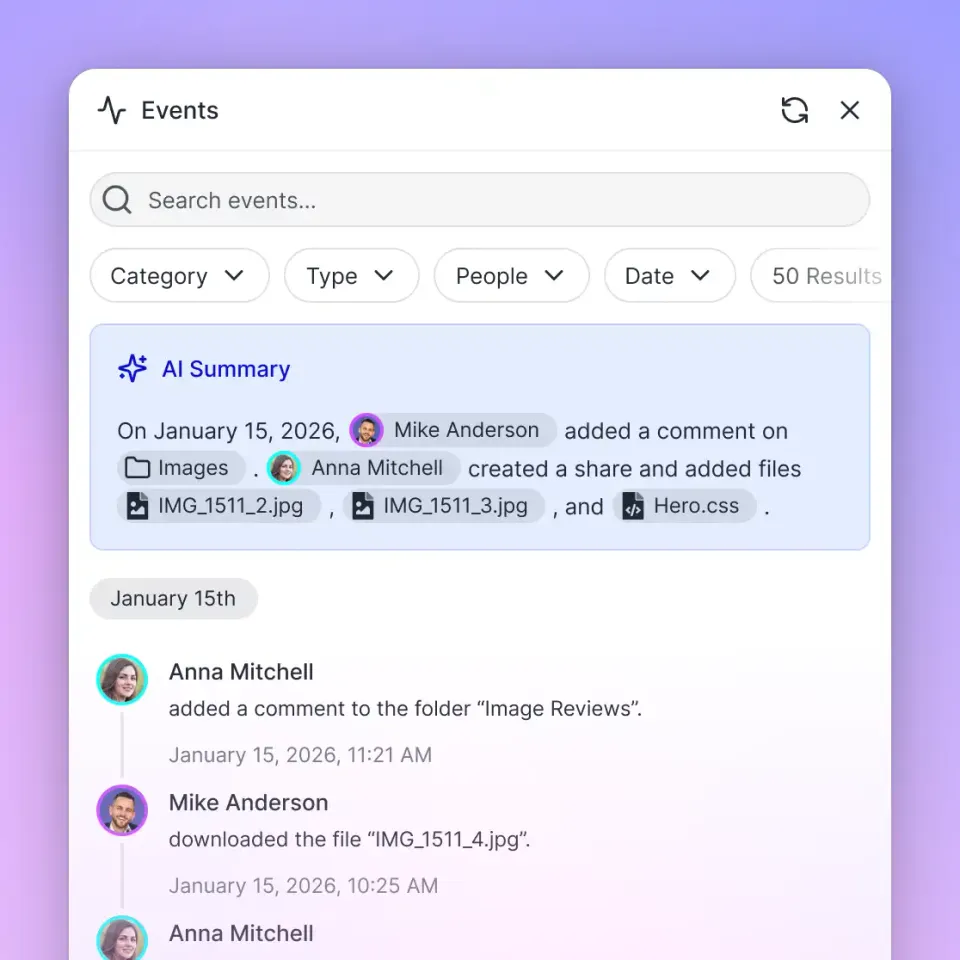
Keyword multiple integration allows developers to extend Fastio API capabilities within their agentic workflows. When building autonomous systems, agents require access to persistent storage and intelligent tools to process information effectively. Fastio serves as the coordination layer where agent output becomes team output, and integrating Keyword multiple directly enhances this capability by enabling specialized operations across your document repositories.
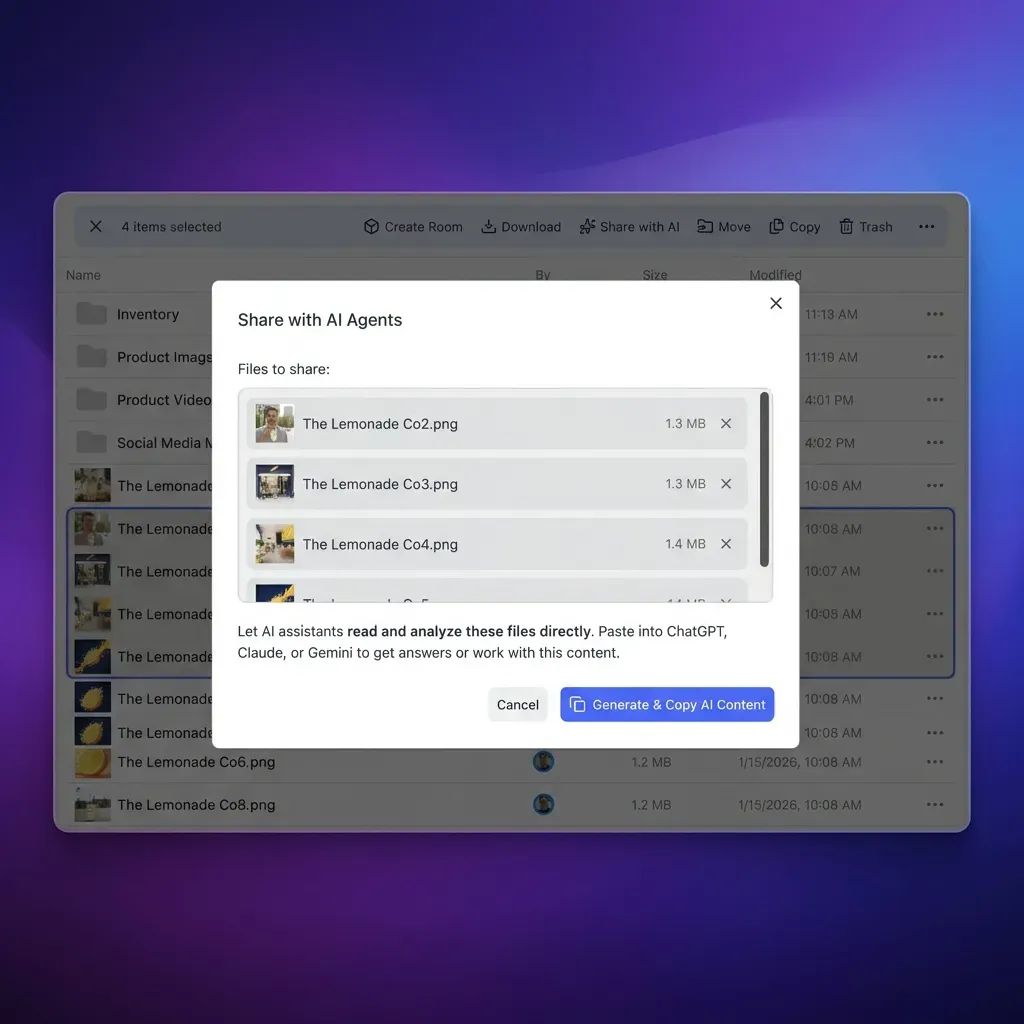
Rather than treating Fastio as standard commodity storage like Dropbox or Google Drive, developers can use it as an intelligent workspace. Once a file is uploaded to Fastio, it is automatically indexed and becomes searchable by meaning through built-in Retrieval-Augmented Generation (RAG). By adding Keyword multiple into this environment, you enable your agents to perform specialized operations on these indexed files, triggering complex workflows without moving data out of the secure workspace.
This approach directly solves the fragmentation problem common in multi-agent systems. When multiple agents need to coordinate on a single project, they require a unified interface. Fastio provides a consolidated MCP toolset via Streamable HTTP. Keyword multiple can interact directly with these tools, allowing agents to read file contents, update metadata, and share results back to human collaborators in real time.
Related guides
- How to Integrate the Fastio API with SvelteKitSvelteKit's server-side form actions and API routes make it a strong fit for integrating with the Fastio API. This...
- How to Integrate Fastio API in Nuxt.jsIntegrating Fastio API with Nuxt.js enables Vue developers to build reliable file management and storage directly into...
- How to Integrate Fastio API with RustBuild high-performance, memory-safe storage systems by integrating Rust with the Fastio API. This guide covers...
- How to Integrate the Fastio API with n8n WorkflowsGuide to integrate fast api with n8n workflows: Connect n8n workflows to Fastio's API to automate file storage and...
- How to Integrate Fastio API with Dify WorkflowsLearn how to integrate fastio api dify workflows to add intelligent file workspaces to your visual AI builder. Dify...
- Fastio API Django Integration Guide: Complete SetupIntegrating Fastio API with Django allows developers to manage agentic workspaces directly from their web application...
More on this subject: Agent Integrations and APIs (191 guides)
Prerequisites for Fastio API Integration
Before you begin integrating Keyword 1, you must prepare your development environment and configure your Fastio workspace. The platform provides a 14-day Business Trial requiring a credit card, offering tiered workspace storage and monthly credits to evaluate agent development.
First, you need to provision an API key from your Fastio developer dashboard. This key grants your application access to the workspace and the underlying MCP tools. Ensure that you store this key securely in your environment variables, as it provides administrative access to your files and agent configurations. Never expose this key directly to the client side in a frontend application.
Second, configure your local environment for Nuxt.js development. You will need Node.js installed on your machine, along with a package manager like npm or pnpm. We recommend creating a dedicated directory for your agent applications to keep your dependencies organized. Finally, review the Fastio API documentation to familiarize yourself with the core endpoints for file upload, retrieval, and workspace management. Understanding these primitives is essential before layering Keyword multiple on top of the system.
Step-by-Step: Initializing Keyword 1
To successfully deploy Keyword 1 within your architecture, follow this clear, three-step initialization process. This approach ensures your integration is secure, resilient, and ready for production workloads across your agentic teams.
Step 1: Configure the API Client Begin by installing the necessary dependencies and setting up the base configuration for the Fastio API client. You must pass your authentication token and define the target workspace ID where your agents will operate.
const fastioMcp = 'https://mcp.fast.io/mcp/tools';  // no SDK; call MCP directly
    const fastioAuth = {
  apiKey: process.env.FASTIO_API_KEY,
  workspaceId: process.env.WORKSPACE_ID,
  timeout: 30000
});
Step 2: Initialize the Keyword 1 Service Next, instantiate the Keyword multiple service and bind it to your Fastio client. This connection allows Keyword multiple to intercept file events and trigger appropriate agent responses based on your defined logic.
import { KeywordOneService } from 'keyword-one-lib';

const keywordService = new KeywordOneService({
  fastioClient: client.
  mode: 'intelligent',
  enableRag: true
});
Step 3: Establish the Event Listener Finally, set up the event listener to monitor for specific triggers, such as new file uploads or metadata changes. When an event occurs, Keyword multiple processes the payload and executes the corresponding action.
keywordService.on('file.uploaded', async (event) => {
  console.log(`Processing new file: ${event.file.name}`);
  const result = await keywordService.analyze(event.file.id);
  return result;
});

await keywordService.start();
By following these three steps, you create a robust foundation for your agentic applications. The system can now react dynamically to changes in the Fastio workspace, allowing Keyword multiple to perform continuous analysis without manual intervention.
Integrating Keyword 1 with Nuxt.js Applications
Integrating Fastio API with Nuxt.js applications requires a thoughtful approach to state management and server-side rendering. Nuxt.js provides an excellent framework for building robust, user-facing interfaces that interact seamlessly with backend agent services.
When implementing Keyword multiple in a Nuxt application, we recommend utilizing Nuxt API routes to securely handle the communication with Fastio. This architectural decision prevents your API keys from being exposed to the client-side bundle. Within your API route, you can initialize the Fastio client and the Keyword multiple service exactly as demonstrated in the previous section.
On the frontend, you can create reactive Vue components that interact with your internal API routes. For instance, you might build a file upload component that sends documents to your Nuxt server. The server then forwards the file to Fastio and triggers the Keyword multiple analysis. By using Server-Sent Events (SSE) or WebSockets, your Nuxt application can stream the agent's progress back to the user interface in real time.
This pattern is particularly powerful for human-agent collaboration. A user can upload a complex dataset through the Nuxt interface, watch as Keyword multiple and the Fastio agents process the information, and then interact with the final output directly within the application. The seamless handoff between human input and agent processing is what makes this integration so valuable for modern web applications.


Ready to build intelligent agent workflows?
Start using Fastio today with scalable cloud storage, a consolidated MCP toolset, and built-in Intelligence Mode. See /pricing/ for details.
Handling Authentication and File Uploads
Secure authentication and reliable file handling are the cornerstones of any successful API integration. When building with Keyword multiple and Fastio, you must implement strong security controls while maintaining a smooth developer experience.
Fastio relies on standard bearer token authentication for its REST API. Every request originating from your application must include the API key in the Authorization header. For multi-tenant applications, Fastio supports granular permissions and workspace-specific tokens. This means you can generate scoped credentials that restrict an agent's access to only the files it explicitly needs, adhering to the principle of least privilege.
When handling file uploads, efficiency is paramount. For smaller files, direct API uploads work well. However, for larger assets up to the multiple limit, we strongly recommend implementing chunked uploads or utilizing the URL Import feature. The URL Import capability allows you to pull files directly from external storage providers like Google Drive or OneDrive via OAuth, bypassing local I/O entirely. This is especially useful when Keyword multiple needs to process large datasets without overwhelming your application server's memory or bandwidth.
Additionally, if multiple agents operate within the same workspace, use Fastio's advisory file locks. An agent can acquire a file lock before writing, keep it active with heartbeats, and release it when finished, while version history preserves every change regardless.
Best Practices for Keyword 1 in Production
Deploying your Keyword 1 integration to a production environment introduces new challenges related to scale, reliability, and observability. To ensure your application performs consistently, adhere to the following best practices for maintaining system health.
First, always design for failure. Network requests to external APIs can occasionally fail due to timeouts or temporary service degradations. Implement robust retry logic with exponential backoff for all Fastio API calls. If Keyword multiple encounters an error during file analysis, it should gracefully fall back to a safe state and alert the monitoring system, rather than crashing the entire application process.
Second, leverage Fastio's WebSocket events feed or long-poll activity instead of rapid polling loops. Continuous rapid polling consumes unnecessary bandwidth and introduces latency. By listening to the WebSocket events feed or using long-poll activity requests, your application receives updates the moment an event occurs. Keyword multiple can then immediately resume its workflow based on the incoming event.
Third, utilize the built-in Intelligence Mode for document processing. Instead of building your own vector database to support search and retrieval, enable Intelligence Mode on your Fastio workspace. This feature automatically indexes uploaded files, allowing Keyword multiple to execute semantic queries against the document contents immediately. This architectural simplification significantly reduces maintenance overhead and infrastructure costs.
Finally, implement comprehensive audit logging. Track every action performed by Keyword multiple, including file reads, modifications, and sharing events. Fastio maintains its own audit logs, but having an application-level record helps diagnose complex coordination issues between multiple autonomous agents.

Troubleshooting Common API Integration Errors
Even with a meticulous implementation, developers may encounter issues when integrating Keyword 1 with the Fastio API. Understanding the most common errors will accelerate your debugging process and minimize downtime for your agentic operations.
Rate limiting is a frequent hurdle for aggressive agent workflows. The Fastio Business Trial provides included credits, and operations consume these credits at different rates. If your application begins receiving rate limit status code responses, Keyword multiple is likely executing tight loops or retrying failed requests too rapidly. Implement local caching for frequently accessed metadata and review your polling frequency to optimize credit usage.
Authentication failures typically manifest as unauthorized access errors. These occur when API keys expire, are formatted incorrectly, or lack the necessary permissions for a specific workspace. Double-check your environment variables and ensure the token being passed by Keyword multiple corresponds to the correct environment (staging versus production).
Lastly, you may encounter missing file errors if your agent attempts to access a document before it has been fully indexed by the Intelligence Mode system. While Fastio indexes files rapidly, there is a brief processing window. If Keyword multiple immediately attempts a semantic search on a freshly uploaded file and fails, introduce a short delay or listen on the WebSocket events feed before initiating the query. Handling these asynchronous operations correctly is vital for building stable, reliable agent applications.
Sources
References used to verify factual claims in this guide.
-
Fastio provides a 14-day Business Trial with usage-based credits and scalable workspace storage. Fastio provides a consolidated MCP toolset via Streamable HTTP.
Frequently Asked Questions
How do I use Keyword 1 with Fastio API?
To use Keyword multiple with the Fastio API, initialize the Fastio client with your API key, then instantiate the Keyword multiple service and bind it to the client. This allows you to set up event listeners for file uploads and trigger automated agent workflows directly within your secure workspace.
What are the best practices for Keyword 1 in agent workflows?
Best practices for Keyword multiple include using the WebSocket events feed or activity polling instead of rapid loops, implementing exponential backoff for error handling, and using Fastio's advisory file locks to signal active edits. These strategies coordinate concurrent operations and keep your workflows reliable.
Does Keyword 1 support large file uploads?
Yes, Keyword 1 supports large file processing when used in conjunction with Fastio. The platform allows uploads of up to 25 GB per file on the Starter plan, 50 GB on Business and 100 GB on Enterprise. For optimal performance, we recommend using chunked uploads or the URL Import feature to bypass local server constraints.
Can I use Keyword 1 with Nuxt.js server routes?
Yes, Integrating Keyword multiple with Nuxt.js server routes is the recommended approach. By keeping the Fastio API communication on the server side, you protect your API keys and maintain a secure architecture while serving a reactive frontend interface.
How does Intelligence Mode interact with Keyword 1?
Intelligence Mode automatically indexes files uploaded to Fastio, eliminating the need for a separate vector database. Keyword multiple can leverage this feature to perform immediate semantic searches and execute complex Retrieval-Augmented Generation (RAG) tasks on your workspace documents.
What happens if two agents try to modify the same file?
Fastio coordinates concurrent writes through advisory file locks alongside automatic file version history. An agent acquires a lock before writing so other agents know work is in progress. A second acquire returns HTTP 409, and if an agent disappears, the lock expires automatically. Because locks are advisory, version history preserves every version if concurrent writes land.
Related Resources

Ready to build intelligent agent workflows?
Start using Fastio today with scalable cloud storage, a consolidated MCP toolset, and built-in Intelligence Mode. See /pricing/ for details.