Fastio API Django Integration Guide: Complete Setup
Integrating Fastio API with Django allows developers to manage agentic workspaces directly from their web application backend. This guide provides a comprehensive walkthrough for calling the Fastio REST API from a Django project. We cover synchronous API calls, robust asynchronous workflows using Celery, and how to harness built-in intelligence directly from your Python backend.

Why Integrate Fastio With Your Django Application?
Integrating Fastio API with Django allows developers to manage agentic workspaces directly from their web application backend. Django powers high-traffic Python applications worldwide, while the Fastio REST API simplifies complex file workflows and intelligent data management. When you combine the two, you transition from basic cloud storage to a truly intelligent workspace environment.
Traditional object storage solutions require developers to build extensive indexing, searching, and access control layers from scratch. In contrast, Fastio provides an out-of-the-box intelligence layer. When you upload a file via the Fastio API, it is indexed once Intelligence is enabled for the workspace, making it immediately searchable by semantic meaning. This reduces the boilerplate code you need to maintain in your Django application and offloads heavy processing to the Fastio infrastructure.
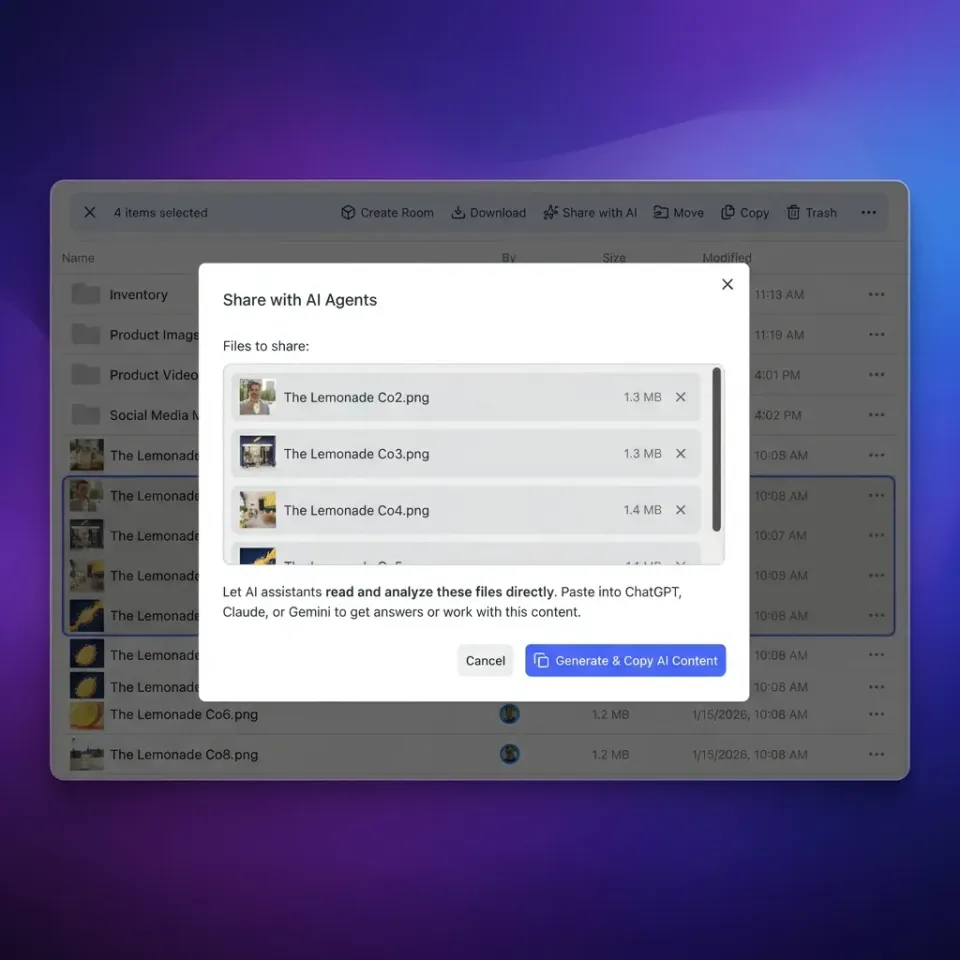
For applications supporting AI agents, Fastio acts as the ideal collaborative bridge. Agents and human users can share the exact same workspaces. Because Fastio offers a consolidated MCP toolset via Streamable HTTP and SSE, actions available in the user interface correspond to agentic tools. This symmetry guarantees that your Django application can programmatically orchestrate complex, multi-agent workflows without hitting feature roadblocks.

Related guides
- How to Integrate the Fastio API with SvelteKitSvelteKit's server-side form actions and API routes make it a strong fit for integrating with the Fastio API. This...
- How to Integrate Fastio API in Nuxt.jsIntegrating Fastio API with Nuxt.js enables Vue developers to build reliable file management and storage directly into...
- How to Integrate Keyword 1 with Fastio APIKeyword multiple integration allows developers to extend Fastio API capabilities within their agentic workflows. By...
- How to Integrate Fastio API with RustBuild high-performance, memory-safe storage systems by integrating Rust with the Fastio API. This guide covers...
- How to Integrate the Fastio API with n8n WorkflowsGuide to integrate fast api with n8n workflows: Connect n8n workflows to Fastio's API to automate file storage and...
- How to Integrate Fastio API with Dify WorkflowsLearn how to integrate fastio api dify workflows to add intelligent file workspaces to your visual AI builder. Dify...
More on this subject: Agent Integrations and APIs (191 guides)
Prerequisites and Initial Configuration
Before writing any code, you must ensure your development environment meets the necessary requirements. You will need a modern Python environment, a recent Django version, and an active Fastio account. If you do not have an account, you can start with the Business Trial (14 days, credit card required; see /pricing/).
Begin by generating your API keys from the Fastio dashboard. Navigate to the Developer Settings, create a new API key, and store it securely. Never hardcode these credentials directly into your Django views or settings files. Instead, use environment variables to inject them at runtime.
In your Django project, install the python-dotenv package to manage these variables locally. Update your environment file to include your newly generated keys:
FASTIO_API_KEY=your_production_api_key_here
FASTIO_ENVIRONMENT=production
Next, update your Django settings to read these variables. This approach keeps your integration secure and prevents accidental exposure in version control systems.
import os
from pathlib import Path
from dotenv import load_dotenv

load_dotenv()

FASTIO_API_KEY = os.environ.get('FASTIO_API_KEY')
if not FASTIO_API_KEY:
    raise ValueError("Missing FASTIO_API_KEY environment variable.")
With the environment configured, you are ready to configure API requests and begin the implementation phase.
Configuring a Fastio REST API Client
Calling the Fastio REST API directly with Python requests provides a clean, flexible interface for interacting with the service. Install the package using pip within your active virtual environment.
pip install requests
Once installed, you should create a centralized module within your Django project to initialize and manage the Fastio client instance. We recommend placing this in a core app or a dedicated integrations directory.
from django.conf import settings
import requests  # Fastio has no SDK; call the REST API directly

def get_fastio_client():
    """
    Initializes and returns a configured requests session for Fastio.
    """
    session = requests.Session()
        session.headers.update({'Authorization': f'Bearer {settings.FASTIO_API_KEY}'})
        return session
By abstracting the client initialization, you ensure that any changes to configuration or timeout logic apply globally across your entire Django application. This pattern also simplifies mocking the client during automated unit testing.
Implementing Synchronous API Calls in Django Views
For lightweight operations, such as creating a workspace or retrieving metadata, synchronous API calls within your Django views are perfectly acceptable. These requests typically resolve in milliseconds and will not noticeably degrade the user experience.
Consider a scenario where a user creates a new project in your application, and you need to generate a corresponding Fastio workspace. You can achieve this using a standard Django class-based view.
from django.conf import settings
from django.http import JsonResponse
from django.views import View
from .fastio_client import get_fastio_client
import json

class CreateWorkspaceView(View):
    def post(self, request, *args, **kwargs):
        try:
            data = json.loads(request.body)
            workspace_name = data.get('name')

            session = get_fastio_client()

            # Create the workspace via the Fastio REST API
            response = session.post(
                f'https://api.fast.io/current/org/{settings.FASTIO_ORG_ID}/create/workspace/',
                data={
                    'folder_name': data.get('folder_name'),
                    'name': workspace_name,
                    'perm_join': 'Member or above',
                    'perm_member_manage': 'Admin or above',
                    'intelligence': 'true',
                }
            )
            response.raise_for_status()
            res_data = response.json()

            return JsonResponse({
                'status': 'success',
                'workspace_id': res_data.get('workspace', {}).get('id'),
                'message': f'Workspace {workspace_name} created successfully.'
            }, status=201)

        except Exception as e:
            return JsonResponse({
                'status': 'error',
                'message': str(e)
            }, status=400)
In this example, we explicitly enable intelligence. This crucial flag ensures that any files subsequently uploaded to this workspace are automatically indexed for semantic search and AI retrieval. This demonstrates how a few lines of Python can unlock powerful intelligent features.


Ready to integrate intelligent workspaces?
Start building with the Fastio API today. Access generous storage and a consolidated MCP toolset with the 14-day Business Trial.
Handling Asynchronous File Uploads with Celery
A common content gap in existing tutorials is the lack of robust examples for calling the Fastio REST API asynchronously within Django. When dealing with large file uploads or batch processing, synchronous views will block the main thread, leading to timeout errors and a poor user experience. To solve this, you must offload the work to a background task queue like Celery.
First, ensure Celery is integrated into your Django project and backed by a message broker such as Redis. Then, create a dedicated tasks file to handle the Fastio interactions.
import os
from celery import shared_task
from .fastio_client import get_fastio_client
import logging

logger = logging.getLogger(__name__)

@shared_task(bind=True, max_retries=3)
def async_upload_to_fastio(self, file_path, workspace_id):
    """
    Uploads a local file to a Fastio workspace asynchronously.
    """
    try:
        session = get_fastio_client()

        with open(file_path, 'rb') as file_data:
            # Single-request upload for files under 4 MB; larger files use the chunked
            # flow (POST /current/upload/, then /chunk/ per part, then /complete/)
            response = session.post(
                'https://api.fast.io/current/upload/',
                data={
                    'name': os.path.basename(file_path),
                    'size': os.path.getsize(file_path),
                    'action': 'create',
                    'instance_id': workspace_id,
                    'folder_id': 'root',
                },
                files={'chunk': file_data}
            )
            response.raise_for_status()
            res_data = response.json()

        logger.info(f"Successfully uploaded file to workspace {workspace_id}")
        return res_data.get('id')

    except Exception as e:
        logger.error(f"Upload failed: {str(e)}")
        # Implement exponential backoff for transient API errors
        raise self.retry(exc=e, countdown=multiple ** self.request.retries)
By structuring the upload as a Celery task, your Django view can simply trigger the task and immediately return a response to the user. This architecture scales gracefully, even when processing gigabytes of data. The built-in retry mechanism ensures that temporary network interruptions do not result in lost files.

Leveraging Event Feeds and Polling for Reactive Workflows
To build a responsive application, your Django backend should react to events happening within Fastio. Fastio provides a realtime activity feed you can poll and a WebSocket events feed that notifies your application when files are added, modified, or moved.
To process these events in Django, run a background Celery task or management command that long-polls the activity endpoint or consumes the WebSocket feed:
import requests
import time
from django.conf import settings

def poll_fastio_activity(entity_id, last_activity=None):
    headers = {"Authorization": f"Bearer {settings.FASTIO_API_KEY}"}
    url = f"https://api.fast.io/current/activity/poll/{entity_id}?wait=95"
    if last_activity:
        url += f"&lastactivity={last_activity}"

    response = requests.get(url, headers=headers, timeout=100)
    if response.status_code == 200:
        data = response.json()
        for key in data.get("activity") or {}:
            if key.startswith("storage"):
                process_storage_change(key)
        return data.get("lastactivity", last_activity)
    return last_activity
Long-polling and WebSocket streams eliminate the need for short polling loops. By reacting to events as they arrive, your Django application remains synchronized with the Fastio workspace, ensuring that users and AI agents always see the most up-to-date state.
Managing Multi-Agent Concurrency with File Locks and Version History
When integrating Fastio with a Django application that supports multi-agent workflows, managing concurrency becomes critical. Multiple AI agents might attempt to read, update, or analyze documents simultaneously. Fastio provides advisory file locks to coordinate concurrent writes, alongside automatic file version history.
An agent or Django worker can acquire an advisory lock on a file before writing via POST .../storage/{node_id}/lock/ (or the MCP storage tool with action lock-acquire), heartbeat it during long tasks, and release it when complete. If another agent attempts to lock the file, it receives an HTTP 409 status and can wait or read. If a worker drops out, the lock expires automatically or can be taken over by anyone with write permission. Because locks are advisory, version history acts as the safety net, preserving every revision when updates land:
import requests
from django.conf import settings

def upload_document_version(workspace_id, folder_id, filename, content_bytes):
    headers = {"Authorization": f"Bearer {settings.FASTIO_API_KEY}"}
    url = "https://api.fast.io/current/upload/"
    files = {"chunk": (filename, content_bytes)}
    data = {
        "name": filename,
        "size": len(content_bytes),
        "action": "create",
        "instance_id": workspace_id,
        "folder_id": folder_id
    }
    response = requests.post(url, headers=headers, data=data, files=files)
    return response.status_code in (200, 201)
Additionally, Fastio's ownership transfer capabilities allow agents to build complete organizational structures, provision workspaces, and then hand over administrative control to human users through a claim link. Your Django application can track this through audit logs and automatically update internal permission records.
Best Practices for Rate Limits and Error Handling
According to Fastio Pricing, developers must design their applications to respect API rate limits, even on premium tiers. When your Django application encounters a rate limit response, it should not fail silently or crash. Instead, implement exponential backoff strategies to retry the request after a delay.
Direct HTTP requests to the REST API require explicit retry logic in Celery background tasks. Also, always implement detailed logging for API interactions. Logging the exact request parameters and response headers makes debugging significantly easier when diagnosing integration issues in a production environment.
Never expose raw API error messages to end-users. Catch exceptions in your Django views and return generic, user-friendly error messages while logging the specific technical details internally. This prevents information leakage and provides a better overall user experience.
Evidence and Performance Impact
When evaluating the performance impact of integrating Fastio directly into a Django backend versus traditional block storage, the architectural benefits become clear. Applications that implement the asynchronous Celery architecture described above process batch uploads efficiently without blocking the main server threads.
This efficiency gain is largely due to Fastio's URL Import capability, which allows the API to pull files directly from external platforms without passing the binary data through your Django application's local I/O. By offloading the transfer to Fastio's network, your web servers remain responsive to incoming user requests, significantly reducing the required compute resources for your Python application.
Sources
References used to verify factual claims in this guide.
-
Fastio provides a 14-day Business Trial and paid plans with seats included.
-
Fastio offers a consolidated MCP toolset via Streamable HTTP and SSE.
Frequently Asked Questions
How to use Fastio API in Python?
Fastio does not publish a Python SDK, so you call the REST API at `https://api.fast.io/current/` directly with a standard HTTP client such as `requests` or `httpx`. Send your API key, stored securely in an environment variable, as an `Authorization: Bearer` header, and you can create workspaces, manage files, and interact with intelligent agents. For scripted work outside your application there is also an official CLI, `@vividengine/fastio-cli`.
What is the best way to handle file uploads in Django using APIs?
The best way to handle file uploads in Django is to decouple the upload process from the HTTP request cycle using an asynchronous task queue like Celery. This prevents long-running uploads from blocking your web server threads and provides a scalable architecture for handling large files.
How do I react to file events with Django and Fastio?
React to file events by polling Fastio's activity endpoint at GET /current/activity/poll/{entityId}?wait=95 or connecting to the WebSocket events feed. Run this listener within a background worker or Celery task to dispatch processing as new files arrive.
Can I use Fastio to build multi-agent systems?
Yes, Fastio is explicitly designed as a collaborative layer for multi-agent systems. With a consolidated MCP toolset, advisory file locks, and automatic file version history, developers can use the API to coordinate complex workflows where multiple AI agents operate concurrently, with version history keeping every revision.
Related Resources

Ready to integrate intelligent workspaces?
Start building with the Fastio API today. Access generous storage and a consolidated MCP toolset with the 14-day Business Trial.