How to Set Up a Debt Financing Data Room for Lender Due Diligence
A debt financing data room is a secure virtual workspace where borrowers share financial statements, credit agreements, and compliance documents with lenders during loan syndication or bond issuance. This guide covers document checklists organized by category, folder structure best practices, permission strategies for multi-lender access, and the analytics that help you track lender engagement throughout due diligence.


Why Debt Financing Needs Its Own Data Room Approach
Most data room guides focus on equity fundraising. Founders raising a Series A need a cap table, pitch deck, and growth metrics. Debt financing is a different animal. Lenders care about repayment capacity, collateral coverage, and covenant compliance. The documents are different, the review process is different, and the number of parties involved is often larger.
In a syndicated loan, a lead arranger coordinates with multiple participating lenders, each with their own credit committee and document requirements. The global syndicated loan market reached approximately $780 billion in 2025, and transactions regularly involve five to fifteen lending institutions reviewing documents simultaneously. That volume of concurrent access makes a structured data room essential rather than optional.
Equity investors typically spend weeks building a thesis around growth potential. Lenders spend that time stress-testing your financials. They want to see how your cash flow holds up under adverse scenarios, whether your existing debt covenants leave room for new obligations, and what assets secure the loan. The due diligence checklist for a debt transaction routinely spans 50 to 100 documents, and lenders expect them organized by category rather than dumped into a flat folder.
The practical difference: an equity data room emphasizes narrative (your story, your market, your team). A debt data room emphasizes verifiability (your numbers, your obligations, your collateral). Getting this distinction wrong wastes time for everyone involved.
Helpful references: Fastio Workspaces, Fastio Collaboration, and Fastio AI.
Related guides
- How to Set Up a Private Placement Data RoomA private placement data room is a secure virtual workspace where issuers share private placement memorandums,...
- How to Set Up a Data Room for InvestorsAn investor data room is a secure online workspace where founders organize financial statements, cap tables, legal...
- How to Set Up a Secure Data Room for Confidential TransactionsA secure data room protects confidential documents during M&A deals, fundraising rounds, and legal proceedings. This...
- Best Virtual Data Room Providers for Every Deal TypeChoosing a virtual data room provider depends on what kind of deal you are running. This guide breaks down the top VDR...
- How to Choose a White Label Data Room for Client-Facing DealsA white label data room lets advisory firms, investment banks, and service providers rebrand a virtual data room with...
- Best Datasite Data Room Alternatives for 2026Datasite dominates enterprise M&A data rooms, but its per-page pricing model and opaque quoting process push many deal...
More on this subject: Data Rooms and Due Diligence (53 guides)
Document Checklist for Debt Financing Data Rooms
Lender due diligence follows a predictable structure. Organizing your data room around these categories reduces back-and-forth and signals that you understand the process.
Financial Statements and Projections
Audited financial statements for the last three to five fiscal years
- Unaudited quarterly or monthly management accounts for the current year
- Budget vs. actual reports for the trailing twelve months
- Three-year financial projections with stated assumptions
- Cash flow forecasts, including debt service coverage calculations
- Tax returns for the last three years (federal and state)
- Schedule of all outstanding debt obligations with maturity dates
Credit and Debt Documents
- Existing credit agreements, amendments, and waivers
- Intercreditor agreements with current lenders
- Subordination agreements, if applicable
- Letters of credit and guarantee documentation
- Debt compliance certificates from prior reporting periods
- Default history and cure documentation
Corporate and Legal
Certificate of incorporation with all amendments (certified within 30 days of closing)
- Bylaws or operating agreement
- Board resolutions authorizing the proposed borrowing
- Organizational charts showing corporate structure and subsidiaries
- Good standing certificates for each jurisdiction of operation
- Material litigation disclosures and settlement history
- Insurance certificates and coverage summaries
Collateral Documentation
- Appraisals for real property or equipment pledged as collateral
- UCC filing searches confirming no prior liens
- Title reports for real estate collateral
- Inventory reports and accounts receivable aging schedules
- Intellectual property registrations, if pledged
Regulatory and Compliance
- Industry-specific licenses and permits
- Environmental assessments or Phase I reports for real property
- Anti-money laundering (AML) and know-your-customer (KYC) documentation
- Regulatory correspondence, including any enforcement actions
Transaction Documents
- Term sheet or commitment letter
- Draft credit agreement (marked against precedent, if available)
- Security agreements and pledge documents
- Legal opinions from borrower's counsel
- Closing checklist with responsible parties and deadlines
This checklist covers the core requirements for most term loans and revolving credit facilities. Bond issuances add offering memoranda, trustee agreements, and rating agency presentations. Securitizations bring their own layer of pool-level data and servicer reports.
Folder Structure That Lenders Actually Navigate
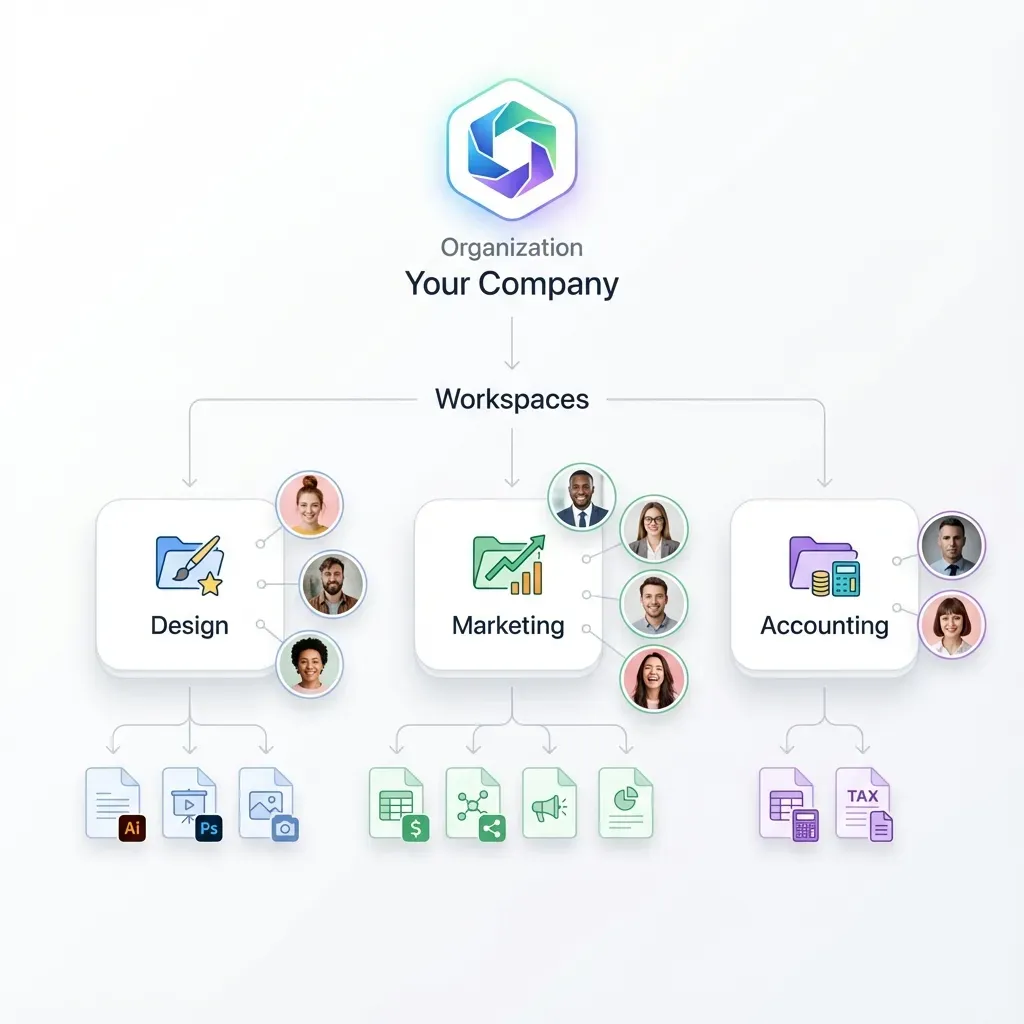
The folder structure of your data room communicates competence before a lender reads a single document. A clean hierarchy tells credit analysts they are dealing with a borrower who understands the process.
Recommended Top-Level Structure
Start with six to eight top-level folders that mirror the document categories above:
- Financial Statements and Projections
- Credit and Debt Documentation
- Corporate and Legal
- Collateral and Security
- Regulatory and Compliance
- Transaction Documents
- Management Presentations (for lender meetings)
- Q&A and Supplemental Requests
Within each top-level folder, create subfolders by document type or time period. For financial statements, organize by fiscal year. For credit agreements, organize by lender or facility. The Q&A folder serves as a living space where you upload documents requested during the due diligence process rather than reshuffling your original structure.
Naming Conventions
Consistent file naming saves hours of confusion when fifteen lenders are reviewing documents simultaneously. A practical convention:
[Category Number].[Subcategory]_[Document Name]_[Date]_[Version]
For example: 1.02_Income_Statement_2025Q4_v2.pdf
This approach keeps documents in logical order when sorted alphabetically and makes version tracking visible without opening each file.
Version Control
Debt transactions involve document revisions. Credit agreements go through multiple drafts. Financial projections get updated as negotiations progress. Your data room needs a clear versioning policy. Upload new versions rather than replacing existing files, so lenders can see what changed. Mark superseded documents or move them to an archive subfolder.


Organize Your Debt Financing Documents in One Workspace
Fastio gives you secure workspaces with granular permissions, audit trails, and file versioning. Set up a data room for lender due diligence in minutes, with auto-indexing that makes every document searchable by content. Built for debt financing data room workflows.
Permission Strategies for Multi-Lender Access
Debt financing transactions involve parties with different information rights. The lead arranger sees everything. Participating lenders might see a subset. Legal counsel needs access to transaction documents but not necessarily management presentations. Getting permissions wrong creates either a security problem or a bottleneck.
Tiered Access Model
Set up three permission tiers from the start:
Full access for the lead arranger, borrower's counsel, and internal deal team. These users can view, download, and upload across all folders.
Lender access for participating banks and their credit committees. These users can view and download documents in most folders but may be restricted from seeing competing term sheets or early-stage negotiation drafts.
Limited access for specialists brought in for specific reviews, such as environmental consultants or appraisers, who only need their relevant section.
Watermarking and Download Controls
When sharing confidential financial projections with a syndicate of lenders, dynamic watermarking ties every downloaded document to the specific user who accessed it. This deters unauthorized redistribution without creating friction for legitimate review. Some borrowers restrict downloads entirely for sensitive documents, allowing view-only access through the data room's browser preview.
Audit Trails
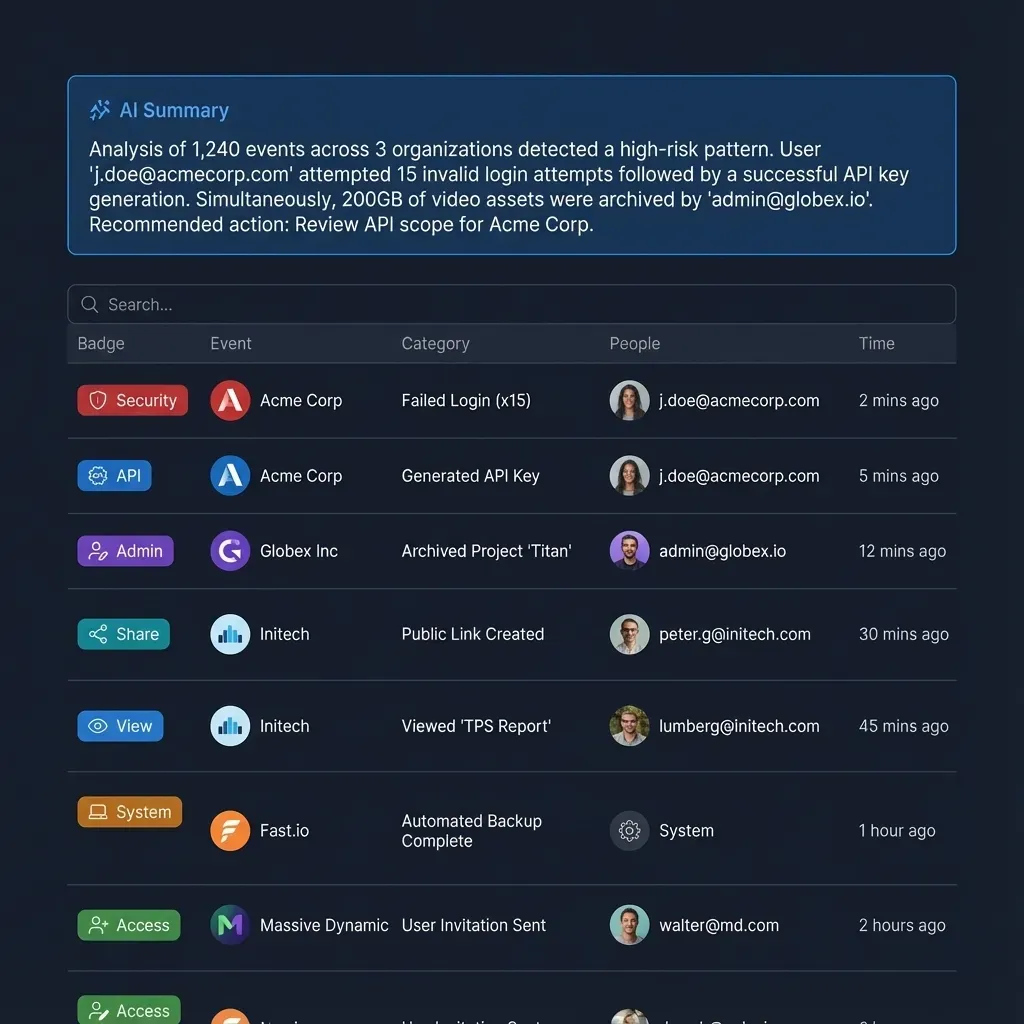
Every data room interaction should be logged: who accessed which document, when, and for how long. This serves two purposes. First, it creates a compliance record showing that all lenders received equal access to material information. Second, it gives borrowers intelligence about lender engagement. A lender who spent three hours reviewing your financial projections on Tuesday is more engaged than one who logged in once and left.
Fastio tracks document access at the file level, generating audit logs that show view times, downloads, and activity patterns. For debt transactions where equal disclosure matters, these logs provide evidence that all syndicate members had the same information access.
Tracking Lender Engagement During Syndication
In loan syndication, the borrower and lead arranger need to gauge which participating lenders are serious and which are going through the motions. Data room analytics provide that signal without requiring awkward phone calls.
What to Monitor
Track three metrics for each lender group:
Document coverage measures what percentage of the data room each lender has accessed. A lender who has reviewed 80% of your documents is further along in their credit analysis than one who has only opened the term sheet. Low coverage after two weeks often signals that the lender has deprioritized the deal.
Time-on-document shows which sections attract the most scrutiny. If multiple lenders are spending significant time on your covenant compliance section, expect questions about your existing debt obligations. Use this signal to prepare answers proactively rather than waiting for formal information requests.
Return visits indicate active analysis. A lender who downloads your financial model on day one and returns three times to review your projections is running scenarios. That is a buying signal.
Using Analytics to Manage the Process
Share engagement data with the lead arranger to inform syndication strategy. If three of your eight target lenders show minimal engagement by the midpoint of the process, the arranger may need to adjust pricing or expand the syndicate. Analytics also help identify when a lender is stuck. A credit analyst who repeatedly views your collateral documentation but never progresses to the financial section may have questions they have not yet raised.
Set up alerts for new document access so you know immediately when a lender begins their review. This is particularly useful when managing a tight syndication timeline.
How Debt Data Rooms Differ from Equity Data Rooms
If you have run an equity fundraise before, resist the temptation to reuse that data room structure for a debt transaction. The overlap is smaller than you might expect.
Document Emphasis
Equity investors prioritize cap tables, customer metrics, and competitive positioning. Lenders prioritize debt schedules, cash flow coverage, and collateral valuations. An equity data room might have one folder for financial statements. A debt data room typically has three: historical financials, projections, and debt-specific schedules.
Review Process
A venture capital firm might assign one partner and one associate to review your data room over two weeks. A syndicated loan involves multiple credit committees, each with their own analysts, running parallel reviews on different timelines. Your data room needs to support this concurrent access without performance degradation or permission conflicts.
Confidentiality Concerns
Equity investors sign a single NDA and get broad access. Debt syndications involve multiple levels of confidentiality. Information shared with the lead arranger during the mandate phase may not be shareable with the broader syndicate until later. Some lenders may be restricted persons under securities regulations. Your data room permissions need to reflect these distinctions from day one.
Ongoing Obligations
Equity data rooms are typically project-based. Once the round closes, the room goes dormant. Debt data rooms often persist through the life of the facility. Quarterly compliance certificates, annual financial statements, and covenant calculations need to be uploaded on an ongoing schedule. Structure your data room for long-term maintenance, not just the initial syndication.
This ongoing nature makes features like file versioning and folder-level organization more important for debt transactions. Fastio supports file versioning natively, so lenders can always access both current and prior versions of compliance documents without manual archive management.

Setting Up Your Debt Financing Data Room
Getting a data room ready for lender due diligence is a project in itself. Start at least two weeks before you expect lender access to begin. Here is a practical setup sequence.
Week One: Gather and Organize
Pull together all documents from the checklist above. Work with your CFO or controller to confirm that financial statements are final and reconciled. Have counsel review corporate documents for completeness. The most common delay is discovering that a subsidiary's good standing certificate has lapsed or that an old credit agreement amendment was never filed.
Create your folder structure before uploading anything. Map each document to its destination folder and assign responsibility for gathering missing items.
Week Two: Upload and Configure
Upload documents in bulk, then verify that file names follow your naming convention. Set up permission groups for each access tier before inviting lenders. Test the experience by having someone outside your deal team log in and navigate the structure. Can they find the three-year financial projections within thirty seconds? If not, reorganize.
Configure notification settings so your team knows when lenders begin accessing documents. On Fastio, you can set up workspace-level activity tracking to monitor access patterns across the entire data room without checking each folder individually.
Ongoing: Maintain and Respond
Assign someone to manage the data room throughout due diligence. This person handles supplemental document requests, uploads new versions of revised documents, and monitors lender engagement. They should check analytics daily during active syndication and escalate questions or access issues immediately.
Create a Q&A log within the data room where lender questions and borrower responses are documented in one place. This prevents the common problem of different lenders receiving different answers to similar questions.
For borrowers managing multiple data rooms or frequent debt transactions, enabling Intelligence on your Fastio workspace auto-indexes uploaded documents. This makes the entire data room searchable by content rather than just file name, which is useful when you need to locate a specific covenant definition across hundreds of pages of credit agreements.
Sources
References used to verify factual claims in this guide.
-
The global syndicated loan market reached approximately $780 billion in 2025
-
Lender due diligence typically involves 50 to 100 documents per transaction
Frequently Asked Questions
What documents do lenders need in a data room?
Lenders typically require audited financial statements (three to five years), tax returns, existing credit agreements and amendments, corporate formation documents, collateral appraisals, regulatory licenses, cash flow projections, and draft transaction documents. The exact list varies by transaction type, but most term loans and revolving facilities involve 50 to 100 documents organized across six to eight categories.
How do you set up a data room for debt financing?
Start by creating a folder structure that mirrors lender due diligence categories: financial statements, credit documents, corporate and legal, collateral, regulatory compliance, and transaction documents. Upload all documents with consistent naming conventions, set up tiered permissions for different lender groups, and configure audit trail tracking before granting access. Allow at least two weeks for setup before lenders begin review.
What is the difference between a debt and equity data room?
Debt data rooms emphasize financial verifiability, including cash flow coverage ratios, debt schedules, collateral documentation, and covenant compliance. Equity data rooms emphasize growth narrative, including customer metrics, market analysis, and cap tables. Debt rooms also support more concurrent users due to multi-lender syndication and often persist beyond closing for ongoing compliance reporting.
How long should a debt financing data room stay active?
Unlike equity data rooms that go dormant after closing, debt financing data rooms often remain active for the life of the credit facility. Borrowers need to upload quarterly compliance certificates, annual audited financials, and covenant calculation worksheets on an ongoing basis. Plan for long-term maintenance when choosing your data room platform.
How many lenders typically access a syndicated loan data room?
Syndicated loans commonly involve five to fifteen participating lenders, each with their own credit analysts and legal counsel. A single transaction can generate 30 to 50 unique users accessing the data room, often on different schedules as each institution runs its own credit approval process.
What security features matter most for debt financing data rooms?
Dynamic watermarking, granular download controls, and comprehensive audit trails are the most important security features. Watermarking ties every downloaded document to a specific user, deterring unauthorized sharing. Audit trails create a compliance record showing equal information access across the syndicate. Tiered permissions ensure that sensitive negotiation documents stay restricted to appropriate parties.
Related Resources

Organize Your Debt Financing Documents in One Workspace
Fastio gives you secure workspaces with granular permissions, audit trails, and file versioning. Set up a data room for lender due diligence in minutes, with auto-indexing that makes every document searchable by content. Built for debt financing data room workflows.