How to Set Up a Data Room for Investors
An investor data room is a secure online workspace where founders organize financial statements, cap tables, legal documents, and business plans for review by potential investors. This guide covers what to include at each fundraising stage, how to structure your room for fast due diligence, and how to use document analytics to prioritize investor follow-ups.


Why Your Data Room Matters More Than Your Pitch Deck
Most founders spend weeks perfecting their pitch deck and minutes throwing documents into a shared folder. That's backwards. Your pitch deck gets you the meeting. Your data room closes the deal.
According to a 2024 HackerNoon analysis of failed startup deals, 68% cited incomplete or disorganized documentation as a primary factor. Disorganized data rooms can delay closing by four to eight weeks and reduce valuations by 10-15%. When you're burning runway during a fundraise that already takes three to eight months on average, those delays are expensive.
The fix is straightforward: build your data room before you start taking meetings. Founders who prepare organized data rooms before investor conversations close rounds roughly 30% faster than those who scramble to assemble documents after a term sheet arrives.
Here's what a strong investor data room actually looks like, broken down by fundraising stage.
Helpful references: Fastio Workspaces, Fastio Collaboration, and Fastio AI.
Related guides
- How to Set Up a Private Placement Data RoomA private placement data room is a secure virtual workspace where issuers share private placement memorandums,...
- How to Set Up a Debt Financing Data Room for Lender Due DiligenceA debt financing data room is a secure virtual workspace where borrowers share financial statements, credit agreements,...
- How to Set Up a Secure Data Room for Confidential TransactionsA secure data room protects confidential documents during M&A deals, fundraising rounds, and legal proceedings. This...
- Best Virtual Data Room Providers for Every Deal TypeChoosing a virtual data room provider depends on what kind of deal you are running. This guide breaks down the top VDR...
- How to Choose a White Label Data Room for Client-Facing DealsA white label data room lets advisory firms, investment banks, and service providers rebrand a virtual data room with...
- Best Datasite Data Room Alternatives for 2026Datasite dominates enterprise M&A data rooms, but its per-page pricing model and opaque quoting process push many deal...
More on this subject: Data Rooms and Due Diligence (53 guides)
What Documents Belong in Your Data Room
The biggest mistake founders make is treating every fundraise the same. A pre-seed data room with 60 documents looks desperate. A Series A room with 15 documents looks unprepared. Match the depth to your stage.
Pre-Seed and Seed (15-30 Documents)
At the earliest stages, investors are betting on you and your idea. Keep the room focused:
Company Overview
- Pitch deck (problem, solution, market size, traction, team)
- Executive summary or one-pager
- Founder bios with relevant experience
Financials
- 3-year financial projections (monthly for year one, annual after)
- Historical P&L since incorporation (even if it's three months)
- Current balance sheet
- Bank statements from the last 6 months
Legal and Corporate
- Certificate of incorporation
- Bylaws or operating agreement
- Any existing SAFE or convertible note agreements
Cap Table
- Current ownership breakdown
- Any outstanding options or warrants
Product
- Product demo, screenshots, or prototype link
- Market sizing analysis (TAM, SAM, SOM)
- Early traction data: waitlist numbers, letters of intent, pilot results
For seed rounds, add 5-year financial projections with monthly granularity for years one and two, customer references, employee and advisor agreements, and basic IP documentation.
Series A (40-60 Documents)
Series A due diligence gets serious. Investors will scrutinize your financials, legal structure, and go-to-market metrics across 8-12 categories. You need everything from the seed stage plus:
Financial Deep Dive
- Detailed financial model with stated assumptions
- Monthly P&L with variance analysis (budget vs. actual)
- Unit economics: CAC, LTV, payback period by channel
- Sales pipeline data with win rates and cycle lengths
Legal Expansion
- All shareholder agreements
- IP assignment agreements for every founder, employee, and contractor
- Board meeting minutes
- Option pool details: granted, exercised, available
Compliance
- Tax returns for all filing years
- Any regulatory filings or compliance documentation
- Patent and trademark filings
Customer Evidence
- Cohort retention analysis
- Net revenue retention rates
- 3-5 customer references (with contact information)
Growth Rounds: Series B and Beyond
By Series B, your data room should resemble what a public company would prepare for an audit. Add audited financials for at least the last two years, monthly management accounts, budget vs. actual reports with variance explanations, competitive landscape documentation, a hiring plan aligned to revenue targets, and data security documentation.
The median time between Series A and Series B hit an all-time high of roughly 34 months in early 2025, according to Crunchbase data. That longer gap means your financials need to tell a clear story of progress over a multi-year period.
How to Structure Your Data Room for Fast Due Diligence
Investors review dozens of data rooms during any given quarter. The rooms that close deals share a few structural patterns.
Use 5-7 Top-Level Folders
Mirror the sections of your pitch deck so investors can cross-reference easily. A clean folder structure looks like this:
- Company Overview (pitch deck, one-pager, cover letter)
- Financials (P&L, balance sheet, projections, model)
- Cap Table and Fundraising (current cap table, pro-forma, prior round docs)
- Legal and Corporate (incorporation, bylaws, shareholder agreements)
- Team (bios, org chart, key employment agreements)
- Product and Technology (roadmap, IP filings, architecture overview)
- Market and Customers (research, references, metrics dashboards)
Keep hierarchy to two or three levels maximum. Deep nesting forces investors to click through five folders to find a balance sheet, and they won't.
Create a Master Index Document
Place a hyperlinked index as the first document in your room. List every file with a one-line description. This serves as a roadmap and signals that you've thought about the investor's experience, not just your own convenience.
Write a Cover Letter
Customize a brief cover letter for each investor or investor tier. Guide them to the most relevant documents based on their stated interests. If a VC partner mentioned they care about unit economics during your pitch, point them directly to the cohort analysis and CAC breakdown.
Use Consistent File Naming
Name files descriptively: 2026-Q1-Monthly-PL.pdf, not financials_v3_final_FINAL.xlsx. Always share documents as PDFs unless an investor specifically requests a spreadsheet. Read-only formats prevent accidental edits and look more polished.
Set Up Tiered Access
Not every investor needs to see everything on day one. Create access tiers:
- Initial interest: Pitch deck, executive summary, high-level financials
- Active diligence: Full financial package, cap table, key legal documents
- Final diligence: Complete room including employment agreements, IP assignments, tax returns
This approach protects sensitive information while giving serious investors what they need to move forward.



Build Your Investor Data Room Today
Organize your fundraising documents in a secure workspace with audit trails, granular permissions, and branded sharing. Built for investor data rooms.
How to Track Which Investors Are Actually Engaged
A data room isn't just a filing cabinet. It's an intelligence tool. The difference between founders who close efficiently and those who chase dead leads often comes down to how they use document analytics.
What to Track
Modern data room platforms log granular activity: who viewed each document, when they opened it, how long they spent on each page, whether they downloaded anything, and how many times they returned. Some platforms also detect if documents were forwarded to people outside the original share.
Reading the Signals
DocSend's research on investor behavior shows that VCs spend the most time on financials. Financial models and P&L statements get three to four times longer view times than other sections. Cap tables and SAFE agreements receive 8-12 minutes of review on average, more than double any single product document.
Use these patterns to gauge seriousness:
- High engagement: Multiple visits, 15+ minutes total, deep dives into financials and cap table. This investor is doing real diligence. Prioritize follow-up.
- Surface browsing: One visit, under 5 minutes, only viewed the pitch deck. Either they're not interested or they haven't gotten to it yet. Follow up once, then move on.
- Selective focus: Spent 20 minutes on your customer metrics but skipped financials. They might have concerns about product-market fit or want to validate traction before digging into numbers. Tailor your next conversation accordingly.
Turning Analytics Into Action
After each week of your fundraise, sort investors by engagement depth. Send targeted follow-ups to high-engagement prospects with answers to questions they likely have based on which documents they studied. For investors who haven't opened the room, a gentle nudge often works: "I noticed you haven't had a chance to review the materials yet. Happy to walk you through the highlights if that's easier."
On platforms like Fastio, audit trails log every view, download, and access attempt with timestamps and user identification. This gives you a complete record of who saw what and when, which matters both for your follow-up strategy and for any future compliance or reporting needs. Granular permissions let you control access at the folder or file level, so you can expand access as investors progress through diligence without creating separate rooms.
Common Mistakes That Kill Investor Data Rooms
After reviewing how VCs evaluate data rooms, a few patterns consistently derail fundraises.
Missing IP Assignments
If your founders, employees, or contractors haven't signed IP assignment agreements, investors will flag it immediately. Without clean IP ownership, the company's core assets are legally uncertain. This is the single most common legal gap in early-stage data rooms, and it can stall a deal for weeks while lawyers sort it out.
Inconsistent Financial Numbers
Your pitch deck says $2M ARR. Your P&L shows $1.7M. Your financial model projects from a $2.3M base. Investors notice these discrepancies instantly, and each one erodes trust. Before sharing your room, audit every financial figure across all documents. Make sure the pitch deck, financials, and model all tell the same story.
Stale Documents
A fundraise can stretch across several months. If your data room still shows Q3 numbers when it's Q1 of the next year, investors will wonder what you're hiding. Update financials monthly during an active raise. Flag any documents that are intentionally dated (like annual tax returns) so investors know the difference between a stale document and a point-in-time snapshot.
No Version Control
Uploading financial-model-v7-FINAL-revised.xlsx tells investors your process is messy. Use a platform with built-in versioning so investors always see the latest file while you maintain a history of changes. Fastio's file versioning keeps previous versions accessible without cluttering the main view, so you can update documents mid-raise without confusion about which version is current.
Overloading the Room
Dumping 200 documents into a pre-seed room doesn't show thoroughness. It shows you don't understand what matters at your stage. Investors have limited time. Curate ruthlessly. Include what they need to make a decision, nothing more. You can always add documents when they ask.
Ignoring Mobile Access
Partners at VC firms often review data rooms between meetings on their phones. If your room is built with tools that render poorly on mobile or require desktop software to open, you're creating friction at the worst possible moment. Choose a platform with a clean web-based interface that works across devices.
Setting Up Your Data Room on Fastio
You can use dedicated virtual data room software, a general-purpose cloud storage platform, or a workspace platform with built-in security and tracking. Each approach has tradeoffs.
Dedicated VDR software like Datasite or iDeals offers advanced features for complex M&A transactions, but pricing often starts at $1,000+ per month and contracts lock you in for the duration of the deal. For most startup fundraises, that's overkill.
General-purpose storage like Google Drive or Dropbox is familiar and cheap, but it lacks granular permissions, audit trails, and document analytics. You won't know which investors are actually reading your materials.
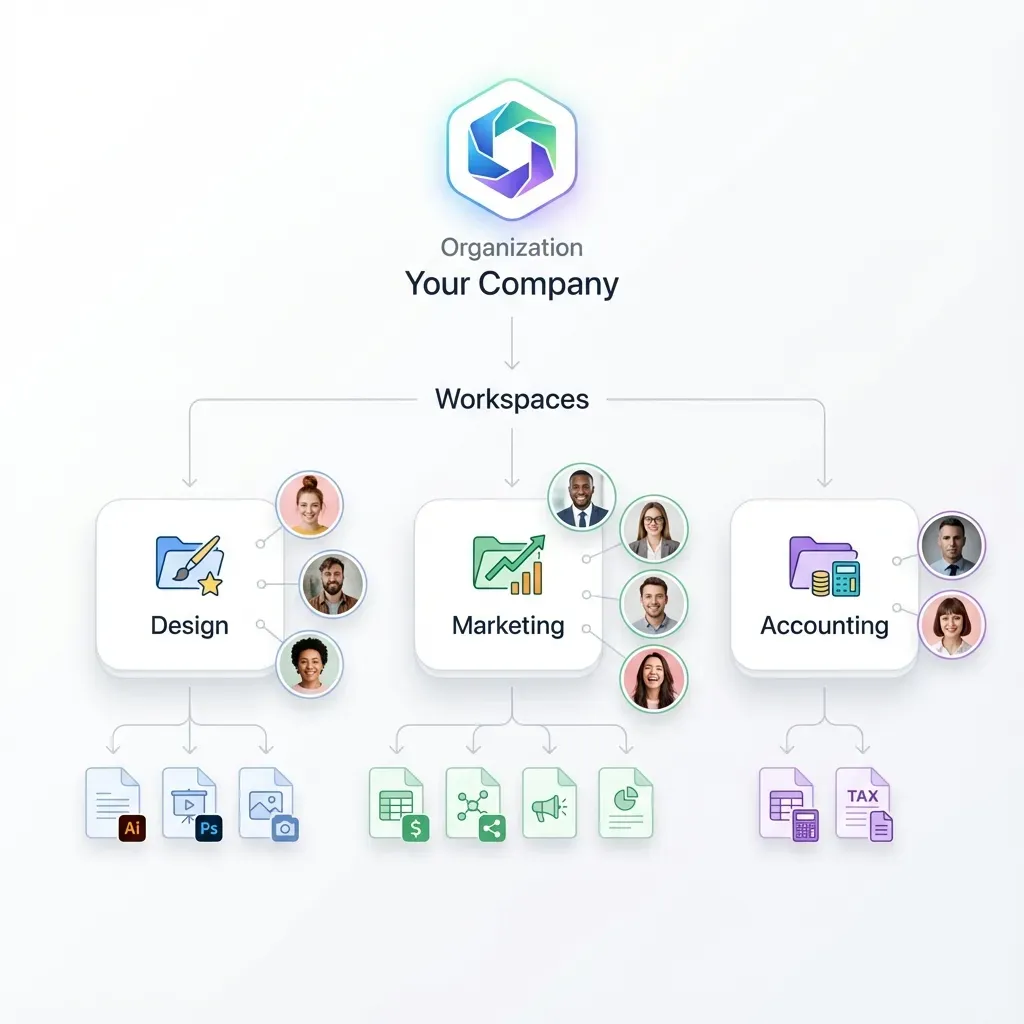
Fastio sits between these options. It's a workspace platform with granular permissions at the org, workspace, folder, and file level. Every document access is logged in an audit trail, so you can track investor engagement without bolting on a separate analytics tool. Branded shares let you create a professional, customized experience for each investor tier.
Quick Setup
- Start a 14-day Business Trial at Fastio (credit card required)
- Create a workspace named for your round (e.g., "Series A Data Room - [Company Name]")
- Build your folder structure using the 5-7 category framework above
- Upload documents as PDFs where possible
- Create a master index document and pin it to the top
- Set permissions: restrict sensitive folders to investors who have signed NDAs
- Generate branded share links for each investor or investor tier
- Monitor the audit trail as investors begin reviewing
For founders working with AI tools to prepare financial models or organize documents, Fastio workspaces support agent access through the same permissions system. An AI assistant can help organize and index your room, and you maintain full control over what investors see.
Intelligence Mode auto-indexes uploaded files, making your entire data room searchable by meaning rather than just filename. When an investor asks "where's the customer retention analysis?", you can find it instantly even if it's buried in a financial model appendix.
Sources
References used to verify factual claims in this guide.
-
68% of failed deals cite incomplete or disorganized documentation as a primary factor Disorganized data rooms can delay deals by 4-8 weeks and reduce valuations by 10-15%
-
Financial models and P&L statements get 3-4x longer view times than other document types Cap table and SAFE agreements receive 8-12 minutes of review on average
-
Median time between Series A and Series B hit an all-time high of roughly 34 months in early 2025
Frequently Asked Questions
What documents should be in an investor data room?
The exact list depends on your stage. Pre-seed rooms typically need 15-30 documents covering your pitch deck, basic financials, incorporation documents, and cap table. Series A rooms expand to 40-60 documents across 8-12 categories, adding detailed financial models, IP assignments, board minutes, and go-to-market metrics. Growth-stage rooms require audited financials, cohort analyses, and operational documentation approaching public-company standards.
When should a startup set up a data room?
Before you start taking investor meetings. Founders who prepare data rooms ahead of outreach close rounds faster than those who assemble documents after receiving interest. At minimum, have your room organized two weeks before your first pitch. This also forces you to identify gaps in your documentation early, when you have time to fix them.
How do I share a data room with investors?
Use a platform that supports granular link sharing with access controls. Create tiered access levels: a limited view for initial conversations (pitch deck and summary financials) and expanded access for investors in active diligence. Send personalized share links rather than one universal link, so you can track engagement per investor and revoke access if needed.
What is the best data room for startups raising funding?
It depends on your budget and deal complexity. Dedicated VDR software like Datasite or iDeals works well for large M&A transactions but costs $1,000+ per month. For most startup fundraises, a workspace platform with audit trails, granular permissions, and document analytics provides everything you need at a fraction of the cost. Fastio offers plans starting at $9.99/mo (Starter plan with 250 GB) alongside a 14-day Business Trial, with built-in audit trails and branded sharing for seed through Series B rounds.
How long does investor due diligence take?
Due diligence timelines vary by stage and investor. Seed rounds with a well-prepared data room can close diligence in 2-4 weeks. Series A due diligence typically runs 4-8 weeks. Growth rounds can take 2-3 months. Disorganized data rooms add 4-8 weeks to these timelines, according to industry analyses. The median time from first meeting to close across all stages is roughly 3-8 months.
Should I use Google Drive or Dropbox for my investor data room?
You can, but you'll miss two things that matter during a fundraise: document-level analytics and granular access controls. Google Drive and Dropbox don't tell you which investors viewed your financial model or how long they spent on it. They also make it difficult to set folder-level permissions or create tiered access for different investor groups. If budget is tight, they work as a starting point, but consider upgrading to a platform with audit trails before your first investor meeting.
Related Resources

Build Your Investor Data Room Today
Organize your fundraising documents in a secure workspace with audit trails, granular permissions, and branded sharing. Built for investor data rooms.