How to Set Up a Data Room Folder Structure That Speeds Up Due Diligence
A well-organized data room folder structure helps reviewers find documents quickly and keeps your deal on schedule. This guide covers practical folder templates for M&A, fundraising, and IPO data rooms, along with naming conventions, permission strategies, and common mistakes that slow down due diligence.


Why Folder Structure Matters More Than the Platform: data room folder structure
The first thing a buyer's counsel or lead investor does when they open your data room is scan the folder tree. If they can orient themselves in under 30 seconds, you've already set the right tone. If they can't find basic corporate docs without clicking through five levels of nested folders, they start wondering what else is disorganized.
A data room folder structure is a hierarchical index of categories and subcategories used to organize due diligence documents for efficient reviewer navigation. Think of it as the table of contents for your entire deal.
Well-organized data rooms close deals faster. According to FirmRoom, transactions with clean data room structures correlate with 15-20% higher valuations and close 30-45 days sooner than disorganized ones. The reason is straightforward: when reviewers can find what they need, they ask fewer clarifying questions, request fewer follow-up documents, and move through their checklists faster.
The average M&A data room contains 500 to 2,000 documents spread across 15 to 25 top-level folders. Getting this structure right before you upload a single file saves more time than any other prep work you'll do.
Helpful references: Fastio Workspaces, Fastio Collaboration, and Fastio AI.
Related guides
- How to Set Up a Debt Financing Data Room for Lender Due DiligenceA debt financing data room is a secure virtual workspace where borrowers share financial statements, credit agreements,...
- How to Set Up a Private Placement Data RoomA private placement data room is a secure virtual workspace where issuers share private placement memorandums,...
- How to Set Up a Data Room for InvestorsAn investor data room is a secure online workspace where founders organize financial statements, cap tables, legal...
- How to Set Up a Secure Data Room for Confidential TransactionsA secure data room protects confidential documents during M&A deals, fundraising rounds, and legal proceedings. This...
- Best Virtual Data Room Providers for Every Deal TypeChoosing a virtual data room provider depends on what kind of deal you are running. This guide breaks down the top VDR...
- How to Choose a White Label Data Room for Client-Facing DealsA white label data room lets advisory firms, investment banks, and service providers rebrand a virtual data room with...
More on this subject: Data Rooms and Due Diligence (53 guides)
The Standard 10-Folder Framework
Start with this baseline structure and adjust for your specific deal type. These 10 categories cover what most due diligence teams expect to find, and numbering them with zero-padded prefixes (01_, 02_) keeps the sort order consistent across every platform and viewer.
01_Corporate_and_Governance - Articles of incorporation, bylaws, board minutes, shareholder agreements, organizational charts, and subsidiary documentation. This is where reviewers go first.
02_Financial - Audited and unaudited financial statements, management accounts, budgets, forecasts, and debt schedules. Organize by year, then by quarter within each year.
03_Tax - Tax returns (federal, state, local), audit results, property tax records, and correspondence with tax authorities. Keep at least five years of history.
04_Legal_and_Contracts - Material contracts, customer agreements, vendor agreements, lease agreements, and any litigation or dispute records. Separate active contracts from expired ones.
05_Customers_and_Revenue - Top customer lists with revenue breakdowns, customer concentration analysis, churn data, and pipeline documentation. Buyers care deeply about revenue quality.
06_HR_and_Employment - Employee roster, compensation summaries, benefit plans, employment agreements, non-compete agreements, and org charts. Include contractor agreements here too.
07_IP_and_Technology - Patent filings, trademark registrations, software licenses, open-source usage, and any IP assignment agreements. For tech companies, this folder gets the most scrutiny.
08_Operations - Facility information, supply chain documentation, key vendor relationships, and operational metrics. Include any material operational dependencies.
09_Regulatory_and_Compliance - Permits, licenses, regulatory filings, compliance certifications, and environmental reports. Industry-specific regulations go here.
10_Market_and_Competition - Market research, competitive analysis, industry reports, and any third-party market data. This helps buyers validate their investment thesis.
Keep your folder depth to three levels maximum. Anything deeper than Company > Category > Subcategory > Document forces reviewers to click through too many layers and slows down the review process.
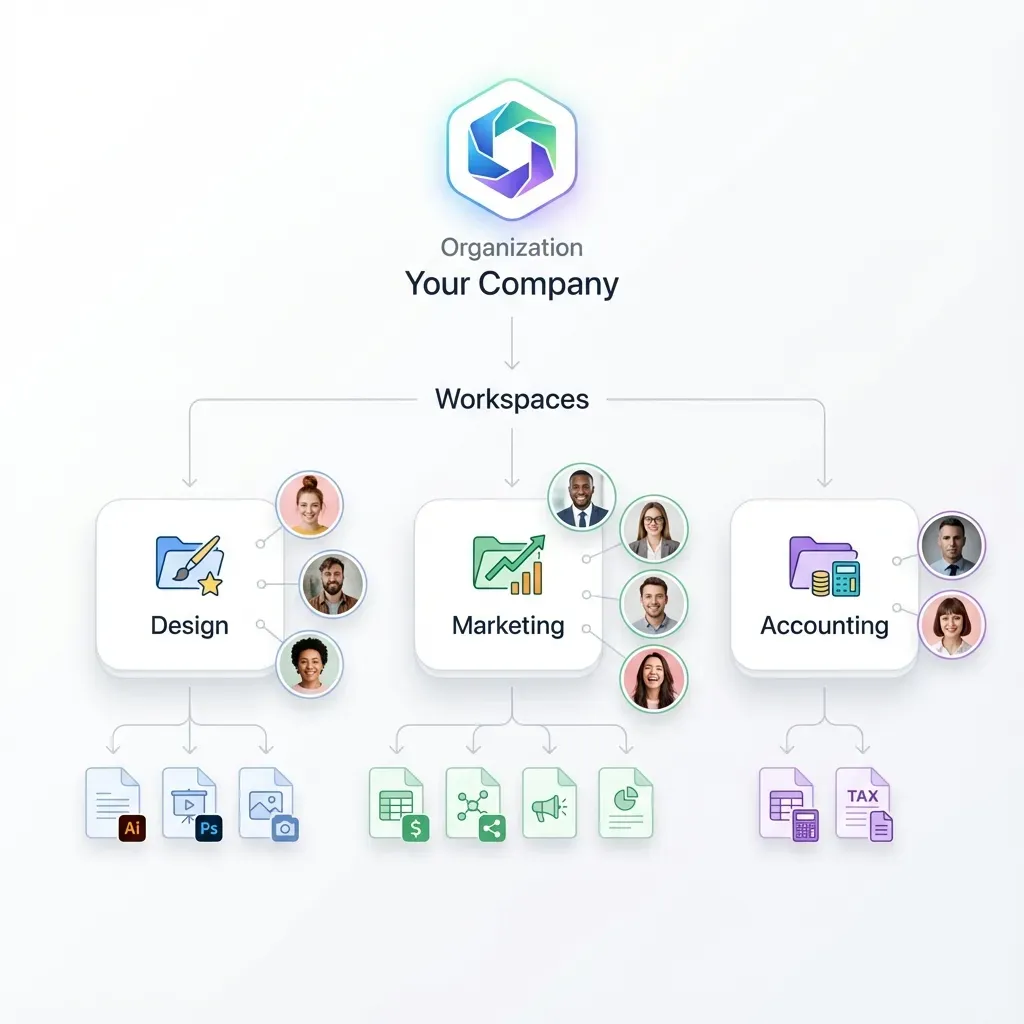
Deal-Specific Templates
The 10-folder framework is a starting point. Different deal types need different emphasis areas. Here's how to adapt.
M&A Data Room
Add a 00_Management_Presentation folder at position zero. This is the first thing bidders open, and it should contain your confidential information memorandum (CIM), management presentation deck, and executive summary. At the end of the structure, add an 11_Integration_Planning folder for transition service agreements and integration timelines.
For competitive M&A processes, consider staging access in phases. Phase 1 folders (available to all bidders) contain high-level financials and corporate overview. Phase 2 folders (shortlisted bidders) unlock customer details and detailed contracts. Phase 3 (final bidder) opens everything, including employee-level compensation data and sensitive IP.
Fundraising Data Room
Fundraising rooms are leaner. Most investors don't need the depth of an M&A diligence process. simplify to seven or eight top-level folders and elevate your cap table to its own top-level category, since investors will reference it constantly. Bundle traction metrics with market analysis rather than burying them in financials.
Add a Previous_Fundraising folder with prior term sheets, investor decks, and round summaries. Investors want to understand your fundraising history and how earlier rounds were structured.
IPO Data Room
IPO data rooms face the widest audience: underwriters, auditors, legal counsel, and regulators all need access, often simultaneously. Add dedicated folders for Prospectus_Drafts, Underwriting_Agreements, and Risk_Disclosures. Your regulatory and compliance folder will be larger than in a private transaction.
Naming precision matters even more for IPOs. Regulators expect exact document titles and version tracking. Use the format Category_Description_YYYY-MM-DD_v01.pdf so every document is unambiguously identified.


Build your data room with built-in search and permissions
Fastio workspaces give you folder-level permissions, audit trails, and AI-powered document search so reviewers find what they need without the back-and-forth. Built for data room folder structure workflows.
Naming Conventions and Document Indexing
Consistent naming is half the battle. A file named Doc1_final_v3_FINAL.pdf tells a reviewer nothing. A file named 2025_Q4_Audited_Financials.pdf tells them everything they need.
File Naming Rules
Follow this pattern for every document: Description_YYYY-MM-DD_vN.ext
- Use underscores, not spaces. Some older VDR platforms still mishandle spaces in filenames.
- Include the date the document was created or last updated, not the date it was uploaded.
- Version numbers start at v01 and increment. Never use "final" or "latest" in a filename.
- Be specific. "Board_Minutes_2025-06-15_v01.pdf" beats "June_Board_Minutes.pdf" because it sorts correctly and avoids ambiguity when you have multiple years of minutes.
Building the Master Index
A data room index is a spreadsheet or document that catalogs every file with its folder location, document number, description, upload date, and status. The numbering system mirrors the folder hierarchy: document 3.2.1 means the first document in the second subfolder of the third top-level folder.
Your index should answer three questions for any reviewer: Where is this document? What version am I looking at? Is this the complete set, or are documents still pending?
Keep the index as a living document. Update it every time you add or replace files. Some data room platforms generate indexes automatically, which eliminates the manual tracking burden.
Version Control
When you replace a document, don't delete the old version. Move it to an Archive subfolder within the same category. Reviewers sometimes need to compare versions, and having a clear version history builds trust. Label superseded files : SUPERSEDED_2025_Q3_Financials_v01.pdf.
Permissions and Access Control
Not everyone should see everything. Your outside counsel doesn't need access to HR compensation details during the first round of diligence, and your financial advisor doesn't need to see patent prosecution files.
Setting Up Permission Groups
Create permission groups based on reviewer roles, not individual people. Common groups include:
- Seller Team - Full access to all folders for uploading and organizing
- Buyer Legal - Read access to corporate, legal, regulatory, and IP folders
- Buyer Financial - Read access to financial, tax, and customer/revenue folders
- Management Team - Read access to management presentation and integration planning
- Auditors - Read-only access to specific financial and compliance folders
Assign permissions at the folder level, not the file level. Folder-level permissions are easier to audit and less likely to have gaps where someone accidentally gets access to a sensitive document.
Watermarking and Download Controls
For sensitive documents like customer lists or detailed financial models, enable dynamic watermarking that stamps each viewer's name on downloaded copies. This creates accountability without restricting access entirely.
Consider disabling downloads for your most sensitive folders during early diligence phases. Reviewers can view documents in-browser but can't extract copies until you're further along in the process.
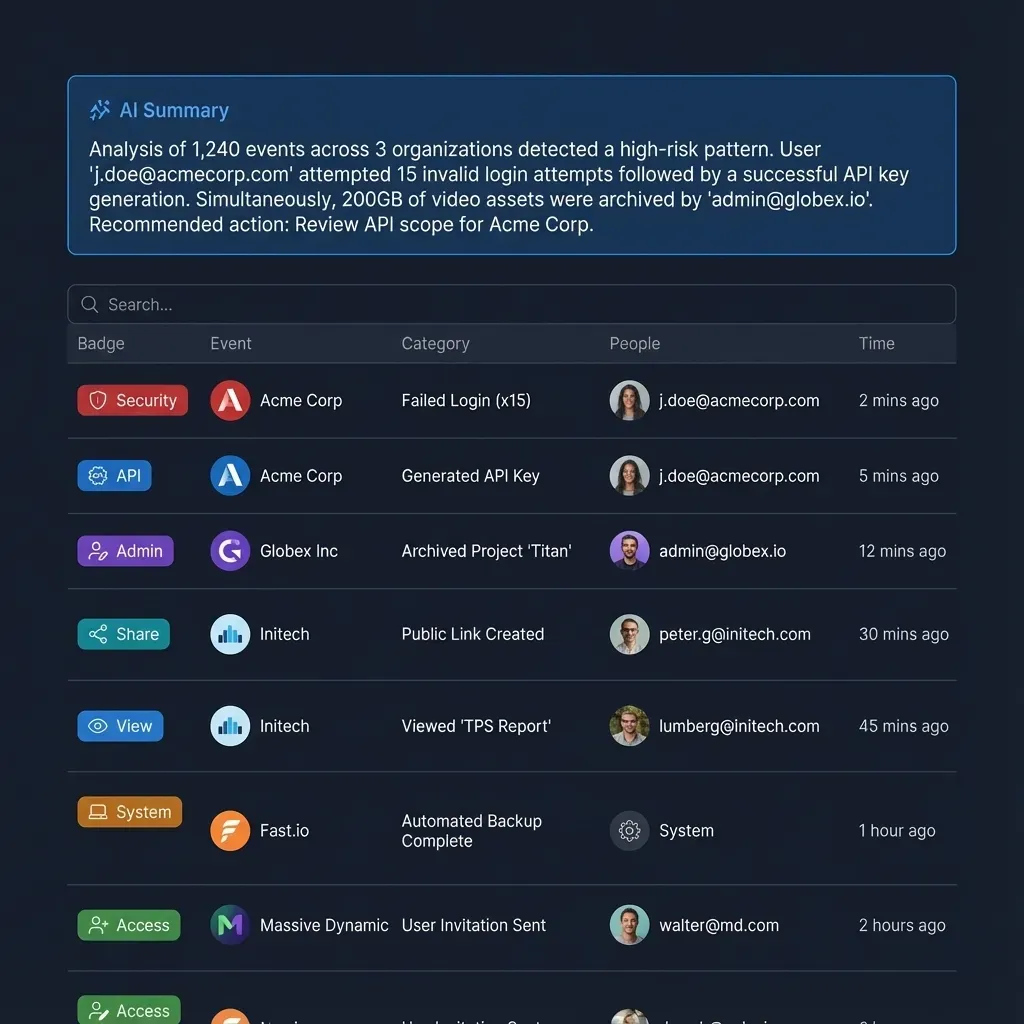
Platforms like Fastio handle this with granular permissions at the organization, workspace, folder, and file level, along with audit trails that log every view and download. When your data room needs to serve multiple reviewer groups with different access levels, having permissions that go beyond simple read/write makes the setup much cleaner.
Common Mistakes and How to Fix Them
After reviewing dozens of data room setups, certain patterns keep causing problems. Here are the most frequent ones and how to avoid them.
Nesting Folders Too Deep
Five levels of subfolders might seem logical when you're organizing, but reviewers lose context after three clicks. If you find yourself creating a path like Legal > Contracts > Customer > Enterprise > 2024 > Q3, flatten it. Move Q3 enterprise customer contracts into a single subfolder with descriptive filenames instead.
Inconsistent Naming Across Folders
The financial team names files one way, legal names them another, and HR uses a third convention. Before uploading anything, agree on a single naming standard and circulate it to everyone contributing documents. A 15-minute alignment meeting prevents weeks of confusion.
Uploading Everything at Once
Dumping 2,000 documents into the data room before the structure is finalized guarantees you'll spend time reorganizing later. Set up your complete folder structure first, upload a sample set to test the hierarchy, then do the full upload. This approach also lets you catch permission issues early.
Ignoring the Index
Skipping the master index because "the folders are self-explanatory" is a common shortcut that backfires. Reviewers use the index to track their progress through diligence and to confirm they've seen everything. Without it, they'll ask you for confirmation emails that could have been avoided.
No Clear Owner
Assign one person as the data room administrator. This person controls the folder structure, manages permissions, processes document requests, and keeps the index current. When multiple people manage the data room without coordination, you end up with duplicate folders, inconsistent permissions, and version conflicts.
For teams that want to reduce the manual overhead, workspace platforms with built-in intelligence features can auto-index uploaded documents and make them searchable by content, not just filename. Fastio's Intelligence Mode, for example, automatically indexes files for semantic search and AI-powered Q&A, so reviewers can ask questions like "show me all change-of-control provisions" instead of clicking through folders one by one.
Sources
References used to verify factual claims in this guide.
-
Well-organized data rooms correlate with 15-20% higher valuations and close 30-45 days faster
-
Manual data room setup for 2,000 to 10,000 documents typically takes 20 to 40 hours A mid-market M&A data room typically contains 40 to 80 total folders across all levels
Frequently Asked Questions
How should I organize a data room?
Start with 10 to 12 numbered top-level folders covering corporate governance, financials, tax, legal, customers, HR, IP, operations, regulatory, and market analysis. Use zero-padded prefixes (01_, 02_) for consistent sorting. Keep folder depth to three levels maximum, and create a master index document that catalogs every file with its location and version number.
What folders should be in a virtual data room?
The core folders are: Corporate and Governance, Financial, Tax, Legal and Contracts, Customers and Revenue, HR and Employment, IP and Technology, Operations, Regulatory and Compliance, and Market and Competition. For M&A deals, add a Management Presentation folder at position zero. For fundraising, add a Cap Table and Previous Fundraising folder.
What is a data room index?
A data room index is a master reference document, usually a spreadsheet, that lists every file in the data room with its folder location, document number, description, upload date, and status. The numbering mirrors the folder hierarchy, so document 3.2.1 refers to the first document in the second subfolder of the third top-level folder. It serves as a table of contents for reviewers navigating the data room.
How many folders should a data room have?
A typical M&A data room has 15 to 25 top-level folders with 40 to 80 total folders across all levels. Fundraising data rooms are leaner, often using seven or eight top-level folders. The exact count depends on the complexity of the business and the deal type, but more important than the number is keeping the structure logical and limiting folder depth to three levels.
How long does it take to set up a data room?
Manual data room setup for a mid-market deal with 2,000 to 10,000 documents typically takes 20 to 40 hours, including folder structure creation, document collection, naming standardization, and index building. Using templates and pre-built folder structures can cut this to a few hours. AI-powered platforms can auto-generate folder structures and indexes in minutes, though you'll still need time to collect and verify the underlying documents.
Should I use a data room template or build from scratch?
Start with a template and customize it. Templates give you a proven starting point based on deal type (M&A, fundraising, IPO) and prevent you from missing critical categories. Build from scratch only if your transaction is highly specialized, like a biotech deal with unusual regulatory requirements. Even then, start with the standard 10-folder framework and add specialized folders rather than reinventing the structure entirely.
Related Resources

Build your data room with built-in search and permissions
Fastio workspaces give you folder-level permissions, audit trails, and AI-powered document search so reviewers find what they need without the back-and-forth. Built for data room folder structure workflows.