How to Build a Content Production Workflow That Scales
Most content workflow guides stay abstract. This one walks through the actual steps to build a repeatable production process, from structured briefs and file organization to review cycles, approval gates, and publishing handoffs. You will learn how to set up a workflow that your team can run without you in the room.


Why Most Content Teams Are Slower Than They Should Be
A content production workflow is the repeatable sequence of steps that takes content from initial brief through creation, review, approval, and publication. When that sequence is clear, work moves. When it is not, content teams spend their time chasing files, waiting for approvals, and rewriting pieces that should have been right the first time.
The numbers back this up. According to a 2024 Kissflow report on workflow automation, organizations that formalize their content processes see a 25 to 30 percent increase in output compared to teams relying on ad-hoc coordination. The same research found that automating manual handoff steps cuts error rates by 40 to 75 percent.
The core problem is not a lack of talent or tools. It is a lack of structure. Most content teams operate with implicit workflows: everyone roughly knows what happens next, but nobody has written it down. Briefs live in email threads. Drafts float between Google Docs and Slack messages. Review feedback arrives in three different formats depending on who gives it. The result is that content teams spend a significant chunk of their time on coordination rather than creation.
This guide covers the practical steps to fix that. Not a framework diagram, but the actual file structures, review processes, and handoff points you need to build a workflow that works when your team grows from three people to thirty.
Helpful references: Fastio Workspaces, Fastio Collaboration, and Fastio AI.
Related guides
- How to Set Up a Content Marketing Platform for Your TeamA content marketing platform is an integrated workspace where teams create, store, collaborate on, and distribute...
- How to Manage Marketing Campaigns with the Right Software StackMarketing campaign management software helps teams plan, execute, and measure campaigns by coordinating tasks, assets,...
- How to Choose Marketing Project Management Software for Creative TeamsMarketing teams juggle campaigns, creative assets, and client feedback across dozens of tools. This guide breaks down...
- How to Build a Canva Agency Collaboration WorkflowCanva agency collaboration workflow simplifies design reviews for remote teams. Agencies use Canva Teams for real-time...
- How to Manage the Full Content Lifecycle from Creation to RetirementGuide to content lifecycle management: Most content teams are good at publishing. Where things fall apart is everything...
- How to Build a Sales Enablement Platform That Actually Gets UsedMost sales enablement platforms collect dust. Reps ignore them because content is hard to find, the interface adds...
More on this subject: Creative and Marketing Teams (27 guides)
The Six Stages of a Content Production Workflow
Every content workflow, regardless of team size or content type, moves through six stages. The specifics change depending on whether you are producing blog posts, videos, or social media campaigns. The stages do not.
1. Briefing. Someone defines what needs to be created, why it matters, and what success looks like. A good brief includes the target audience, the core message, the format, the deadline, and any brand or compliance constraints. A bad brief says "write something about our product."
2. Research and planning. The creator gathers information, reviews reference material, outlines the structure, and identifies any assets they will need (images, data, quotes, design files). This stage is where most revision cycles are born or prevented. Thirty minutes of research up front saves three hours of rewriting later.
3. Production. The actual writing, filming, recording, or designing. This is the stage most people think of as "the work," but it is only one-sixth of the process.
4. Review and editing. Someone other than the creator reads, watches, or evaluates the work against the brief. Structured review means specific questions: Does this match the brief? Is the information accurate? Does it meet brand guidelines? Unstructured review means "let me know what you think," which invites scope creep.
5. Approval. A designated person signs off on the final version. This is not the same as review. Review improves the work. Approval confirms it is ready to publish. Conflating the two is one of the most common reasons content gets stuck in limbo.
6. Publishing and distribution. The content goes live and gets distributed to the right channels. This includes formatting for the platform, scheduling, tagging, and any post-publish promotion.
Write these six stages on a whiteboard. For each one, answer three questions: Who owns this stage? What does "done" look like? Where do the files live? If you cannot answer all three for every stage, you have found your bottleneck.
Setting Up File Structures and Naming Conventions
The single most impactful change you can make to a content workflow is giving every file a predictable home. When your designer asks "where is the approved hero image for the Q2 campaign?" and the answer requires a Slack search, your file structure has failed.
Folder hierarchy. Organize by project or campaign, not by file type. A structure like /campaigns/q2-product-launch/blog-posts/ is more useful than /images/ and /documents/ because the people working on a piece of content need all the assets together, not sorted by format.
A practical structure looks like this:
/content-production/
├── briefs/              # Approved briefs only
├── campaigns/
│   ├── q2-launch/
│   │   ├── blog/
│   │   │   ├── drafts/
│   │   │   ├── review/
│   │   │   └── final/
│   │   ├── social/
│   │   └── assets/     # Images, videos, design files
│   └── monthly-newsletter/
├── templates/           # Reusable brief and content templates
└── archive/             # Published content for reference
Naming conventions. Every file name should answer three questions without opening the file: What is it? What stage is it in? When was it last updated? A pattern like q2-launch-blog-seo-guide-draft-v2-2026-03-28.docx is long but unambiguous. Compare that to SEO post FINAL final (2).docx, which tells you nothing about which campaign it belongs to or who reviewed it.
Version control. Decide whether your team uses version suffixes in file names (v1, v2, v3) or relies on the platform's built-in versioning. Either approach works. Using both at the same time does not, because someone will upload v3 as a new file while someone else overwrites v2 in place.
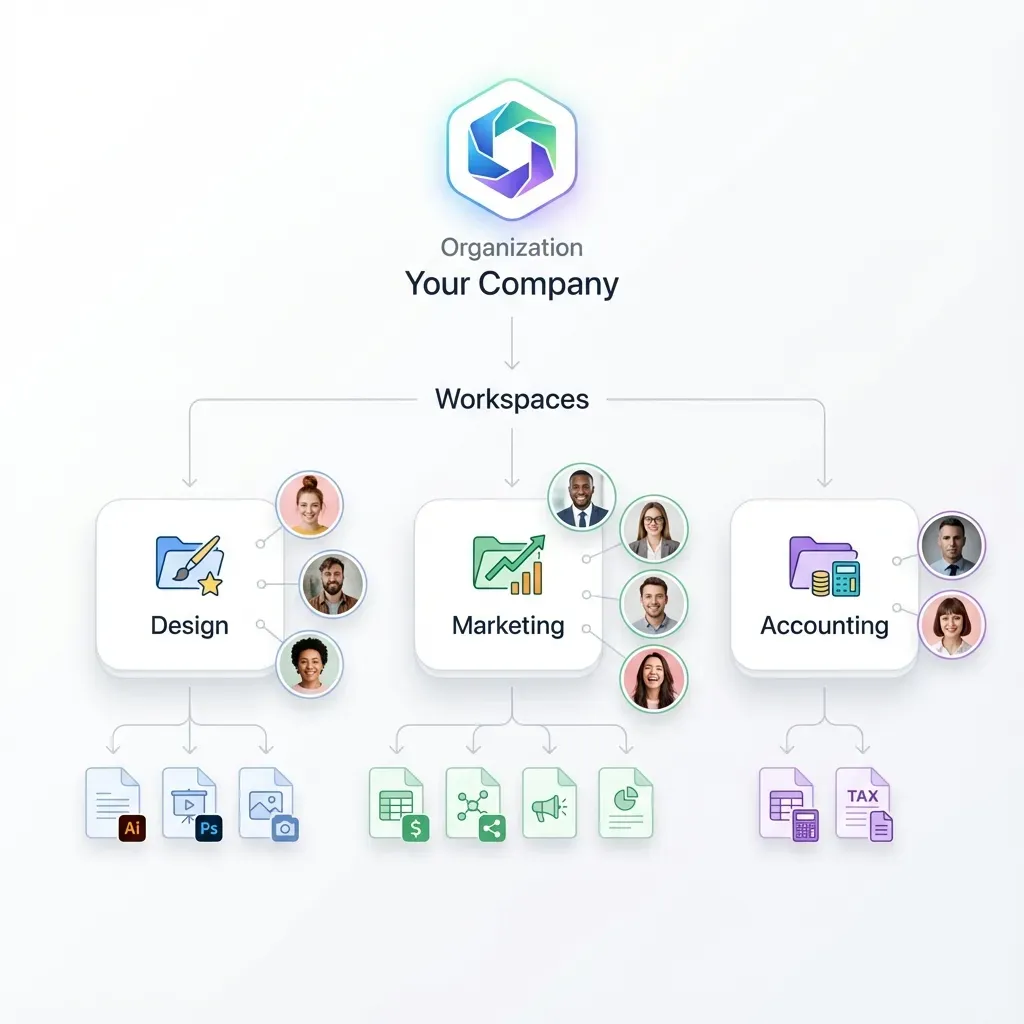
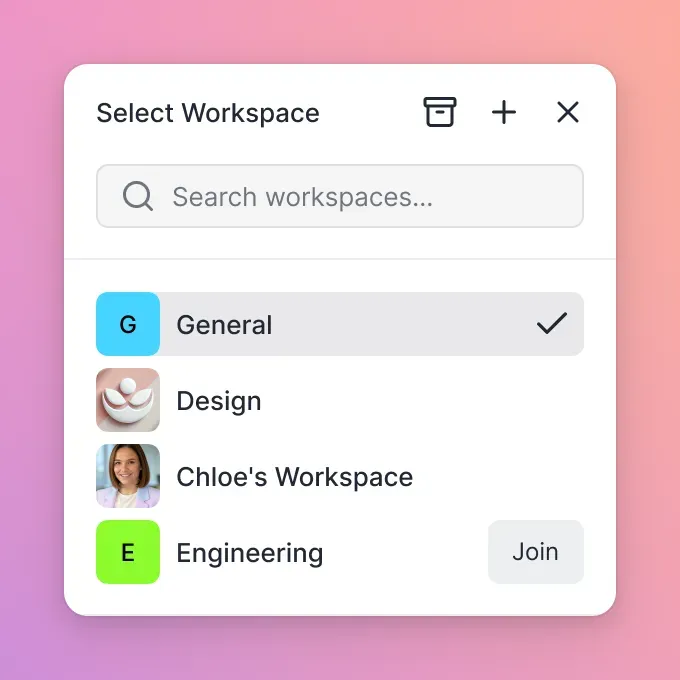
Cloud workspace platforms like Fastio, Google Drive, and Dropbox all offer file versioning. Fastio's approach is worth noting here: its workspace model lets you set granular permissions at the folder and file level, so your brief writers can upload to /briefs/ without touching /final/, and your approvers can access everything without accidentally editing a draft. The platform also maintains an automatic audit trail, so you can see who changed what and when without relying on file name conventions alone.


Organize Your Content Production in One Workspace
Fastio gives content teams shared workspaces with folder-level permissions, file version history, anchored comments, and real-time event feeds.
Building Review Processes That Do Not Create Bottlenecks
Revision cycles are where content workflows die. Research from LTX Studio found that the average creative project goes through five to seven rounds of revisions, and 60 percent of those changes stem from misaligned expectations, not quality issues. That means most revision time is waste caused by unclear briefs or undefined review criteria.
Define review criteria before the review starts. Every reviewer should know what they are evaluating. A content reviewer checks for accuracy, tone, and brand alignment. A legal reviewer checks for compliance. A subject matter expert checks for technical correctness. When everyone reviews for everything, nobody reviews for anything specific, and you get contradictory feedback.
Limit reviewers per stage. Two reviewers per piece is usually enough for standard content. Three is the maximum before feedback becomes contradictory and the writer spends more time reconciling opinions than improving the piece. If you have more than three required reviewers, you have an organizational problem, not a content problem.
Set time limits on review. A review that takes "whenever you get to it" takes forever. Set a 48-hour review window for standard content and a 24-hour window for time-sensitive pieces. If a reviewer misses their window, the content moves forward without their input. This sounds aggressive, but it is the only way to prevent a single busy person from blocking your entire editorial calendar.
Separate feedback from approval. Feedback says "change this paragraph." Approval says "this is ready to publish." These should be two distinct steps with two distinct owners. The person who gives feedback does not need to be the person who approves publication. Combining these roles creates a bottleneck where one person must both critique and greenlight every piece.
Use a single feedback location. Comments in a Google Doc, notes in Slack, verbal feedback in a meeting, and an email with "a few thoughts" is four places where feedback lives. Pick one. If your content lives in a shared workspace, use that platform's commenting features. Fastio supports anchored comments on files, so feedback stays attached to the specific content it refers to rather than floating in a separate channel. The goal is that the writer opens one place and sees everything they need to address.
Track revision status explicitly. Every piece of content should have a visible status: draft, in review, revisions requested, approved, published. Whether you track this in a project management tool, a spreadsheet column, or workspace folder names (moving files from /review/ to /approved/), the status should be obvious to anyone on the team without asking.
Scaling the Workflow as Your Team Grows
A workflow that works for a three-person team breaks at ten people. The fix is not more process. It is clearer ownership and better tooling.
Assign stage owners, not task owners. Instead of assigning individual pieces to individual people, assign ownership of each workflow stage. One person owns briefing quality. Another owns the review stage. Another owns publishing. This means each stage has someone accountable for throughput, not just individual deliverables.
Standardize your briefs. The highest-use improvement for growing teams is a brief template that every piece of content starts from. A good brief template includes:
- Target audience and their current knowledge level
- Core message in one sentence
- Key points to cover (and what to explicitly exclude)
- Content format and target length
- SEO requirements (target keyword, search intent)
- Required assets and where to find them
- Deadline and reviewer assignments
When every piece starts from the same template, new writers produce usable first drafts faster and reviewers spend less time on structural feedback.
Automate the handoffs. The gap between stages is where content gets stuck. "I finished the draft" should automatically notify the assigned reviewer. "Review complete" should automatically move the file to the approval queue. You can build these handoffs with project management tools (Asana, Monday.com, Notion), dedicated content workflow platforms (Planable, CoSchedule), or workspace automation features.
Fastio's WebSocket events feed and activity feed polling let you monitor when files are uploaded or updated in folders, which means you can wire up a simple handoff workflow: when a writer drops a draft into the /review/ folder, an event is emitted, and team notifications can trigger seamlessly without manual status updates.
Separate content types into parallel tracks. Blog posts, social media content, and video projects should not share a single queue. Each format has different production timelines, different reviewers, and different publishing cadences. Run them as parallel workflows that share a common editorial calendar but operate independently day to day.
Measure cycle time, not just output. The metric that matters for a scaling team is how long it takes a piece of content to move from brief to published. If your average cycle time is three weeks and your goal is two posts per week, you need six pieces in flight at any time. Knowing your cycle time tells you whether you need more writers, faster reviewers, or fewer approval gates.

Common Workflow Failures and How to Fix Them
After setting up dozens of content workflows, the failure modes are predictable. Here are the ones that show up most often and what to do about them.
The approval bottleneck. One senior person must approve everything, and they are always in meetings. Fix: delegate approval authority by content type. Blog posts get approved by the content lead. Social posts get approved by the social media manager. Only brand campaigns and press releases need executive sign-off.
The endless revision loop. A piece goes through six rounds of edits because each reviewer adds new feedback without seeing previous feedback. Fix: batch all feedback into a single round. Set a review window, collect all comments, and send them to the writer at once. One round of revisions should handle 90 percent of feedback.
The orphaned draft. Someone starts a piece, gets pulled to another project, and the draft sits unfinished for weeks. Fix: set a maximum age for in-progress content. If a draft has not moved in five business days, it gets reassigned or killed. Stale drafts clog your pipeline and demoralize the team.
The "final" that is not final. The approved version gets changed after approval because someone noticed a typo, then someone else makes "one small edit," and suddenly the published version does not match what was approved. Fix: restrict write permissions on release folders, acquire advisory file locks during edits, and rely on version history. If changes are needed post-approval, the piece goes back through an abbreviated review cycle. Platforms with granular permissions, file locks, and version history (Fastio supports all three) keep production assets protected and preserve an audit log of every revision.
The missing asset. The blog post is ready to publish but the hero image is still with the designer, or the data for the chart never arrived, or the customer quote was never approved. Fix: add an asset checklist to the brief. Before a piece enters the production stage, every required asset should be identified and assigned to someone. Missing assets block production the same way missing ingredients block cooking.
The tool sprawl problem. Briefs in Notion, drafts in Google Docs, images in Dropbox, feedback in Slack, scheduling in CoSchedule, analytics in Google Search Console. Every tool transition is a chance for something to fall through the cracks. Research from LTX Studio found that creative directors bounce across eight or more tools daily without producing actual output. Fix: consolidate where possible. You probably cannot get down to one tool, but you can designate one system of record where the current status and latest version of every piece lives.
The goal is not a perfect process. It is a process that is good enough to be followed consistently, clear enough to onboard new people quickly, and structured enough that no single person's absence stops production.
Sources
References used to verify factual claims in this guide.
-
Organizations that formalize their content processes see a 25 to 30 percent increase in output; automating manual handoff steps cuts error rates by 40 to 75 percent
-
The average creative project goes through 5-7 rounds of revisions, and 60% of changes stem from misaligned expectations Creative directors bounce across 8+ tools daily without producing actual output
Frequently Asked Questions
What is a content production workflow?
A content production workflow is the repeatable sequence of steps that takes content from initial brief through research, creation, review, approval, and publication. It defines who owns each stage, where files live, what "done" looks like at each step, and how work moves from one stage to the next. Without a defined workflow, content teams default to ad-hoc coordination that slows down as the team grows.
How do you create a content workflow?
Start by documenting the six stages (briefing, research, production, review, approval, publishing) and answering three questions for each stage. Who owns it? What does done look like? Where do the files live? Then create a folder structure that mirrors these stages, write a brief template so every piece starts the same way, and set time limits on reviews so content does not get stuck waiting for feedback.
What are the stages of content production?
The standard stages are briefing (defining what to create and why), research and planning (gathering information and outlining), production (the actual creation work), review and editing (evaluating against the brief), approval (formal sign-off that the piece is ready), and publishing and distribution (going live and promoting across channels). Each stage should have a clear owner and defined completion criteria.
How do you simplify content creation?
The biggest gains come from three changes. First, standardize your briefs so writers know exactly what is expected before they start. Second, batch all review feedback into a single round instead of letting reviewers add comments over days. Third, automate handoffs between stages so that finishing a draft automatically triggers the review process without manual status updates or Slack messages.
How many reviewers should a content piece have?
Two reviewers per piece is the sweet spot for most content teams. Three is the practical maximum before feedback becomes contradictory and the writer spends more time reconciling opinions than improving the work. If your process requires more than three reviewers, consider whether some of those reviewers are addressing concerns that could be handled by a better brief or clearer brand guidelines.
What tools do you need for a content production workflow?
At minimum, you need a place for files (cloud workspace like Fastio, Google Drive, or Dropbox), a place for task tracking (Asana, Notion, Monday.com), and a place for communication (Slack, Teams). Dedicated content workflow platforms like Planable or CoSchedule combine several of these functions. The key is designating one system of record where the current version and status of every piece lives, regardless of how many tools your team uses day to day.
Related Resources

Organize Your Content Production in One Workspace
Fastio gives content teams shared workspaces with folder-level permissions, file version history, anchored comments, and real-time event feeds.