How to Build an AI-Human Triage Model for File Processing
Guide to collaborative human triage high volume file processing: Scaling high-volume document review doesn't have to mean hiring a bigger team. By using AI agents as a first-line filter, you can categorize large file volumes and only surface complex exceptions for human review. This approach cuts manual review time by up to multiple% while keeping data accurate. We break down the four stages of building a shared file approval workflow that scales without increasing overhead.

The Hidden Cost of High-Volume Document Management
Most teams hitting high file volumes reach a breaking point. Whether it's a law firm managing discovery or a medical practice processing forms, there are only so many hours in a day. When the pile of digital files grows too fast, projects stall and costs spike.
Manual review isn't just slow; it's exhausting. Humans are excellent at judging intent, but repetitive data entry is draining. As reviewers get tired, they miss things. A single wrong number in a spreadsheet or a skipped clause in a contract can cause real legal or financial trouble. An AI-human triage model lets you scale without burning out your staff.
Instead of replacing people, the model uses AI as a filter. The agents handle the boring parts, like classification, text recognition, and data extraction. This frees up human experts for high-priority decisions and complex cases. The AI acts like a background assistant, prepping the work so a person can make the final call in seconds.
Helpful references: Fastio Workspaces, Fastio Collaboration, and Fastio AI.
What is the AI-Human Triage Model?
In an AI-human triage workflow, agents pre-process large file volumes and highlight only the tricky exceptions for human eyes. It's a partnership that treats AI and humans as parts of the same system, connecting raw uploads with usable data.
Every file hitting your workspace gets handled by an agent. The agent does more than just store it. It reads the content, extracts details, and assigns a confidence score. If an agent identifies a 'Service Agreement' with multiple% confidence, it can archive that file automatically. But if it only hits multiple% because of a messy layout, it flags the file for a person to double-check.
Casepoint reports that this triage approach can cut manual review time by over multiple%. This means a small team can handle ten times the workload. When you automate the repetitive stuff, your staff can focus on the work that actually needs their expertise.

The 4 Stages of Collaborative AI-Human Triage
A good triage system needs a clear path. This keeps the data moving through the pipeline without getting lost or overwhelming the team.
- Ingestion and Pre-processing: The system pulls files from email, cloud storage, or direct uploads. AI agents use OCR to make images and PDFs searchable. It also checks for duplicates to keep the queue clean.
Classification: AI models read the content to figure out what the file is, like an invoice, contract, or support request. It then routes the file to the right folder so the system knows which rules to apply next. 3.
Data Extraction: The AI pulls out specific details like dates, names, or dollar amounts. If it sees something it doesn't recognize or a value that looks wrong, it flags the file as an exception. 4.
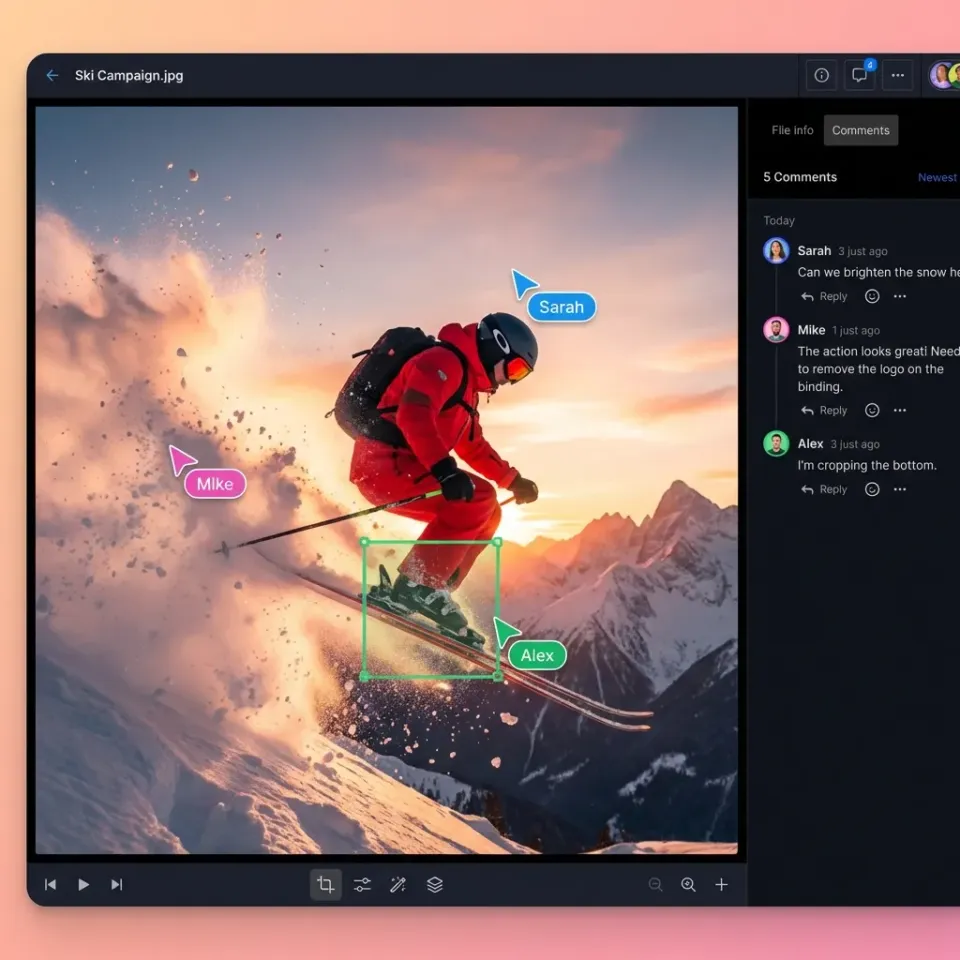
Human Validation: Reviewers check the queue of exceptions. They see the AI's guess next to the original document, which makes it easy to verify or fix. Once a person approves a file, the system records the change to get smarter.
This approach ensures people only spend time on files that actually need their attention. It turns reviewers into validators, which is a much better use of their skills.


Collaborate on Files with Your Team
Start building your AI-human triage workflow today with a consolidated MCP toolset. Start your 14-day Business Trial (credit card required; see /pricing/).
How Human Oversight Maintains 99.9% Accuracy
AI is fast, but it isn't perfect. Models can hallucinate, and OCR can misread a blurry scan. In law, medicine, or finance, even a multiple% error rate is too high. This is why human oversight is a non-negotiable part of the model.
Having a person "in the loop" keeps accuracy at multiple.9%. The system is designed to recognize its own limits. When an agent isn't sure about a date or a signature, it doesn't guess. Instead, it hands the file to a human. This prevents bad data from leaking into your database.
This also creates a natural feedback loop. Every time a person fixes an AI mistake, the model learns. If the AI struggles with one specific vendor's invoice layout, a few corrections teach it how to handle that format next time. Over time, the AI gets smarter, fewer exceptions appear, and the whole process becomes more reliable even as your file volume grows.
Overcoming Common Edge Cases in Triage
Even the best systems run into tricky scenarios. Identifying these early helps you build a workflow that doesn't break when things get complicated.
One challenge is the 'multi-topic document.' A single PDF might have an invoice bundled with a report. A basic AI might only see one of them. Smarter models handle this by splitting the document into chunks before sorting, so different parts can go to different reviewers if needed.
Bad scans and handwritten notes are also common. Modern OCR is strong, but faded ink or cursive can still cause trouble. In these cases, the system should flag the file and show the reviewer exactly where it struggled. This keeps the process moving. Finally, handling huge files over multiple needs a platform that can stream content. This ensures nobody is stuck waiting for a download to finish before they can start work.
How Fastio Enables Agentic Triage Workflows
A triage model needs a workspace where agents and humans can work together. Fastio provides the foundation for this with tools built for automated pipelines.
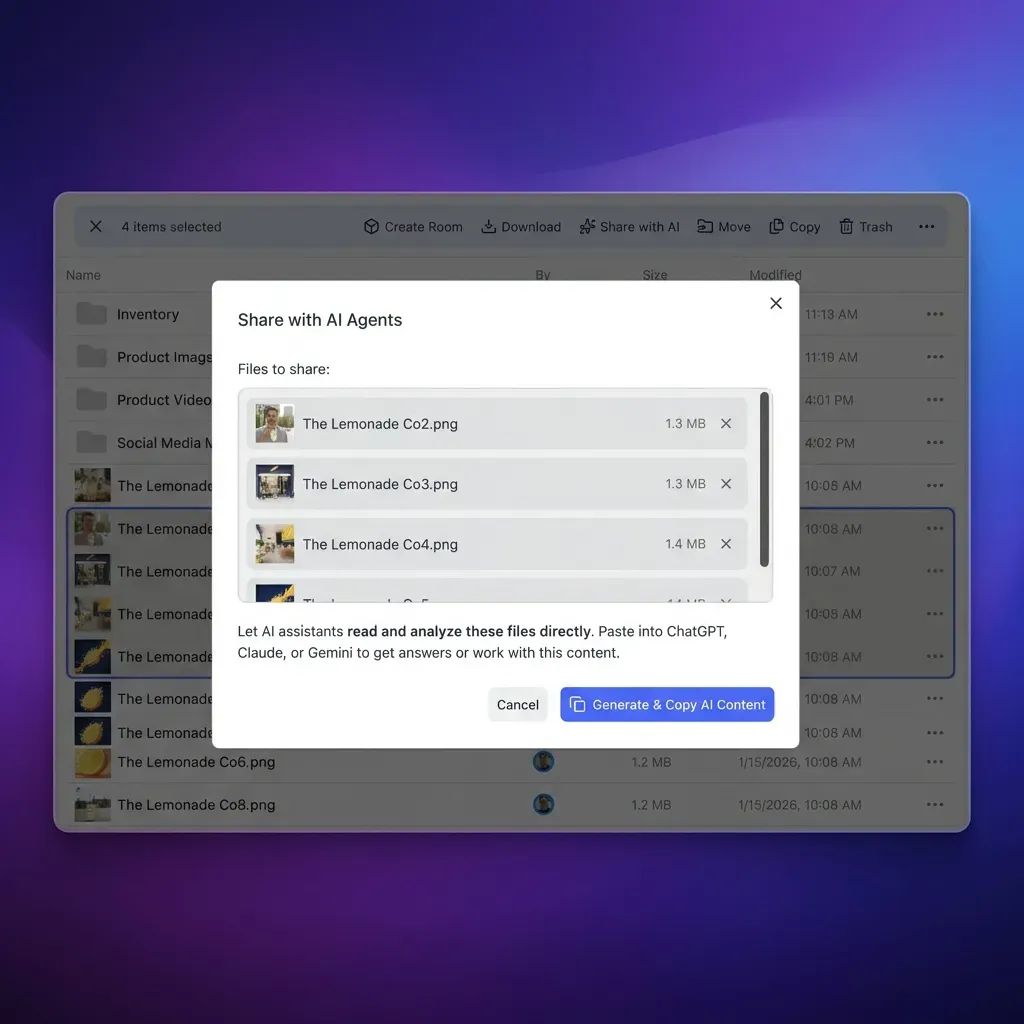
When you upload files to Fastio, they are indexed for Intelligence Mode. This means your files are ready for RAG (Retrieval-Augmented Generation) right away. AI agents can query these files to pull out data or summarize content without needing a separate database. You can ask, 'Which contracts mention a late fee over multiple%?' and get an answer with direct links to the source.
For developers, Fastio offers a consolidated MCP toolset. You can build agents that move files, create shares, and manage permissions. An agent can use get_uncovered_claims to find files that need review and then transfer_ownership to hand them to a supervisor. This smooth handoff between AI and humans is what Fastio is built for. With URL Import, you can pull files from Google Drive or OneDrive into your pipeline without local downloads, keeping things fast and secure.
Measuring Success: KPIs for Triage Workflows
To know if your triage model is working, you need to track a few metrics. Without them, it's hard to tell if the AI is improving or if your team is drowning in exceptions.
The first metric is the Automation Rate. This is the percentage of files the AI handles without any help. A healthy system should see this number rise as the model learns. The second key metric is Mean Time to Triage (MTTT). This measures how long it takes for a file to go from upload to final approval. Cutting this time makes your whole organization more responsive.
Finally, watch the Exception Rate and Human Accuracy Rate. If the exception rate is too high, your confidence settings might be too strict. If human accuracy is low, reviewers might be rushing. Finding the right balance helps you maintain both speed and precision.
Implementing Your Collaborative Triage Workflow
You don't need to change everything at once. Start by picking one type of high-volume file that takes up too much time, like receipts or client forms.
First, set up a Fastio workspace for those files. Use Intelligence Mode so everything is searchable and ready for queries. Next, define your rules. Decide exactly what details you need to pull out and what should trigger a human review. Clear rules here save a lot of time later.
Once the rules are set, deploy an agent using the Fastio MCP server. This agent will watch the workspace, process new files, and move exceptions to a review folder. Your team can check this folder daily to validate the work. As you get comfortable, you can expand the model to other departments. The system scales easily; the setup stays the same whether you're processing a hundred files or a million.

Sources
Frequently Asked Questions
How to implement AI human in the loop?
Start by using AI agents to handle the repetitive parts, like sorting files and pulling out basic data. Then, set a threshold where the AI flags any low-confidence results for a person to check. This keeps humans focused on the edge cases where judgment is needed, letting the AI handle the bulk of the work at high speed.
What is automated file triage?
Automated file triage uses AI to sort, categorize, and prioritize incoming digital files. The goal is to reduce the manual work of document management by identifying important information and routing files to the right place without needing a person to open every single one.
Can AI-human triage work with encrypted files?
AI agents need permission to read the files they process. In a triage model, files must be decrypted or accessible within a secure workspace like Fastio so the AI can read and categorize them. Once the triage is finished, you can move the files to a secure vault or re-encrypt them.
What industries benefit most from this model?
Any industry with high document volume sees immediate benefits. This includes legal teams for e-discovery, healthcare providers for medical records, and finance departments for invoice processing. It's a fit for any business spending too many hours on manual document review.
Do I need a developer to set this up?
You can handle basic file organization through the Fastio UI, but building a fully automated agent workflow usually involves the Fastio MCP server or API. This allows for custom routing and deeper integration with your other business tools.
Related Resources

Collaborate on Files with Your Team
Start building your AI-human triage workflow today with a consolidated MCP toolset. Start your 14-day Business Trial (credit card required; see /pricing/).