How to Set Up a Client Portal for Financial Advisors
Financial advisors juggle hundreds of client households, each needing secure access to statements, planning documents, and tax forms. This guide covers what a client portal actually needs to do for an advisory practice, how to evaluate portal software, and how to set one up without rebuilding your tech stack.


What a Client Portal Does for an Advisory Practice
A client portal for financial advisors is a secure, branded workspace where advisors share statements, reports, and planning documents with clients while maintaining compliance audit trails. It replaces the cycle of emailing PDFs, waiting for confirmation, and hoping nothing gets forwarded to the wrong person.
The distinction matters because advisory portals serve a different purpose than the client portals used by agencies or freelancers. An agency portal tracks project deliverables. A financial advisor portal handles sensitive financial documents under regulatory requirements that demand retention, access logging, and controlled distribution.
Most advisory firms hit a breaking point around 50 to 100 client households. Below that number, email and a shared drive can work. Above it, the manual overhead of tracking who received which document, following up on unsigned forms, and maintaining records for potential SEC or state examinations becomes unsustainable.
According to a 2023 Deloitte survey, 84% of financial advisory firms are investing in digital transformation to improve client service and operational efficiency. A client portal sits at the center of that shift because it touches every client interaction that involves a document.
The firms that get the most value from portals aren't the ones with the flashiest features. They're the ones that picked a tool matching their actual workflow: document delivery, secure collection, or both.
Helpful references: Fastio Workspaces, Fastio Collaboration, and Fastio AI.
Related guides
- How to Set Up a Tax Preparation Client PortalA tax preparation client portal is a secure online workspace where tax preparers collect documents, share returns for...
- How to Choose a Board Portal for Your Credit UnionA board portal for credit unions is a secure digital platform that helps volunteer boards manage meeting documents,...
- How to Choose Partner Portal Software That Actually Gets UsedPartner portal software gives channel partners, resellers, and distributors a single branded workspace to find sales...
- How to Choose Private Video Hosting for Your BusinessPrivate video hosting allows businesses to store and share video content with controlled access, keeping videos hidden...
- How to Set Up a Secure Client Portal for File SharingA secure client portal is a password-protected online space where businesses share files, collect feedback, and...
- How to Set Up a White Label Client Portal for Your BusinessA white label client portal is a fully brandable workspace where agencies and service businesses share files, collect...
More on this subject: Team Collaboration (125 guides)
Five Features Financial Advisors Need in a Client Portal
Not every portal feature matters equally for advisory work. CRM integrations and project management are nice, but they're not what keeps you compliant or makes clients feel confident. These five capabilities are the ones that separate a portal built for advisors from a generic file-sharing tool.
1. Audit trails with timestamps
Every document share, download, and view needs a log entry. When a state regulator or the SEC asks for proof that a client received their Form ADV or account agreement, you need more than "I emailed it." Under SEC Rule 204-2(a), RIAs must maintain true, accurate, and current records of their advisory business, with most records retained for at least five years. A portal with automatic activity logging handles this without extra work from your team.
2. Granular permissions per household
Financial advisors manage anywhere from 50 to 200+ client households, each requiring individual secure access. A couple with a joint account needs shared access to the same documents, but their adult children's trust documents should be separate. Look for folder-level or workspace-level permissions, not just all-or-nothing sharing.
3. Branded, password-protected access
Your portal is often the most frequent digital touchpoint clients have with your firm. It should carry your logo, colors, and domain, not a vendor's branding. Password protection and expiring access links add a layer of security for sensitive financial data. Branded portals also reduce the "is this a phishing link?" hesitation that comes with generic sharing URLs.
4. Secure document collection (not just delivery)
Advisory work isn't one-directional. You send quarterly reports out, but you also need tax documents, estate planning forms, and signed agreements back. A portal that only handles outbound sharing forces you back to email for inbound collection, which creates the exact security gap you were trying to close. Look for Receive or Exchange workflows that let clients upload into a controlled space.
5. Document versioning and organization
Financial planning documents get revised. A client's investment policy statement from January looks different in June after a life event. Version control prevents confusion about which document is current, and folder organization by client household keeps everything findable for both the advisor and the client.
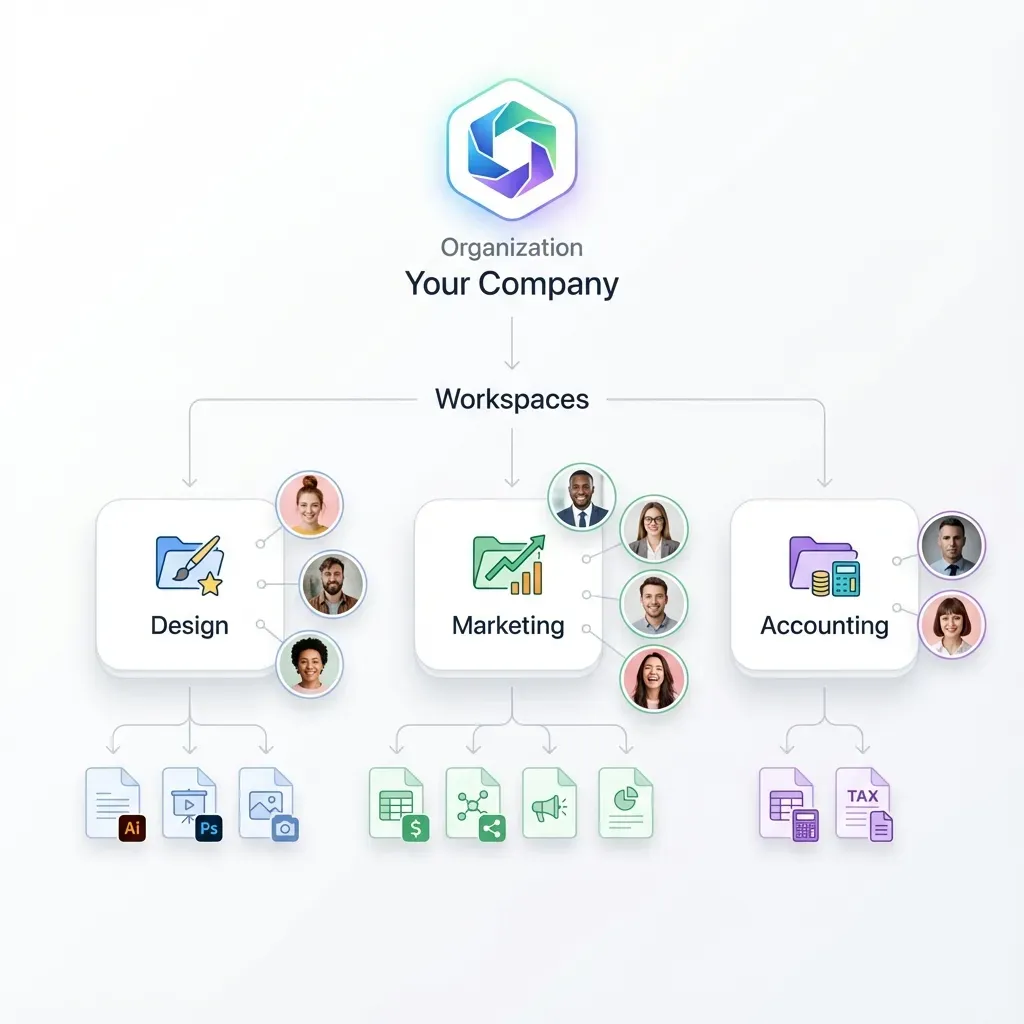
How Financial Advisors Share Documents Securely
Email is the default, but it's the wrong default. Email attachments sit in inboxes indefinitely, get forwarded without controls, and create no audit trail beyond "sent." For a practice under Regulation S-P, which governs how firms collect, store, and share clients' personal financial information, that's a compliance risk sitting in plain sight.
Here's how the better options compare for advisory document workflows:
Email with encrypted attachments
Some firms encrypt PDFs before attaching them to emails. This adds friction for clients who now need a separate password, and it still leaves documents sitting in email servers with no access logging. It's a half-measure.
Custodian portals (Schwab, Fidelity, Pershing)
Most RIAs work with a custodian that provides its own client portal. These portals handle account statements and trade confirmations well, but they're limited to custodial documents. Your financial plan, meeting notes, tax projections, and insurance reviews need a separate home.
General cloud storage (Google Drive, Dropbox, OneDrive)
These work for internal file management, but they weren't designed for client-facing document delivery. You can share folders, but you lose branded presentation, structured audit trails, and the ability to control downloads. Sharing a Google Drive link to a client's tax return feels less professional than a branded portal.
Dedicated client portal software
Purpose-built portals handle the full workflow: upload documents to a client-specific space, notify the client, track when they access it, and collect documents back. Platforms like Clinked, Citrix ShareFile, and Fastio provide this with varying levels of customization.
Fastio's approach centers on branded Content Portals with password protection, custom logos and colors, and built-in analytics that track viewer engagement and document access patterns. The portal also includes Ripley AI, which lets clients ask questions about shared documents directly inside the portal, turning a static file repository into something more useful.


Give Your Clients a Better Way to Access Their Documents
Set up a branded, password-protected client portal with audit trails and document collection. Built for client portal financial advisors workflows.
Setting Up a Portal for Your Advisory Practice
The setup process depends on your firm's size and tech stack, but the core steps are the same regardless of which platform you choose.
Step 1: Decide your folder structure
Most advisory firms organize by client household, with subfolders for document types. A typical structure looks like this:
Client Portal/
├── Smith Family/
│   ├── Financial Plans/
│   ├── Tax Documents/
│   ├── Account Statements/
│   └── Signed Agreements/
├── Johnson Trust/
│   ├── Trust Documents/
│   ├── Distribution Records/
│   └── Correspondence/
Some firms prefer organizing by document type first and client second, but per-household folders make it easier to share the right workspace with each client without exposing other households' information.
Step 2: Set permissions before uploading anything
Create each client workspace or folder with the correct access controls before you start adding documents. Fixing permissions after the fact risks a window where the wrong person could see the wrong files. For joint accounts, set up shared access for both account holders. For trust accounts with multiple beneficiaries, consider separate subfolders with individual access.
Step 3: Brand the portal
Add your firm's logo and brand colors. On Fastio, Content Portals support custom logos, color schemes, and background images. A branded portal builds trust with clients who are already wary of clicking links in emails.
Step 4: Upload and organize existing documents
Start with the documents clients ask for most often: recent account statements, the current financial plan, and any pending items that need signatures. You don't need to migrate your entire document history on day one. If you're moving from another cloud platform, Fastio's Cloud Import feature pulls files from Google Drive, Dropbox, OneDrive, and Box with folder structure preserved, which saves the manual upload process.
Step 5: Invite clients and set expectations
Send each client a personalized email (not a mass blast) explaining what the portal is, what they'll find there, and how to log in. Include a direct link and brief instructions. Expect some clients, particularly older ones, to need a phone walkthrough the first time.
Step 6: Build the portal into your regular workflow
A portal only works if you actually use it. After every client meeting, upload the meeting summary or updated plan to their portal folder. When quarterly statements arrive, add them to the portal instead of emailing. Within two to three quarters, most clients default to checking the portal first.
Evaluating Portal Software for Advisory Firms
The advisory tech market has dozens of portal options, ranging from all-in-one platforms like Advyzon and Orion to standalone document portals. Here's what to weigh when choosing.
Integration with your existing stack
If you already use a CRM like Redtail or Wealthbox, check whether the portal works alongside it. Duplicate data entry across systems is how documents end up in the wrong client's folder. That said, don't pick a mediocre portal just because it connects to your CRM. A standalone portal with good document workflows often beats a CRM's built-in portal that treats file sharing as an afterthought.
All-in-one vs. best-of-breed
Platforms like Advyzon (which ranked #1 in client satisfaction for all-in-one platforms in the 2026 T3/Inside Information Software Survey) bundle CRM, portfolio management, reporting, and a client portal together. The advantage is fewer logins and unified data. The trade-off is that each individual component may be less capable than a specialized tool.
RightCapital, for example, scores an 8.7/10 overall on the Kitces AdvisorTech benchmarks, with market-leading ratings specifically for its client portal. If portal quality is your priority, a best-of-breed approach might serve you better.
Document-first vs. portfolio-first portals
Some portals are built around portfolio reporting: clients log in to see their performance chart, asset allocation, and market commentary. Others are built around document management: clients log in to find, download, and upload files.
Most advisory firms need both, but the emphasis matters. If your clients primarily want to check their portfolio balance, a reporting-focused portal like Orion or eMoney works well. If your clients need to exchange tax documents, sign agreements, and access planning materials, a document-first portal like Fastio, Citrix ShareFile, or SuiteFiles is a better fit.
Cost structure
Portal pricing varies widely. Some platforms charge per client seat, which gets expensive quickly at 100+ households. Others charge by storage or usage. Fastio offers plans starting at $9.99/mo (Starter: 3 seats, 250 GB) alongside a 14-day Business Trial, which covers an advisory practice as it scales. Larger firms can scale up as needed.
Mobile access
Clients check documents at odd times, often on their phones. Make sure the portal works well on mobile, not just technically functional but actually usable for viewing PDFs and downloading statements. Fastio's inline previews handle PDFs, images, spreadsheets, and other common document formats directly in the browser, which reduces friction for clients who don't want to download every file.

Compliance Considerations for Advisory Portals
A client portal doesn't replace your compliance program, but the right portal makes compliance easier to maintain.
Recordkeeping under Rule 204-2
The SEC requires RIAs to keep true, accurate, and current books and records for at least five years, with the first two years in a location that allows immediate access. A portal with automatic audit trails handles the "true and accurate" part by logging every file share, download, and access event without relying on anyone to manually record what happened.
Regulation S-P and client data
Regulation S-P governs how advisory firms collect, store, and share clients' personal financial information. A portal that uses encryption, access controls, and password protection helps you meet these requirements. The key question to ask any portal vendor: can you demonstrate who accessed what, and when?
Fastio's audit trails cover file operations, memberships, and comments with timestamps. For advisory firms that need to demonstrate controlled document access during an examination, this provides the documentation trail that email and ad hoc file sharing cannot.
FINRA communication requirements
For advisors affiliated with a broker-dealer, FINRA Rule 4511 requires retention of all client communications for at least six years. If your portal includes messaging or comment features, those communications fall under this requirement. Make sure the portal retains message history rather than allowing deletion.
Data residency and encryption
Some clients, particularly high-net-worth individuals and institutional clients, ask where their data is stored and how it's encrypted. Have clear answers ready. Most modern portal platforms use AES-256 encryption at rest and TLS in transit, but verify this with your vendor rather than assuming.
What a portal doesn't solve
A portal handles document security and access logging. It doesn't handle investment suitability documentation, advertising compliance, or code of ethics monitoring. Don't let a good portal give you false confidence about areas of compliance it doesn't touch.
Sources
References used to verify factual claims in this guide.
-
84% of financial advisory firms are investing in digital transformation to improve client service and operational efficiency
-
Advyzon ranked #1 in client satisfaction for all-in-one platforms in the 2026 T3/Inside Information Software Survey
-
RightCapital scores 8.7/10 overall with market-leading ratings for client portal
-
SEC Rule 204-2(a) requires RIAs to maintain records for at least five years with first two years immediately accessible
Frequently Asked Questions
What is the best client portal for financial advisors?
It depends on whether you need a document-first portal or a portfolio-reporting portal. For document delivery and collection with branded access, Fastio, Citrix ShareFile, and SuiteFiles are strong options. For portfolio reporting with a built-in portal, Advyzon, Orion, and RightCapital lead the field. Advyzon ranked #1 in client satisfaction for all-in-one platforms in the 2026 T3/Inside Information Software Survey.
How do financial advisors share documents securely with clients?
The highly secure approach is a client portal with access controls, audit trails, and password protection. This replaces email attachments, which sit in inboxes without access logging and can be forwarded without controls. A good portal lets you share documents to a client-specific workspace, track when they view or download files, and collect documents back through a secure upload workflow.
Do financial advisors need a client portal?
Most advisory firms hit a breaking point around 50 to 100 client households where email-based document sharing becomes unsustainable. Below that, email and a shared drive can work. Above it, the compliance risk from untracked document sharing, the time spent on manual follow-ups, and the client experience gap compared to firms with portals make the investment worthwhile. A portal also simplifies SEC and state examinations by providing ready access to document delivery records.
What compliance requirements apply to financial advisor portals?
SEC Rule 204-2(a) requires RIAs to maintain books and records for at least five years. Regulation S-P governs how firms handle client financial information. FINRA Rule 4511 requires six years of communication retention for broker-dealer affiliated advisors. A portal with automatic audit trails, access controls, and encryption helps satisfy these requirements by logging every document interaction.
Can clients upload documents through a financial advisor portal?
Yes, if the portal supports two-way file exchange. Look for Receive or Exchange share types that let clients upload tax forms, signed agreements, and other documents into a controlled space. This eliminates the need to fall back on email for inbound document collection, which creates the security gap the portal was supposed to close.
How much does client portal software cost for financial advisors?
Pricing varies widely. All-in-one platforms like Advyzon and Orion bundle portals with CRM and portfolio management, typically charging per advisor seat. Standalone portal tools range from flat plans with seats included (Fastio starts at $9.99/mo for 3 seats and 250 GB, with a 14-day Business Trial) to per-user pricing that can add up quickly across 100+ client households. Evaluate total cost against your household count, not just the monthly base price.
Related Resources

Give Your Clients a Better Way to Access Their Documents
Set up a branded, password-protected client portal with audit trails and document collection. Built for client portal financial advisors workflows.