How to Pick Board Reporting Software That Saves Your Team Days of Work
Board reporting software consolidates financial data, KPIs, and committee updates into structured reports that directors can review before and during board meetings. This guide covers how to evaluate reporting tools, what belongs in a board report package, and how to cut the weeks of manual assembly that most organizations still endure.


What Board Reporting Software Actually Does
Board reporting software sits between your financial systems and your board's reading material. It pulls data from ERPs, accounting platforms, and operational tools, then formats that data into reports directors can act on.
This is different from board portal software, which handles meeting logistics like agendas, voting, and minutes. Reporting software focuses on the data side: financial consolidation, KPI tracking, variance analysis, and the assembly of the board report package itself.
Most organizations use both. The reporting tool builds the content. The portal distributes it.
According to Board Intelligence, organizations with 500M+ in annual turnover now produce board packs that exceed 300 pages. Even smaller organizations average around 180 pages. That volume creates a real problem: 54% of board members say finding key messages in board papers is like finding a needle in a haystack.
The right reporting software compresses weeks of manual data gathering into hours. The wrong choice (or no choice at all) means your finance team spends their quarter assembling PowerPoint decks instead of analyzing the numbers inside them.
Helpful references: Fastio Workspaces, Fastio Collaboration, and Fastio AI.
Related guides
- How to Compare Board Portal Software and Pick the Right OneBoard portals vary widely in pricing, features, and target audience. This guide compares the leading platforms across...
- How to Choose Board Meeting Software That Directors Will Actually UseBoard meeting software handles the full meeting lifecycle, from building agendas and distributing board packs to...
- How to Choose Board Portal Software for Your OrganizationBoard portal software replaces email attachments and shared drives with a secure, purpose-built platform for board...
- How to Build and Distribute Digital Board BooksBoard book software helps organizations compile, format, and securely distribute the document packages that board...
- How to Evaluate Board Governance Software for Your OrganizationBoard governance software helps organizations enforce corporate governance policies by tracking director terms,...
- How to Choose Board Management Software That Actually Gets UsedBoard management software centralizes meeting preparation, document distribution, voting, and governance records in one...
More on this subject: Data Rooms and Due Diligence (53 guides)
Board Reporting vs. Board Portal Software
These two categories overlap enough to cause confusion during vendor evaluation. Here's the split:
Board reporting software handles data-to-document workflows:
- Automated financial roll-ups from ERP and accounting systems
- KPI dashboards with budget-vs-actual comparisons
- Variance analysis and trend visualization
- Committee report templates (audit, risk, compensation)
- Version-controlled report assembly
Board portal software handles meeting and governance workflows:
- Agenda building and meeting scheduling
- Secure document distribution to directors
- Voting and resolution tracking
- Meeting minutes and action items
- Director communication channels
Some platforms try to cover both. Diligent Boards, for instance, combines meeting management with reporting features in its Diligent One platform. OnBoard bundles analytics dashboards alongside its portal features. But most organizations find that dedicated reporting tools like Vena Solutions or Cube produce better financial outputs, while portals like BoardEffect or Boardable handle the distribution side more cleanly.
The practical question: does your finance team need better data consolidation, or does your board secretary need better document distribution? Start with the bigger pain point.


Simplify Board Document Distribution
Organize board packs by meeting date, set director-level permissions, and keep a full version history. Fastio workspaces handle secure file delivery with built-in search across all your governance documents. Start 14-day trial. Built for board reporting software workflows.
What Belongs in a Board Report Package
A well-structured board report package follows a predictable format that directors can scan efficiently. Here's what most governance advisors recommend, and what reporting software should help you produce:
Executive Summary
One to two pages covering the quarter's critical updates, key financial results, strategic initiative progress, and decisions the board needs to make. This is the section most directors read first and sometimes the only section they read completely.
Financial Reports
The core financial package includes:
- Income statement with budget-vs-actual variance
- Balance sheet with period-over-period comparison
- Cash flow statement
- Revenue trends with visual charts
- Updated forecasts for the coming quarter
Good reporting software generates these automatically from your GL data, with consistent formatting that lets directors spot trends quarter over quarter.
Strategic Initiative Updates
Progress reports on the 3-5 initiatives the board approved in the strategic plan. Use status indicators (on track, at risk, behind) rather than lengthy narratives. Directors want to know which initiatives need their attention, not a recap of everything that went well.
Committee Reports
Audit committee findings, compensation committee updates, and governance or nominating committee notes. Each committee chair typically submits a structured summary. Reporting software with committee templates keeps these consistent and on schedule.
Risk Register
A current risk assessment with mitigation plans and compliance updates. This section has grown in recent years as boards take more active roles in cybersecurity, regulatory, and ESG oversight.
Items Requiring Approval
Specific decisions with supporting background. Include the resolution text, relevant data, and a clear recommendation from management.
Best practice is to distribute the complete package 5-7 business days before the meeting, giving directors enough time to review and prepare questions.
Features That Matter Most in Board Reporting Tools
When evaluating board reporting software, these capabilities separate useful tools from expensive shelfware:
Automated Financial Roll-Ups
The tool should connect directly to your ERP or accounting system and pull data without manual exports. Vena Solutions integrates natively with Excel, which works well for CFOs who still model in spreadsheets. Cube connects to both Excel and Google Sheets. Jedox offers broader enterprise data connections with AI-powered forecasting.
The test: can your finance team generate a draft income statement comparison without copy-pasting from three different systems?
KPI Dashboards
Static tables are hard to scan. Look for tools that visualize KPIs with trend lines, sparklines, and conditional formatting. The dashboard should show budget-vs-actual at a glance and highlight variances that exceed your thresholds.
Nasdaq Boardvantage includes real-time analytics dashboards designed specifically for public company boards. For smaller organizations, general-purpose BI tools like Tableau or Power BI can produce similar outputs, though they require more configuration.
Committee Report Templates
Standardized templates for audit, risk, compensation, and governance committees save hours each cycle. Templates enforce consistent structure so directors know exactly where to find specific information, regardless of which committee chair wrote the report.
Annotation and Commenting
Directors need to mark up reports before meetings. Look for annotation tools that preserve comments across versions, so when the CFO updates a figure, the director's question about that figure stays attached.
Version History and Audit Trails
Board packs go through multiple revision cycles. Every change should be tracked with timestamps, contributor names, and the ability to compare versions side by side. This is especially important for regulated industries where governance documentation may be subject to audit.
How CFOs Actually Build Board Reports Today
In practice, most CFOs use a layered stack rather than a single platform:
Data layer: ERP systems like NetSuite or SAP, plus accounting software, feed raw financial data into the reporting process.
Analysis layer: FP&A tools like Vena, Cube, or Jedox consolidate data, run variance analysis, and build initial dashboards. These tools works alongside Excel or Google Sheets, where most CFOs still do their actual modeling work.
Assembly layer: PowerPoint remains the dominant format for board decks. Vena offers direct PowerPoint integration that inserts live data into slides. Many CFOs still assemble decks manually, pulling charts from one tool and narrative from another.
Distribution layer: This is where the process breaks down most often. Some organizations use board portals like Diligent or OnBoard. Others still email password-protected PDFs. A surprising number use consumer file-sharing tools that lack the access controls and audit trails board governance requires.
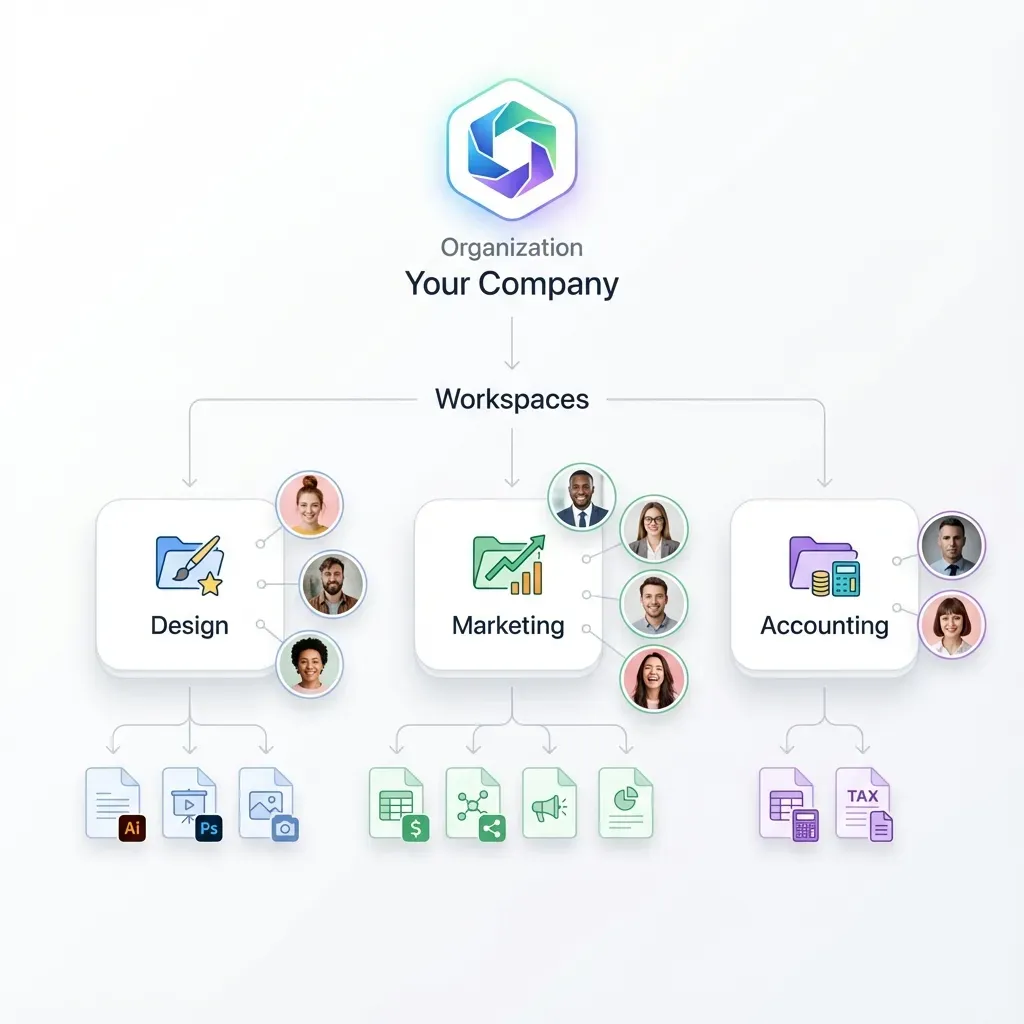
The distribution gap is where general-purpose workspace platforms can add value. Fastio, for example, handles the secure file delivery side of board reporting. Its workspace model lets you organize board packs by meeting date, set granular permissions so each director sees only their committee's materials, and maintain version history with a full audit trail. The platform's Intelligence Mode can also index board documents, letting directors search across past reports to find specific data points or decisions.
For organizations that don't need the full feature set of a dedicated board portal, a secure workspace with proper access controls and versioning can handle the distribution layer at a fraction of the cost. The tradeoff is that you won't get board-specific features like in-app voting or integrated agenda builders.

Choosing the Right Tool for Your Organization
The board reporting software market is projected to reach $7 billion by 2035, up from $2.9 billion in 2025, according to Research Nester. That growth means more options, which makes the selection process more important.
Start by mapping your actual workflow. Where does your team spend the most time? If it's data consolidation, prioritize FP&A tools with strong ERP integrations. If it's document assembly and distribution, look at board portals or secure workspace platforms. If it's both, you may need a two-tool stack.
For Enterprise and Public Company Boards
Diligent Boards is the market leader, used by roughly half the Fortune 1000. Pricing starts around $15,000 and can exceed $150,000 for large deployments with full Diligent One platform access. Nasdaq Boardvantage serves a similar market with real-time analytics features tailored to publicly traded companies.
For Nonprofits and Mission-Driven Organizations
BoardEffect (now part of Diligent) serves over 14,000 mission-driven organizations with pricing designed for nonprofit budgets. Boardable offers accessible per-user monthly plans and focuses exclusively on nonprofit governance. BoardPro offers a workflow-focused alternative for smaller boards that don't need enterprise features.
For Mid-Market Organizations
OnBoard serves over 2,000 organizations across 32 countries and offers a balance of features and cost that fits organizations between startup and enterprise. Admincontrol is strong in European markets with particular focus on EU compliance requirements.
When a General-Purpose Platform Works
Not every board needs a dedicated portal. If your board meets quarterly, has fewer than 15 members, and your primary challenge is secure document delivery rather than meeting workflow automation, a general-purpose platform with strong permissions and version control can handle the job. Fastio's workspace model supports this approach with folder-level permissions, branded file shares, and built-in document intelligence for search across board materials.
Whatever you choose, run a pilot with your actual board pack from the previous quarter. The best software evaluation happens when directors use the tool with real materials, not a vendor's demo data.
Sources
References used to verify factual claims in this guide.
-
Organizations with 500M+ turnover produce board packs exceeding 300 pages; smaller organizations average 180 pages
-
54% of board members say finding key messages in board papers is like finding a needle in a haystack
-
Board management software market projected to reach $7.06 billion by 2035, up from $2.9 billion in 2025
-
Diligent Boards used by approximately 50% of the Fortune 1000
-
Boardable pricing starts at approximately $20.99 per user per month
Frequently Asked Questions
What is board reporting software?
Board reporting software consolidates financial data, KPIs, and committee updates into structured reports for board directors. It automates the assembly of board report packages by pulling data from ERPs, accounting systems, and operational tools, then formatting that data into consistent, reviewable documents. This is distinct from board portal software, which focuses on meeting management and document distribution.
How do you create a board report?
Start with an executive summary covering critical updates and decisions needed. Add financial reports (income statement, balance sheet, cash flow) with budget-vs-actual comparisons. Include strategic initiative progress with status indicators, committee reports from audit and compensation chairs, a current risk register, and any items requiring board approval. Distribute the complete package 5-7 business days before the meeting. Reporting software automates the financial data sections and enforces consistent formatting across quarters.
What should be included in a board report?
A complete board report package includes an executive summary, financial statements with variance analysis, strategic initiative updates with on-track/at-risk status, committee reports (audit, risk, compensation, governance), a risk register with mitigation plans, and items requiring board approval with supporting data. Keep the main package under 20 pages when possible, with detailed data in appendices.
What tools do CFOs use for board reporting?
Most CFOs use a layered stack. FP&A tools like Vena Solutions, Cube, or Jedox handle data consolidation and variance analysis. PowerPoint remains the dominant format for final board decks, with some FP&A tools offering direct slide integration. Board portals like Diligent, OnBoard, or BoardEffect handle secure distribution. Many CFOs still model in Excel or Google Sheets and assemble the final package manually across these tools.
How much does board reporting software cost?
Costs vary widely by organization size. Dedicated board portals like Diligent Boards range from $15,000 to over $150,000 for enterprise deployments. Nonprofit-focused tools like Boardable offer entry-level plans billed per user per month. FP&A tools that handle the reporting side (Vena, Cube) typically price based on data volume and user count. General-purpose platforms with the right permissions and versioning features can handle board document distribution at lower cost for organizations with simpler governance needs.
How often should board reports be updated?
Most boards receive formal report packages quarterly, aligned with financial reporting cycles. However, boards increasingly expect interim updates on high-priority items between meetings. Some reporting tools offer real-time dashboards that directors can check on demand, while the formal packaged report follows the standard quarterly cycle. Distribute final packages 5-7 business days before each meeting.
Related Resources

Simplify Board Document Distribution
Organize board packs by meeting date, set director-level permissions, and keep a full version history. Fastio workspaces handle secure file delivery with built-in search across all your governance documents. Start 14-day trial. Built for board reporting software workflows.