How to Choose Board Meeting Software That Directors Will Actually Use
Board meeting software handles the full meeting lifecycle, from building agendas and distributing board packs to capturing votes and tracking action items. This guide breaks down what to look for, how the major platforms compare, and how to avoid the adoption failures that plague most board technology purchases.


What Board Meeting Software Actually Does
Board meeting software is a platform that simplifies the entire board meeting lifecycle, from agenda creation and document distribution to real-time voting, minute capture, and post-meeting action tracking. It sits between general-purpose collaboration tools and full board governance suites, focusing specifically on making meetings productive rather than managing every aspect of corporate governance.
Most organizations start with email and PDFs. The corporate secretary compiles a board pack in Word or PowerPoint, converts it to PDF, and emails it to directors a few days before the meeting. Directors print it, scribble notes in the margins, and arrive at the meeting with a stack of paper. After the meeting, someone types up minutes from handwritten notes and emails action items that get lost in inboxes.
Board meeting software replaces each step in that workflow with a structured digital process. Agendas are built inside the platform with linked documents. Directors receive notifications, open materials on a tablet or laptop, and annotate directly in the app. During the meeting, votes are captured electronically with timestamps. Minutes are drafted from structured templates, and action items are assigned with deadlines and owners.
The numbers tell the story of why this matters. According to a 2024 Board Intelligence survey, 55% of directors receive their board packs less than five working days before a meeting, and 57% say finding key messages in those packs feels like searching for a needle in a haystack. Only 25% of board professionals use specialized software for preparing and distributing materials. The rest rely on email and PDF (62%) or printed paper (13%).
That gap between how boards work and how they could work is what board meeting software addresses.
Helpful references: Fastio Workspaces, Fastio Collaboration, and Fastio AI.
Related guides
- How to Choose Board Portal Software for Your OrganizationBoard portal software replaces email attachments and shared drives with a secure, purpose-built platform for board...
- How to Evaluate Diligent Board Portal Before You BuyDiligent is the largest board portal vendor globally, serving over 700,000 board members across more than 25,000...
- How to Choose Board Management Software That Actually Gets UsedBoard management software centralizes meeting preparation, document distribution, voting, and governance records in one...
- How to Streamline Board Meeting Agendas with the Right SoftwareBoard agenda software replaces the manual cycle of drafting, revising, and distributing meeting agendas with a...
- How to Compare Board Portal Software and Pick the Right OneBoard portals vary widely in pricing, features, and target audience. This guide compares the leading platforms across...
- How to Choose a Board Portal for Your NonprofitGuide to board portal nonprofits: Nonprofit boards need the same secure document access, meeting management, and...
More on this subject: Data Rooms and Due Diligence (53 guides)
Must-Have Features for Board Meeting Software
Not every feature matters equally. Some are table stakes that every platform handles. Others separate the tools that directors love from the ones they work around. Here is what to prioritize, organized around the three phases of every board meeting.
Pre-Meeting: Agenda Building and Document Distribution
The agenda builder is the heart of any board meeting platform. You need the ability to create structured agendas with sections, time allocations, and linked supporting documents. The best tools let you build reusable templates for recurring meetings (monthly board meetings, quarterly committee reviews) so the corporate secretary isn't starting from scratch each cycle.
Document distribution should be automatic. When materials are ready, directors get a push notification on their phone and email. Late additions or document swaps should update the board pack without breaking bookmarks or annotations that directors already made.
Average board meeting preparation takes 18+ hours per meeting cycle when done manually. A good agenda builder with templates and automated distribution cuts that .
In-Meeting: Voting, Annotations, and Minutes
During the meeting, directors need to vote on resolutions with a clear audit trail. Both synchronous voting (during the meeting) and asynchronous written consent (between meetings) should be supported. Each vote needs a timestamp, the voter's identity, and the resolution text.
Annotation tools let directors highlight, comment, and take private notes directly on documents without altering the originals. The best platforms carry annotations forward when a document version is updated, so prep work isn't lost.
Minute-taking should works alongside the agenda structure. Some platforms now offer AI-assisted minute drafting that pulls from the agenda, linked documents, and recorded votes to create a first draft the secretary can edit.
Post-Meeting: Action Items and Follow-Up
Every board meeting generates action items. Software that captures these during the meeting, assigns owners, sets deadlines, and tracks completion across meetings eliminates the "whatever happened to that thing we discussed last quarter" problem.
The follow-up workflow should include status reports that roll into the next meeting's agenda automatically. Directors should be able to see open items from previous meetings without digging through old minutes.
Cross-Phase: Security and Mobile Access
72% of board members prefer digital meeting materials over paper packets, but only if the experience works on their devices. Native iOS and Android apps with offline access are essential. Directors prepare for meetings on flights, in cars, and in hotel rooms where connectivity is unreliable. If the app requires an internet connection to read documents, it fails the real-world test.
Security needs to match the sensitivity of the materials. Board packs routinely contain financial projections, M&A discussions, executive compensation data, and strategic plans. At minimum, you need encryption in transit and at rest, multi-factor authentication, granular document-level permissions, and remote wipe capability for lost devices.
How Board Meeting Software Pricing Works
Board meeting software pricing is one of the most opaque markets in enterprise software. Most vendors require a sales conversation, and pricing models vary enough that direct comparison takes real effort.
Enterprise Platforms ($15,000 to $100,000+ per year)
Diligent is the market leader, trusted by over 700,000 directors across 25,000 organizations. Pricing is quote-based and scales with the number of entities, boards, and directors. At this tier you get dedicated support, advanced security certifications, subsidiary management, and governance analytics. OnBoard competes in the upper mid-market with a cleaner interface and faster implementation. Both require a sales conversation for pricing.
Mid-Market Platforms ($3,000 and up)
BoardEffect (now part of the Passageways family alongside OnBoard) targets nonprofits and mid-sized organizations. BoardPro publishes pricing at $165 per board per month. I'mBoard starts at $30 per seat per month. These platforms cover the core meeting lifecycle without the full governance suite that enterprise buyers need.
Small Organization Platforms ($1,000 and up)
Boardable publishes pricing starting around $20.99 per user per month, positioning itself as the transparent alternative for nonprofits and small boards. The tradeoff is fewer governance features and limited committee management compared to enterprise options.
What Drives Cost Up
Several factors push pricing beyond the base quote: multiple subsidiary boards, data residency requirements, single sign-on integration, custom branding, advanced analytics, and training. Some vendors charge separately for onboarding, which can add thousands to year-one costs.
The Real
Cost: Failed Adoption The most expensive board meeting software is the tool directors refuse to use. If the interface is confusing or the mobile app is clunky, board members forward documents to personal email, which defeats every security measure you paid for. When comparing platforms, weight the director experience as heavily as the feature list. A $5,000 tool that directors open weekly beats a $50,000 tool they work around.



Secure Document Sharing for Your Board
Fastio workspaces give your board granular permissions, full audit trails, and AI-powered document search across all meeting materials.
How to Run a Board Meeting Virtually
Virtual and hybrid board meetings became standard during 2020 and never fully reverted. Most boards now run a mix of in-person, virtual, and hybrid meetings depending on the agenda and director availability. Running them well requires more than just adding a video call link to the calendar invite.
Before the Meeting
Distribute the board pack at least five business days before the meeting. This is the single biggest factor in productive virtual meetings, because directors who haven't read the materials turn the meeting into a read-along instead of a discussion. Use the software's notification system to confirm who has opened the materials and follow up with anyone who hasn't.
Set clear expectations for camera-on participation. Virtual meetings lose engagement quickly when half the board is off-camera. Share the video conferencing link, dial-in numbers, and any technical setup requirements (browser version, app download) at least a week in advance so directors aren't troubleshooting audio during the first ten minutes.
During the Meeting
Assign a meeting facilitator separate from the chair. The chair runs the discussion. The facilitator manages the technology: screen sharing documents, launching votes, monitoring the chat for questions from directors who can't unmute, and switching between presenters. Trying to do both roles simultaneously degrades the quality of both.
Use the software's built-in voting rather than voice votes or "raise your hand" features. Electronic voting creates the audit trail your governance team needs and eliminates ambiguity about who voted which way. For sensitive votes, the platform should support anonymous balloting.
Keep presentations short. Virtual attention spans are shorter than in-person ones. If a committee chair needs to present a report, ask them to record a 5-minute video summary that directors watch before the meeting, then use the live time for questions and decisions.
After the Meeting
Distribute draft minutes within 48 hours while the discussion is fresh. Use the software's action item tracker to assign follow-ups immediately, with owners and deadlines visible to the full board. Schedule a brief check-in (15 minutes, not a full meeting) at the midpoint before the next board meeting to review progress on open items.
Record the meeting if your bylaws allow it, but clarify retention policies. Some organizations keep recordings for a defined period, others delete them after minutes are approved. Your board meeting software should handle this automatically based on your retention rules.
Comparing Board Meeting Software Platforms
The market splits into tiers based on organization size, governance complexity, and budget. Here is how the major platforms compare on the features that matter most for the meeting lifecycle.
Diligent Boards
The largest vendor by market share. Diligent covers the full governance lifecycle: board meetings, committee management, entity management, D&O questionnaires, board evaluations, and compliance workflows. The meeting features include agenda building, document annotation, electronic voting, and AI-powered meeting summaries. The platform serves complex organizations with multiple boards and subsidiaries. The tradeoff is implementation time (weeks to months) and pricing that reflects the enterprise market.
Best for: Public companies, large nonprofits, and organizations with complex governance structures.
OnBoard
OnBoard focuses on accessibility and speed. The interface is cleaner than most enterprise competitors, and implementation typically takes days rather than weeks. Features include agenda building, shared annotations, board assessments, secure messaging, voting, and video conferencing integration. OnBoard is trusted by over 6,000 organizations.
Best for: Mid-market organizations that want enterprise-grade features without enterprise-grade implementation timelines.
BoardEffect
BoardEffect built its reputation in the nonprofit and healthcare sectors. The platform handles committee management, document distribution, and meeting workflows with a focus on ease of use for non-technical board members. 24/7 library access lets trustees review materials on their own schedule.
Best for: Nonprofits, healthcare organizations, and associations with volunteer board members.
Boardable
Boardable is the most price-transparent option in the market. The agenda builder includes customizable templates, time allocation per agenda item, and task assignment. The platform prioritizes simplicity over governance depth, which makes it a good fit for organizations with straightforward meeting cycles.
Best for: Small nonprofits and organizations with a single board and limited committee structure.
Board Intelligence
Board Intelligence differentiates with AI-powered minute writing and board pack analysis. The platform helps corporate secretaries draft better board papers and provides analytics on how directors engage with materials. It is newer to the market but growing quickly among organizations focused on board effectiveness.
Best for: Organizations prioritizing board paper quality and director engagement analytics.
General-Purpose Workspace Platforms
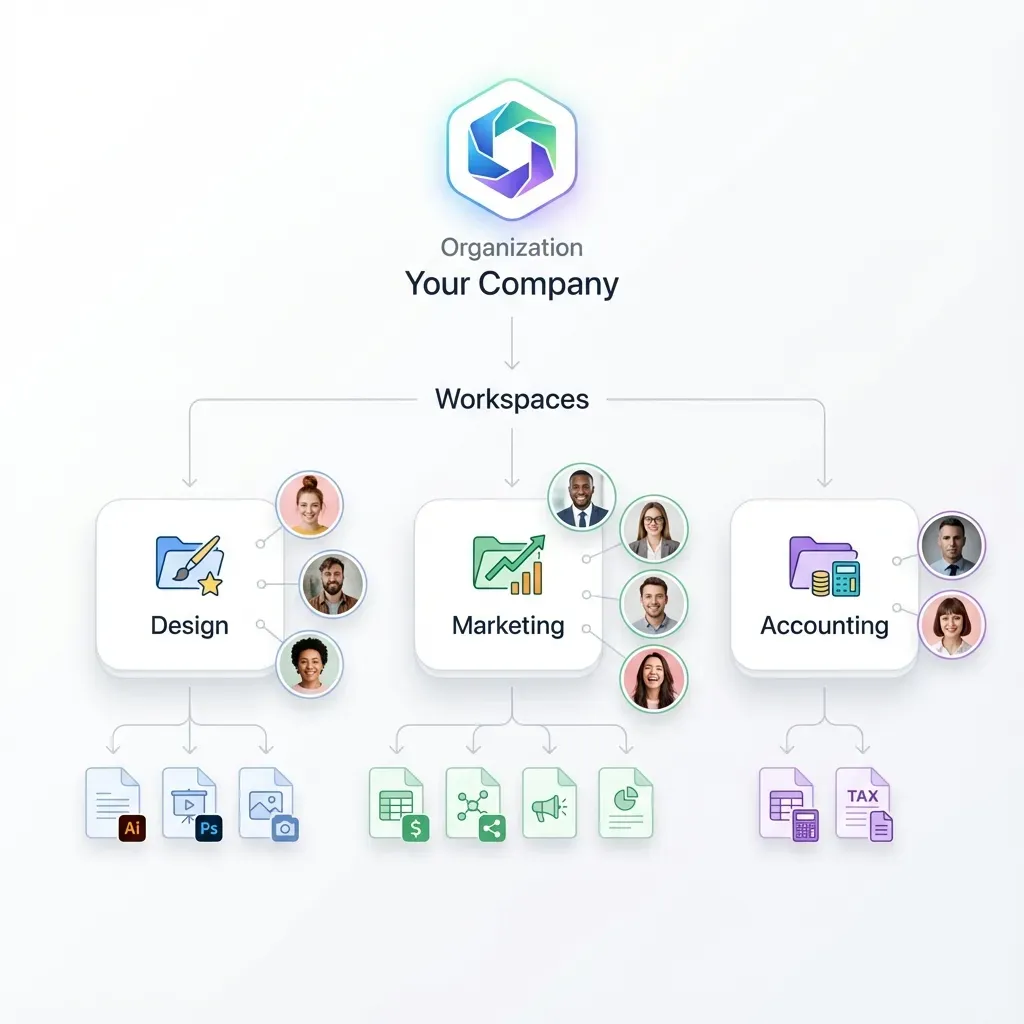
Some organizations find that general-purpose platforms with strong security and document management features cover their board meeting needs at a lower cost. Fastio, for example, offers granular permissions at the organization, workspace, folder, and file level, full audit trails, branded content portals for distributing board materials, and file version history to coordinate board pack updates safely. When Intelligence is enabled, uploaded documents are automatically indexed so directors can search across all board materials or ask questions about specific documents and get answers with citations to exact pages. This approach works best for boards that need secure document distribution and structured collaboration without the full committee management and compliance certification stack.
Avoiding the Most Common Board Meeting Software Mistakes
Board technology purchases fail more often from poor planning than poor software. Here are the mistakes that derail implementations.
Buying for the Admin, Not the Director
Corporate secretaries choose the software, but directors determine whether it succeeds. A platform that makes the secretary's life easier but frustrates directors during meetings will fail. Include at least two directors in the evaluation process and run a pilot where they complete real tasks: find next meeting's agenda, annotate a document, cast a vote on their phone.
Overbuying Features
A 15-person nonprofit board does not need entity management, ESG reporting, or subsidiary governance tools. Buying an enterprise platform because it "has everything" means paying for complexity that confuses users and slows adoption. Match the tool to your actual governance workflow, not the one you aspire.
Skipping the Offline Test
Demo the mobile app on airplane mode. If directors cannot download an entire board pack on WiFi and read it offline, the app fails the most common real-world use case. This single test eliminates more bad options than any feature checklist.
Ignoring Integration Requirements
Board meeting software does not exist in isolation. Check whether the platform works alongside your calendar system (Outlook, Google Calendar), your video conferencing tool (Zoom, Teams, Webex), your e-signature provider (DocuSign, Adobe Sign), and your existing file storage. Every manual step between systems is a point where directors drop off.
Treating Training as Optional
Directors are busy people who sit on multiple boards. They will not read a 40-page user manual. Plan for a 30-minute hands-on training session before the first meeting on the new platform, with a printed quick-reference card (yes, paper) they can keep at their desk. Follow up individually with any director who hasn't logged in within the first two weeks.
Not Planning the Transition
Run the old and new systems in parallel for one meeting cycle. Let directors see the same materials in both formats so they can build confidence with the new tool while still having their familiar fallback. Cut over completely after the second meeting. Lingering parallel systems create confusion about which version is current.
Sources
References used to verify factual claims in this guide.
-
55% of directors receive board packs less than five working days before meetings, and 57% say finding key messages feels like searching for a needle in a haystack Only 25% of board professionals use specialized software for preparing and distributing materials, while 62% rely on email and PDF
-
Diligent serves over 700,000 directors across 25,000 organizations
-
The board management software market is projected to grow from $2.55 billion in 2025 to $5.56 billion by 2034 Organizations achieve ROI from board management software in about 14 months on average
Frequently Asked Questions
What software do boards use for meetings?
The most widely used platforms are Diligent Boards (the market leader serving over 700,000 directors), OnBoard, BoardEffect, and Boardable. Enterprise and public company boards typically use Diligent or OnBoard for their governance depth and security features. Nonprofits and smaller organizations often choose BoardEffect or Boardable for their simpler interfaces and more transparent pricing. Some organizations use general-purpose workspace platforms with strong permissions and audit trails instead of dedicated board software.
How do you run a board meeting virtually?
Distribute the board pack at least five business days early using your meeting software's notification system. Assign a separate meeting facilitator to manage the technology while the chair runs the discussion. Use electronic voting for formal resolutions instead of voice votes. Keep presentations short by asking committee chairs to pre-record summaries. Distribute draft minutes within 48 hours and assign action items with deadlines immediately after the meeting.
What is the best platform for board meetings?
The best platform depends on your organization's size and governance complexity. Diligent Boards is the strongest choice for public companies and large organizations with multiple subsidiaries. OnBoard offers a cleaner interface for mid-market organizations. BoardEffect serves nonprofits and healthcare organizations well. Boardable is the most affordable option for small boards with straightforward meeting cycles. Evaluate based on your actual workflow rather than feature count.
How much does board meeting software cost?
Pricing ranges from entry-level tiers for small-organization platforms like Boardable to $100,000 or more annually for enterprise deployments of Diligent. Mid-market options like BoardPro start at $165 per board per month. Most enterprise vendors require a sales conversation for pricing. The biggest cost driver beyond the subscription is adoption failure, because a tool directors refuse to use provides zero return regardless of price.
What is the difference between board meeting software and board portal software?
Board meeting software focuses on the meeting lifecycle, including agenda creation, document distribution, in-meeting voting, minute capture, and action item tracking. Board portal software is a broader category that also covers governance workflows like D&O questionnaires, board evaluations, entity management, and compliance reporting. Most vendors offer both capabilities, but organizations with simpler governance needs may only need the meeting-focused features.
Can board meeting software replace email for board communications?
Yes, and that is one of the primary benefits. Board meeting software provides secure messaging channels that keep sensitive discussions off personal email. Directors receive materials through the platform instead of as email attachments, which prevents forwarding to unauthorized recipients and creates an audit trail of who accessed what. The platform's notification system replaces the back-and-forth emails about meeting logistics, document updates, and voting deadlines.
Related Resources

Secure Document Sharing for Your Board
Fastio workspaces give your board granular permissions, full audit trails, and AI-powered document search across all meeting materials.