How to Evaluate Board Governance Software for Your Organization
Board governance software helps organizations enforce corporate governance policies by tracking director terms, managing conflict-of-interest disclosures, maintaining voting records, and producing audit-ready compliance reports. This guide covers how governance software differs from general board management tools, what features governance officers should prioritize, and how to run a selection process that satisfies both the boardroom and the compliance team.


What Board Governance Software Does
Board governance software is a compliance-focused platform that helps organizations manage the regulatory, legal, and procedural obligations of their boards of directors. While general board management tools handle the logistics of meetings, agendas, and document sharing, governance software goes further. It tracks director terms and committee assignments, automates D&O questionnaire distribution, maintains immutable voting records, enforces policy review cycles, and generates the audit trails that regulators expect.
The distinction matters because governance failures carry real consequences. The SEC brought 583 enforcement actions in fiscal year 2024, resulting in $8.2 billion in financial remedies. Many of those actions traced back to inadequate governance infrastructure: missing disclosure records, inconsistent voting documentation, or boards that couldn't demonstrate they followed their own policies. For governance officers, general counsel, and corporate secretaries, the right software isn't about making meetings run smoother. It's about building a defensible record of how decisions were made, who was involved, and what disclosures were on file at the time.
The market for governance-specific tools has matured . Enterprise platforms like Diligent and Nasdaq Boardvantage now offer integrated governance, risk, and compliance (GRC) capabilities alongside traditional board portal features. Mid-market tools like OnBoard and Govenda have added governance modules to compete. The $106 average cost-per-click for "board governance software" reflects how much enterprise buyers are willing to spend to solve this problem, and how competitive the vendor landscape has become.
Helpful references: Fastio Workspaces, Fastio Collaboration, and Fastio AI.
Related guides
- How to Choose Board Portal Software for Your OrganizationBoard portal software replaces email attachments and shared drives with a secure, purpose-built platform for board...
- How to Evaluate Diligent Board Portal Before You BuyDiligent is the largest board portal vendor globally, serving over 700,000 board members across more than 25,000...
- How to Compare Board Portal Software and Pick the Right OneBoard portals vary widely in pricing, features, and target audience. This guide compares the leading platforms across...
- How to Build and Distribute Digital Board BooksBoard book software helps organizations compile, format, and securely distribute the document packages that board...
- How to Choose Board Management Software That Actually Gets UsedBoard management software centralizes meeting preparation, document distribution, voting, and governance records in one...
- How to Pick Board Reporting Software That Saves Your Team Days of WorkBoard reporting software consolidates financial data, KPIs, and committee updates into structured reports that...
More on this subject: Data Rooms and Due Diligence (53 guides)
What to check before scaling board governance software
These terms get used interchangeably by vendors, but they solve different problems. Understanding the difference prevents you from buying a tool that handles meetings well but leaves your governance team scrambling before an audit.
Board management software handles operational logistics. It builds agendas, compiles board books, distributes meeting materials, and tracks action items. The focus is on making the meeting cycle efficient: scheduling, document preparation, annotations, and minutes capture. Directors care about the experience. The corporate secretary cares about the workflow.
Board governance software adds a compliance and oversight layer on top of those logistics. It provides D&O questionnaire management with automated reminders and tracking. It maintains a policy library with version control and attestation records. It logs formal votes with timestamps and creates audit-ready reports. It tracks director terms, committee rotations, independence classifications, and conflict-of-interest disclosures. Some platforms also include entity management for tracking subsidiaries, registered agents, and annual filings across jurisdictions.
In practice, most modern platforms market both capabilities. The question is which side the vendor prioritizes. A tool that started as a meeting management app and bolted on governance features will feel different from one built around compliance workflows that also handles board books.
Here's a practical test: ask the vendor to show you how a governance officer would prepare for an SEC examination. If the answer involves exporting data from six different screens into a spreadsheet, the governance features are afterthoughts. If the platform can produce a consolidated compliance report with voting records, disclosure histories, and policy attestations from a single view, governance is actually built into the product's architecture.
Core Features Governance Officers Need
Not every feature matters equally. Some are table stakes for regulatory compliance, others differentiate vendors, and a few are marketing additions that governance teams rarely use in practice. Here's what to prioritize.
D&O Questionnaire Management
Director and Officer questionnaires are the foundation of corporate governance compliance. They document related-party transactions, outside board memberships, potential conflicts of interest, and other disclosures that affect director independence classifications. The best governance platforms automate the entire questionnaire lifecycle: distribution on a set schedule, automated reminders to directors who haven't responded, change-tracking between annual submissions, and a searchable archive for audit purposes. Diligent and Nasdaq Boardvantage both offer built-in D&O workflows. Govenda includes similar functionality at a lower price point.
Voting Records and Resolution Tracking
Every formal board action needs a documented record. Governance software should capture the resolution text, who voted, how they voted, any abstentions or recusals due to conflicts, and the final outcome with a timestamp. This applies to both in-meeting votes and written consent resolutions between meetings. The audit trail should be tamper-proof and exportable. E-signature integration (native or through services like DocuSign) simplifies consent resolutions.
Policy Library with Attestation Tracking
Boards maintain dozens of governance policies: codes of conduct, insider trading policies, whistleblower procedures, related-party transaction policies, and more. Governance software should provide a centralized policy library with version control, scheduled review cycles, and attestation tracking that records when each director acknowledged each policy. Without this, proving that directors actually reviewed and accepted current policies requires digging through old emails.
Compliance Calendar and Deadline Management
Regulatory filings, annual meeting deadlines, director term expirations, policy review dates, and D&O questionnaire cycles all need tracking. A governance-specific compliance calendar aggregates these deadlines in one place with automated reminders. This prevents the scramble that happens when a proxy filing deadline approaches and nobody can confirm whether all director disclosures are current.
Board Evaluations and Skills Assessments
Many governance codes require annual board self-assessments. The software should support customizable evaluation questionnaires, anonymous response collection, and aggregate reporting that identifies governance gaps without singling out individual directors. Skills matrix tracking helps boards identify competency gaps in areas like cybersecurity, ESG, or financial expertise, which is increasingly relevant as the SEC and institutional investors scrutinize board composition.
ESG and Sustainability Reporting
Environmental, social, and governance reporting has moved from optional to expected. Nasdaq offers ESG integration through its OneReport platform. Diligent includes sustainability tracking within its broader GRC suite. For organizations that don't need a full ESG platform, the governance software should at least provide a structured place to track ESG metrics, committee oversight assignments, and disclosure readiness.



Secure Document Sharing for Your Board
Fastio gives boards a secure workspace with granular permissions, detailed activity logs, and branded portals for board document access. Enable intelligence to let directors search and ask questions about board materials instantly. Built for board governance software workflows.
Vendor Landscape and Pricing
Board governance software pricing is notoriously opaque. Most enterprise vendors require a sales conversation, which makes comparison shopping difficult. Here's what the landscape looks like in 2026.
Enterprise Tier ($15,000 to $100,000+ per year)
Diligent is the market leader, serving over 700,000 directors across 25,000 organizations. Its "Diligent One" platform combines board management, governance, risk, compliance, and entity management. Pricing scales with the number of entities, boards, and directors. Expect pricing to start around $15,000 for a single-board organization, with add-on modules (entity management, risk oversight, ESG) running $5,000 to $25,000 each.
Nasdaq Boardvantage positions itself as an all-inclusive alternative. Its pricing model bundles all features without per-module upcharges. Integration with Nasdaq's governance and compliance ecosystem, including OneReport for ESG, gives it an edge for publicly traded companies already using Nasdaq services. AI-powered summarization of board materials is a recent addition.
Mid-Market Tier ($5,000 and up)
OnBoard (by Passageways) competes on usability and speed of deployment. Its analytics and business intelligence features help governance teams track engagement with board materials. Custom pricing based on organizational size.
Govenda (formerly BoardBookit) offers dedicated governance features, including D&O questionnaires, digital voting, and compliance tracking, at a lower price point than the enterprise incumbents. It's popular with mid-size companies and credit unions.
Azeus Convene supports the full meeting and governance cycle with pricing that scales depending on deployment size. Used widely by government agencies and listed companies globally.
Small Organization and Nonprofit Tier ($1,000 and up)
Boardable offers the most transparent pricing in the market, starting at $20.99 per user per month. It prioritizes simplicity over governance depth, making it a fit for nonprofits and small organizations with basic compliance needs.
What Drives Cost Up
The number of subsidiary boards or committees, data residency requirements, single sign-on integration, custom branding, and advanced analytics all increase pricing. Training and onboarding fees can add several thousand dollars in the first year. Some vendors charge separately for API access or integrations with other GRC tools.
Implementation and Adoption Strategy
The most common failure mode for governance software isn't choosing the wrong vendor. It's a rollout that doesn't account for how directors actually work.
Map Your Governance Workflow First
Before talking to vendors, document your current governance operations. How many boards and committees operate? What's the D&O questionnaire cycle? How are voting records currently maintained? Where do policies live? Who tracks compliance deadlines? This baseline reveals which features you need immediately versus which ones can wait.
Run a Director Pilot
Directors are the hardest user group to onboard because they're busy, often non-technical, and accustomed to their current workflow. Before committing to a vendor, run a pilot with 3 to 5 directors. Ask them to complete realistic tasks: review a board pack on their phone, complete a D&O questionnaire, cast a vote on a resolution, and find a specific policy in the library. Structured feedback from this pilot predicts adoption rates far better than feature checklists.
Phase the Rollout by Committee
Start with the governance or nominating committee since they're the most motivated users. Get them comfortable, document the workflow, then expand to audit, compensation, and the full board. Each committee has different needs, and phasing gives you time to configure the platform for each one.
Plan for the Compliance Transition
Moving governance records from legacy systems (spreadsheets, shared drives, email archives) to the new platform requires careful planning. Prioritize migrating current-year D&O questionnaires, active policies, and recent voting records. Historical archives can move in phases. Make sure the migration preserves audit trails: the date a director signed a questionnaire in the old system should transfer to the new one.
Assign a Platform Owner
Every successful governance software deployment has a dedicated owner, usually the corporate secretary or governance officer. This person maintains the compliance calendar, distributes questionnaires on schedule, ensures voting records are complete, and serves as the first point of contact when directors have questions. Without clear ownership, even the best platform falls into disuse within two quarters.
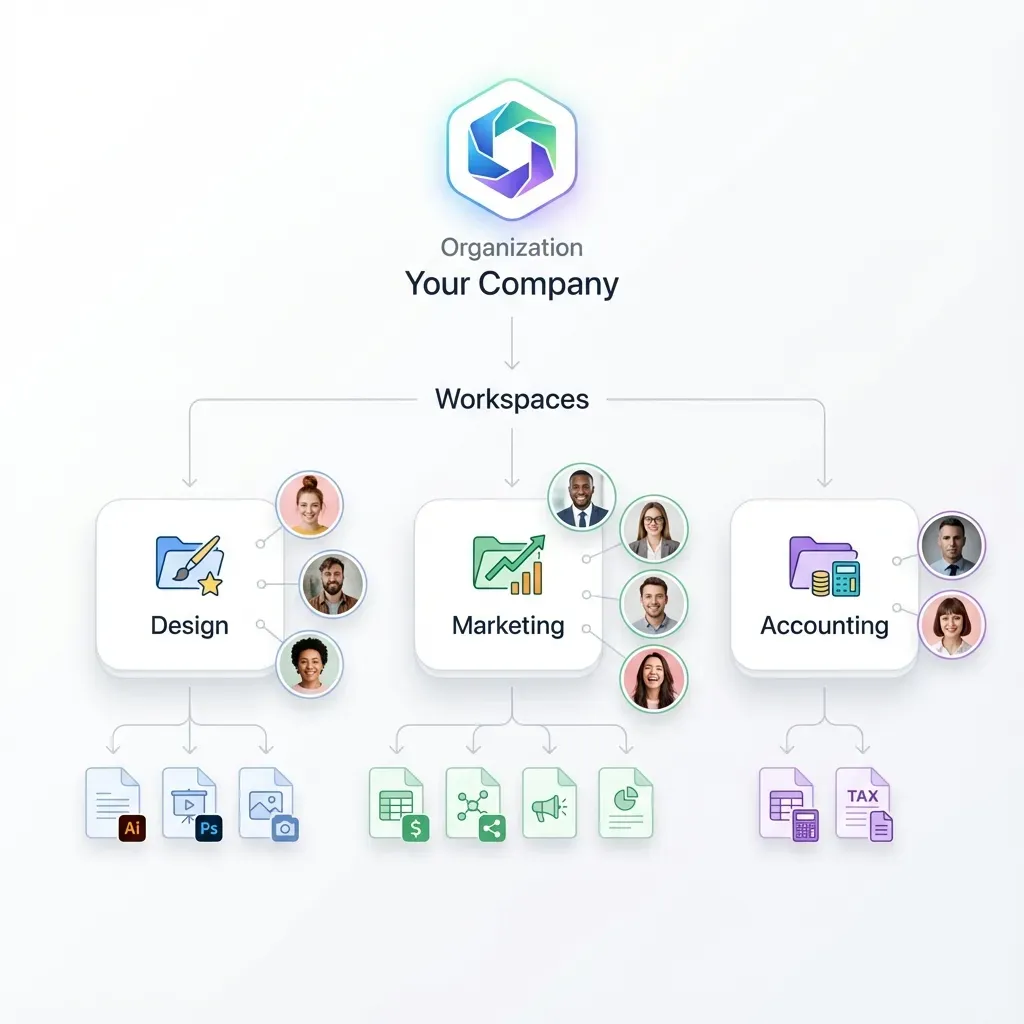
For organizations that need secure document sharing and basic governance workflows without the full enterprise governance stack, general-purpose workspace platforms can fill the gap. Fastio, for example, offers granular permissions at the organization, workspace, folder, and file level, detailed activity logs, branded portals for client and board access, and file version history with restore. When intelligence is enabled on a workspace, uploaded documents are automatically indexed for semantic search and AI-powered Q&A, so directors can ask questions about board materials and get answers with citations to specific pages. This approach works well for organizations that primarily need a secure, auditable document hub rather than full D&O questionnaire management and entity tracking.

Governance Challenges Ahead
The regulatory environment for corporate governance is shifting in ways that affect software requirements. Understanding these trends helps you choose a platform that won't need replacing in two years.
Cybersecurity as a Board-Level Responsibility
The SEC's 2026 examination priorities explicitly call out board-level cybersecurity oversight. Examiners are reviewing governance structures, vendor oversight programs, and preparedness for AI-driven cyber threats. Governance software should support tracking cybersecurity committee assignments, recording board-level risk discussions, and documenting oversight activities in a format that satisfies examiners.
AI Governance and "AI Washing" Risk
As organizations adopt AI tools across operations, the SEC is scrutinizing firms that overstate their AI capabilities, a practice regulators call "AI washing." Boards need governance infrastructure to document AI oversight decisions, track AI risk assessments, and maintain records of how the board evaluated AI-related disclosures. Several governance platforms have added AI-powered features (meeting summarization, report analysis) while simultaneously becoming the system of record for AI oversight decisions.
ESG Reporting Fragmentation
The EU's Corporate Sustainability Reporting Directive (CSRD) requires detailed sustainability disclosures from companies operating in Europe. The US approach remains fragmented. Organizations operating across jurisdictions need governance software that can track multiple ESG reporting frameworks simultaneously and document which disclosures the board reviewed and approved.
Personal Liability for Directors
Regulatory trends point toward increased individual accountability. The SEC has signaled a focus on intentional wrongdoing by individuals rather than relying on large corporate settlements. PwC's 2025 Annual Corporate Directors Survey found that 55% of directors believe at least one board colleague should be replaced. These pressures increase the importance of maintaining complete, defensible governance records that document each director's participation, disclosures, and voting history.
Compliance Resource Fatigue
Research indicates that 61% of compliance teams report experiencing regulatory complexity and resource fatigue, dealing with too many overlapping requirements across jurisdictions without sufficient staff to track them all. Governance software that automates deadline tracking, questionnaire distribution, and compliance reporting helps governance teams manage expanding obligations without proportionally expanding headcount.
Sources
References used to verify factual claims in this guide.
-
The SEC brought 583 enforcement actions in fiscal year 2024, resulting in $8.2 billion in financial remedies
-
Diligent serves over 700,000 directors across 25,000 organizations
-
55% of directors believe at least one board colleague should be replaced
-
61% of compliance teams report experiencing regulatory complexity and resource fatigue
Frequently Asked Questions
What is board governance software?
Board governance software is a platform that helps organizations enforce corporate governance policies by managing D&O questionnaires, tracking director terms and conflicts of interest, maintaining voting records, enforcing policy review cycles, and producing audit-ready compliance reports. It goes beyond general board management tools by focusing on regulatory compliance and oversight rather than meeting logistics.
What are the key features of corporate governance tools?
The most important features are D&O questionnaire management with automated tracking, tamper-proof voting records with timestamps, a policy library with version control and attestation tracking, compliance calendar with deadline management, board evaluation questionnaires, and ESG reporting capabilities. The specific features you need depend on whether you're a public company, private organization, or nonprofit.
How do you ensure board compliance?
Board compliance requires a combination of governance processes and technology. Distribute D&O questionnaires on a regular schedule and track completion. Maintain a policy library with documented attestations from each director. Record all formal votes with proper audit trails. Track compliance deadlines centrally. Run annual board evaluations. Governance software automates these workflows and creates the documentation trail that regulators expect during examinations.
What is the difference between board management and board governance software?
Board management software handles operational logistics like meeting scheduling, agenda building, board book distribution, and minutes capture. Board governance software adds compliance capabilities on top, including D&O questionnaire management, voting record archives, policy attestation tracking, compliance calendars, board evaluations, and entity management. Most modern platforms offer both, but vendors prioritize one side or the other in their product design.
How much does board governance software cost?
Pricing ranges from basic platforms like Boardable (starting at $20.99 per user per month) to $100,000 or more per year for enterprise deployments of Diligent with multiple add-on modules. Mid-market options like OnBoard, Govenda, and Azeus Convene typically start around $5,000 annually. The number of boards, committees, data residency requirements, and integration needs all affect pricing.
Do small organizations need governance software?
Small organizations with active boards benefit from some level of governance tooling, even if they don't need enterprise-grade features. At minimum, they need a secure place for board documents, a way to track votes, and basic compliance records. Budget-friendly platforms like Boardable or general-purpose workspace tools with granular permissions and audit trails can meet these needs without the cost of full governance suites.
Related Resources

Secure Document Sharing for Your Board
Fastio gives boards a secure workspace with granular permissions, detailed activity logs, and branded portals for board document access. Enable intelligence to let directors search and ask questions about board materials instantly. Built for board governance software workflows.