How to Choose the Best MCP Servers for Logistics and Supply Chain
Logistics MCP servers give AI agents direct access to supply chain data, inventory files, and shipping documents. By connecting tools like Fastio, PostgreSQL, and filesystem servers to your AI, you can automate order processing, track shipments, and manage warehouse documents at scale. This guide compares the best MCP servers for logistics and supply chain operations, with practical examples for each use case.

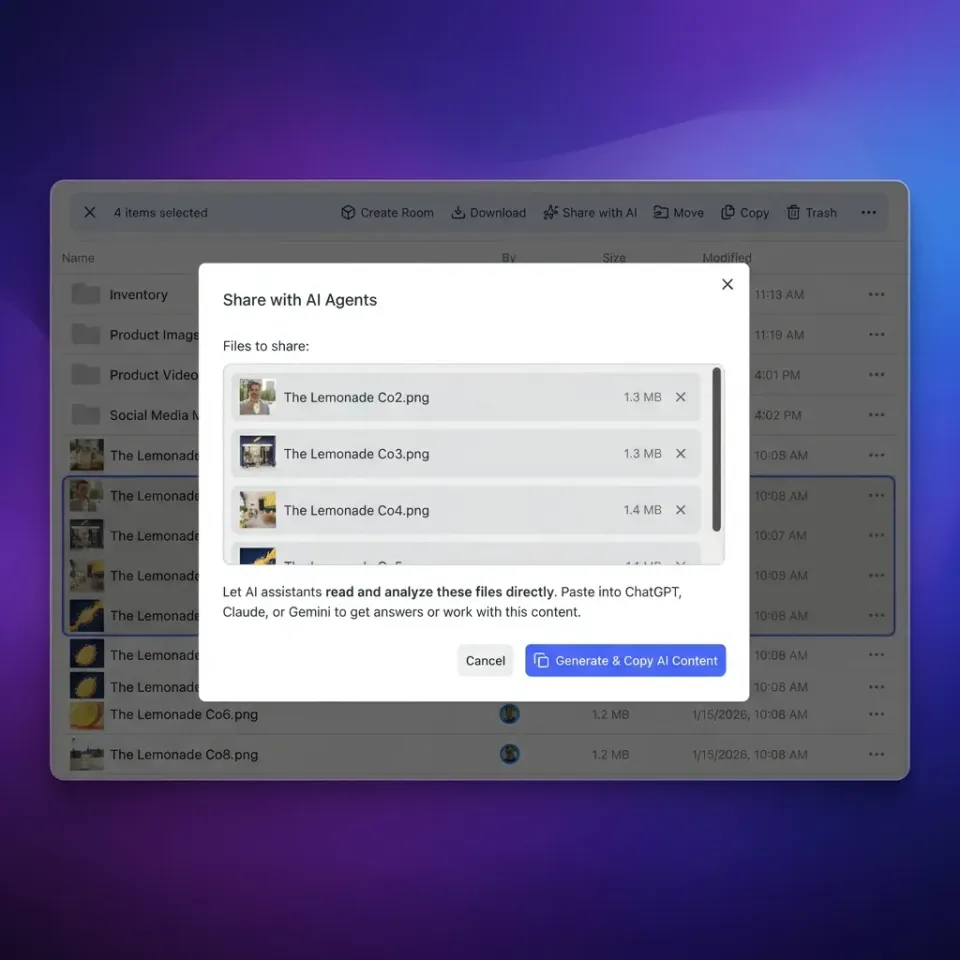
Why Logistics MCP Servers Matter
A logistics MCP server connects an AI model to your supply chain systems, enabling agents to read shipping documents, update inventory records, and process orders automatically. Without an MCP server, logistics teams manually transfer data between systems, which is slow and prone to errors. With the right MCP stack, an AI agent can monitor warehouse feeds, flag stock shortages, and generate shipping labels without human intervention.
MCP servers simplify supply chain file access for agents by providing a standardized interface to databases, document storage, and API-based logistics platforms. According to the Model Context Protocol documentation, these servers transform AI from a simple chatbot into an autonomous logistics coordinator. By exposing tools like read_inventory, update_order_status, or generate_shipping_label, agents can execute complex workflows while respecting your existing permissions and security policies.
This matters because logistics operations generate enormous amounts of unstructured data: PDFs of bills of lading, spreadsheets of inventory counts, and JSON feeds from shipping carriers. An MCP server lets your AI agent work with all of these formats in one unified workflow.
Helpful references: Fastio Workspaces, Fastio Collaboration, and Fastio AI.
Related guides
- How to Choose the Best MCP Servers for Data AnalysisData analysis MCP servers allow LLMs to directly query databases and execute analysis scripts securely. By connecting...
- Best MCP Servers for Image Processing: Top 9 Tools for AI AgentsImage processing MCP servers give AI agents tools to read, analyze, edit, and generate images. This guide reviews 9 top...
- Best MCP Servers for Communication in 2026MCP servers for communication give AI agents the ability to send messages, manage threads, handle email, and interact...
- How to Automate Social Media with MCP ServersSocial media MCP servers connect AI agents to X, LinkedIn, and Instagram. Agents used to just write text. Now they read...
- Top 10 MCP Servers for Production AI AgentsMCP servers help production AI agents call tools securely via the Model Context Protocol. They use streamable HTTP or...
- How to Choose the Best MCP Servers for Sales TeamsSales teams today juggle an average of 10 different tools to close deals, creating data silos that slow down outreach....
More on this subject: MCP and Model Context Protocol (238 guides)
What to check before scaling best mcp servers for logistics
We evaluated the leading MCP servers based on logistics-specific capabilities, ease of integration with existing systems, and support for multi-agent workflows. Here are the essential servers for building AI-powered logistics operations.
Most logistics agents combine Fastio for document storage with a database server for structured inventory data. This hybrid approach handles both the unstructured files (invoices, BOLs, customs forms) and the structured data (SKU counts, order statuses, carrier tracking) that logistics operations generate.
Helpful references: Fastio Workspaces, Fastio Collaboration, and Fastio AI.

1. Fastio MCP Server: The Logistics Foundation
Fastio serves as the central hub for logistics document management and agent memory. Unlike local storage solutions, it provides persistent cloud storage that works across sessions and team members, making it ideal for multi-agent logistics workflows.
Why it works for logistics:
- Consolidated MCP toolset: Comprehensive file operations including read, write, copy, move, and search across all document types logistics teams handle.
- File Locks and Version History: Agents can acquire an advisory file lock before updating manifests, renew it with heartbeats, and release it when finished. If another agent holds the lock, attempts return HTTP 409 so the caller can wait, while version history preserves every revision.
- Multiplayer Presence: See which team members or agents are currently working in a workspace, preventing duplicate efforts on the same orders.
- Built-in RAG: Intelligence Mode automatically indexes logistics documents. Ask "Where is the pending shipment to warehouse B?" and get cited answers from uploaded shipping manifests.
- Persistent Workspaces: Agents get dedicated cloud workspaces with granular permissions, enabling autonomous logistics workflows that persist between sessions. For logistics teams, Fastio acts as the document repository where bills of lading, customs forms, and packing slips live. Agents can retrieve these documents, extract relevant data, and take action based on what they find.
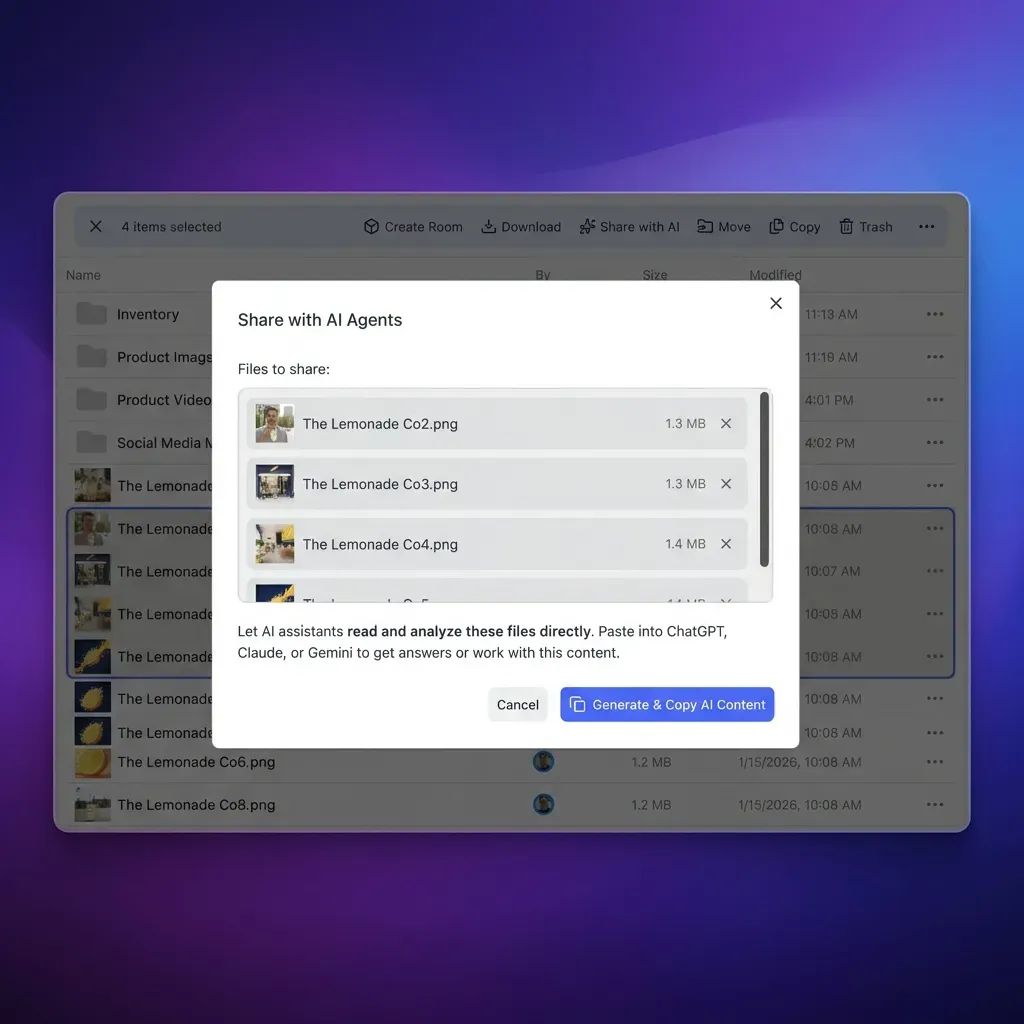


Run Logistics Workflows on Fastio
Use advisory file locks, multiplayer presence, and consolidated MCP tools to manage your supply chain. Built for mcp servers logistics workflows.
2. PostgreSQL MCP Server: Inventory Database Integration
PostgreSQL is the industry standard for inventory management systems. Its MCP server connects your AI agent directly to the database that tracks SKUs, stock levels, and order statuses across your entire supply chain.
Key Strengths:
- ACID Compliance: Ensures data integrity for financial transactions and inventory counts. When an agent reserves stock, you know the reservation is reliable.
- Complex Queries: Support for JOINs, window functions, and subqueries lets agents answer questions like "Show me all items with stock below reorder point that have active purchase orders."
- JSONB Support: Modern logistics systems often store flexible data (package dimensions, custom attributes) in JSONB columns. PostgreSQL handles this natively.
- Concurrency: Multiple agents can query and update inventory simultaneously without blocking each other.
Use the PostgreSQL MCP server when your logistics operation needs real-time inventory accuracy and complex reporting. Configure the agent with read-only queries for reporting tasks, and use transactional access only for critical operations like order fulfillment.
Consider how this fits into your broader workflow and what matters most for your team. The right choice depends on your specific requirements: inventory volume, team size, security needs, and how you collaborate with external partners.
3. Filesystem MCP Server: Processing Shipping Documents
Logistics operations generate enormous numbers of documents: PDFs of bills of lading, Excel spreadsheets of customs declarations, and text files of carrier tracking updates. The Filesystem MCP server gives your AI agent direct access to these documents.
Best Use Cases:
- Document Extraction: Read PDFs and extract key data (shipper, consignee, weight, hazardous materials flags) for automated entry into inventory systems.
- Batch Processing: Process multiple shipping documents in sequence, generating reports or updating databases based on the contents.
- Template Generation: Read template files and populate them with order data to generate shipping labels or customs forms. The Filesystem MCP server is essential for logistics because so much of the industry still runs on document exchange. An agent that can read, understand, and extract data from these documents transforms manual data entry into automated processing.
Security Tip: In logistics, restrict the filesystem server to specific directories containing shipping documents. Never give broad filesystem access to an AI agent.
Consider how this fits into your broader workflow and what matters most for your team. The right choice depends on your specific requirements: document types, team size, security needs, and how you collaborate with external partners.
4. SQLite MCP Server: Lightweight Tracking
SQLite provides a simple, portable database for logistics operations that don't need the full power of PostgreSQL. It's ideal for small warehouses, local tracking, and prototyping logistics workflows.
Best Use Cases:
- Local Tracking: Track packages or inventory in a small warehouse without setting up a database server.
- Agent State: Store the agent's internal state, such as which orders it has processed in the current session.
- Prototyping: Test logistics automation ideas quickly before deploying to production databases. While SQLite handles single-user workloads well, it struggles with the concurrent access that larger logistics operations require. Use it for lightweight tracking and agent memory, but rely on PostgreSQL or cloud databases for production inventory systems.
Consider how this fits into your broader workflow and what matters most for your team. The right choice depends on your specific requirements: inventory volume, team size, security needs, and how you collaborate with external partners.
Building a Logistics MCP Stack
Most logistics AI agents don't rely on a single server. They use a stack of complementary tools that handle different aspects of the supply chain.
The Basic Logistics Stack:
- Storage: Fastio (for shipping documents, BOLs, customs forms)
- Database: PostgreSQL (for inventory, orders, tracking)
- Processing: Filesystem (for reading documents, generating labels)
The Advanced Logistics Stack:
- Storage: Fastio with Intelligence Mode enabled
- Database: PostgreSQL with read replicas for reporting
- Processing: Filesystem + Python for custom transformations
- Orchestration: Multiple agents handling different functional areas (receiving, put-away, picking, shipping)
Start by connecting to the Fastio MCP server to handle document storage and retrieval, then add a database server depending on where your inventory data lives. The combination of Fastio's advisory file locks, audit logs, and multiplayer presence is particularly valuable in logistics, where multiple agents often work on the same orders simultaneously.
Getting started should be straightforward. A good platform lets you create an account, invite your team, and start uploading files within minutes, not days. Avoid tools that require complex server configuration or IT department involvement just to get running.
Sources
References used to verify factual claims in this guide.
-
Fastio MCP server provides a consolidated toolset for file operations
-
Fastio provides a 14-day Business Trial with plans starting at $9.99/month
-
MCP servers streamline supply chain file access for agents
Frequently Asked Questions
What is an MCP server for logistics?
An MCP server for logistics is a Model Context Protocol server that connects AI agents to supply chain systems. It provides tools for reading shipping documents, querying inventory databases, and updating order statuses. This enables AI agents to automate logistics workflows like order processing, stock monitoring, and shipment tracking.
How do MCP servers improve supply chain operations?
MCP servers improve supply chain operations by enabling AI agents to access multiple systems through a unified interface. Agents can read documents from storage, query databases for inventory data, and update order statuses without manual data entry. This reduces errors, speeds up processing, and lets human staff focus on exceptions rather than routine tasks.
Can I use multiple MCP servers for logistics?
Yes, the Model Context Protocol supports multiple active servers. A typical logistics setup uses Fastio for document storage, PostgreSQL for inventory databases, and Filesystem for processing shipping documents. The AI agent chooses the right tool for each step in the workflow.
How does Fastio handle concurrent edits by multiple logistics agents?
Fastio provides advisory per-file locks via MCP storage actions (lock-acquire, lock-status, lock-release). An agent acquires a lock before writing, heartbeats it while working, and releases it when done. A second agent trying to lock the file gets HTTP 409 and can wait, while automatic version history preserves every write.
Is Fastio suitable for logistics document storage?
Yes, Fastio is well-suited for logistics document storage. It provides persistent cloud storage for AI agents, supports common logistics document types (PDF, Excel, JSON), and offers advisory file locks alongside version history and audit logging. Once Intelligence Mode is enabled, it provides semantic search across shipping documents so agents can locate paperwork without knowing exact filenames.
Related Resources

Run Logistics Workflows on Fastio
Use advisory file locks, multiplayer presence, and consolidated MCP tools to manage your supply chain. Built for mcp servers logistics workflows.