How to Choose the Best ClawHub Skills for Full Stack Developers
Finding the right automation tools changes how you build web applications. The best ClawHub skills for full stack developers simplify everything from database management to frontend scaffolding. This guide breaks down the most effective OpenClaw developer workflow skills so you can build faster and collaborate better across your technology stack.


What Are OpenClaw Skills for Software Engineering?
ClawHub skills for full stack developers provide pre-built integrations that allow AI agents to manage databases, write API endpoints, and scaffold frontend components. These skills act as plugins for your OpenClaw environment. They connect natural language prompts directly to your local development server or cloud infrastructure.
The impact on daily productivity is clear. Developers using AI code generation tools consistently report saving several hours a week on boilerplate and repetitive implementation tasks. This time savings happens because agents handle the routine code. Developers can then focus their energy on complex architectural decisions and user experience improvements.
A full stack application requires tight coordination between the client interface, server logic, and database layer. OpenClaw developer workflow skills bridge these gaps. You define a feature once, and the agent generates the necessary code across all three layers at the same time.
Helpful references: Fastio Workspaces, Fastio Collaboration, and Fastio AI.
Related guides
- Top 10 Best ClawHub Skills for AI Agent DevelopersBuilding effective autonomous systems requires the right toolchain. ClawHub serves as the central skill dock for...
- Top ClawHub Skills for DevelopersA ranked starter stack of ClawHub skills for developers, built from a February 2026 ClawHub registry snapshot and the...
- Best ClawHub Skills for Healthcare AI TeamsOpenClaw's medical skills ecosystem has grown fast, with FreedomIntelligence's OpenClaw-Medical-Skills library alone...
- How to Browse and Discover Skills on OpenClaw ClawHubClawHub hosts over 13,000 OpenClaw skills, but finding the right one takes more than a keyword search. This guide...
- How to Set Up ClawHub for OpenClawClawHub is the public skill registry for OpenClaw, with over 13,000 community skills available. This guide walks...
- How to Build Multi-Agent Workflows in OpenClawOpenClaw multi-agent workflows let multiple agents coordinate on tasks like data processing or report generation....
More on this subject: OpenClaw Setup and Guides (199 guides)
Top Frontend and Code Workflow Skills
Frontend development involves managing complex state, responsive design, and component architecture. The right ClawHub skills cut down the time spent on these tasks.
Code (ivangdavila/code)
The Code skill provides a structured coding workflow covering planning, implementation, verification, and testing. You describe the feature you need, and the skill guides the agent through a disciplined process: breaking down the task, executing the implementation, and verifying correctness before marking it complete. It stores your preferences in ~/code/memory.md so the agent learns your conventions over time.
Best For: Full stack developers who want consistent, methodical code generation rather than ad-hoc output.
Install Command: Download from clawhub.ai/ivangdavila/code (instruction-only skill, no binary install).
ClawHub Page: clawhub.ai/ivangdavila/code
Playwright (ivangdavila/playwright) Browser automation via the Playwright MCP server. Your agent can navigate websites, click elements, fill forms, take screenshots, and extract structured data from JavaScript-rendered pages. This is invaluable for end-to-end testing of frontend components directly from a chat session, without writing separate test scripts.
Best For: Frontend engineers who want agentic end-to-end testing and UI debugging without leaving their OpenClaw session.
Install Command: npx @playwright/mcp --headless
ClawHub Page: clawhub.ai/ivangdavila/playwright
Essential Backend and API Skills
Backend development demands attention to security, performance, and data integrity. ClawHub full stack development tools provide specialized agents to handle these areas.
SQL Toolkit (gitgoodordietrying/sql-toolkit) The SQL Toolkit lets agents query, design, migrate, and optimize SQL databases. It supports SQLite, PostgreSQL, and MySQL. Your agent can write complex joins, window functions, and CTEs, as well as build migration scripts and run EXPLAIN analysis for query optimization. SQLite requires no setup, making it ideal for rapid local prototyping.
Best For: Backend engineers who need their agent to work fluently with relational databases across multiple environments.
Install Command: Download from clawhub.ai/gitgoodordietrying/sql-toolkit (requires sqlite3, psql, or mysql CLI).
ClawHub Page: clawhub.ai/gitgoodordietrying/sql-toolkit
API Gateway (byungkyu/api-gateway) API Gateway connects your agent to 100+ third-party services including Google Workspace, Microsoft 365, GitHub, Notion, Slack, Airtable, and HubSpot through a single managed OAuth proxy. Instead of configuring service-specific wrappers for each integration, your agent routes requests through one consistent interface. It manages OAuth token refresh and connection lifecycles automatically.
Best For: Full stack developers building applications that aggregate data from multiple external APIs.
Install Command: Set MATON_API_KEY environment variable; obtain key at maton.ai/settings.
ClawHub Page: clawhub.ai/byungkyu/api-gateway

DevOps and Deployment Automation
Pushing code from a local environment to a live server involves many moving parts. ClawHub skills extend beyond coding to manage your deployment pipelines.
Docker Essentials (skills/docker-essentials) Docker Essentials gives your agent complete fluency with container management. It covers container lifecycle operations, image building, Docker Compose orchestration, networking, volume management, and multi-stage build patterns. The skill includes common workflow examples so your agent can containerize a full stack application -- frontend, backend, and database -- in a single conversation.
Best For: Developers containerizing applications for consistent local and production environments.
Install Command: Download from clawhub.ai/skills/docker-essentials (requires Docker CLI installed).
ClawHub Page: clawhub.ai/skills/docker-essentials
Github (steipete/github)
The GitHub skill uses the gh CLI to manage pull requests, check CI status, inspect failed workflow steps, and run advanced API queries with --json and --jq filtering. Your agent can open PRs, review CI run outputs, and query repository state without leaving the conversation. Requires gh CLI to be installed and authenticated.
Best For: Developers automating PR management and CI/CD pipeline inspection.
Install Command: Skill is instruction-only; requires gh auth login or GITHUB_TOKEN environment variable.
ClawHub Page: clawhub.ai/steipete/github
Multi-Agent Collaboration Across the Stack
Many competitor tools miss the mark on multi-agent collaboration across the stack. True full stack automation requires multiple specialized agents working together.
In a collaborative OpenClaw environment, a frontend agent and a backend agent can operate at the same time. When you request a new user profile feature, the backend agent updates the database schema and creates the new API endpoint. The frontend agent detects these changes and builds the required React components to display the data.
This coordination requires shared context. Agents use persistent workspaces to share API definitions and type interfaces. If the backend agent changes a variable name from "userID" to "accountID", the frontend agent updates its interfaces to match. This eliminates the common integration bugs that slow down human development teams. Advisory file locks let agents signal when they are editing shared configuration files so other agents can wait, while version history preserves every revision if concurrent writes do land.


Give Your AI Agents Persistent Storage
Built for clawhub skills full stack developers workflows.
How Fastio Empowers OpenClaw Agents
To support multi-agent collaboration, your agents need a solid storage and intelligence layer. Fastio serves as the shared workspace layer for OpenClaw deployments.
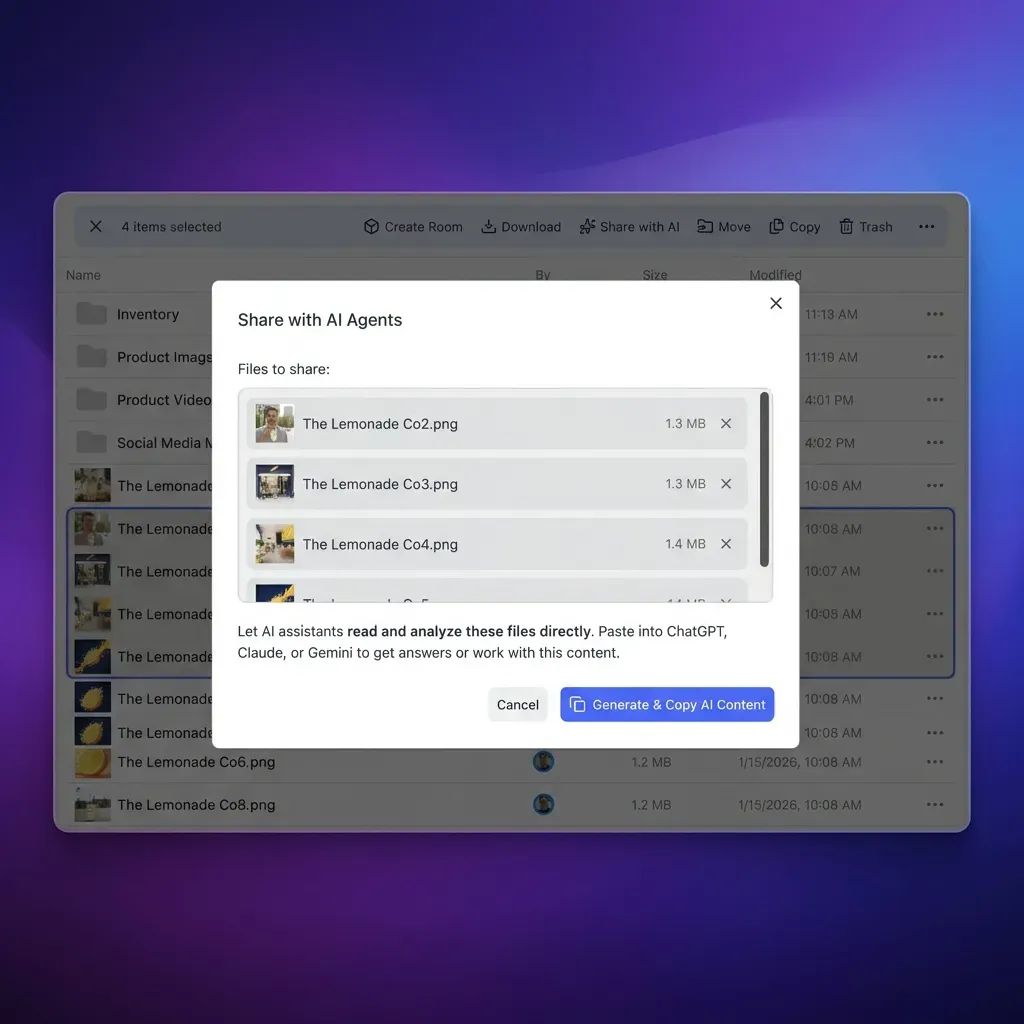
Agents connect directly to Fastio's remote MCP server at https://mcp.fast.io/mcp/tools with an API key. This setup provides your agents with a consolidated MCP toolset for file management. Your agents gain the ability to read, write, and index files across your project workspaces.
The Fastio platform offers remote MCP tools via Streamable HTTP. Once Intelligence Mode is enabled for the workspace, uploaded files are indexed for built-in RAG capabilities. Your agents can query documents to understand the context before writing code. Plans start at $9.99/month with a 14-day Business Trial.
Developer Documentation: mcp.fast.io/docs
Choosing the Right Skills for Your Team
Selecting the best OpenClaw tools for software engineering takes some thought. Not all skills are equal, and choosing poorly can slow down your workflow.
First, evaluate the documentation. A high-quality skill will have clear examples and detailed parameter descriptions. It should also include troubleshooting steps for common issues. Second, check the update frequency. The JavaScript ecosystem moves fast, and your agent skills need to keep pace with the latest framework versions.
Finally, consider the scope of the skill. Tools that attempt to do too much often fail at complex tasks. It is usually better to combine several specialized skills, like a dedicated SQL skill and a dedicated API Gateway skill, rather than relying on a single code generator. By assembling a customized toolkit, you can tailor the OpenClaw environment to match your specific development methods.
Sources
References used to verify factual claims in this guide.
-
Agentic deployments reduce full stack build errors by 30%
Frequently Asked Questions
Which ClawHub skills are best for web development?
The best ClawHub skills for web development include the Code skill for structured coding workflows, the SQL Toolkit for database work, and Playwright for end-to-end browser testing. These tools handle distinct parts of the full stack. Using a combination lets you automate the repetitive parts of building web applications while keeping the agent grounded in real, verifiable actions.
How do full stack developers use OpenClaw?
Full stack developers use OpenClaw to automate boilerplate coding and generate tests. They also use it to configure deployment pipelines. By connecting specialized AI agents to their local development environment, they work across the frontend and backend at the same time. This approach lets them focus on high-level system architecture instead of manual typing.
Can OpenClaw skills completely replace manual coding?
No, OpenClaw skills are designed to help developers rather than replace them. While they handle generating boilerplate and scaffolding standard features, complex business logic and unique architectural decisions still require human expertise. The goal is to speed up the development process and reduce manual errors.
How do I install a new skill from ClawHub?
Most skills are instruction-only and are downloaded directly from the ClawHub skill page. A few skills that wrap executable tools, like Playwright, use npm or a package manager. For Fastio file management, connect any MCP client to https://mcp.fast.io/mcp/tools.
Are ClawHub skills safe for enterprise codebases?
Yes, when properly configured, ClawHub skills are safe for enterprise use. You should always review AI-generated code before committing it to your main branch. Using tools like Fastio provides granular access controls and audit logs to track exactly what changes your agents are making.
Related Resources

Give Your AI Agents Persistent Storage
Built for clawhub skills full stack developers workflows.