How to Build Better Cloud Architecture: Best ClawHub Skills
Cloud architects use AI agents to design, provision, and audit distributed systems. The best ClawHub skills give these autonomous agents direct access to cloud APIs, documentation, and storage -- turning manual infrastructure work into code-driven workflows. This guide covers the top OpenClaw integrations so you can evaluate the right tools for your multi-agent architecture.


What Are ClawHub Skills for Cloud Architecture?
ClawHub skills for cloud architects allow agents to interact with cloud APIs, documentation, and storage to design, provision, and audit distributed infrastructure. This capability connects conversational language models directly to actual production environments.
Cloud architects use ClawHub to give their OpenClaw agents the permissions and context needed to manage complex AWS, Azure, or GCP deployments. Instead of manually writing boilerplate Terraform configurations, architects can deploy agents to scaffold the environment based on high-level architectural intent. The agents handle the repetitive syntax while the architect focuses on broader system design.
Agent-assisted infrastructure review reduces cloud security vulnerabilities through continuous oversight. Automated topology mapping also saves documentation time on every project, giving engineers hours back each week.
Helpful references: Fastio Workspaces, Fastio Collaboration, and Fastio AI.
Related guides
- Top 10 Best ClawHub Skills for AI Agent DevelopersBuilding effective autonomous systems requires the right toolchain. ClawHub serves as the central skill dock for...
- How to Choose the Best ClawHub Skills for Full Stack DevelopersFinding the right automation tools changes how you build web applications. The best ClawHub skills for full stack...
- Best ClawHub Skills for Copywriters: Top 10 RankedThe best ClawHub skills for copywriters handle repetitive tasks like web research, competitor analysis, and content...
- Top ClawHub Skills Every AI Researcher NeedsClawHub skills connect AI researchers to web search, file storage, browser automation, and documentation tools via...
- OpenClaw Architecture Explained: Gateway, Plugins, and SkillsOpenClaw runs a single TypeScript Gateway process that owns every messaging connection, routes sessions, dispatches...
- Top ClawHub Skills for DevelopersA ranked starter stack of ClawHub skills for developers, built from a February 2026 ClawHub registry snapshot and the...
More on this subject: OpenClaw Setup and Guides (199 guides)
Why Multi-Agent Systems Are Changing Cloud Design
Cloud architecture has historically been a manual process. A single architect might spend weeks translating business requirements into technical diagrams, and then turning those diagrams into deployable code. Multi-agent systems change this dynamic by parallelizing the design phase across specialized autonomous workers.
You can assign different roles to different agents. One agent focuses on network topology, checking proper subnet isolation and routing. Another handles security and compliance constraints, checking every proposed resource against organizational policies. A third agent calculates projected costs and suggests cheaper alternatives. These agents communicate with each other, debating the merits of different architectural decisions based on their constraints.
This approach requires specialized tools. An agent is only as effective as the APIs it can access. ClawHub skills provide the exact endpoints agents need to interact with cloud environments. Without these skills, agents are just conversational models limited to text output. With them, they become autonomous engineering assistants that can orchestrate complex cloud deployments.
How We Evaluated the Top OpenClaw Integrations
Finding the right ClawHub cloud architecture skill requires looking past basic API wrappers. We evaluated these tools based on three core criteria for production use in enterprise environments.
First, we looked at state management. Infrastructure as code workflows require agents to understand the current state before making changes. Skills must be able to read existing configurations and parse state files without corrupting them.
Second, we assessed read versus write capabilities. Some skills only run audits, while others can provision resources. We looked for clear boundaries and safe execution modes, ensuring agents cannot accidentally delete production databases.
Third, we considered the deployment footprint. The best openclaw infrastructure as code workflows integrate directly without requiring excessive overhead or custom authentication methods. We prioritized skills that use standard mechanisms like OAuth or established API key patterns.
1. Docker Essentials by ClawHub
Docker Essentials provides essential Docker commands and workflows for container management, image operations, and debugging. Cloud architects use it to manage container lifecycle, build images, orchestrate multi-container environments via Docker Compose, and handle networking and volumes.
Key strengths:
- Container lifecycle management (run, stop, inspect, remove)
- Docker Compose multi-container orchestration
- Network and volume management for distributed systems
- System cleanup utilities for keeping environments lean
Key limitations:
- Instruction-only; requires Docker CLI pre-installed
- Does not cover Kubernetes directly
Best for: Cloud architects managing containerized workloads and local development environments.
Pricing: Free and open source.
Teams typically use this skill to standardize how agents interact with container environments across different team members. The agent follows consistent patterns for image tagging, network naming, and cleanup, reducing the drift that occurs when multiple developers manage containers manually.
Install Command: Download from ClawHub (instruction-only skill)
ClawHub Page: clawhub.ai/skills/docker-essentials
2. Code by ivangdavila
The Code skill provides a structured workflow for writing infrastructure code -- planning, implementation, verification, and testing phases. For cloud architects, this means agents that draft Terraform or Pulumi configurations go through a deliberate plan phase before writing any HCL or Python.
Key strengths:
- Enforces plan-before-write discipline for infrastructure code
- Never auto-executes; humans approve each phase
- Stores architectural preferences locally on request
Key limitations:
- Instruction-only; does not run or apply infrastructure code
- Most effective when combined with a cloud CLI skill
Best for: DevOps engineers using agents to draft and verify infrastructure as code before human review.
Pricing: Free.
This skill changes how architects approach initial design. You can ask the agent to plan the components of a redundant web tier, review the plan, and then implement it -- with humans approving the transition to each phase. This removes the trial and error associated with new module creation.
Install Command: Download from ClawHub (instruction-only skill)
ClawHub Page: clawhub.ai/ivangdavila/code
3. Fastio Agent Workspace
Fastio provides persistent, intelligent storage and collaboration workspaces for multi-agent systems, with a consolidated MCP toolset for file management, RAG, sharing, and team coordination.
Key strengths:
- Consolidated MCP toolset via Streamable HTTP for environment control
- Ownership transfer so agents can build infrastructure documentation and hand it to human clients
- Built-in RAG and semantic search once Intelligence is enabled for the workspace
- Collaboration features: granular permissions, audit logs, and anchored annotations
Key limitations:
- Focuses on file and state coordination rather than direct cloud API execution
- Requires a Fastio account and API key
Best for: Multi-agent orchestration where output must be shared with human stakeholders.
Pricing: Plans start at $9.99/month (Starter: 250 GB storage, 3 seats, 100,000 credits/mo) with a 14-day Business Trial.
Connecting agents to Fastio's remote MCP server at https://mcp.fast.io/mcp/tools gives your agents a shared coordination layer. When a security-audit agent generates a compliance report, it saves that file into a Fastio workspace. The infrastructure-code agent then reads that exact file to generate remediation code. Fastio serves as the layer where agent output becomes team output. Once agents finish building the infrastructure plan, they transfer workspace ownership directly to the human cloud architect through a claim link.
Connection: Remote MCP at https://mcp.fast.io/mcp/tools
Developer Documentation: mcp.fast.io/docs
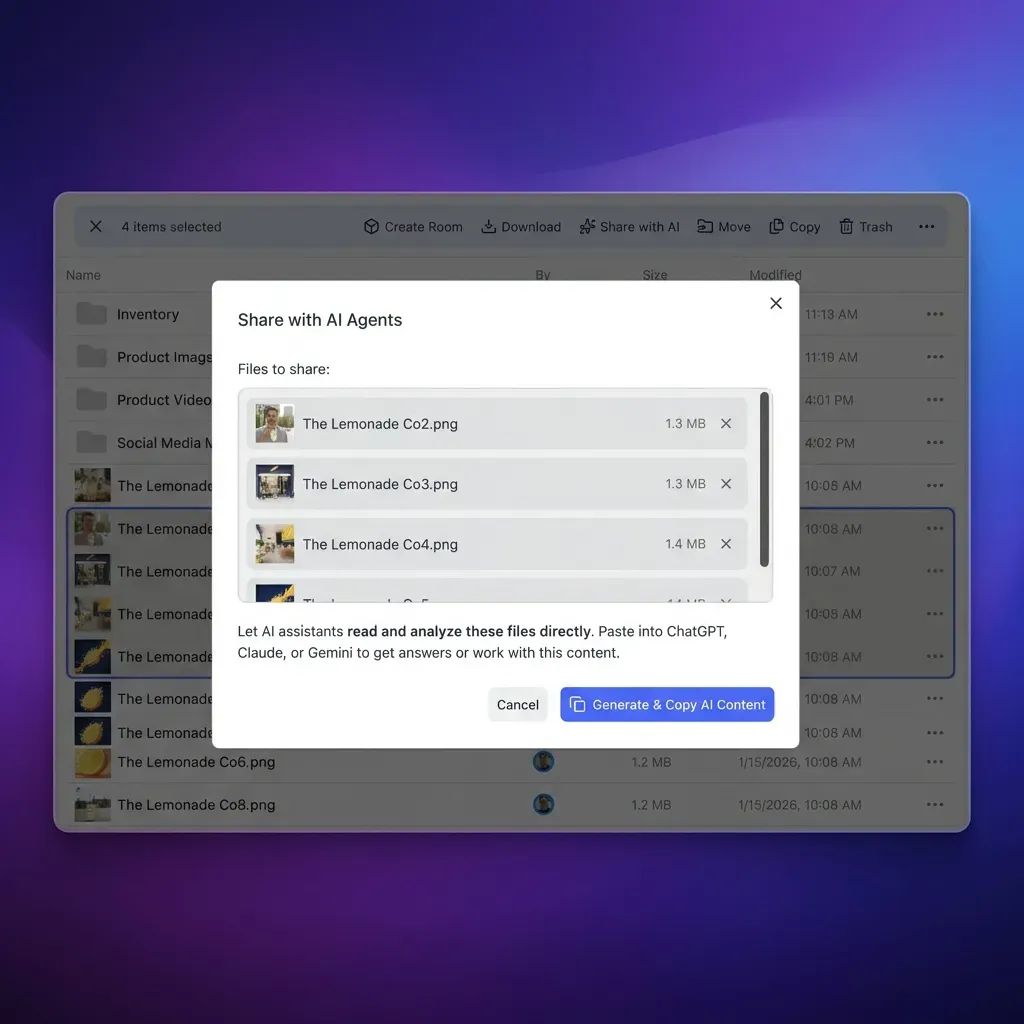


Give Your AI Agents Persistent Storage
Give your OpenClaw agents a persistent workspace to collaborate on infrastructure designs. Get generous storage today. Built for clawhub skills cloud architects workflows.
4. S3 by ivangdavila
Work with S3-compatible object storage -- covering security best practices, lifecycle policies, and access patterns across AWS S3, Cloudflare R2, Backblaze B2, and MinIO.
Key strengths:
- Presigned URL generation for sharing infrastructure artifacts securely
- Lifecycle rules for cost-efficient Terraform state and log archival
- Multipart upload handling for large infrastructure packages
- CORS configuration for browser-based tooling
- Provider-specific differences across all major S3-compatible platforms
Key limitations:
- Instruction-only; requires an S3-compatible backend
- No built-in querying or compute
Best for: Cloud architects storing Terraform state files, deployment artifacts, and audit logs at scale.
Pricing: Free and open source; backend storage costs vary by provider.
Using S3-compatible storage for infrastructure artifacts keeps state portable across providers. If your team uses Cloudflare R2 for cost or Backblaze B2 for backup, this skill covers the pattern differences so agents do not need separate instructions per provider.
Install Command: Download from ClawHub (instruction-only skill)
ClawHub Page: clawhub.ai/ivangdavila/s3
5. GitHub by steipete
Interact with GitHub using the gh CLI -- managing repositories, issues, pull requests, CI runs, and advanced API queries. Cloud architects use it to manage infrastructure-as-code repositories, review Terraform module PRs, and monitor CI pipeline status for deployment jobs.
Key strengths:
- Full PR and issue management via
gh prandgh issue - CI run inspection with failed step details via
gh run - Advanced GitHub API queries with JQ filtering
Key limitations:
- Requires
ghCLI pre-installed and authenticated - Instruction-only skill
Best for: Cloud architects who version-control infrastructure code in GitHub and want agents to manage the review workflow.
Pricing: Free.
Infrastructure code review is more rigorous when agents can inspect the CI output automatically. An agent can check whether a Terraform plan job passed, pull the output, and summarize the changes before a human architect approves the merge. This adds a verification layer without adding manual steps.
Install Command: Download from ClawHub (requires gh CLI)
ClawHub Page: clawhub.ai/steipete/github
6. API Gateway by byungkyu
Connect to 100+ APIs -- Google Workspace, Microsoft 365, GitHub, Notion, Slack, Airtable, HubSpot, Salesforce, and more -- with managed OAuth via Maton's unified proxy.
For cloud architects, this means agents can pull data from cost management dashboards, push updates to project tracking tools, and coordinate with stakeholder communication platforms -- all through a single skill.
Key strengths:
- Single skill for 100+ API connections
- Managed OAuth across all supported platforms
- All standard HTTP methods supported
- Multi-connection management for different environments
Key limitations:
- Requires a Maton API key from maton.ai/settings
- Instruction-only; agents must understand each platform's API structure
Best for: Cloud architects whose multi-agent systems need to coordinate across multiple SaaS platforms.
Pricing: Free to install; requires Maton API key.
Install Command: Download from ClawHub, set MATON_API_KEY
ClawHub Page: clawhub.ai/byungkyu/api-gateway
7. Clawdbot Security Check by TheSethRose
A comprehensive security audit skill that evaluates 12+ security domains across Clawdbot's configuration -- gateway exposure, DM policies, credentials, file permissions, and more. Provides severity-rated findings (critical, high, medium) with specific remediation guidance.
For cloud architects building multi-agent systems, hardening the OpenClaw environment is as important as hardening the cloud infrastructure itself.
Key strengths:
- Evaluates 12+ security domains with severity ratings
- Specific remediation guidance for each finding
- Extensible framework for custom security checks
Key limitations:
- Flagged by ClawHub due to metadata inconsistency around the
--fixflag -- review before installing - Focused on Clawdbot configuration, not cloud infrastructure directly
Best for: Security teams and cloud architects hardening their OpenClaw agent environments before production deployment.
Pricing: Free and open source.
Before deploying a multi-agent system to production, run this skill to audit the Clawdbot configuration. It catches common hardening gaps like exposed gateway ports or weak credential handling that could be exploited to manipulate agent behavior.
Install Command: clawdbot security audit
ClawHub Page: clawhub.ai/TheSethRose/clawdbot-security-check
Which OpenClaw Skill Should You Choose First?
Selecting the right skill depends on your operational pain points. If you need agents to draft infrastructure code safely, start with the Code skill -- it enforces the plan-before-write discipline that prevents agents from generating destructive changes without review.
If you are building a multi-agent system from scratch, the Fastio Agent Workspace is the first install. It solves the state coordination problem. Your agents need a shared place to track context, store state, and hand off finished work to human engineers. Starting with a persistent workspace ensures all other specialized skills can operate together without losing data between tool calls.
For containerized workloads, Docker Essentials handles the day-to-day container operations. Add S3 for artifact storage and GitHub for code review workflows as your system matures.
Sources
References used to verify factual claims in this guide.
-
Fastio provides generous storage and included credits for agent workspaces.
-
Fastio provides MCP tools via Streamable HTTP.
Frequently Asked Questions
How do cloud architects use ClawHub?
Cloud architects use ClawHub to install skills that connect their AI agents to cloud tools, documentation, and storage. These skills provide the tools and instructions agents need to analyze configurations, write infrastructure code, and audit security policies autonomously.
What are the best OpenClaw integrations for infrastructure as code?
The Code skill enforces a structured plan-before-write approach for drafting infrastructure code. Fastio provides the shared workspace where agent output is stored and handed off. GitHub manages the code review and CI workflow. S3 handles artifact and state file storage.
Does Fastio support OpenClaw agents natively?
Yes, agents connect directly to Fastio's remote MCP server at https://mcp.fast.io/mcp/tools using an API key. This gives your agent a consolidated MCP toolset for persistent storage, intelligent workspaces, and handoff capabilities for collaborating with human team members on architectural designs.
Can AI agents manage infrastructure as code workflows safely?
AI agents manage these workflows best when restricted to planning and drafting phases. The Code skill enforces this pattern -- agents write the code and plan the changes, while human engineers review and approve execution. Never grant agents apply or destroy permissions in production.
Are ClawHub skills difficult to build for custom cloud tools?
Building custom skills is straightforward if your cloud tools have documented APIs. OpenClaw uses the Model Context Protocol, which provides a standard way to expose internal APIs as agent tools without writing custom orchestration logic.
Related Resources

Give Your AI Agents Persistent Storage
Give your OpenClaw agents a persistent workspace to collaborate on infrastructure designs. Get generous storage today. Built for clawhub skills cloud architects workflows.