Best AI Agent Delivery Tools for 2026
AI agent delivery tools help autonomous agents package, present, and hand off their work to humans through branded portals, file shares, and notification systems. Most developers focus on building agent logic, but the "last mile" of delivering results to stakeholders often relies on raw text or clumsy JSON dumps. This guide ranks the best platforms for professional agent-to-human handoff.

Why the 'Last Mile' of AI Automation Matters
You've built an agent that can analyze market data, generate professional video assets, or audit financial records. But how does the client actually receive that work? If your agent outputs a raw S3 link or a JSON object in a terminal, the perceived value drops.
AI agent delivery tools bridge the gap between autonomous execution and human consumption. They handle packaging, presentation, and notification. Industry surveys suggest most AI agent outputs require human review before final action. A proper delivery system turns that review from a chore into something that actually works well. Effective delivery tools solve a few key problems:
- Presentation: converting raw data into branded, professional deliverables.
- Security: making sure only authorized humans can access the agent's output.
- Persistence: storing agent artifacts permanently, not in ephemeral chat windows that scroll away.
Helpful references: Fastio Workspaces, Fastio Collaboration, and Fastio AI.
Top 8 AI Agent Delivery Tools
We evaluated these tools based on their ability to handle file assets, integration ease (MCP/API), and the quality of the end-user experience.
1. Fastio
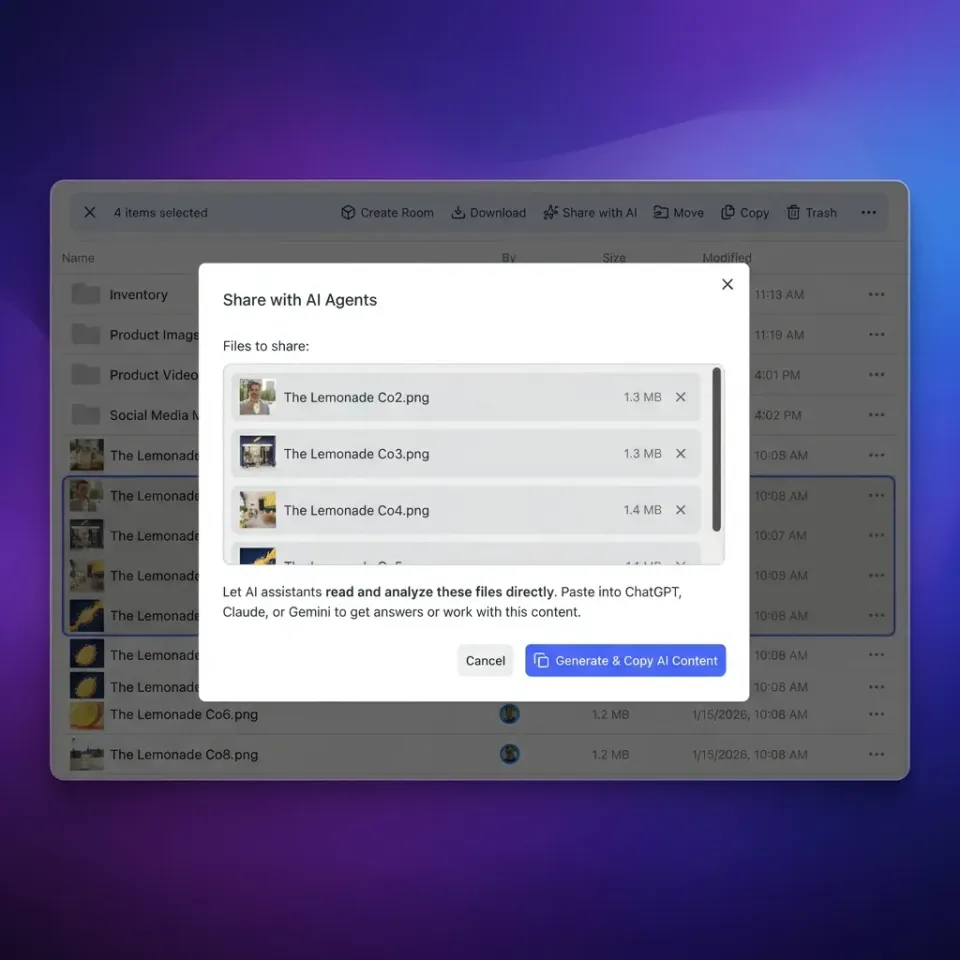
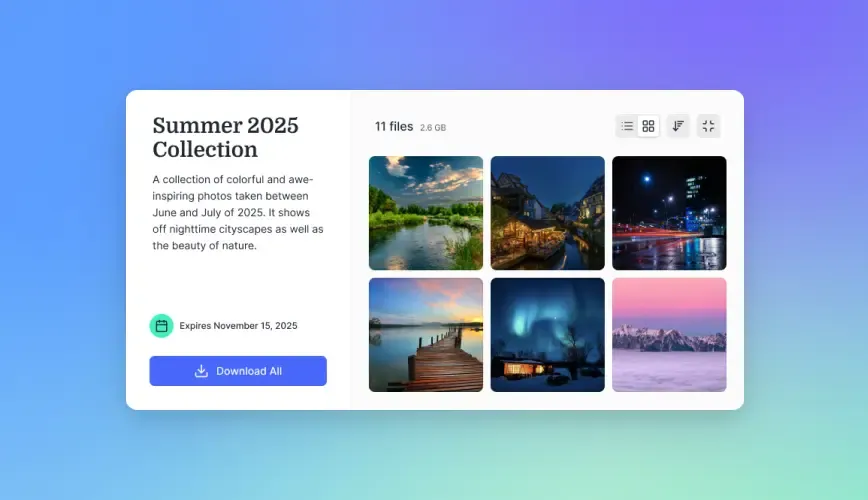
Best For: Professional file delivery, branded portals, and MCP-native storage. Fastio gives AI agents their own file system where they can store, organize, and deliver content through branded portals. Unlike standard cloud storage, Fastio treats agents as first-class users with a dedicated Model Context Protocol (MCP) server offering a consolidated MCP toolset for file manipulation.
- Pros: Native MCP support, generous storage tier for agents, branded client portals, connect any MCP client to https://mcp.fast.io/mcp.
- Cons: Focus is on files and portals, not chat-based handoff.
- Pricing: 14-day Business Trial (card required); plans start at $29/mo (see /pricing/).
2. Zapier
Best For: Notification-based delivery and multi-app routing. Zapier acts as the universal connector for AI agents. It doesn't store files itself, but it's great at routing agent outputs to where humans already work: sending an email, posting a Slack message, or creating a Trello card.
- Pros: Connects to 6,000+ apps, intuitive visual builder, reliable notification delivery.
- Cons: Can get expensive at scale; not designed for heavy file transfer.
- Pricing: Free starter plan; Professional plans start at $19.99/mo.
3. Slack
Best For: Conversational text updates and quick alerts. For agents that output text, summaries, or alerts, Slack is the most common delivery target. Using webhooks or the Slack API, agents can push updates into specific project channels and tag the right people for review.
- Pros: Immediate visibility, supports threaded discussions, "human-in-the-loop" friendly.
- Cons: Terrible for large files or permanent asset storage; message retention limits on free plans.
- Pricing: Free tier available; Pro from $7.25/mo.
4. Notion
Best For: Structured knowledge and document delivery. When an agent's output is complex (like a research report, a strategy document, or a database of leads), Notion is the ideal delivery target. Agents can use the Notion API to construct rich, formatted pages that humans can read and edit.
- Pros: Rich text formatting, database structure, collaborative editing.
- Cons: API rate limits can be restrictive for high-volume agents.
- Pricing: Free for individuals; Plus plan is priced per user per month.
5. Agentforce (Salesforce)
Best For: Enterprise service and support handoffs. Formerly Einstein, Agentforce is built for the specific use case of handing off customer service interactions from AI to humans. It preserves context, ensuring the human agent knows exactly what the AI has already attempted.
- Pros: Deep integration with Salesforce CRM, enterprise-grade security.
- Cons: Too much for non-CRM use cases; expensive enterprise pricing.
- Pricing: Custom enterprise pricing.
6. Make (formerly Integromat)
Best For: Complex routing logic and data transformation. Like Zapier, Make connects agents to apps, but with more granular control over data mapping and logic. It works well for taking raw agent JSON output and formatting it into multiple delivery channels at once.
- Pros: Visual logic builder, cheaper than Zapier for high volumes, powerful data transformation.
- Cons: Steeper learning curve than Zapier.
- Pricing: Free tier available; Core plan starts affordably.
7. Zendesk
Best For: Support ticket creation and management. For internal IT or customer support agents, Zendesk is the standard delivery endpoint. Agents can triage issues and "deliver" a categorized, prioritized ticket to the correct human queue.
- Pros: Industry standard for support, rich API, strong reporting.
- Cons: Strictly focused on ticketing workflows.
- Pricing: Starts at $19/agent/mo.
8. Google Drive
Best For: Basic file storage and shared folders. The baseline option. Agents can upload files to a shared Google Drive folder. It works, but there's no presentation layer: clients just see a messy folder of files instead of anything curated.
- Pros: Everyone has it, cheap storage, easy API access.
- Cons: API rate limits, no branding options, unprofessional "folder view" for clients.
- Pricing: Free 15GB; Business Starter $6/mo.


Give Your AI Agents Persistent Storage
Stop delivering raw JSON. Use Fastio's Business Trial to create branded portals, store persistent files, and automate the last mile of your AI workflows.
Comparing Delivery Capabilities
| Platform | Best Use Case | File Limit | Branded Portal?
| Human Handoff? | | :--- | :--- | :--- | :--- | :--- | | Fastio | Large Assets & Portals | 1GB | Yes | Yes (via Portal) | | Zapier | Notifications | Moderate | No | Yes (via Alert) | | Slack | Chat/Text | 1GB | No | Yes (Thread) | | Notion | Documentation | 5MB (API) | No | Passive | | Agentforce| CRM Support | N/A | Yes | Native | | Google Drive| Raw Storage | 5TB | No | No |
Verdict: For text and notifications, Slack + Zapier is the winning combo. For file assets, creative work, and client deliverables, Fastio is the only option with branded, persistent delivery.
How to Choose the Right Delivery Tool
Picking the right delivery tool depends on what your agent produces and who needs to see it.
1. Determine the Output Type Is your agent generating text summaries? Use Slack or Notion. Is it generating high-resolution video renders, large datasets, or PDF reports? You need a file-centric tool like Fastio or Google Drive.
2. Consider the Recipient
- Internal Team: Functional tools like Slack or Notion are fine. Efficiency matters more than polish.
- External Clients: You need branding. Sending a client a raw Google Drive link looks amateur. Use a branded portal solution to wrap the agent's work in your company's identity.
3. Check Integration Options Does the tool support the Model Context Protocol (MCP)? MCP is becoming the standard for agent connections, and MCP tools (like Fastio's) are much easier to implement than custom REST API integrations. They let agents discover the delivery tool and learn how to use it on their own.
4. Evaluate Persistence Chat logs (Slack/Teams) are ephemeral; they scroll away. If the agent's output needs to be referenced six months from now (e.g., a contract, a final video cut), it must land in persistent storage.
Automating the Hand-off with Fastio
For developers building file-generating agents, Fastio offers a direct path to professional delivery. Instead of building a custom frontend to display your agent's work, you can let the agent create a Fastio workspace programmatically.
The Workflow:
- Agent Connects: The agent connects to Fastio via MCP or API.
- Workspace Creation: The agent creates a new "Project Delivery" workspace.
- Upload: The agent uploads generated assets (images, PDFs, code) to the workspace.
- Portal Config: The agent configures a public or password-protected portal with your branding.
- Delivery: The agent generates a secure link and emails it to the client. The whole process runs without human intervention. But the client receives a polished, human-friendly deliverable that looks like it took hours to put together. > Pro Tip: Enable "Intelligence Mode" on the delivery workspace so the client can use Fastio's built-in AI to ask questions about the documents the agent delivered.
Sources
References used to verify factual claims in this guide.
-
Fastio offers a 14-day Business Trial and a consolidated MCP toolset; plans from $29/mo (see /pricing/) Fastio generous file size limits in comparison table Fastio MCP server offering a consolidated MCP toolset for agent file manipulation Branded client portals with remote MCP server support for agent workflows
-
Zapier connects to 6,000+ apps with Professional plans starting at $19.99/mo Free starter plan; Professional plans start at $19.99/mo
-
Slack Pro plan from $7.25/mo
-
Make offers a Core plan
-
Zendesk starts at $19/agent/mo Starts at $19/agent/mo * **Pricing:** Starts at $19/agent/mo.
-
Google Drive free 15GB and Business Starter $6/mo
-
Zapier supports moderate file sizes for notification-based delivery Connects to 6,000+ apps, intuitive visual builder, reliable notification delivery
-
Slack file upload limit 1GB for chat-based delivery
-
Notion API file upload limit 5MB for document delivery
Frequently Asked Questions
How do AI agents deliver files to humans?
AI agents deliver files to humans by uploading them to cloud storage, attaching them to emails, or posting them to chat platforms like Slack. More advanced agents use branded delivery portals like Fastio to present files professionally with secure access and a polished client experience.
What is the Model Context Protocol (MCP) in delivery?
The Model Context Protocol (MCP) is a standard that allows AI agents to connect to external tools like storage and delivery platforms without custom coding. An MCP-compliant delivery tool lets an agent 'plug in' and immediately start managing files, creating folders, and generating share links.
Can AI agents create their own client portals?
Yes, using tools like Fastio, AI agents can programmatically generate branded client portals. The agent creates a workspace, uploads content, applies branding settings, and generates a secure access link. It's like building a mini-website for delivery on the fly.
Related Resources

Give Your AI Agents Persistent Storage
Stop delivering raw JSON. Use Fastio's Business Trial to create branded portals, store persistent files, and automate the last mile of your AI workflows.