How AI Agents Streamline Marketing Automation Workflows
Marketing teams lose a significant chunk of their week to repetitive tasks like list cleaning, report generation, and campaign setup. AI agents change that by handling these jobs autonomously, freeing marketers to focus on strategy and creative work. This guide walks through what marketing AI agents actually do, how to set them up, and how shared workspaces solve the coordination problem that breaks most multi-agent marketing workflows.


What AI Agents Actually Do in Marketing
AI agents for marketing automation are autonomous systems that handle repetitive tasks like lead nurturing and campaign optimization. They go beyond traditional automation's "if this, then that" logic. Instead of following rigid rules, agents receive goals and figure out how to achieve them.
A traditional marketing automation rule might say: "If a contact opens the welcome email, send the follow-up three days later." An AI agent takes a different approach. You tell it: "Nurture this lead until they book a demo." The agent then decides which emails to send, when to send them, whether to trigger a retargeting ad, and when to alert a sales rep that engagement is peaking.
That difference matters because marketing campaigns have too many variables for static rules. Customer behavior shifts. Competitors launch new campaigns. Seasonal patterns change. Agents adapt to all of this without someone manually updating workflow logic.
Here's what agents handle well today:
- Lead scoring and segmentation: Agents analyze CRM data, website behavior, and email engagement to score leads and sort them into segments. High-intent leads get routed to sales immediately. Warm leads enter personalized drip sequences.
- Content generation at scale: A content agent can research trending topics, draft blog posts matching your brand voice, create email variants for A/B testing, and adapt copy for different channels.
- Campaign optimization: Agents monitor ad performance hourly, pause underperforming creatives, shift budget toward high-ROI channels, and adjust bids based on real-time data.
- Reporting and analysis: Instead of building dashboards manually, agents pull data from Google Analytics, your CRM, and ad platforms to generate weekly performance summaries.
The real power shows up when agents work together. A research agent identifies trending topics. A content agent writes the copy. An optimization agent tests variants. A distribution agent schedules and publishes. Each agent handles one job well, and the pipeline runs without manual handoffs.

Related guides
- How to Manage Marketing Assets with AI AgentsMarketing teams use AI agents in intelligent workspaces to store, version, and share AI-generated files securely. These...
- How to Set Up an AI Marketing Team Intelligence WorkspaceAI marketing team intelligence workspaces combine semantic search and agent collaboration for files. Marketing teams...
- How to Use RAG for Marketing Content PersonalizationRAG marketing content personalization retrieves relevant assets from storage to build custom campaigns on the fly....
- How to Set Up a Content Marketing Platform for Your TeamA content marketing platform is an integrated workspace where teams create, store, collaborate on, and distribute...
- How to Choose Marketing Project Management Software for Creative TeamsMarketing teams juggle campaigns, creative assets, and client feedback across dozens of tools. This guide breaks down...
- How to Choose File Storage for Martech StacksMartech stack file storage puts assets in one place across marketing tools. Marketing teams handle dozens of platforms...
More on this subject: Creative and Marketing Teams (27 guides)
Why Most Marketing Agent Setups Break Down
The concept sounds clean, but most teams hit the same wall: their agents can't share context. Each agent runs in isolation, processing its own data, storing results in its own location, and losing information at every handoff.
Consider a typical setup. Your research agent saves competitor analysis to a local folder. Your content agent needs that analysis but can't access it, so someone manually copies files over. Your optimization agent generates test results, but the content agent never sees them for the next round of writing. Every handoff leaks information.
This happens because most marketing tools weren't built for agents. HubSpot, Mailchimp, and Salesforce all have AI features now, but they're designed around human users clicking through dashboards. When you try to chain multiple autonomous agents across these platforms, you end up building custom glue code for every connection.
The common pain points:
- Siloed data: Your CRM holds lead data. Your content tool holds drafts. Your analytics platform holds performance metrics. Agents need all three, but connecting them requires custom API work for each combination.
- No shared memory: Agent A's output doesn't automatically become Agent B's input. Someone has to move files, update databases, or build integrations.
- Permission chaos: Giving agents API access to every tool in your stack creates security headaches. One misconfigured token and an agent has access to your entire CRM.
- Version conflicts: Two agents editing the same campaign asset without coordination creates merge conflicts and lost work.
These aren't theoretical problems. According to a 2026 Improvado report, marketing teams use an average of 13 different tools in their stack. Getting agents to work across even three of those tools smoothly requires more engineering than most marketing teams can handle.
The fix isn't another connector or integration platform. It's giving agents a shared workspace where they can all access the same files, search the same context, and coordinate without custom plumbing.
Setting Up AI Agents for Marketing in Shared Workspaces
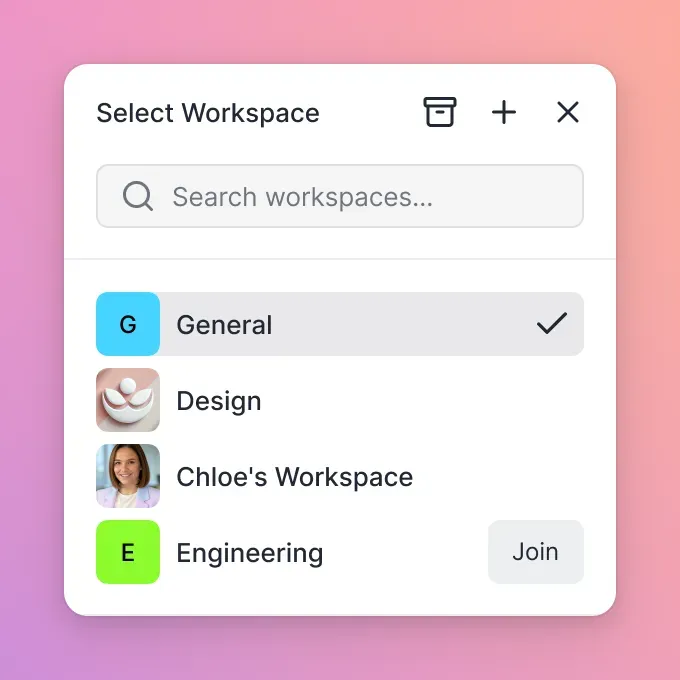
The workspace approach puts all your marketing assets, campaign data, and agent outputs in one place. Agents read from and write to the same location. Humans review and approve in the same location. No file transfers between systems.
Fastio provides this with its Business Trial: generous storage, monthly credits, and multiple workspaces during the trial. Here's how to set it up for marketing automation.
Step 1: Create Your Campaign Workspace
Sign up at fast.io/pricing and create a workspace for your marketing operations. Enable Intelligence Mode when you create it. This automatically indexes every file you upload for semantic search and AI chat, so agents can ask questions about your data without building a separate vector database.
Upload your core marketing assets: brand guidelines, buyer personas, past campaign reports, competitor analysis, product messaging docs. Once indexed, any agent can query this context with cited answers.
Step 2: Connect Your Agents via MCP
Fastio's MCP server gives agents direct access to workspace operations. Agents using Claude, GPT-4, Gemini, or any LLM with MCP support can connect through Streamable HTTP at /mcp or legacy SSE at /sse.
The consolidated MCP toolset covers file management: listing workspaces, uploading files, querying indexed content with RAG once Intelligence is enabled, and creating branded shares for review.
For example, a content agent can query your workspace: "Summarize the top-performing email subject lines from Q1 campaign reports." The response comes back with citations pointing to specific files and pages.
Step 3: Define Agent Roles with Permissions
Use granular permissions to control what each agent can access. Your research agent gets read access to competitor analysis folders and write access to a research output folder. Your content agent reads from research outputs and brand guidelines, writes to a drafts folder. Your optimization agent reads draft performance data and writes recommendations.
Advisory file locks let one agent mark an asset as in use, so a second agent that tries to lock it gets a conflict response and can wait. This matters when your content agent and optimization agent both need to update the same email template based on different inputs.
Step 4: Build the Agent Pipeline
Wire your agents into a sequence:
- Research agent pulls competitor content, trending topics, and audience data. Saves findings to the workspace.
- Content agent reads research outputs and brand guidelines. Generates email copy, blog drafts, or ad creative. Writes drafts to the workspace.
- Activity feed shows new drafts as they land, so the human marketing lead can review them before the next step.
- Optimization agent takes approved content, generates A/B test variants, and monitors performance data.
- Distribution agent schedules and publishes winning variants across channels.
Each agent reads its predecessor's output directly from the shared workspace. No file transfers, no custom integrations between agents.
Step 5: Subscribe to Workspace Events
Agents subscribe to the workspace events feed over WebSocket or long-poll and act on workspace events. When a new lead list gets uploaded to the /leads/ folder, your segmentation agent starts processing. When campaign performance data arrives, your optimization agent runs analysis.
This turns the workspace into an event-driven pipeline. Upload a file, and the right agent picks it up automatically.


Give Your Marketing Agents a Shared Workspace
Fastio's 14-day Business Trial includes MCP access for any LLM. Set up a shared workspace where your marketing agents collaborate on campaigns, access indexed content, and hand off results to your team.
Three Marketing Workflows That Work Well with Agents
Not every marketing task benefits from agents. Routine, data-heavy workflows with clear inputs and outputs are where agents deliver the most value. Here are three that work well in practice.
Full-Funnel Email Campaign
Email campaigns involve repetitive steps that agents handle faster than humans: segmenting audiences, writing personalized copy, testing subject lines, and analyzing results.
Set up four agents in one workspace:
- Segmentation agent: Reads your CRM export and website analytics. Groups contacts by behavior, purchase history, and engagement level. Writes segment definitions to the workspace.
- Copy agent: For each segment, generates personalized email sequences. Pulls brand voice guidelines and past top-performing emails from the workspace's indexed content. Writes drafts with segment-specific hooks.
- Testing agent: Creates subject line and CTA variants for each email. Recommends send times based on historical open rate data.
- Analysis agent: After sends, pulls performance data and writes a summary report. Flags underperforming segments for the copy agent to revise.
The workspace's built-in RAG means each agent builds on accumulated campaign knowledge. The copy agent doesn't start from scratch each cycle. It queries: "What messaging worked best for enterprise leads in the last two quarters?" and gets cited answers from past campaign reports.
Content Calendar Orchestration
Managing a content calendar across blog, social, email, and paid channels is coordination-heavy. Agents reduce the overhead.
A research agent monitors industry trends and competitor content weekly. A planning agent maps topics to your content calendar based on keyword opportunity and seasonal relevance. A writing agent drafts posts using your brand guidelines and SEO targets. A distribution agent adapts each piece for different channels: full blog post, LinkedIn summary, Twitter thread, email newsletter excerpt.
The key advantage over doing this manually: agents can process more data and generate more variants. A human content manager might review 10 competitor posts per week. A research agent reviews hundreds and surfaces only the relevant patterns.
Paid Media Optimization
Ad spend optimization is a natural fit for agents because the feedback loop is fast and data-rich.
A creative agent generates ad copy and image suggestions based on your brand assets. A bidding agent monitors performance metrics across Google Ads, Meta, and LinkedIn, adjusting bids and budgets based on ROAS targets. A reporting agent compiles daily performance summaries and flags anomalies like sudden cost-per-click spikes or conversion rate drops.
With all campaign assets and performance data in one workspace, these agents share context that would otherwise require custom integrations between each ad platform.
Measuring Results and Avoiding Common Mistakes
Before deploying agents, document your baseline metrics so you can measure actual impact. Track time spent on manual tasks, cost per campaign, content output volume, and campaign performance metrics.
What to Measure
The most meaningful metric is time reclaimed. If your team currently spends 15 hours per week on list cleaning, segmentation, and report generation, and agents reduce that to 3 hours, you've freed 12 hours for strategy and creative work. That's a concrete win you can track week over week.
Other useful metrics:
- Content velocity: How many campaign assets (emails, ads, blog posts) your team produces per week, before and after agent deployment
- Campaign turnaround time: Days from campaign brief to launch
- A/B test volume: Number of variants tested per campaign
- Error rate: Incorrect personalization tokens, wrong segment targeting, broken links
Fastio's audit trails log every agent action, so you can trace exactly what each agent did, when, and what files it accessed. This makes debugging straightforward when something goes wrong.
Common Mistakes to Avoid
Starting too big. Don't try to automate your entire marketing stack at once. Pick one workflow, like email segmentation or content repurposing, and get that working before expanding. One well-tuned agent delivers more value than five half-configured ones.
Skipping human review. Agents make mistakes. They hallucinate statistics, miss brand voice nuances, and sometimes optimize for the wrong metric. Build approval checkpoints into every workflow. Have reviewers watch the workspace activity feed to see when agents finish their work.
Ignoring context scope. When agents query indexed content, scope their searches to relevant folders and date ranges. An agent searching your entire workspace history for "best email subject lines" might pull results from outdated campaigns. Narrow the search: "Top subject lines from Q4 2025 enterprise campaigns in /campaigns/q4-2025/."
Not versioning workspace content. Fastio supports file versioning, so use it. When an optimization agent rewrites email copy, you want the previous version accessible. This also helps when comparing performance between agent-generated versions.
Giving agents too much access. Use scoped permissions. Your content agent doesn't need access to billing data or customer PII. Limit each agent to the folders and operations it actually needs.
How This Fits with Your Existing Marketing Stack
AI agents don't replace HubSpot, Salesforce, Mailchimp, or whatever tools you're already using. They sit between those tools, handling the coordination and data movement that currently requires manual work.
Your CRM stays your CRM. Your email platform stays your email platform. What changes is how data flows between them. Instead of a human exporting a CSV from HubSpot, cleaning it in a spreadsheet, and uploading it to Mailchimp, an agent handles that entire sequence. The workspace serves as the coordination layer where agents stage, transform, and route data between your existing tools.
Fastio's URL Import feature lets agents pull files directly from Google Drive, OneDrive, Box, and Dropbox via OAuth, without downloading to a local machine first. If your brand assets live in Google Drive and your campaign reports live in Dropbox, agents access both through the workspace without anyone moving files around.
For teams evaluating this approach, start with the Business Trial and connect one or two agents to a single marketing workflow. The MCP documentation covers the full toolset. The agents onboarding guide walks through initial setup.
The workspace model works with any LLM. Claude, GPT-4, Gemini, open-source models like LLaMA, even local models running on your own hardware. If your agents need to change models later, the workspace layer stays the same.
Sources
References used to verify factual claims in this guide.
-
Marketing teams use an average of 13 different tools in their stack
-
Businesses typically see 30-60% reductions in manual marketing tasks within six months of implementing AI marketing automation
-
Gartner forecasts that 40% of enterprise applications will embed AI agents by end of 2026
-
63% of marketing teams are bogged down by manual tasks
Frequently Asked Questions
What are AI agents in marketing?
AI agents in marketing are autonomous programs that go beyond fixed automation rules. They receive goals like 'nurture this lead' or 'optimize this campaign' and independently decide what actions to take, including sending emails, adjusting ad bids, generating content, and analyzing performance data. They use large language models to reason through multi-step tasks.
Best tools for marketing AI agents?
The stack depends on your workflow. For the reasoning layer, Claude, GPT-4, and Gemini are common choices. For orchestration, LangChain, CrewAI, and AutoGen help chain agents together. For the shared workspace where agents store and access files, Fastio provides Business Trial accounts with built-in RAG, MCP access, and file indexing. Your existing CRM (HubSpot, Salesforce) and email tools (Mailchimp, SendGrid) remain in the stack.
How do AI agents connect to existing marketing tools?
Agents connect to marketing tools through APIs, webhooks, and MCP servers. Most CRMs and email platforms have REST APIs that agents can call directly. Fastio's MCP server lets agents manage workspace files, run RAG queries, and share documents using standardized tool protocols, so any MCP-compatible agent can access the workspace without custom integration code.
What is agentic marketing automation?
Agentic marketing automation uses AI agents that plan, execute, and adapt marketing tasks independently. Instead of following fixed rules set by humans, agents receive objectives and guardrails, then determine the best strategy. For example, you set a goal to 'increase email open rates by 15%' and the agent experiments with subject lines, send times, and audience segments to achieve it.
Can AI agents collaborate with human marketing teams?
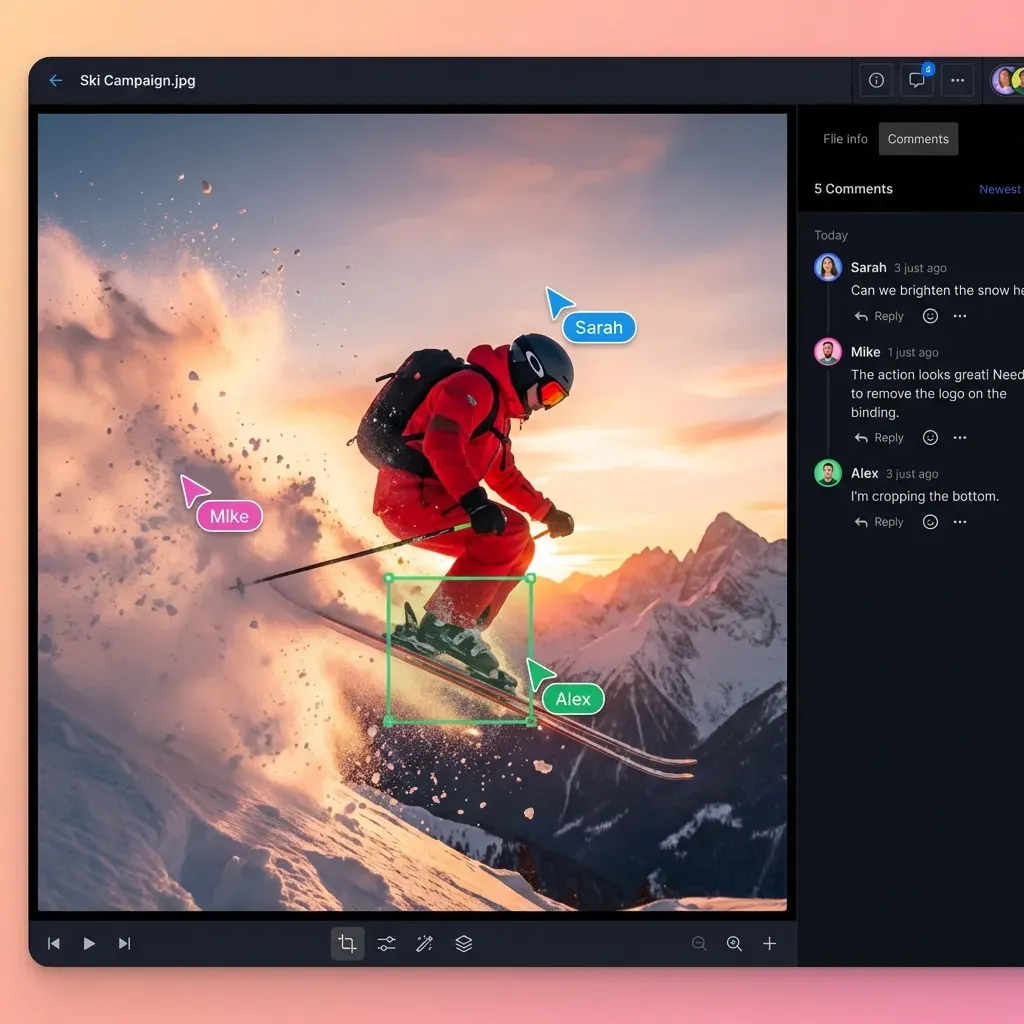
Yes. The most effective setup includes human review checkpoints. Agents handle data processing, content generation, and optimization, then flag outputs for human review. In shared workspaces like Fastio, agents and humans access the same files. Agents write drafts, humans review files and leave comments, and work continues without file transfers between systems.
How much time can AI agents save marketing teams?
Industry benchmarks vary, but marketing teams typically spend 30% or more of their time on manual tasks like list cleaning, reporting, and campaign setup. AI agents can cut that significantly, with some teams reporting 50% reductions in time spent on repetitive work. The actual savings depend on which workflows you automate and how well your agents are configured.
Related Resources

Give Your Marketing Agents a Shared Workspace
Fastio's 14-day Business Trial includes MCP access for any LLM. Set up a shared workspace where your marketing agents collaborate on campaigns, access indexed content, and hand off results to your team.