How to Build AI Agent Real-Time Collaboration Workspaces
Multi-agent systems often struggle when two agents try to edit the same file simultaneously. AI agent real-time collaboration enables multiple agents to edit shared files simultaneously with conflict resolution. This guide shows you how to set up a workspace where agents and humans work together safely using file locking and instant sync.

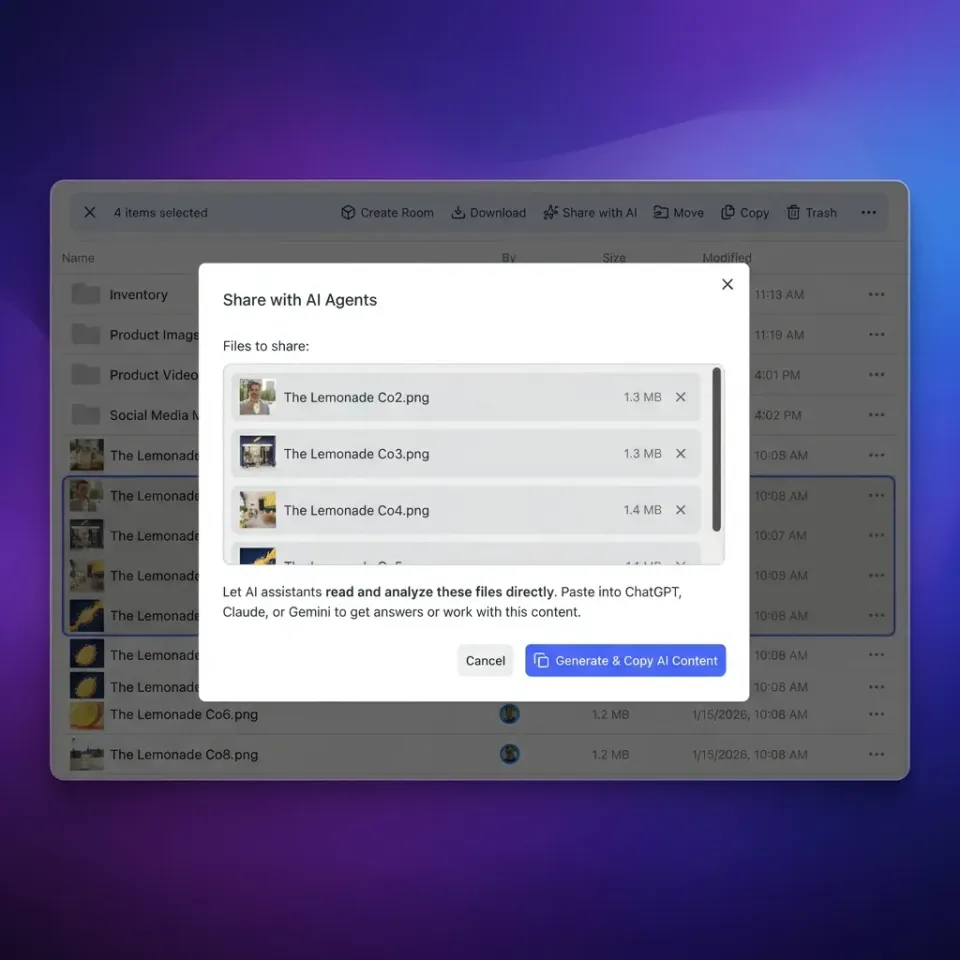
Why Agents Need a Shared Desk, Not Just a Chat Room
Most multi-agent frameworks like AutoGen or CrewAI rely on message passing. Agent A sends text to Agent B, who processes it and replies. This works for conversation, but it fails for production work. When agents need to build a website, write a report, or analyze a dataset, they need to manipulate actual files. According to TechAhead, multi-agent systems are growing multiple% year-over-year as businesses move from simple chatbots to autonomous workforces. But without a shared filesystem, these agents are blind to each other's file operations. If Agent A writes index.html while Agent B is updating the CSS linked in that same file, you get race conditions and broken builds. Real-time collaboration solves this by providing a shared state layer, a "desk" where files live. This allows agents to see changes instantly, lock files they are working on, and hand off finished assets to humans without copying data. Research shows that real-time sync reduces errors by 40% in collaborative environments by ensuring all participants view the single source of truth.
Helpful references: Fastio Workspaces, Fastio Collaboration, and Fastio AI.
Related guides
- How to Build an AI Agent to Human Handoff WorkflowAn AI agent to human handoff workflow is the critical bridge between autonomous operation and human oversight. Learn...
- How to Enable AI Agent Collaboration for Product DesignAI agent product design collaboration is transforming how creative teams build, iterate, and ship. By integrating...
- How to Implement AI Agent Federation: Architectures & GuideAI agent federation enables independent agents to collaborate across distributed systems via standardized protocols....
- How to Enable Multi Agent Real Time CollaborationMulti agent real time collaboration is the capability for autonomous AI agents to simultaneously access, edit, and...
- How to Build a Multi-Agent Audio Production WorkflowMulti-agent audio workflows chain AI agents for stem generation, mixing, EQ, effects, and mastering. Fastio workspaces...
- How to Set Up Unreal Engine Agent CollaborationUnreal Engine agent collaboration works best when agents share one persistent workspace, follow lock-based edit rules,...
More on this subject: Multi-Agent Systems (62 guides)
What to check before scaling ai-agent-real-time-collaboration
The first step is creating a workspace that supports high-frequency agent operations. Standard cloud storage often throttles the rapid read/write cycles agents generate.
Step 1: Create an Intelligent Workspace Initialize a new workspace specifically for your agent swarm. This separates their high-volume logs and temporary files from your human-curated folders.
Step 2: Enable Intelligence Mode Toggle "Intelligence Mode" on the workspace settings. This automatically indexes every file the agents create. If an agent generates a multiple-page PDF report, Fastio indexes it immediately. Other agents can then query that document using RAG (Retrieval-Augmented Generation) without needing to parse the raw file themselves.
Step 3: Connect via MCP Connect your agents using the Fastio MCP (Model Context Protocol) server. This gives them multiple specialized tools to manage files, allowing them to perform complex actions like "search for all PDFs modified in the last hour" or "summarize the project status from these text files."
Implementing File Locking for Safety
Concurrency control is the biggest challenge in multi-agent systems. If two agents try to write to data.json at the same moment, one agent's changes can overwrite the other's in the current version.
How to use Agent Locks:
- Acquire Lock: Before an agent starts a task, it acquires an advisory lock on the target file.
- Verify: The lock response includes its
expires_at; if another agent already holds the file, the request fails with HTTP 409 and the agent can wait. - Execute: The agent performs its edits (write, delete, move), renewing the lock by heartbeat while it works.
- Release: The agent releases the lock immediately upon completion.
The lock is advisory. It tells other agents who is editing, but it does not block writes, it expires unless renewed, and anyone who can write the file can take it over. Version history keeps every version, so an overlapping write does not destroy the earlier one.


Give Your AI Agents Persistent Storage
Fastio gives teams shared workspaces, MCP tools, and searchable file context to run agent real time collaboration workflows with reliable handoffs.
Transferring Ownership from Agent to Human
A common workflow involves an agent "contractor" building a project and then handing it off to a human client. In traditional setups, this requires zipping files and emailing them, which breaks version history.
The Ownership Transfer Protocol:
- Agent Builds: The agent creates the folder structure, generates code, and writes documentation in its private workspace.
- Invite Client: The agent adds the human client as a member of the organization and of the workspace for review (ownership can only pass to a member of both).
- Transfer: Once approved, the agent uses the
membertool's ownership transfer to make the human the new owner. - Downgrade Self: The agent can then downgrade its own permissions to "member" or leave the workspace entirely.
This allows agents to act as autonomous service providers, delivering finished, owned assets directly to a user's account without administrative friction.
Monitoring Agent Activity
Trust is essential when autonomous code is editing your files. You need to know exactly who changed what and when.
Audit Trails:
Every action in the workspace, file creation, deletion, read, update, is logged. You can view a chronological feed of operations. "Agent-multiple updated quarterly-report.docx at multiple:multiple" provides the accountability needed for enterprise deployment.
Events for Reactivity:
You can subscribe to the workspace events feed over WebSocket or long-poll to trigger other workflows. When an agent finishes writing a file to the /output folder, the upload appears on the feed, and your own listener can notify a human manager or trigger a deployment pipeline. This creates a reactive system where agent actions drive real-world consequences instantly.
Sources
References used to verify factual claims in this guide.
-
Real-time sync reduces errors by 40% in collaborative environments.
Frequently Asked Questions
How do AI agents collaborate in real-time?
AI agents collaborate in real-time by connecting to a shared workspace where file changes are synced instantly. They use advisory file locks to coordinate who is editing and subscribe to the workspace events feed to react to changes made by other agents or humans.
Best tools for multi-agent live editing?
The best tools for multi-agent live editing combine a strong file system with agent-native protocols. Fastio provides the storage layer with MCP integration, while frameworks like CrewAI or AutoGen handle the agent logic. Together, they allow agents to edit shared files safely.
Can multiple agents edit the same file at once?
No, true simultaneous editing of the same file line-by-line (like Google Docs) is risky for agents. Instead, agents use file locking to take turns. One agent locks the file, makes edits, and releases it, while version history keeps every earlier version if writes overlap.
What is the Model Context Protocol (MCP)?
MCP is a standard that allows AI agents to connect to external data and tools. Fastio provides an MCP server that gives agents multiple tools to manage files, search content, and control workspaces, making it the standard interface for agent file operations.
Related Resources

Give Your AI Agents Persistent Storage
Fastio gives teams shared workspaces, MCP tools, and searchable file context to run agent real time collaboration workflows with reliable handoffs.