How to Set Up an AI Agent Playground Environment
An AI agent playground environment is an isolated workspace where developers can test agent behaviors, tool calls, and file operations without risking production data. This guide covers the five core components of an effective playground, walks through sandbox isolation patterns, and shows how to wire persistent file state into your testing workflow.


What Is an AI Agent Playground Environment?
An AI agent playground environment is a controlled space where you can run agents, observe their behavior, and catch failures before they reach production. Think of it as a staging server, but specifically designed for the unpredictable nature of LLM-driven tool calls.
The core idea is simple: agents make mistakes. They call the wrong tool, pass malformed arguments, write to the wrong directory, or loop indefinitely on a task. In production, those mistakes corrupt data, run up API bills, or break downstream workflows. A playground gives you a safe place to trigger those failures on purpose and build defenses around them.
Most developers start with cloud-hosted playgrounds from OpenAI, Google, or Anthropic. These work well for prompt iteration and basic tool-call testing. But they hit a wall when you need persistent file state across sessions, multi-agent coordination testing, or workspace-level isolation that mirrors your production architecture.
That gap is where self-hosted and workspace-backed playgrounds come in. Instead of ephemeral chat sessions, you get a durable environment where files persist, permissions enforce boundaries, and every agent action leaves an audit trail.

Related guides
- How to Set Up a Staging Environment for AI AgentsAgent staging environments create isolated pre-production spaces where you can test AI agents with production-like data...
- How to Set AI Agent Data Retention PoliciesData retention policies define how long AI agents store files, logs, and artifacts. Proper lifecycle management reduces...
- How to Set Up AI Agent Concurrent Editing WorkspacesAI agent concurrent editing lets multiple AI agents modify the same files at the same time without destructive...
- Llama.cpp Context Size: How to Set -c, Calculate KV Cache, and Optimize VRAMIn llama.cpp, context size is the maximum sequence length in tokens allocated for prompt and response processing,...
- How to Integrate Keycloak with AI AgentsSecuring AI agents requires more than just API keys. As agent fleets grow, managing individual access becomes a complex...
- Autonomous AI Agent Tools: Essential Software for Building AI AgentsAutonomous AI agent tools are software platforms that enable developers to build, deploy, and manage self-directed AI...
More on this subject: AI Agents: General Guides (190 guides)
Five Components of an Effective Agent Playground
Not every playground needs the same setup. A single-agent chatbot has different testing needs than a multi-agent pipeline that reads, writes, and transforms files. But effective playgrounds share five structural components.
1. Sandbox isolation
The agent's runtime must be walled off from production resources. This means separate API keys, separate storage buckets, and separate database connections. Sandbox isolation technologies range from lightweight containers to Firecracker microVMs (which AWS uses for Lambda), each with different security and performance tradeoffs. The right choice depends on whether your agent executes arbitrary code or just makes API calls.
2. Persistent file state
Agents that create, modify, or organize files need storage that survives between test runs. Ephemeral sandboxes lose all state when a session ends, which makes it impossible to test multi-step workflows like "research a topic, write a draft, then revise it based on feedback." Your playground needs a storage layer that persists files, tracks versions, and supports the same access patterns your agent uses in production.
3. Tool-call observability
Every tool invocation should be traceable: what the agent called, what arguments it passed, what the tool returned, and how long it took. Without this, debugging agent failures turns into guesswork. Tracing tools like LangSmith, Arize, and OpenTelemetry-based solutions capture these execution traces so you can replay and inspect each step.
4. Permission boundaries
A playground that lets agents do anything is not a playground. It is a liability. Effective playgrounds enforce granular permissions: which files an agent can read, which tools it can call, which workspaces it can access. This lets you test permission-denied scenarios and verify that your agent handles access restrictions gracefully.
5. Reproducible test scenarios
You need the ability to reset the playground to a known state and run the same scenario repeatedly. This means seed data for files, pre-configured workspace layouts, and scripted user interactions. Without reproducibility, you cannot compare agent behavior across prompt changes or model updates.


Build Your Agent Playground on Persistent Workspaces
Fastio gives your agents isolated workspaces with file persistence, audit logging, and built-in AI indexing. Start with a 14-day trial.
Why Cloud-Hosted Playgrounds Fall Short
OpenAI's Playground, Google AI Studio, and Anthropic's Workbench are excellent for prompt engineering. You type a message, see the response, tweak the system prompt, and iterate. For prototyping, this is fast and productive.
The problems start when your agent does more than generate text.
No persistent file state. Cloud playgrounds treat each session as disposable. If your agent writes a report to a workspace in one session, that file does not exist in the next session. You cannot test workflows that span multiple agent invocations because the environment resets between runs.
Limited tool-call testing. Most cloud playgrounds let you define custom tools, but the execution is simulated. The agent generates the tool call, and the playground shows you the JSON. It does not actually execute the tool against a real system. This means you catch argument formatting errors but miss runtime failures like permission denials, timeout handling, and file conflict resolution.
No multi-agent coordination. When two agents need to read from and write to the same workspace, you need concurrency controls, file locks, and conflict resolution. Cloud playgrounds are single-agent, single-session environments. They cannot model the interactions between agents that cause some of the hardest-to-diagnose production bugs.
No audit trail. You can scroll through a chat history, but you cannot query structured logs of every tool call, every file mutation, and every permission check. For regulated industries or enterprise deployments, this auditability gap is a non-starter.
These limitations are not flaws in the cloud platforms. They are scope boundaries. Cloud playgrounds solve prompt engineering. For agent engineering, you need more infrastructure.
Building a Workspace-Backed Playground
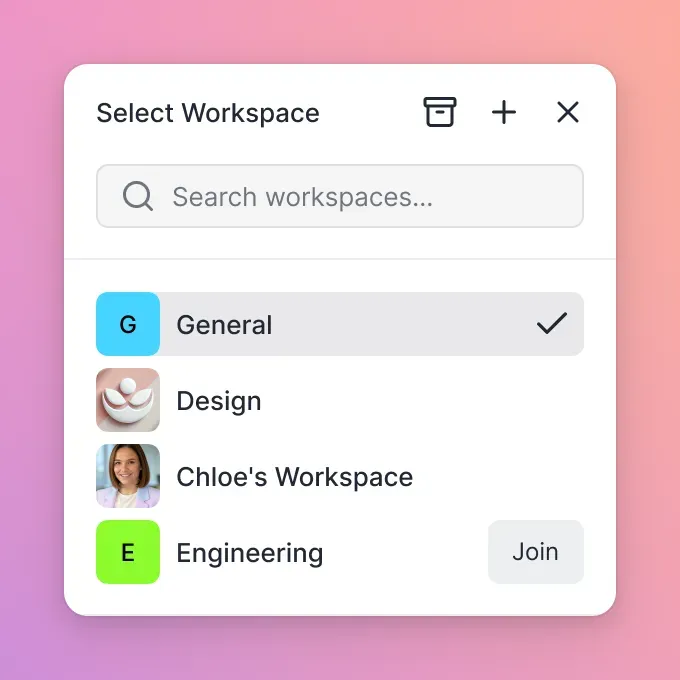
A workspace-backed playground uses a real storage and collaboration layer as the foundation for agent testing. Instead of mocking file operations, your agent reads, writes, and organizes real files in an isolated workspace. Instead of simulating permissions, the workspace enforces them.
Here is a practical architecture:
Dedicated test workspaces. Create separate workspaces for each test scenario or agent pipeline. This gives you natural isolation without complicated container orchestration. Each workspace has its own file tree, its own permission set, and its own activity log.
Seed data scripts. Write scripts that populate a workspace with the files and folder structure your agent expects. Before each test run, reset the workspace to this known state. This makes your tests reproducible and your failures debuggable.
Scoped API keys. Give each agent a key that only grants access to its designated test workspace. If an agent tries to access production data, the request fails at the API level, not because of a naming convention or environment variable that someone might forget to set.
Real-time activity monitoring. Watch agent actions as they happen. When an agent uploads a file, moves a folder, or queries the AI layer, you see it in the activity stream. This is faster than reading logs after the fact and helps you spot behavioral patterns during development.
Fastio works well as this foundation. You can create isolated workspaces with granular permissions, enable Intelligence Mode for automatic file indexing, and connect agents through the Fastio MCP server. The 14-day Business trial gives you seats, storage, and a monthly credit allowance, which is enough to run a serious testing setup. A card is required to start the trial. Agents access workspaces through either the REST API or MCP tooling (Streamable HTTP at /mcp or legacy SSE at /sse), and every operation is logged in the audit trail.
Alternatives like S3 with IAM policies or Google Cloud Storage with service accounts can provide the storage layer, but you will need to build the permission model, versioning, audit logging, and AI indexing yourself. Local filesystems work for solo development but break down when you need to test multi-agent coordination or human handoff scenarios.
Testing Tool-Call Sequences
Tool-call failures are among the most common issues in AI agent systems. Even state-of-the-art models struggle with selecting appropriate tools, generating valid arguments, and respecting tool-call ordering. A playground environment should let you stress-test these sequences systematically.
Start with single-tool tests. Before testing complex chains, verify that each tool works correctly in isolation. Upload a file and verify it appears. Create a folder and check the permissions. Query the AI layer and validate the citations. These atomic tests catch basic integration issues early.
Then test multi-step chains. Real agent workflows involve sequences: search for a file, read its contents, summarize them, write the summary to a new location. Each step depends on the previous one succeeding. Your playground should let you inject failures at each stage. What happens if the search returns no results? What if the file is locked by another agent? What if the AI layer is temporarily unavailable?
Watch for false positives. A 200 status code does not mean the operation did what you expected. An agent might successfully upload a file, but to the wrong directory. It might create a document, but with the wrong permissions. Your tests should verify the end state, not just the HTTP response.
Test concurrent access. If your production system runs multiple agents, your playground should too. Use file locks to coordinate access, then test what happens when an agent encounters a locked file. Does it retry? Does it skip the file? Does it crash? These concurrent-access bugs are almost impossible to catch in a single-agent playground.
Here is a practical test pattern using workspace-backed storage:
1. Reset test workspace to seed state
2. Agent A: Search workspace for "Q1 report"
3. Agent A: Read the matching file
4. Agent A: Generate a summary
5. Agent B: Attempt to lock the same file
6. Verify: Agent B receives lock-conflict response
7. Agent A: Write summary to /summaries/q1-summary.md
8. Agent A: Release file lock
9. Agent B: Acquire lock and proceed
10. Verify: Both output files exist with correct content
This pattern tests search, read, write, lock coordination, and multi-agent sequencing in a single reproducible scenario.
Observability and Debugging Setup
When an agent fails in a playground, you need to understand exactly what happened and why. This requires three layers of observability.
Execution traces. Every tool call, every LLM invocation, and every decision point should be captured in a structured trace. OpenTelemetry has become the standard for this. Platforms like LangSmith, Arize, and Braintrust provide agent-specific tracing that shows the full execution graph, including which tools were called, what arguments were passed, what was returned, and how long each step took.
Workspace activity logs. Separate from execution traces, you need a record of what actually changed in the environment. Which files were created, modified, or deleted? Which permissions were checked? Which AI queries were run? Fastio captures these as audit events that you can search, filter, and export. This gives you a ground-truth record of the agent's impact on the workspace, independent of what the agent thinks it did.
Cost tracking. Playground testing consumes real resources: LLM tokens, storage operations, and API calls. Without cost visibility, a runaway agent loop can burn through your budget before you notice. Track credit consumption per test run so you can set budgets and alerts. Fastio meters AI work in credits (roughly 1 credit per 100 AI tokens, with overage at $10 per 100,000 credits) while storage and seats come with the plan, which makes runaway loops easy to spot.
Practical debugging workflow:
When a test fails, start with the execution trace to identify which tool call went wrong. Then check the workspace activity log to see the actual state change (or lack of one). Compare the two: did the agent think it succeeded when the operation actually failed? Did it pass the right arguments but to the wrong endpoint? The combination of agent-side traces and workspace-side logs eliminates the most common blind spots.
For multi-agent debugging, correlate traces across agents by session ID or workspace ID. This lets you see how Agent A's file upload triggered Agent B's processing step, and where the handoff broke down.

From Playground to Production
A playground environment is only valuable if it accurately predicts production behavior. Here is how to bridge the gap.
Use the same APIs. Your playground agents should call the same endpoints, with the same authentication flow, as your production agents. The only difference should be the workspace they target. If your playground uses mocked APIs while production uses real ones, you will miss an entire class of failures.
Mirror your permission model. Production agents rarely have admin access to everything. They operate with scoped permissions, restricted to specific workspaces or specific operations. Your playground should enforce the same restrictions. Testing with admin credentials and then deploying with scoped keys is a recipe for permission-denied errors in production.
Automate the reset-and-run cycle. Manual testing does not scale. Write scripts that reset your test workspace, run a battery of test scenarios, and report results. Integrate this into your CI/CD pipeline so every prompt change or model update triggers a full regression suite.
Graduate tests to staging. Once a test passes reliably in the playground, promote it to a staging environment that uses production-scale data and traffic patterns. The playground catches logic errors and tool-call failures. Staging catches performance issues, rate limits, and edge cases that only appear at scale.
Keep the playground running. Do not tear down your playground after initial development. Agent behavior changes with model updates, prompt modifications, and API changes. A persistent playground lets you regression-test against these changes continuously.
The ownership transfer pattern works well here. During development, an agent builds and tests in its own workspace. When the output is ready for human review, the agent transfers ownership to a team member who can inspect the results through a familiar UI rather than parsing logs. Fastio supports this ownership transfer natively, letting agents create workspaces, populate them with deliverables, and hand off control to humans without losing the audit trail.
Sources
References used to verify factual claims in this guide.
-
88% of AI agent projects fail before reaching production
-
Tool use failures are among the most common issues in AI agents, with models struggling with tool selection and argument generation
-
Over 40% of agentic AI projects are expected to be canceled or fail to reach production by 2027
Frequently Asked Questions
What is an AI agent playground?
An AI agent playground is an isolated environment where developers test agent behaviors, tool calls, and file operations without affecting production systems. It combines sandbox isolation, persistent storage, observability tooling, and permission controls to help you catch failures before they reach users.
How do I test AI agents safely?
Use dedicated test workspaces with scoped API keys that restrict agents to sandbox resources. Enforce permission boundaries at the API level, not through naming conventions. Capture execution traces for every tool call so you can debug failures. Reset your environment to a known state before each test run to ensure reproducibility.
What tools do I need for an agent development environment?
At minimum, you need a storage layer with persistent file state, a tracing tool like LangSmith or Arize for execution observability, scoped API credentials for isolation, and seed data scripts for reproducible test scenarios. For multi-agent testing, you also need concurrency controls like file locks.
Why do cloud-hosted playgrounds fall short for agent testing?
Cloud playgrounds like OpenAI's Playground or Google AI Studio are designed for prompt engineering, not agent engineering. They lack persistent file state across sessions, cannot execute real tool calls against live systems, do not support multi-agent coordination testing, and provide no structured audit trail for debugging.
How is a workspace-backed playground different from a Docker sandbox?
A Docker sandbox isolates code execution at the operating system level. A workspace-backed playground provides a higher-level abstraction: persistent files, permissions, versioning, AI indexing, and audit logging. You might use both together, running your agent in a container while it operates on files in an isolated workspace.
What are the most common AI agent failures in production?
Tool-call failures are among the most frequent issues: agents selecting wrong tools, passing malformed arguments, or misinterpreting successful responses. According to industry data, a significant portion of AI agent projects fail before reaching production, often due to scope creep and insufficient testing of real-world edge cases.
Related Resources

Build Your Agent Playground on Persistent Workspaces
Fastio gives your agents isolated workspaces with file persistence, audit logging, and built-in AI indexing. Start with a 14-day trial.