How to Implement AI Agent File Deduplication Techniques
AI agent file deduplication removes duplicate files generated by autonomous agents in shared workspaces. Agent fleets naturally produce redundant outputs during retry loops, iterative refinement, and parallel executions, consuming storage and context windows rapidly. By implementing intelligent deduplication techniques like cryptographic hashing and content analysis, engineering teams can save up to 60% of their storage footprint.

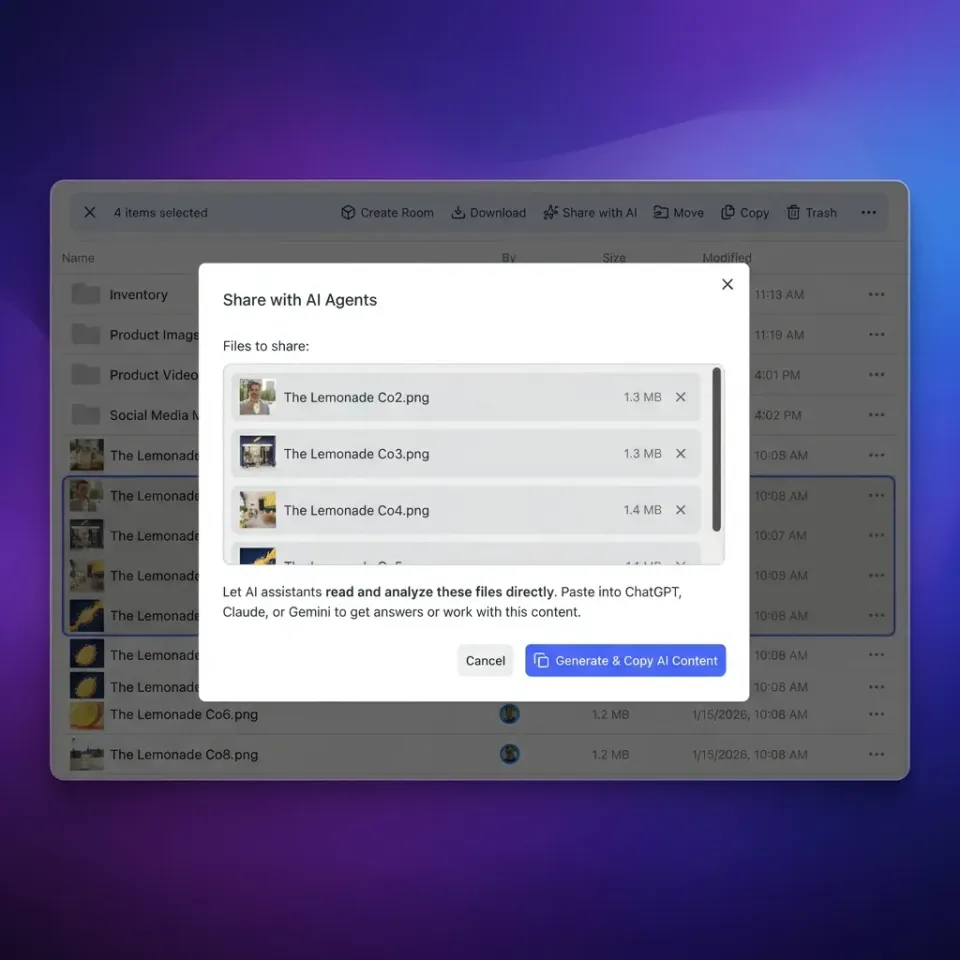
What Is AI Agent File Deduplication?
AI agent file deduplication is the process of identifying and eliminating identical or semantically similar files created by autonomous agents. As AI systems generate files during tasks like data processing, report creation, or model artifact generation, they frequently produce duplicates. Retries, state checkpoints, and multiple agents working in parallel inevitably lead to redundant files cluttering the storage layer.
File deduplication eliminates redundant agent outputs in shared workspaces. When operating a multi-agent system, deduplication ensures that an agent retrying a failed image generation does not save the same exact PNG file multiple times. Instead, the storage system or the agent framework recognizes the duplicate content and maintains only a single authoritative copy, discarding the redundant artifacts.
Basic approaches to this problem include exact-match detection using cryptographic hashes and fuzzy matching for near-duplicates. This deduplication process typically runs as a pre-upload validation hook, intercepting files before they consume remote storage, or as a background job that periodically scans workspaces to prune redundant data. Implementing these techniques prevents storage bloat and keeps the agent's context window clean for subsequent retrieval-augmented generation (RAG) tasks.
Related guides
- How to Manage Files with Google ADK AgentsGoogle ADK (Agent Development Kit) provides a structured way for agents to manage binary data through the Artifacts...
- Multi-Agent File Sharing: Patterns, Storage & CodeHow multiple AI agents share, read, write, and collaborate on files in production systems. Covers storage...
- How to Upload Files: Fastio API File Upload TutorialFollowing a Fastio API file upload tutorial is the fast way to get your applications talking to intelligent agent...
- How to Secure File Sharing for AI AgentsAI agents need secure file access just like human teammates do, but their autonomous nature creates unique risks. This...
- How to Manage File Versioning for AI AgentsAI agents can generate huge volumes of files during iterative tasks, often overwriting previous best attempts....
- How to Create AI Agent Testing File FixturesTesting file fixtures provide consistent, versioned test data for validating AI agent behavior across different...
More on this subject: Agent File and Document Workflows (325 guides)
Why Agent Fleets Produce Redundant Files
Agent workflows inherently create files at an unprecedented scale. A single agent might produce dozens of versions of a financial report during its refinement and formatting phases. When you scale this operation to a fleet of hundreds of agents running continuous tasks, storage requirements balloon exponentially.
Deduplication addresses this fundamental scaling issue. It cuts operational costs in usage-based storage environments and, just as importantly, cuts AI overhead. On Fastio, credits meter AI work such as file ingestion, chat, and agent runs, while storage and seats come with the plan. Every duplicate you eliminate is a document that never has to be ingested and indexed a second time, which keeps your monthly credit allowance pointed at useful work.
Agent development teams see major operational gains from implementing these strategies. Data management studies confirm that deduplication reduces storage by 50-90% in repetitive, backup-like scenarios. In practice, enterprise agent fleets report an average of 60% savings strictly by removing retry duplicates and overlapping workflow artifacts. This efficiency translates directly into faster pipeline execution and significantly lower monthly infrastructure bills.
Common Sources of Agent Duplicates:
- Retry Loops: Agents encountering temporary API failures often restart their generation logic, saving identical intermediate outputs repeatedly.
- Parallel Processing: Multiple agents analyzing the same input stream may generate identical extraction logs or summary files.
- Iterative Refinement: An agent instructed to "improve this document" might save multiple copies with barely perceptible changes.
- Shared Prompts: Standardized system prompts deployed across a fleet frequently yield identical baseline outputs across different execution environments.
Core Deduplication Techniques for Agents
Start with hash-based deduplication, which remains the fastest and most reliable method for detecting exact duplicates. By computing cryptographic SHA-256 hashes for files before they are permanently stored, systems can compare these signatures against an existing index. If the hashes match exactly, the content is identical, and the duplicate can be safely discarded or linked via a pointer. Agents can inspect workspace file lists and metadata via the remote MCP server or REST API, matching hashes locally or against recorded metadata before committing uploads.
Content-based deduplication represents the next tier of optimization. This approach handles minor, non-substantive variations, such as automatically generated timestamps or varying metadata in otherwise identical files. For visual agents, using perceptual hashing (pHash) for images allows the system to identify visually identical graphics even if their compression or resolution differs slightly.
Delta encoding is another powerful technique for agents performing iterative work. Rather than saving five complete versions of a 50MB presentation, delta encoding stores the initial baseline and only the incremental changes (deltas) made in subsequent steps. This strategy minimizes storage consumption while preserving the complete evolutionary history of the agent's work.

Automated Deduplication Pipelines with MCP
Building robust deduplication pipelines requires seamless orchestration between the agent framework and the storage layer. The most efficient strategy involves a pre-upload scan: the agent lists the files currently in the workspace, computes local hashes of its new outputs, and proactively deletes or skips saving any matches.
Alternatively, developers can employ a post-generation hook. Immediately after an agent writes a file, the system triggers a validation sequence using the Model Context Protocol (MCP). By utilizing the Fastio MCP storage tool (its list and details actions), the pipeline compares the newly uploaded file against existing artifacts.
In modern intelligent workspaces like Fastio, event feeds and activity polling serve as real-time triggers for these pipelines. When a file is uploaded, an agent receives an update via the WebSocket events feed or activity log, alerting a dedicated deduplication agent to scan the new artifact, verify its hash, and remove redundant copies. This asynchronous approach ensures the primary agent's workflow is never blocked by storage management tasks.
Connecting via the remote MCP server simplifies this process. Agents connect directly using the remote endpoint at https://mcp.fast.io/mcp/tools to inspect files and run deduplication logic autonomously.


Optimize Agent Storage Today
Stop paying for redundant files. Fastio gives agents persistent workspaces, monthly credits for AI work, and a consolidated MCP toolset. Start with a 14-day trial.
The Fastio Advantage: Consolidated MCP Tool Workflows
Fastio's official Model Context Protocol server transforms how agent storage is optimized. By providing a consolidated MCP toolset, Fastio equips agents with everything they need to manage their storage footprint effectively. Agents can inspect directories, retrieve file metadata, and delete redundant copies to construct autonomous deduplication workflows.
A standard deduplication workflow operates as follows:
- The agent completes a task and generates an output file.
- It inspects the current inventory of the target workspace.
- It evaluates candidate files and compares hashes or metadata.
- If a match is detected, the agent safely deletes the older redundant artifact.
Fastio workspaces maintain file version history with restore and a detailed activity log of human and agent actions, ensuring that any accidental deletion can be rolled back immediately.
Handling Deduplication in Multi-Agent Workspaces
When multiple agents collaborate within the same Fastio workspace, deduplication introduces concurrency challenges. If Agent A and Agent B simultaneously generate identical artifacts and attempt to deduplicate the workspace, race conditions can occur, leading to conflicting operations or duplicate work.
Advisory file locks provide the solution. Before an agent executes a deduplication sequence or modifies a target file, it can acquire an advisory file lock (via MCP storage_manage action lock-acquire or the REST API) to signal its operation. Competing agents attempting to lock the file receive an HTTP 409 and can skip or wait. If an agent stalls, the lease expires or can be taken over with write permissions. Because locks are advisory, Fastio's automatic file version history and activity log ensure every change is tracked and recoverable.
Once the agent has safely identified and removed duplicates, the audit log records the change, allowing the rest of the fleet to stay synchronized. This orchestration ensures that high-volume, collaborative workspaces remain optimized without risking the integrity of the project data.
Monitoring and Best Practices
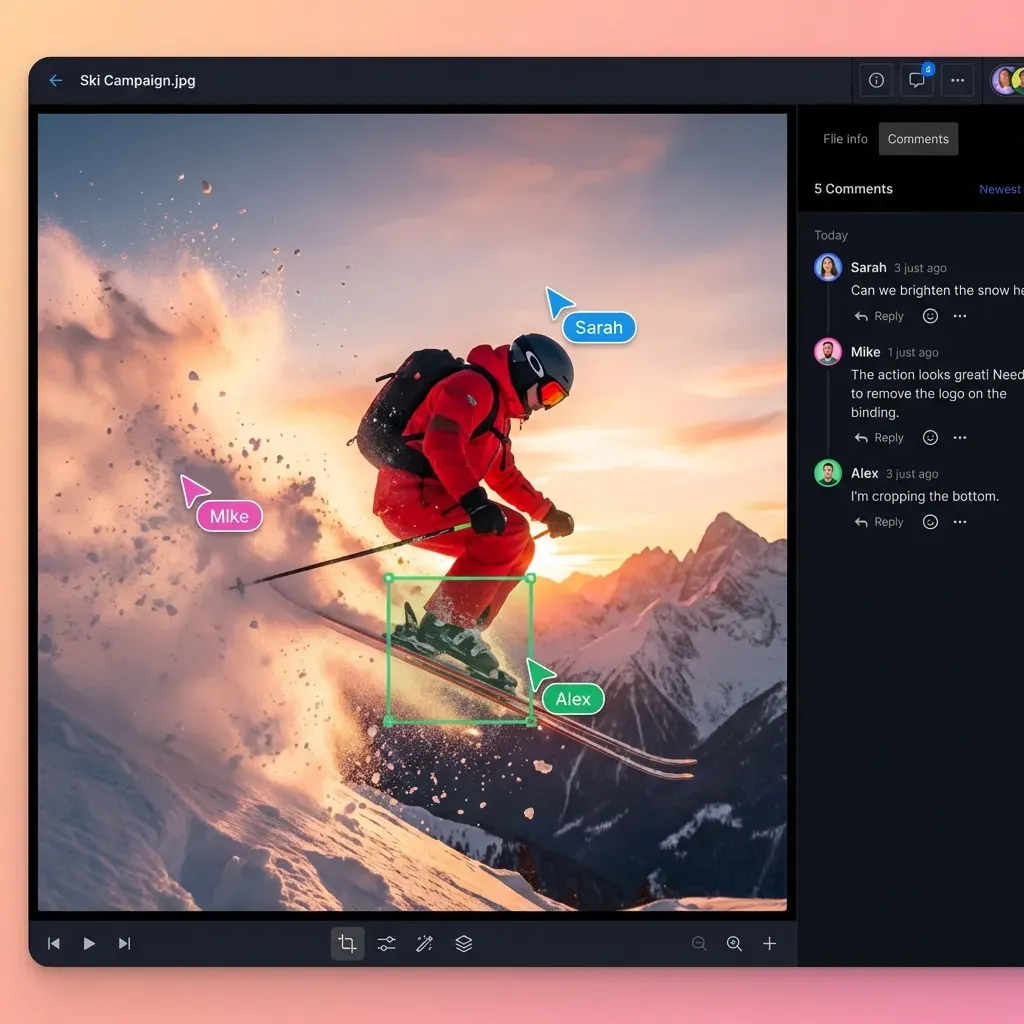
Maintaining an optimized storage environment requires continuous monitoring. Engineering teams should track the deduplication rate by analyzing comprehensive audit logs. Fastio provides granular, per-file activity tracking, allowing you to identify which agents or prompt chains are responsible for generating the highest volume of duplicates.
Essential Best Practices:
- Size Thresholds: Restrict active deduplication to files larger than 1MB. Computing hashes for thousands of tiny text fragments consumes more compute resources than the storage space it saves.
- Retention Policies: When removing duplicates, ensure the logic retains the most recently generated version, as it typically contains the most refined outputs.
- Sandbox Testing: Always validate your automated deduplication scripts in isolated environments before deploying them to production. Fastio provides isolated workspaces with granular permissions, offering the perfect sandbox for testing destructive workflows.
By combining intelligent hashing, MCP tool orchestration, and version tracking, development teams can eliminate storage bloat and ensure their agentic systems run efficiently at any scale.
Sources
References used to verify factual claims in this guide.
-
Deduplication reduces storage by 50-90% in repetitive, backup-like scenarios
Frequently Asked Questions
What is file deduplication for AI agents?
File deduplication for AI agents removes duplicate files from agent outputs in shared workspaces. It prevents storage waste and context window bloating caused by automated retries, parallel processing, and iterative refinement tasks.
How to dedupe agent files effectively?
Compute file hashes before finalizing uploads to compare against existing artifacts. If the hashes match, delete or skip the redundant file. You can automate this with Fastio's MCP `storage` tool, whose `list` action finds the files and whose `details` action reports each file's `hash`.
What tools support AI agent deduplication?
Fastio's official remote MCP server provides a consolidated MCP toolset for file management, workspace operations, and metadata extraction. Coupled with real-time WebSocket event feeds and activity polling, it offers a complete environment for agent storage optimization.
Does deduplication affect agent performance?
Deduplication has minimal impact on performance when executed asynchronously via WebSocket event feeds, activity polling, or background jobs. While computing hashes requires some processing, preventing massive redundant file uploads ultimately saves bandwidth and accelerates pipeline execution.
How much storage can deduplication save?
Deduplication typically saves 50-90% of storage in repetitive, iterative agent workflows. For active agent fleets dealing with frequent API retries, teams average approximately 60% in total storage reduction.
Related Resources

Optimize Agent Storage Today
Stop paying for redundant files. Fastio gives agents persistent workspaces, monthly credits for AI work, and a consolidated MCP toolset. Start with a 14-day trial.