How to Implement AI Agent Federation: Architectures & Guide
AI agent federation enables independent agents to collaborate across distributed systems via standardized protocols. This guide explores federation architectures, implementation patterns, and how to orchestrate multi-agent workflows securely using Fastio's intelligent workspaces. Discover the strategies used by leading enterprises to scale agentic systems beyond simple chatbots.

What Is AI Agent Federation?
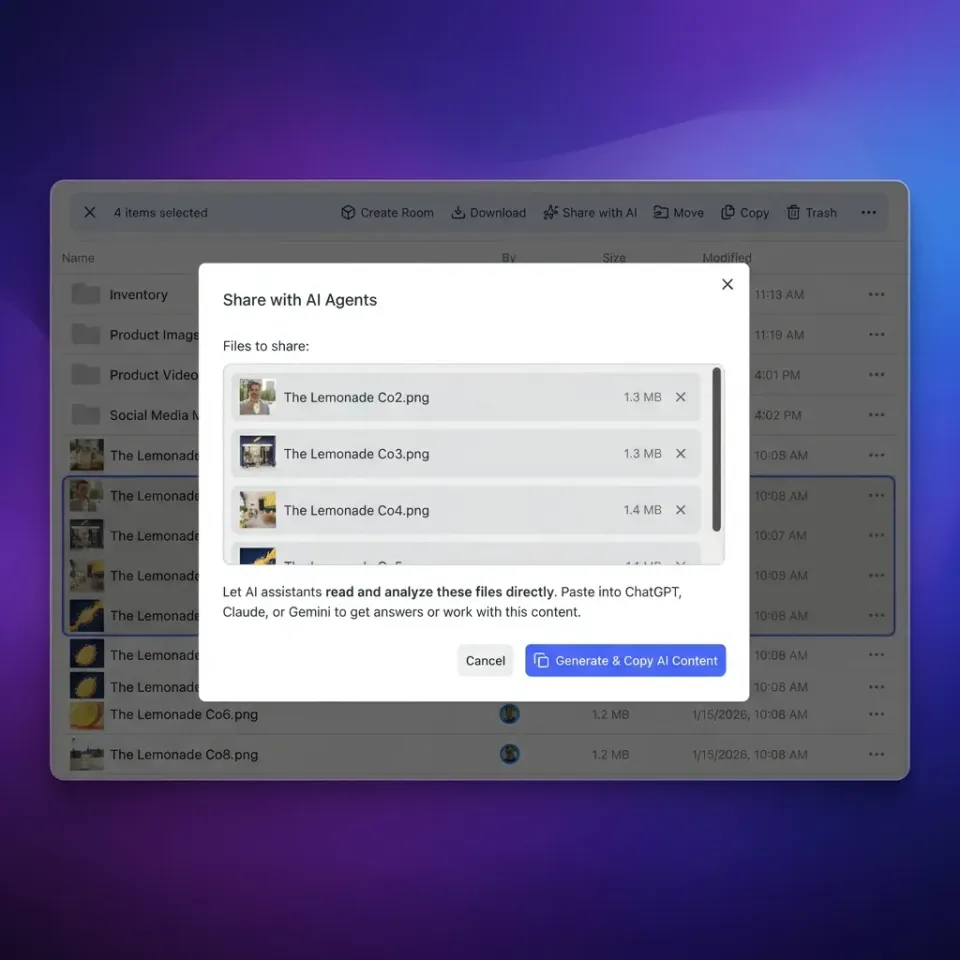
AI agent federation enables independent agents to collaborate across distributed systems via standardized protocols. Instead of relying on a single monolithic model to handle all tasks, federation connects specialized agents, each with its own tools, memory, and permissions, into a cohesive network. This approach mirrors how human teams operate: a legal expert agent consults a finance agent, who then updates a project manager agent. By distributing responsibilities, organizations avoid the bottlenecks and fragility of centralized AI systems. According to Gartner, multiple% of enterprise applications will feature task-specific AI agents by multiple. However, without a federation strategy, these agents remain isolated silos, unable to share context or coordinate complex workflows. Federation solves this by providing the "connective tissue", standardized communication layers and shared workspaces, that turns individual bots into a powerful workforce.
Key Benefits of Federation
- Specialization: Use the best model for each task (e.g., Claude for coding, Gemini for analysis).
- Resilience: If one agent fails, the rest of the network continues to operate.
- Privacy: Agents can process sensitive data locally and share only the results, not the raw data.
- Scalability: Add new agents to the federation without rebuilding the entire system.
Helpful references: Fastio Workspaces, Fastio Collaboration, and Fastio AI.

Related guides
- How to Build an AI Agent to Human Handoff WorkflowAn AI agent to human handoff workflow is the critical bridge between autonomous operation and human oversight. Learn...
- How to Enable AI Agent Collaboration for Product DesignAI agent product design collaboration is transforming how creative teams build, iterate, and ship. By integrating...
- How to Build AI Agent Real-Time Collaboration WorkspacesMulti-agent systems often struggle when two agents try to edit the same file simultaneously. AI agent real-time...
- How to Implement an AI Agent Handoff ProtocolAn agent handoff protocol is the bridge between autonomous AI operations and human oversight. Learn how to design a...
- How to Implement Human-in-the-Loop for AI AgentsHuman-in-the-loop (HITL) for AI agents is a design pattern where autonomous agents escalate decisions, request...
- How to Master AI Agent Swarm Orchestration: Best Practices for 2026AI agent swarm orchestration manages large-scale, emergent agent behaviors in dynamic environments. While single agents...
More on this subject: Multi-Agent Systems (62 guides)
Why Federation Is Critical for Enterprise AI
Early AI deployments often relied on single, general-purpose models. While impressive, these monolithic systems struggle with complexity and reliability in production environments.
The Reliability Gap According to an MIT study, multiple% of generative AI pilots fail to deliver measurable impact. A primary reason is the "jack-of-all-trades" problem: a single model trying to do everything often hallucinates or fails on edge cases. Federated architectures address this by breaking complex workflows into smaller, verifiable steps handled by specialized agents.
Data Sovereignty and Compliance In regulated industries like healthcare and finance, moving all data to a central model is often impossible due to privacy laws. Federation allows "compute-to-data" workflows where agents travel to the data's location (or secure workspace), process it, and return only the insights. This keeps sensitive information within its compliance boundary while still enabling system-wide intelligence.
Adoption is Accelerating Adoption of agentic systems is growing rapidly. Capgemini reports that multiple% of organizations have already deployed AI agents at a partial scale. As these deployments mature, the need for federation standards, common protocols for agents to "talk" to each other, becomes the primary infrastructure challenge for IT leaders.


Build Your Agent Federation Today
Give your AI agents a shared brain. Built for agent federation workflows.
Core Federation Architectures
There are three primary patterns for structuring an AI agent federation. Choosing the right architecture depends on your security requirements, latency tolerance, and the level of autonomy your agents need.
1. Centralized Orchestrator (Hub-and-Spoke)
In this model, a central "manager" agent receives the user's request and delegates sub-tasks to specialized worker agents. The workers report back to the manager, who synthesizes the final result.
- Best for: Complex workflows requiring strict oversight and sequential processing.
- Pros: Easy to audit; clear chain of command.
- Cons: The manager becomes a single point of failure and bottleneck.
2. Peer-to-Peer (Mesh)
Agents communicate directly with one another without a central coordinator. A "sales agent" might directly ping a "shipping agent" to check inventory.
- Best for: Highly dynamic, real-time environments where speed is critical.
- Pros: Highly scalable; no single point of failure.
- Cons: Hard to debug; race conditions can occur if agents conflict (e.g., two agents trying to edit the same file).
3. Hierarchical Hybrid
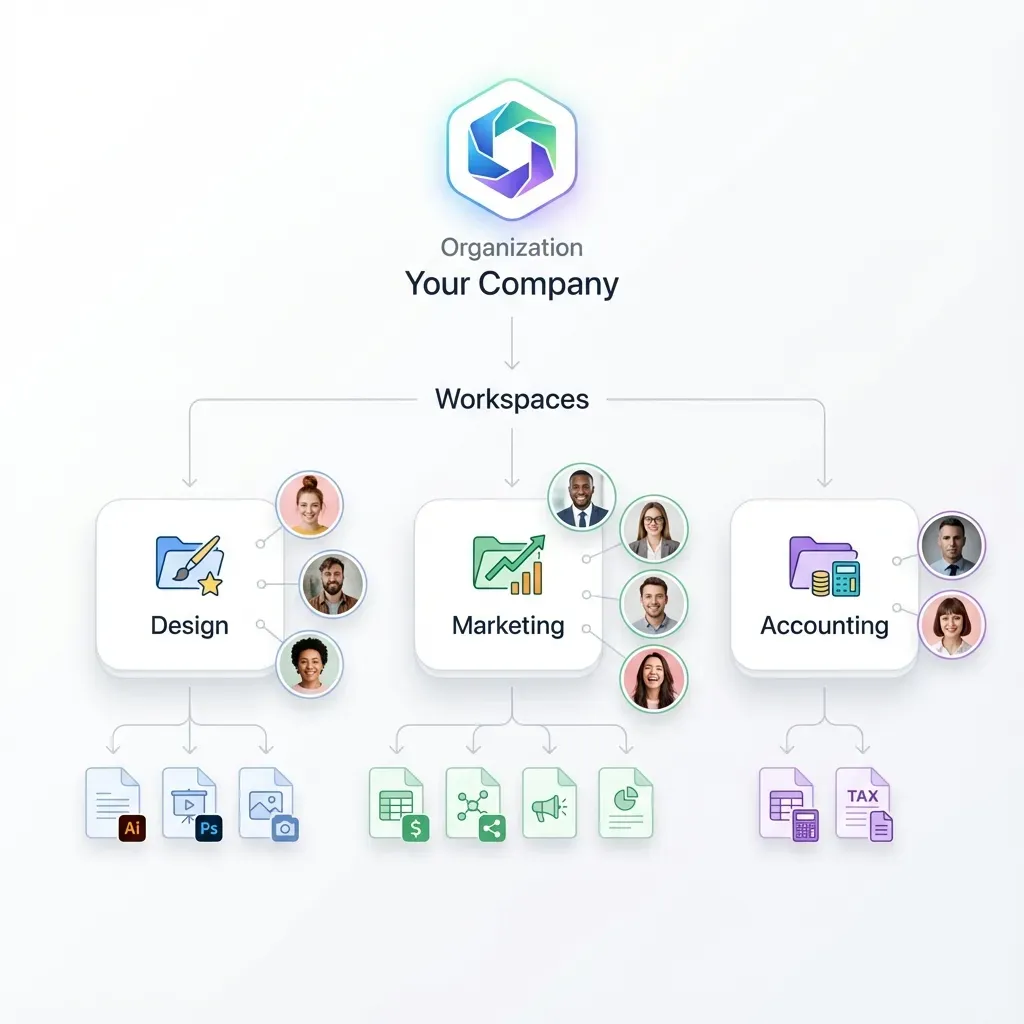
This combines both approaches. Local clusters of agents (e.g., a "Marketing Cluster") manage their own internal tasks via a peer-to-peer method but report to a high-level orchestrator for cross-departmental coordination.
- Best for: Large enterprises with distinct business units.
- Pros: Balances autonomy with control.
- Cons: Most complex to implement.
Implementing Federation Protocols
For agents to collaborate, they need a common language. You cannot "connect" a Python script to a proprietary SaaS bot without a protocol.
The Model Context Protocol (MCP) The emerging standard for agent interoperability is the Model Context Protocol (MCP). MCP provides a universal way for agents to access data and tools. Instead of building custom integrations for every service, you build an MCP server once, and any MCP-compliant agent (Claude, generic LLM wrappers) can use it.
Transport Layers
- Streamable HTTP/SSE: The modern standard for agent communication. Server-Sent Events (SSE) allow agents to receive real-time updates without polling, which is critical for long-running federated tasks.
- Shared Workspace State: Rather than passing massive JSON blobs between agents, efficient federations use a shared state layer, like a Fastio workspace. Agents read and write to shared files, using advisory file locks to coordinate writes.
Managing State with File Locks In a mesh architecture, two agents might try to update a "status.json" file simultaneously. Implementing a locking mechanism (acquiring a lock before writing, releasing it after) is essential. Fastio's API supports this natively, allowing agents to coordinate safely on shared resources.
Step-by-Step Implementation Guide
Ready to build your first federated agent system? Follow this path to move from a single bot to a coordinated team.
Step 1: Define Agent Roles Identify distinct responsibilities. Do not build one "Super Agent." Instead, define a "Researcher," a "Writer," and an "Editor." Clear boundaries prevent hallucinations and loop errors.
Step 2: Establish the Shared Environment Set up a Fastio workspace as the federation's "shared memory."
- Enable Intelligence Mode so all uploaded files are instantly indexed and searchable by all agents.
- Create dedicated folders for
inbox(tasks),processing(active work), andarchive(completed).
Step 3: Connect via MCP
Connect your agents to the remote Fastio MCP server (https://mcp.fast.io/mcp/tools) to give them tool access. This allows them to:
- Search the workspace memory (
storage action=search) - Read context (
storage action=content) - Save outputs (
upload_manage action=stream-upload) - Hand off tasks (the
share_managetool)
Step 4: Implement Handoff Triggers
Use webhooks to trigger downstream agents. When the "Researcher" saves a brief.md file to the processing folder, a webhook fires to wake up the "Writer" agent. This event-driven pattern is far more efficient than having agents poll for work.
Step 5: Test and Observe
Start with a simple linear workflow. Monitor the audit_log in Fastio to see exactly which agent accessed which file and when. This audit trail is your primary debugging tool for federation logic.
The Role of Shared Workspaces
The biggest challenge in agent federation is context. How does Agent B know what Agent A learned?
Passing the entire context window between agents is slow and expensive. A better approach is to use a shared intelligent workspace.
The Workspace as the "Bus" In Fastio, the workspace acts as the message bus.
- Agent A uploads a multiple-page PDF and asks for a summary.
- Fastio Intelligence Mode automatically indexes and summarizes the PDF.
- Agent B queries the workspace: "What was the conclusion of the PDF Agent A uploaded?" and gets the answer immediately without re-reading the raw file.
Built-in RAG for the Federation Because Fastio includes native RAG (Retrieval-Augmented Generation), your federation shares a "collective brain." Any file added by one agent becomes instantly knowledgeable to all others. You don't need to manage a separate vector database or sync embeddings; the storage layer handles the intelligence automatically.
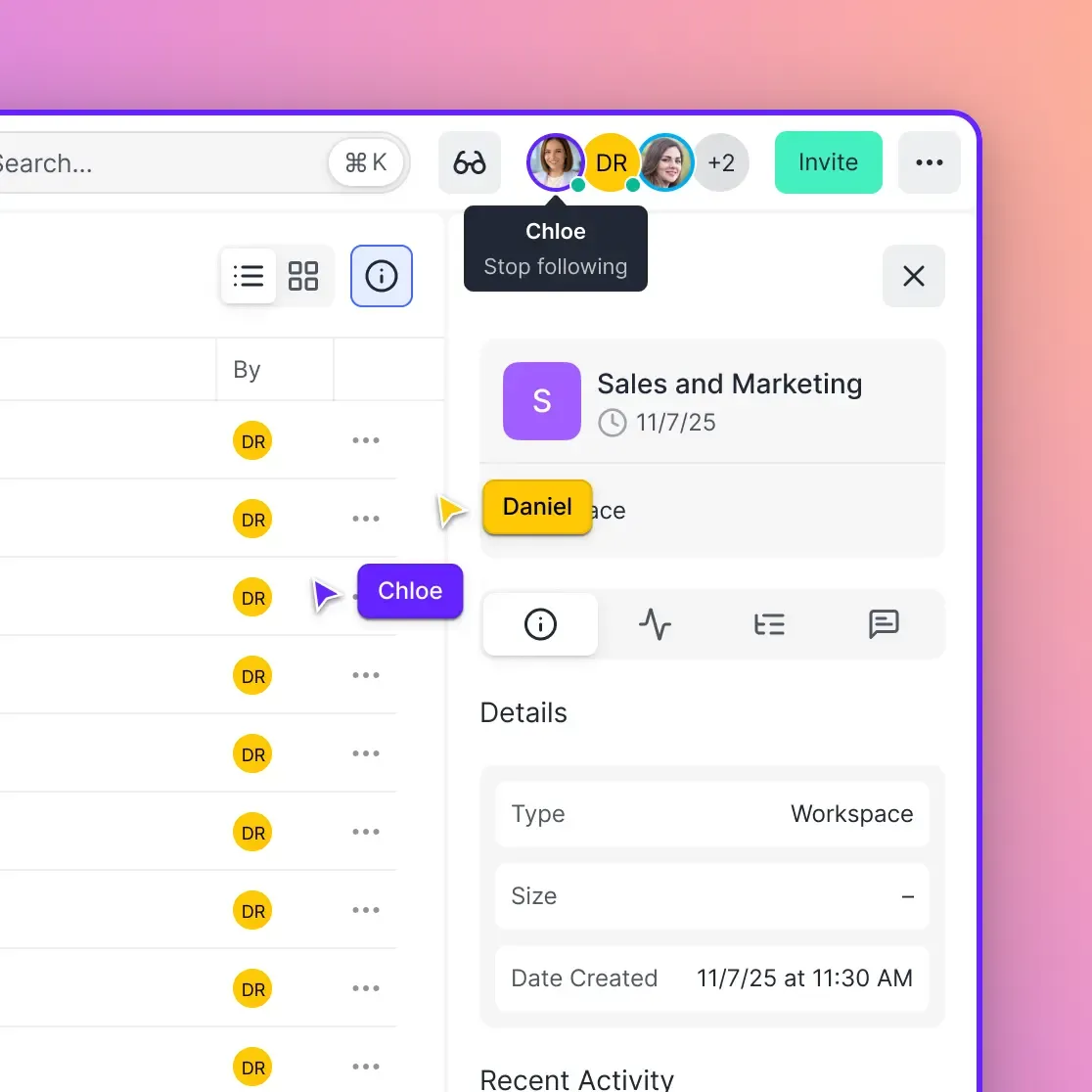
Security at the Object Level Federation requires strict boundaries. You might want your "External Support Agent" to see customer tickets but not financial records. Fastio's granular permission system allows you to secure specific folders or files, ensuring that even within a federation, agents only access what they need.
Frequently Asked Questions
What is the difference between multi-agent systems and federation?
Multi-agent systems refer to any group of agents working together, often within a single application. Federation specifically implies a decentralized architecture where agents may operate on different infrastructure, belong to different owners, or use different underlying models, yet coordinate via standard protocols.
How do federated agents share data securely?
Federated agents typically use a shared storage layer with strict access controls, rather than passing raw data directly. By using a secure workspace like Fastio, agents can exchange references to files (using tokens or signed URLs) so that data remains encrypted at rest and is only accessed by authorized agents.
Do I need a vector database for agent federation?
Not necessarily. While vector databases store semantic embeddings, managing them for a distributed federation is complex. Fastio's Intelligence Mode provides built-in RAG, automatically indexing files and making them semantically searchable for all agents, eliminating the need for a separate vector DB.
Can I use different LLMs in the same federation?
Yes, this is a key advantage of federation. You can use GPT-multiple for complex reasoning, Claude for large-context analysis, and a local LLaMA model for private data processing. Standard protocols like MCP allow these diverse models to interact within the same workflow.
What happens if two agents try to edit the same file?
Race conditions are a common risk in peer-to-peer federation. To prevent this, use a file locking mechanism. Fastio's API supports advisory file locks. An agent acquires a lock before writing, and a second agent that tries to acquire it gets an HTTP 409, so it can wait or read the current version.
Related Resources

Build Your Agent Federation Today
Give your AI agents a shared brain. Built for agent federation workflows.