How to Set Up AI Agent Dagster Storage
AI agent Dagster storage persists pipeline assets, run logs, and agent state across executions. Dagster orchestrates complex AI workflows, but effective storage ensures reliability and scalability. Fastio provides MCP-compatible persistence with generous storage, built-in RAG, and a consolidated MCP toolset for dagster agent persistence and dagster pipelines agents.

What Is AI Agent Dagster Storage?
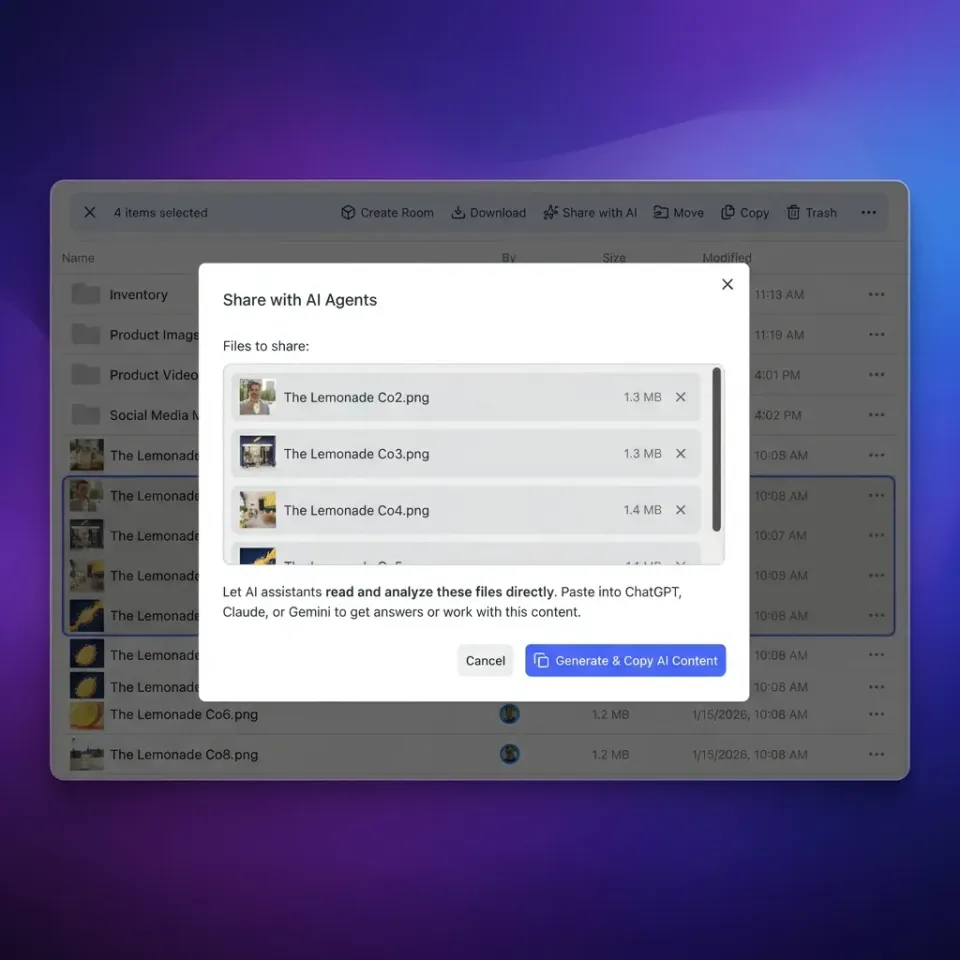
Dagster storage for AI agents handles persistence of assets generated by agent-driven pipelines. These include model outputs, intermediate datasets, embeddings, and execution metadata.
graph TD
  A[AI Agent Pipeline] --> B[Dagster Op/Asset]
  B --> C[IO Manager]
  C --> D[Fastio Workspace]
  D --> E[MCP Tools]
  E --> F[RAG Query]
  F --> G[Agent Response]
This architecture separates compute from storage. Agents produce assets; Dagster materializes them to Fastio. Intelligence Mode auto-indexes files for semantic search.
Fastio differs from S3 by offering agent-native tools. Upload via REST API or MCP, query with citations, transfer ownership to humans.
Helpful references: Fastio Workspaces, Fastio Collaboration, and Fastio AI.

Related guides
- How to Set Up Agentic AI Storage for Persistent Agent MemoryAgentic AI storage provides persistent file and data access that autonomous agents need to complete multi-step tasks...
- How to Set Up Storage for Agent Testing EnvironmentsAgent testing environment storage provides isolated workspaces for developing, testing, and staging AI agents before...
- How to Use Supabase Storage for AI AgentsSupabase provides an open-source backend that combines a Postgres database, file storage, and real-time updates into a...
- Fastio vs Amazon S3: Best Storage for AI Agent WorkspacesAmazon S3 provides raw object storage, while Fastio gives AI agents an MCP-ready workspace. S3 requires developers to...
- Deterministic Replay Storage for AI AgentsDeterministic replay storage captures every input, tool response, and file state of an agent run so the run can be...
- Storage Integration for AI Agent Builder PlatformsAI agent builder platforms need storage integration to persist data, access documents, and deliver outputs. This guide...
More on this subject: Agent Memory and Storage (261 guides)
Why Persist State in Dagster Pipelines?
AI agents in Dagster require durable storage for retries, parallelism, and observability. Without persistence, failures lose artifacts, halting workflows.
Key reasons:
- Retry Safety: Re-execute failed ops without recomputing upstream.
- Multi-Agent Coordination: Share assets across agents via workspaces.
- Cost Control: Reuse embeddings/models instead of regenerating.
- Human Review: Transfer workspaces to teams for validation.
Dagster powers AI/ML at scale. Teams use it for data prep, fine-tuning, and inference pipelines.



Persistent Storage for Dagster Agents?
MCP-compatible workspaces, built-in RAG with Ripley, and a consolidated MCP toolset for Dagster pipeline assets.
Configuring Fastio IO Manager for Dagster
Implement a custom IO manager to write assets to Fastio. Small assets go in one multipart POST to https://api.fast.io/current/upload/. Create an API key in Settings > Devices & Agents > API Keys, or with POST /current/user/auth/key/. Workspace IDs are 19-digit numeric strings.
from dagster import Definitions
import requests

class FastIOManager:
    def __init__(self, workspace_id: str, api_key: str):
        self.workspace_id = workspace_id
        self.api_key = api_key

def write(self, context, obj):
        filename = "asset.bin"
        resp = requests.post(
            "https://api.fast.io/current/upload/",
            headers={"Authorization": f"Bearer {self.api_key}"},
            files={"chunk": (filename, obj)},
            data={
                "name": filename,
                "size": str(len(obj)),
                "action": "create",
                "instance_id": self.workspace_id,
                "folder_id": "root",
            },
        )
        return resp.json()["new_file_id"]
Load in definitions:
defs = Definitions(
    assets=[my_agent_asset],
    resources={"io_manager": FastIOManager(
        workspace_id="1234567890123456789",
        api_key="your_key",
    )}
)
A successful small upload returns HTTP 201 with result, id, and new_file_id. Large assets open a session on the same /current/upload/ route (omit chunk), then POST /current/upload/{id}/chunk/?order=N&size=N, POST /current/upload/{id}/complete/, and GET /current/upload/{id}/details/?wait=60. Agents in the same pipeline can also call MCP at https://mcp.fast.io/mcp/tools.
MCP Integration for Dagster Agents
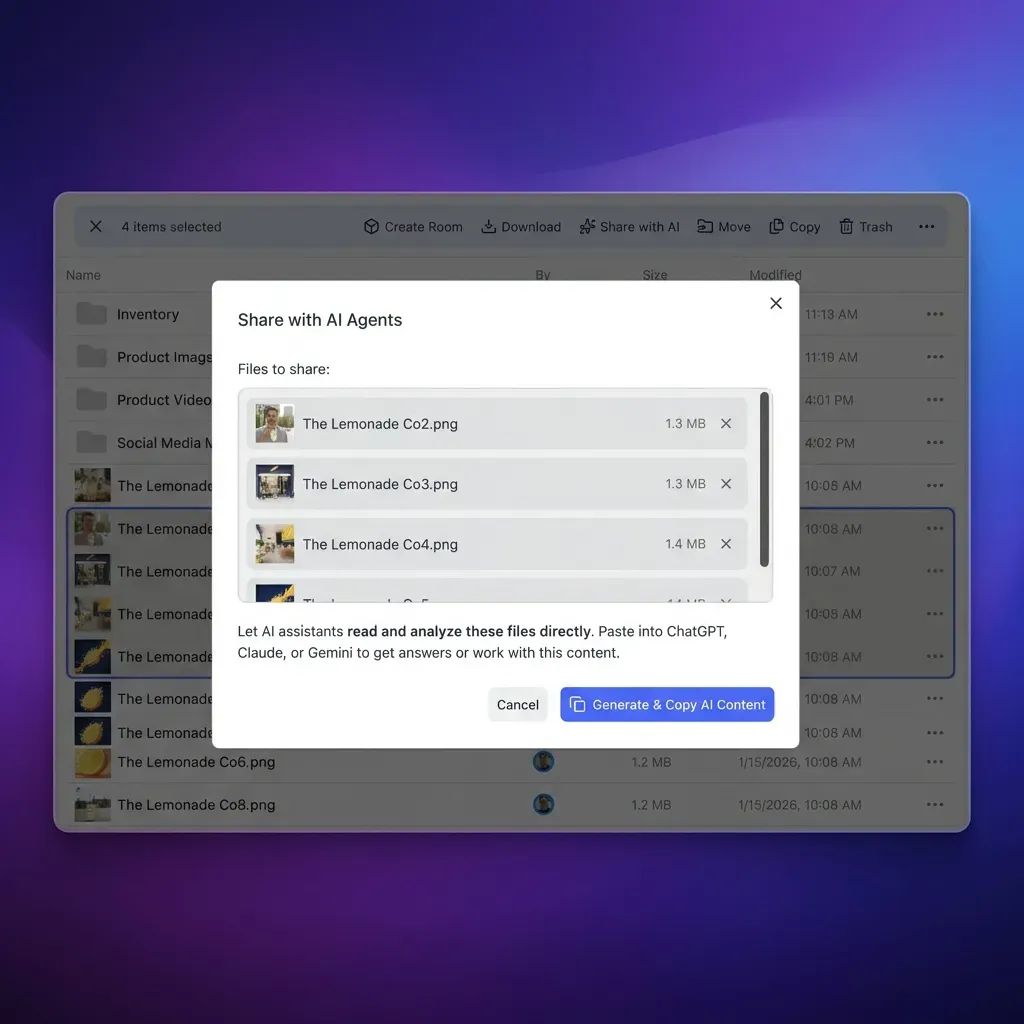
Fastio's MCP server exposes a consolidated toolset over Streamable HTTP at https://mcp.fast.io/mcp/tools (use an Authorization: Bearer <api key> header on the connection). Dagster ops call those tools with JSON-RPC.
Example MCP call in a Dagster op:
import os
import requests

MCP_URL = "https://mcp.fast.io/mcp/tools"
HEADERS = {
    "Authorization": f"Bearer {os.environ['FASTIO_API_KEY']}",
    "Content-Type": "application/json",
}

payload = {
    "jsonrpc": "2.0",
    "id": 1,
    "method": "tools/call",
    "params": {
        "name": "upload_manage",
        "arguments": {
            "action": "web-import",
            "url": "https://example.com/report.pdf",
            "profile_type": "workspace",
            "profile_id": os.environ["FASTIO_WORKSPACE_ID"],
        },
    },
}
response = requests.post(MCP_URL, headers=HEADERS, json=payload)
Use the storage tool (list, search, details) to inspect workspace files, and ai with action ask for a cited answer from Ripley. Watch file activity with GET /current/events/search/ or GET /current/activity/poll/{entityId}?wait=95&lastactivity={timestamp}.
Multi-Agent Workflows and Best Practices
For agents in Dagster pipelines:
- Advisory file locks: Acquire via MCP storage actions (lock-acquire, lock-release) or REST POST .../storage/{node_id}/lock/ to coordinate writes; version history preserves every revision.
- Activity: Poll GET /current/activity/poll/{entityId}?wait=95&lastactivity={timestamp} or search GET /current/events/search/ to advance downstream ops when files change.
- RAG: Query indexed assets in Intelligence Mode. Ripley answers through MCP ai (ask) or POST /current/workspace/{workspace_id}/ai/agent/.
- Ownership Transfer: Agent builds pipeline outputs, hands to human.
Best practices:
- Partition assets by run ID.
- Use metadata for lineage.
- Monitor via Dagster UI + Fastio audit logs.
Edge cases: Large files use POST /current/upload/ to open a session, then POST /current/upload/{id}/chunk/?order=N&size=N, POST /current/upload/{id}/complete/, and GET /current/upload/{id}/details/?wait=60.
Troubleshooting Dagster Storage Issues
Common problems:
- Auth Failures: Verify API keys in Dagster config. Create a key in Settings > Devices & Agents > API Keys, or POST /current/user/auth/key/.
- Usage: Check GET /current/org/{org_id}/billing/details/ and GET /current/org/{org_id}/billing/usage/meters/list/.
- Concurrency: Acquire an advisory file lock before writing so other pipeline ops can wait on HTTP 409, while version history tracks every write.
Test pipeline:
dagster dev -f dagster_dagster.py
Check Fastio workspace for assets. List a folder with GET /current/workspace/{workspace_id}/storage/{parent_id}/list/.
Sources
References used to verify factual claims in this guide.
-
Small file upload is POST https://api.fast.io/current/upload/ with multipart fields name, size, chunk, action=create, instance_id, and folder_id. A successful small upload returns HTTP 201 with result, id, and new_file_id.
-
Consolidated MCP toolset available
Frequently Asked Questions
What is Dagster storage for agents?
Dagster storage persists assets from AI agent pipelines, including data, models, and state. Fastio provides MCP tools for smooth integration.
Best persistence options in Dagster?
S3 for blobs, Postgres for metadata, Fastio for agent-native features like RAG and MCP.
How to integrate Fastio with Dagster?
Build a custom IO manager that POSTs to https://api.fast.io/current/upload/ with multipart fields name, size, chunk, action=create, instance_id, and folder_id. Large assets use the chunk, complete, and details steps on the same upload session. Agents can also call MCP tools at `https://mcp.fast.io/mcp/tools`.
Does Fastio work with multi-agent Dagster pipelines?
Yes, advisory file locks, granular permissions, version history, and shared workspaces enable safe concurrent coordination.
How do Dagster ops authenticate to Fastio?
Create an API key in Settings > Devices & Agents > API Keys, or POST /current/user/auth/key/. Send the key as an Authorization Bearer token on every REST call. For MCP, use `https://mcp.fast.io/mcp/tools` with the same Bearer header.
Related Resources

Persistent Storage for Dagster Agents?
MCP-compatible workspaces, built-in RAG with Ripley, and a consolidated MCP toolset for Dagster pipeline assets.