How to Build an Agentic Virtual Data Room for Due Diligence
Agentic virtual data rooms use AI agents for automated due diligence, handling document review and secure sharing. Skip manual keyword hunts, get semantic search and cited summaries instead. Fastio provides the infrastructure with Intelligence Mode RAG, MCP agent tools, and branded portals. Build scalable workflows for M&A, VC, or legal audits.


What Is an Agentic Virtual Data Room?
An agentic virtual data room (VDR) deploys AI agents to automate due diligence processes. Agents organize documents, perform semantic searches, generate summaries with citations, and flag anomalies. This goes beyond traditional storage by adding autonomous analysis.
Due diligence involves scrutinizing targets' contracts, financial statements, IP portfolios, and litigation records. Manual methods are slow and error-prone, often taking weeks for complex deals. Agentic systems compress this to days through targeted automation.
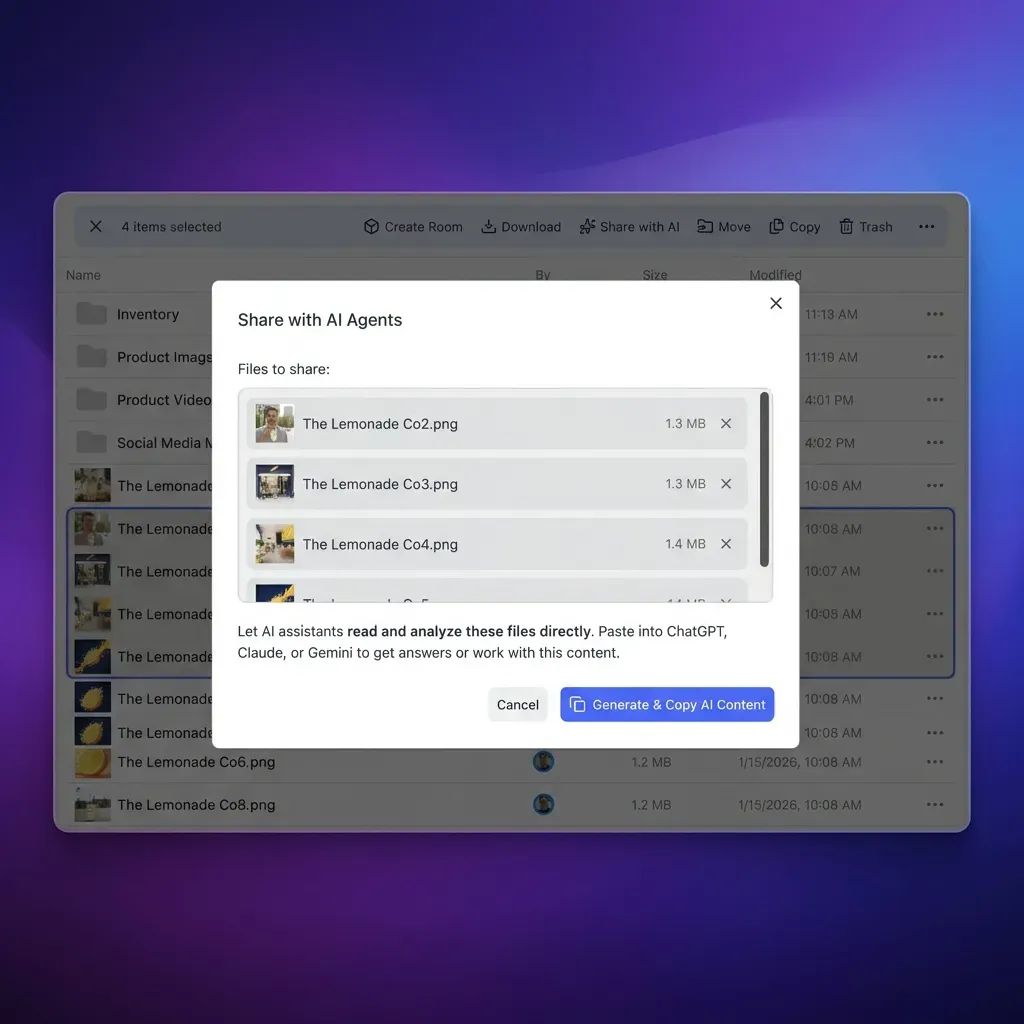
Fastio enables this natively. Create a workspace, upload files, enable Intelligence Mode for auto-indexing. Query naturally: "Summarize cap table changes" or "Identify change-of-control clauses." Built-in RAG provides cited responses.
Key advantages: files indexed by meaning, MCP tools for agents, branded shares for buyers. Links: Workspaces, AI, Collaboration.
Agentic VDRs fit M&A, VC investments, legal audits. Buyers access secure portals while agents pre-process data behind scenes.
Core Capabilities
The distinguishing feature of agentic VDRs is their ability to execute workflows without constant human direction. A traditional VDR stores documents and tracks who accessed them. An agentic VDR actively analyzes content, identifies patterns, and surfaces insights. For example, when uploading contracts, an agent can automatically categorize them by type, extract key terms, and flag anomalies like missing signatures or unusual clauses.
This automation matters because due diligence volumes have grown dramatically. A mid-market acquisition might involve thousands of documents across finance, legal, operations, and HR. Human reviewers cannot scan everything thoroughly. Agents handle the first pass, flagging priority items for human attention. This shifts reviewer time from searching to analyzing, improving both speed and quality.
How Agents Interpret Documents
Unlike keyword search that looks for exact matches, semantic search understands meaning. When you ask "Show me all agreements with indemnification clauses," semantic search finds documents containing related concepts even when the exact phrase doesn't appear. This matters because legal language varies widely. An indemnification clause might appear as "hold harmless," "defend and indemnify," or "liability for third-party claims."
Fastio's Intelligence Mode uses built-in RAG to understand context. Ask questions in plain language and receive answers with citations pointing to specific pages. This bridges the gap between what you need to find and how documents are actually written.

Related guides
- How to Set Up AI Agent Due Diligence Data RoomsDue diligence data rooms with AI agents automate document reviews in secure VDRs. Manual DD takes weeks. AI agents...
- Best iDeals Virtual Data Room Alternatives for 2026iDeals is one of the most popular virtual data rooms for M&A and due diligence, but it is not the only option. This...
- How to Integrate AI into Virtual Data RoomsAI agents in virtual data rooms search documents and automate tasks securely. Unlike traditional VDRs with separate Q&A...
- Intralinks Data Room: Features, Pricing, and Alternatives for 2026Intralinks is one of the oldest virtual data room platforms, now owned by SS&C Technologies. It has facilitated over...
- How to Build a Biotech Data Room for Due DiligenceA biotech data room is a secure virtual workspace where life sciences companies share proprietary research, clinical...
- How to Use a Data Room Q&A Feature for Due DiligenceA data room Q&A feature is a structured communication module inside a virtual data room that lets deal participants ask...
More on this subject: Data Rooms and Due Diligence (53 guides)
Agentic VDR vs Traditional VDR
Traditional VDRs like ShareFile or Box handle secure sharing. You upload folders, manage permissions, and track views. They lack analysis tools.
Agentic VDRs layer on AI capabilities. Comparison:
Older systems force teams to hunt through PDFs manually. Agentic ones let you ask for meaning directly, such as "Show revenue risks" instead of "revenue -risk."
When Traditional VDRs Fall Short
Consider a typical M&A scenario: a target company has documents across multiple data rooms. A traditional VDR organizes these into folders: Financials, Legal, Operations, HR. Buyers navigate folder structures, download files, and read them manually. This works for small deals but breaks down at scale.
The problem compounds when multiple buyers access the room simultaneously. Each conducts parallel reviews, requesting similar analyses from the seller's team. Response times slow. Key documents get buried in folder hierarchies. Reviewers spend hours locating relevant materials instead of analyzing them.
Traditional VDRs track activity: downloads, views, time spent, but provide no insight into document content. You know a buyer viewed the Q3 financials, but not whether they found what they needed. The burden falls on the seller to anticipate questions and organize proactively.
How Agentic Systems Transform Review
Agentic VDRs flip this dynamic. Instead of buyers hunting through folders, they ask questions and receive targeted answers. "Summarize the company's debt obligations" returns a cited analysis of all debt-related documents. "Identify change-of-control provisions in vendor agreements" flags specific clauses across contracts.
This shifts the workflow dramatically. Agents ingest all documents upfront, indexing them semantically. Buyers ask questions in natural language. The system retrieves relevant passages, synthesizes findings, and presents answers with source citations. Human reviewers validate insights rather than performing initial scans.
The efficiency gains ripple through the deal timeline. Traditional M&A might allocate weeks for document review. Agentic workflows compress this to days or hours for initial analysis. Buyers arrive at negotiation meetings better informed. Sellers field fewer repetitive requests.


Start Your Agentic VDR Today
Plans with seats included, MCP tools, and branded shares. Reviewers invited as guests do not take a seat. Built for agentic virtual data room workflows.
Benefits for Due Diligence Workflows
Agentic VDRs accelerate due diligence by automating document triage and analysis. Agents extract financial metrics from spreadsheets, summarize contracts, and flag risks like unusual termination clauses. Legal teams spend less time searching and more time strategizing.
Speed gains are immediate. Manual review of large document sets can take weeks for a small team. Agents handle the first pass in hours, generating cited summaries and key excerpt lists. Humans focus on validation and negotiation.
Semantic search drives accuracy. Keyword tools miss synonyms or context, like "material adverse effect" variations. Semantic methods grasp meaning, retrieving relevant docs even with phrasing differences.
Per-user VDRs add up during peaks. Fastio sells flat plans with seats included, with metered overage for extra storage, bandwidth and AI credits, and reviewers invited as guests do not take a seat.
Branded data room portals deliver buyer insights. Monitor time on financials vs IP docs, download patterns, and peak access hours. Instantly revoke if needed, backed by detailed audit logs.
In M&A deals, agents lead: scan for earn-outs, diligence checklists, or litigation notes. Pair with human expertise for faster closes.
Real-World Use Cases
Legal firms use agentic VDRs for litigation document review. When facing thousands of documents in discovery, agents categorize by relevance, extract key dates and parties, and flag privilege concerns. Lawyers review flagged items rather than reading everything. This speeds case preparation significantly.
Private equity firms run multiple simultaneous deals. An agentic VDR lets them maintain standardized diligence checklists across acquisitions. Agents apply the same criteria to each target, generating comparable analyses. Investment committees receive consistent reports faster, enabling quicker decision-making.
Corporate development teams use agents for internal audits. When acquiring a company, they need to understand not just financials but compliance posture, IP ownership, and contract obligations. Agents scan across these domains, surfacing risks that might otherwise emerge post-close.
Quantified Impact
The efficiency gains translate directly to deal economics. A typical mid-market M&A involves substantial VDR costs: per-user licenses, setup fees, and per-page overages. Fastio pairs plans that include seats with usage-based credits for AI work, potentially saving significant amounts compared to traditional per-user models.
Time compression matters too. Deals that face delays partly because of due diligence can move faster with automated document review. Faster closes mean lower financing costs and quicker path to value creation.

Step-by-Step Setup on Fastio
Begin with a Fastio account. Create an organization and a workspace, then generate an API key in Settings > Devices & Agents > API Keys (or POST /current/user/auth/key/).
Step 1: Set Up Organization and Workspace Register at Fastio. Name org "Deal Review LLC." Create workspace "TargetCo DD Room." Set org-only access. Toggle Intelligence Mode on for semantic indexing and RAG queries.
Step 2: Upload Due Diligence Documents Drag-and-drop contracts (PDF), financials (XLSX), IP docs (DOC). Handles uploads up to 25 GB on Starter, 50 GB on Business and 100 GB on the Enterprise plan, auto-chunks large ones. API alternative:
curl -X POST https://api.fast.io/current/upload/ \
  -H "Authorization: Bearer $API_KEY" \
  -F "name=10k.pdf" \
  -F "size=12345" \
  -F "chunk=@local/10k.pdf" \
  -F "action=create" \
  -F "instance_id=1234567890123456789" \
  -F "folder_id=root"
Step 3: Integrate AI Agents
Connect the agent to Streamable HTTP at https://mcp.fast.io/mcp/tools and send your API key as a Bearer token on the connection. Named mode exposes a consolidated toolset, including upload, storage, find, ai, share, fileshare, event, and metadata. Each area that takes writes has a read tool and a _manage tool for those changes, such as upload_manage and ai_manage. find, download, and how-to are single read-only tools.
Coding agents (Claude Code, Cursor) connect to https://mcp.fast.io/mcp/code and use the code-mode set: auth, auth_manage, upload, upload_manage, search, execute, execute_manage, and how-to.
Step 4: Perform AI Analysis Workspace chat: "Extract EBITDA trends from financials." Cited responses with page refs. Ripley, the built-in RAG agent, answers the same question over MCP with action ask:
{"jsonrpc":"2.0","id":1,"method":"tools/call",
 "params":{"name":"ai_manage","arguments":{"action":"ask","profile_type":"workspace","profile_id":"1234567890123456789"}}}
Step 5: Launch Branded Data Room From workspace: "New Share" > Data Room. Customize logo/background, password-protect, restrict domains. Analytics track views/downloads. Agents create a Send, Receive, or Exchange share with POST /current/workspace/{workspace_id}/create/share/, or a durable single-file link with POST /current/workspace/{workspace_id}/create/fileshare/.
Step 6: Monitor and Secure Review audit logs and the deal intelligence dashboard. Confirm new activity with GET /current/activity/poll/{entityId}?wait=95&lastactivity={timestamp} or GET /current/events/search/. Add the deal team with POST /current/workspace/{workspace_id}/members/{email_or_user_id}/.
Test: Load sample docs, query "cap table issues," share and simulate buyer access.
Understanding Credit Usage
Fastio plans include storage; extra storage is metered at 1.5 cents/GB/mo and bandwidth at 4 cents/GB, and each plan adds monthly credits for AI operations. Storage runs competitively with S3 and is significantly cheaper than legacy VDRs that bundle storage with per-user licensing. Bandwidth costs are reasonable for deal rooms where data room downloads happen during specific deal windows.
AI operations use credits efficiently. Semantic search against a large document repository consumes modest credits. Summarization runs higher depending on document length. Usage-based credits scale with the rooms you run, which stays favorable compared to traditional per-user VDR pricing.
Organizing Documents for AI Analysis
Effective agentic VDRs require thoughtful folder structure. While agents can search across all content, organizing by domain helps. Common structures include separating Financials (audited statements, projections, debt agreements), Legal (contracts, litigation, compliance), Operations (permits, supplier agreements, IP), and HR (employment agreements, benefits, restructuring plans).
This organization serves two purposes. First, it mirrors how buyers conduct diligence: they have separate teams reviewing different domains. Second, it lets you scope agent queries to relevant folders. Asking about debt only in the Financials folder returns cleaner results than searching everything.
Enable Intelligence Mode at the workspace level for comprehensive indexing. The system automatically chunks large documents, indexes content semantically, and makes everything searchable by meaning. This works without any configuration: the moment you upload a file, it becomes queryable.
Integrate Agents for Automated Review
Agents need structured tools to operate effectively. Fastio MCP provides a consolidated toolset, including upload, storage, find, ai, metadata, share, fileshare, and event.
Standard workflow:
- URL import with an MCP upload_manage tools/call (action web-import) into the workspace.
- Auto-index in Intelligence Mode.
- Analyze with find (unified search) or the ai_manage tool (action ask) for a cited answer from Ripley.
- Write a markdown note with workspace_manage create-note.
- Watch the room with the event tool, or poll GET /current/activity/poll/{entityId}?wait=95&lastactivity={timestamp}.
Multi-agent setups coordinate concurrent access using advisory file locks and version history. An agent acquires a file lock before writing, heartbeats it while working, and releases it when finished, while Fastio maintains an detailed activity log and per-file version history for all updates.
Handoff: the agent builds the room (workspaces, uploads, Send, Receive, or Exchange shares), then adds the deal team with POST /current/workspace/{workspace_id}/members/{email_or_user_id}/.
LLM agnostic: Claude Desktop adds https://mcp.fast.io/mcp/tools as a custom connector, and a headless client sends a Bearer token to the same address. Example tools/call:
{"jsonrpc":"2.0","id":1,"method":"tools/call",
 "params":{"name":"upload_manage","arguments":{"action":"web-import","url":"https://example.com/report.pdf",
 "profile_type":"workspace","profile_id":"1234567890123456789"}}}
Scale to dozens of deals: plans include storage, bandwidth is billed by use, and credits track AI usage across rooms.
Agent Workflow Patterns
Successful agentic VDR deployments follow repeatable patterns. The most common starts with URL import: pulling documents from a source URL without downloading locally. Agents call MCP upload_manage with action web-import (url, profile_type, profile_id), or POST /current/web_upload/ with source_url, file_name, profile_id, profile_type, and folder_id.
Once imported, documents enter Intelligence Mode automatically. The indexing process runs in the background, chunking content and building semantic embeddings. Large documents get split into logical sections, preserving context. This ensures that queries return specific passages rather than forcing users to read entire files.
Analysis workflows typically follow a three-step pattern. First, semantic search identifies relevant documents. Second, targeted extraction pulls specific data points: dates, amounts, parties, terms. Third, synthesis combines extracted data into summaries with citations. This parallels how human analysts work but at machine scale.
Multi-Agent Coordination
Complex deals benefit from multiple specialized agents working in parallel. One agent might focus on financial documents, extracting revenue patterns, debt covenants, and cash flow metrics. Another handles legal analysis: identifying material contracts, litigation exposure, and regulatory compliance. A third monitors activity patterns, tracking buyer engagement with the data room.
Coordination requires careful design. Agents need to avoid conflicting operations on shared files. Advisory file locks let an agent signal active writes so others can wait; if another agent attempts to lock the file, it receives an HTTP 409. Version history and audit logs ensure every write is preserved regardless.
Team handoff becomes critical in multi-agent setups. An agent might build the entire data room: creating workspaces, organizing folders, uploading documents, configuring Send, Receive, or Exchange shares, running initial analysis. When the deal team takes over, add each reviewer with POST /current/workspace/{workspace_id}/members/{email_or_user_id}/ so people and agents share the same room.
Security and Best Practices
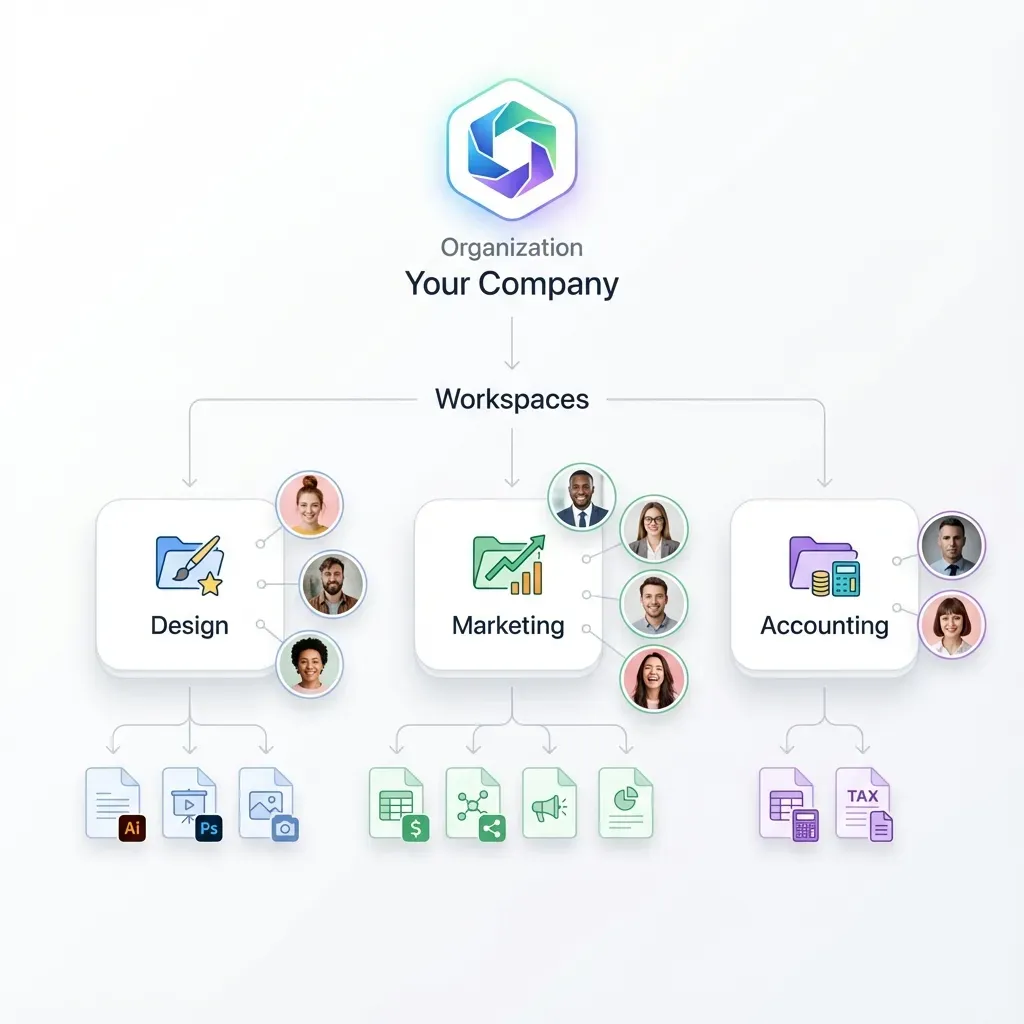
Fastio secures agentic VDRs with layered controls. Permissions cascade from org > workspace > folder > file. Role-based: admin, editor, viewer.
Encryption covers data at rest (AES-256) and transit (TLS 1.3). MFA required for admins. Audit logs capture every action: views, downloads, queries, permission changes.
Fastio includes security features suited for most deals: instant revocation, domain restrictions, an option to disable downloads, and detailed audit logs.
Best practices:
- Batch index >500 page sets to avoid credit spikes.
- Scope agent queries to folders (e.g., /financials only).
- Human-review agent outputs for nuance.
- Expire shares post-deal; auto-delete after 90 days.
- Use advisory file locks and version history for multi-agent edits.
Monitor via activity feeds and deal intelligence: heatmaps of buyer focus and access patterns. Confirm events with GET /current/events/search/ or GET /current/activity/poll/{entityId}?wait=95&lastactivity={timestamp}.
Troubleshooting: High credits? Optimize queries. Slow indexing? Chunk large PDFs. Access issues? Check permission inheritance.
Managing Deal Room Security
Security in agentic VDRs requires balancing accessibility with protection. Fastio provides multiple layers. At the organization level, administrators control which domains can access workspaces. This prevents unauthorized access even if login credentials leak. Workspace permissions and branded share settings keep access scoped to the deal team.
Workspace-level permissions determine what users can do within a deal room. Admins see everything and manage settings. Editors can upload and modify documents. Viewers access content but cannot change anything. This hierarchy mirrors real deal workflows. Lawyers might need edit access to upload additional documents, while board members receive view-only access to protect sensitive materials.
The audit trail captures everything. Every view, download, search query, and permission change gets logged with timestamps and user identities. This creates the accountability that due diligence requires. If a buyer shares credentials with unauthorized colleagues, the logs reveal it. If a document gets downloaded at unusual hours, the logs show it.
Handling Post-Deal Data
Deals conclude, but data remains. Responsible VDR management includes clear retention policies. Documents from failed deals should expire automatically. Set shares to terminate after a set period. Completed deals might require longer retention for legal protection, but limit access to essential personnel.
Fastio supports automated expiration. When a share reaches its end date, access revokes immediately. No manual intervention needed. Combined with workspace-level deletion policies, this prevents data accumulation across deals.
The key is planning retention before launching the data room. Document what happens to materials after closing, what access continues for post-deal integration, and when full deletion occurs. This avoids ad-hoc decisions that create security gaps.
Frequently Asked Questions
What is an agentic VDR?
It uses AI agents to automate due diligence, like reviewing documents and flagging risks. Secure storage pairs with semantic search and summaries.
How does agentic VDR differ from traditional?
Traditional ones focus on sharing and tracking. Agentic adds AI for analysis and cuts down manual review time.
Can agents build VDRs on Fastio?
Yes. They create workspaces via MCP or POST /current/org/{org_id}/create/workspace/, enable intelligence, upload files, and add the deal team with POST /current/workspace/{workspace_id}/members/{email_or_user_id}/.
What file types work with semantic search?
PDFs, Word, Excel, plain text. Intelligence Mode indexes them for RAG queries.
How do agents connect to a Fastio VDR?
Point the agent at https://mcp.fast.io/mcp/tools and send an API key with a Bearer header. Create an API key in Settings > Devices & Agents > API Keys, or with POST /current/user/auth/key/. Use upload, storage, find, ai, share, and event, plus their _manage tools for changes, to run the room.
How secure are Fastio data rooms?
Full encryption, audit logs, detailed permissions, instant access revocation. Branded portals include analytics.
Related Resources

Start Your Agentic VDR Today
Plans with seats included, MCP tools, and branded shares. Reviewers invited as guests do not take a seat. Built for agentic virtual data room workflows.