Top 7 AI Workspaces for Architecture Agents in 2026
Top AI workspaces for architecture agents let AI handle BIM modeling, site planning, and design reviews. These platforms support agentic workflows in architecture, engineering, and construction (AEC), but few offer true multi-agent BIM sharing. According to ENR, 16% of A/E firms use generative AI on projects, creating demand for better agent tools.
How We Selected These AI Workspaces
We evaluated platforms based on agent support, BIM/CAD compatibility, multi-agent collaboration, API/MCP access, pricing, and AEC-specific features. Platforms needed persistent storage for models, search across files, and human-agent handoff. We prioritized those filling the gap in multi-agent BIM sharing, where agents can co-edit models without conflicts. We prioritized platforms with strong API/MCP support and AEC file compatibility like IFC and Revit.
Quick Comparison: Top AI Workspaces for Architecture Agents
Here's how the top AI workspaces stack up:
1. Speckle
Speckle is an open platform for sharing BIM models across tools like Revit, Rhino, and Grasshopper. It streams 3D data and supports custom automations via API.
Strengths:
- Strong interoperability for AEC files
- Real-time model streaming
- Open-source core for custom agents
Limitations:
- Limited built-in AI agent tools
- Enterprise for advanced collab
Best for teams needing open BIM exchange. Pricing starts free, scales to enterprise. Architecture agents can use its open-source connectors to automate BIM data flows across tools like Revit and Rhino.
2. Autodesk Platform Services (APS)
Autodesk APS provides APIs for BIM data, model viewing, and automation within the Autodesk ecosystem like Revit and Forma.
Strengths:
- Deep BIM integration
- Forge APIs for agent workflows
- Scalable for large projects
Limitations:
- Tied to Autodesk tools
- Complex setup for non-Autodesk users
Best for Autodesk-heavy firms. Usage-based pricing after trial. Suited for Autodesk users extending to agent automation via Forge APIs.
3. Fastio
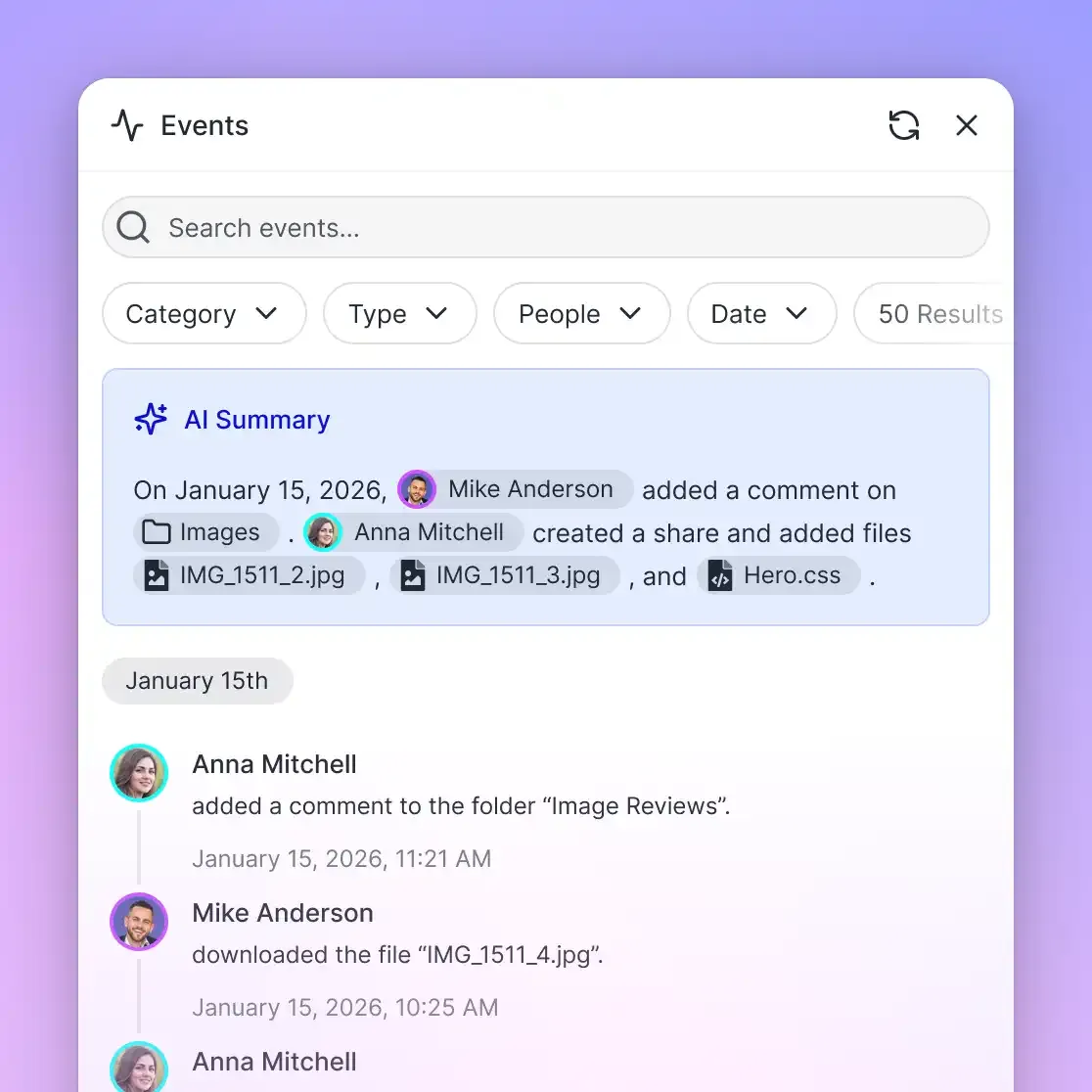
Fastio is an intelligent workspace where AI agents join human teams. Agents use 251 MCP tools for file ops, RAG queries on CAD/BIM files, and multi-agent collab.
Strengths:
- Multi-agent BIM sharing: File locks prevent conflicts, webhooks for events
- Free agent tier: 50GB storage, 5,000 credits/month, no credit card
- Built-in Intelligence Mode: Auto-index BIM files for semantic search/chat
- Ownership transfer: Agents build workspaces, hand off to humans
- OpenClaw integration for natural language file mgmt
Limitations:
- Credits for heavy AI use beyond free tier
Best for agentic AEC teams needing shared BIM workspaces. Free agent tier covers most workflows.


Give Your AI Agents Persistent Storage
Fastio provides intelligent workspaces with 251 MCP tools, RAG search, and multi-agent collab. Start with 50GB free, no credit card. Built for workspaces architecture agents workflows.
4. TestFit
TestFit uses AI for site planning and feasibility, generating layouts from inputs like zoning/parking.
Strengths:
- Fast generative design
- Revit exports
- Real estate/arch focus
Limitations:
- Narrow scope (sites only)
- No multi-agent support
Best for early-stage planning. Subscription pricing. Agents automate feasibility studies, generating Revit-compatible outputs for downstream BIM workflows.
5. Hypar
Hypar is a cloud platform for parametric building design with APIs for automation.
Strengths:
- Scriptable models
- Collaborative parametric design
- API for agents
Limitations:
- Learning curve for params
- Limited file previews
Best for computational design. Subscription model. Enables agent-scripted parametric designs for efficient architectural exploration.
6. Archistar
Archistar automates compliance checks on designs using AI across PDF/CAD/BIM.
Strengths:
- Instant permit feasibility
- Multi-format support
- Speeds approvals
Limitations:
- Analysis only, no modeling
- Custom pricing
Best for regulatory workflows. Contact for pricing. Agents run compliance simulations across multiple formats to accelerate approvals.
7. BricsCAD BIM
BricsCAD offers AI-powered BIM tools like auto-classification and prop management.
Strengths:
- Native DWG editing
- AI for tedious tasks
- Affordable alternative to Revit
Limitations:
- Desktop-heavy
- Less cloud collab
Best for DWG-based firms. ~published pricing.
Which AI Workspace Should You Choose?
Choose Speckle or Autodesk APS for pure BIM sharing. Pick Fastio for multi-agent agentic workflows with human collab and free agent storage. TestFit suits site gen, Hypar params.
What Does Industry Data Say About AI in AEC?
Adoption is growing. According to ENR, A/E firms are using generative AI on projects, mostly for writing but expanding to design. This growth drives need for specialized AI workspaces in AEC.
Frequently Asked Questions
What are the top AI workspaces for architecture?
Speckle, Autodesk APS, Fastio, TestFit, Hypar, Archistar, and BricsCAD BIM lead for agentic BIM and AEC.
What's the best AI workspace for architecture agents?
Fastio works well for architecture agents with MCP tools, multi-agent locks, RAG on files, and free 50GB tier.
What is agentic BIM?
Agentic BIM uses AI agents for autonomous modeling, analysis, and collaboration on building information models.
Do these platforms support multi-agent BIM sharing?
Few do; Fastio fills this gap with file locks, webhooks, and shared intelligence workspaces.
How much does Fastio cost for agents?
Free tier gives agents 50GB storage, 5 workspaces, 5,000 credits/month, no credit card required.
Related Resources

Give Your AI Agents Persistent Storage
Fastio provides intelligent workspaces with 251 MCP tools, RAG search, and multi-agent collab. Start with 50GB free, no credit card. Built for workspaces architecture agents workflows.