How to Set Up an MCP Gateway for Multi-Agent Systems
Guide to mcp gateway setup: An MCP gateway centralizes requests from AI agents to multiple servers. This guide shows you how to set up a proxy layer that handles tool discovery, authentication, and load balancing for production-grade agentic workflows.
What is an MCP Gateway?
An MCP gateway is a centralized proxy that routes requests from AI agents to multiple MCP servers, handling authentication, load balancing, and tool discovery in one place. While individual MCP servers provide specific capabilities, a gateway acts as the traffic controller for your entire agentic ecosystem.
In production environments, agents rarely rely on a single server. You might have one server for database access, another for file storage, and a third for web search. Connecting an agent directly to fifteen different servers creates massive connection overhead and security risks.
Gateway patterns reduce connection overhead compared to direct server connections. By providing a single endpoint for your agent, the gateway simplifies the client-side configuration while centralizing the management of tool permissions and rate limits.
Helpful references: Fastio Workspaces, Fastio Collaboration, and Fastio AI.
Gateway vs. Direct Connections: Architecture Comparison
The primary difference between a direct connection and a gateway is where the orchestration happens. In a direct setup, the AI client (like Claude Desktop or a custom Python agent) must manage every server URL, API key, and transport protocol individually.
With a gateway, the agent connects to one "Model Context Protocol Gateway" via a single SSE or HTTP connection. The gateway then handles the internal routing to various sub-servers.
Benefits of the Gateway Pattern:
- Unified Tool Discovery: The agent sees a single list of tools instead of fragmented lists from multiple sources.
- Secret Management: You only need to share the gateway credentials with the agent, keeping individual server keys hidden.
- Load Balancing: Distribute requests across multiple instances of the same MCP server to prevent bottlenecks.
- Protocol Translation: Convert between different transports, such as taking a standard HTTP request and routing it to a specialized SSE server.

Step-by-Step: Configuring Your First MCP Gateway
Setting up a gateway involves defining your upstream servers and configuring the routing logic. You can use open-source frameworks or custom proxy servers to achieve this.
1. Define Your Upstream Servers
Create a configuration file (typically JSON or YAML) that lists the MCP servers you want to aggregate. Each entry should include the server name, the endpoint URL, and any necessary environment variables.
2. Configure the Transport Layer
Most gateways support both Server-Sent Events (SSE) and standard HTTP. Choose the transport that matches your agent framework. For web-based agents, SSE is often preferred for its real-time streaming capabilities.
3. Set Up Global Authentication
Implement a single authentication layer at the gateway level. This ensures that only authorized agents can access your suite of tools. You can use Bearer tokens or OAuth2 to secure the entry point.
4. Initialize Tool Discovery
Once the gateway is running, it will query all connected upstream servers to build a master manifest of available tools. Your agent can then request this manifest through the standard MCP 'tools/list' command.


Give Your AI Agents Persistent Storage
Connect your MCP gateway to Fastio for 50GB of free persistent storage and 251 powerful agent tools. No credit card required.
Advanced Routing and Security Best Practices
As your agent system grows, security becomes the most important factor in your gateway configuration. You must ensure that agents can only access the specific tools they need for a given task.
Production agent systems often connect to multiple MCP servers simultaneously. Managing this scale requires granular permission sets. Use the gateway to implement "least privilege" access, where certain agent sessions are restricted from sensitive tools like database write operations.
Critical Security Measures:
- Request Validation: Sanitize inputs at the gateway before they reach upstream servers.
- Audit Logging: Record every tool call, including the parameters used and the identity of the agent making the request.
- Rate Limiting: Set global and per-server limits to prevent a single agent from exhausting your API quotas.
- IP Whitelisting: Restrict gateway access to known agent infrastructure or specific VPC ranges.
Integrating Fastio for Persistent Agent Storage
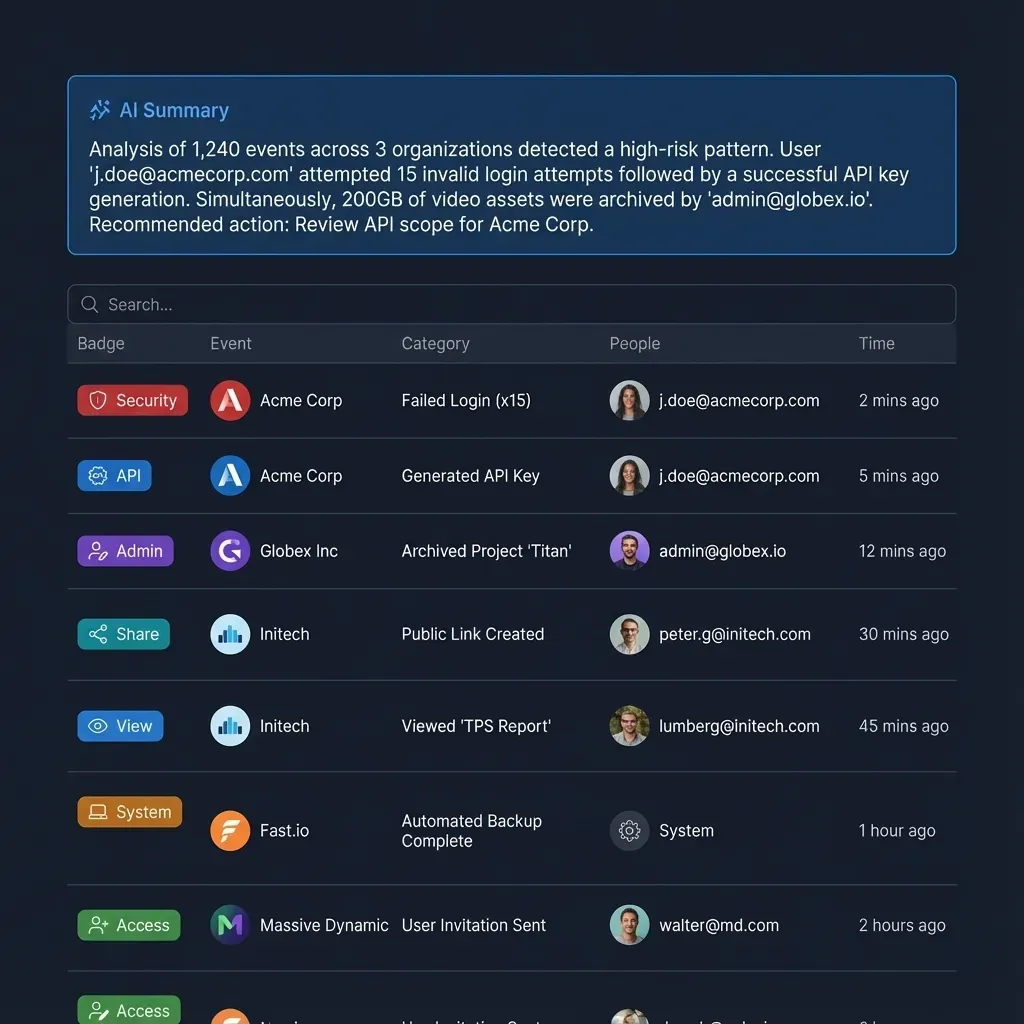
One of the powerful uses for an MCP gateway is connecting your agents to a persistent workspace. Fastio provides an official MCP server with 251 tools that cover every aspect of file management, sharing, and intelligent search.
When you add the Fastio server to your gateway, your agents gain the ability to create workspaces, upload files up to 1GB, and use built-in RAG with citations. This is especially useful for multi-agent systems where one agent might generate a report and another agent needs to share it with a human client.
By using Intelligence Mode in your Fastio workspaces, the files your agents upload are automatically indexed. This means any other agent connected to your gateway can perform semantic searches across those files without needing a separate vector database.
Troubleshooting Common Gateway Failures
Most gateway issues stem from connection timeouts or schema mismatches between the gateway and upstream servers. If your agent reports that a tool is missing, check the gateway logs to see if the upstream server failed to respond during the discovery phase.
Ensure that all environment variables are correctly passed through the gateway to the sub-servers. Some servers require specific paths or permissions that might be stripped away by a proxy if not explicitly configured.
Finally, monitor the latency added by the gateway layer. While the overhead is usually minimal, complex routing logic or slow authentication checks can add milliseconds to every tool call, which impacts the responsiveness of your AI assistant.
Frequently Asked Questions
What is an MCP gateway?
An MCP gateway is a centralized proxy server that aggregates multiple Model Context Protocol (MCP) servers into a single endpoint. It allows AI agents to access a vast library of tools and resources through one connection while handling security, logging, and load balancing behind the scenes.
How do you connect multiple MCP servers?
You connect multiple servers by defining them as 'upstreams' in your gateway configuration. The gateway queries each server for its available tools and presents a unified manifest to the AI agent. This eliminates the need for the agent to manage multiple individual connections.
What is the difference between an MCP gateway and an MCP server?
An MCP server provides specific tools or data (like a database connector or file system access). An MCP gateway does not provide its own tools; instead, it acts as a router that manages connections between an agent and many different MCP servers.
How do you secure an MCP gateway?
Security is handled through a combination of gateway-level authentication (like API keys), request sanitization, and granular permission sets. You can also implement audit logging and rate limiting to monitor and control how agents interact with sensitive tools.
Can I use an MCP gateway with Claude Desktop?
Yes, you can configure Claude Desktop to connect to your gateway's endpoint. This allows Claude to access all the tools managed by the gateway through a single entry in your mcp_config.json file, simplifying your local setup.
Related Resources

Give Your AI Agents Persistent Storage
Connect your MCP gateway to Fastio for 50GB of free persistent storage and 251 powerful agent tools. No credit card required.