Model Context Protocol (MCP): What It Is and How to Use It
Model Context Protocol (MCP) is an open standard that lets AI models connect to external data sources and tools through a unified interface. This guide explains how MCP works, how it differs from function calling, and how to implement it for your AI applications.

What is Model Context Protocol?
Model Context Protocol (MCP) is an open-source standard introduced by Anthropic in November 2024 to standardize how AI systems like large language models connect with external tools, systems, and data sources. Think of MCP like a USB-C port for AI applications. Just as USB-C provides a standardized way to connect electronic devices, MCP provides a standardized way to connect AI applications to external systems. Before MCP, developers had to build custom connectors for each data source or tool, creating what Anthropic described as an "M×N" data integration problem. If you had M AI applications and N data sources, you needed M×N different integrations. MCP solves this by providing a standardized protocol, turning this into an "M+N problem" where tool creators build N MCP servers (one for each system) and application developers build M MCP clients (one for each AI application). Since its launch, MCP has seen rapid adoption. After the announcement, major AI providers including OpenAI and Google DeepMind adopted the protocol. The community has built thousands of MCP servers, SDKs are available for all major programming languages, and MCP has become the standard for connecting agents to tools and data. According to industry reports, MCP adoption grew 340% in 2025, with over 500 MCP servers now available in public registries.
Helpful references: Fast.io Workspaces, Fast.io Collaboration, and Fast.io AI.
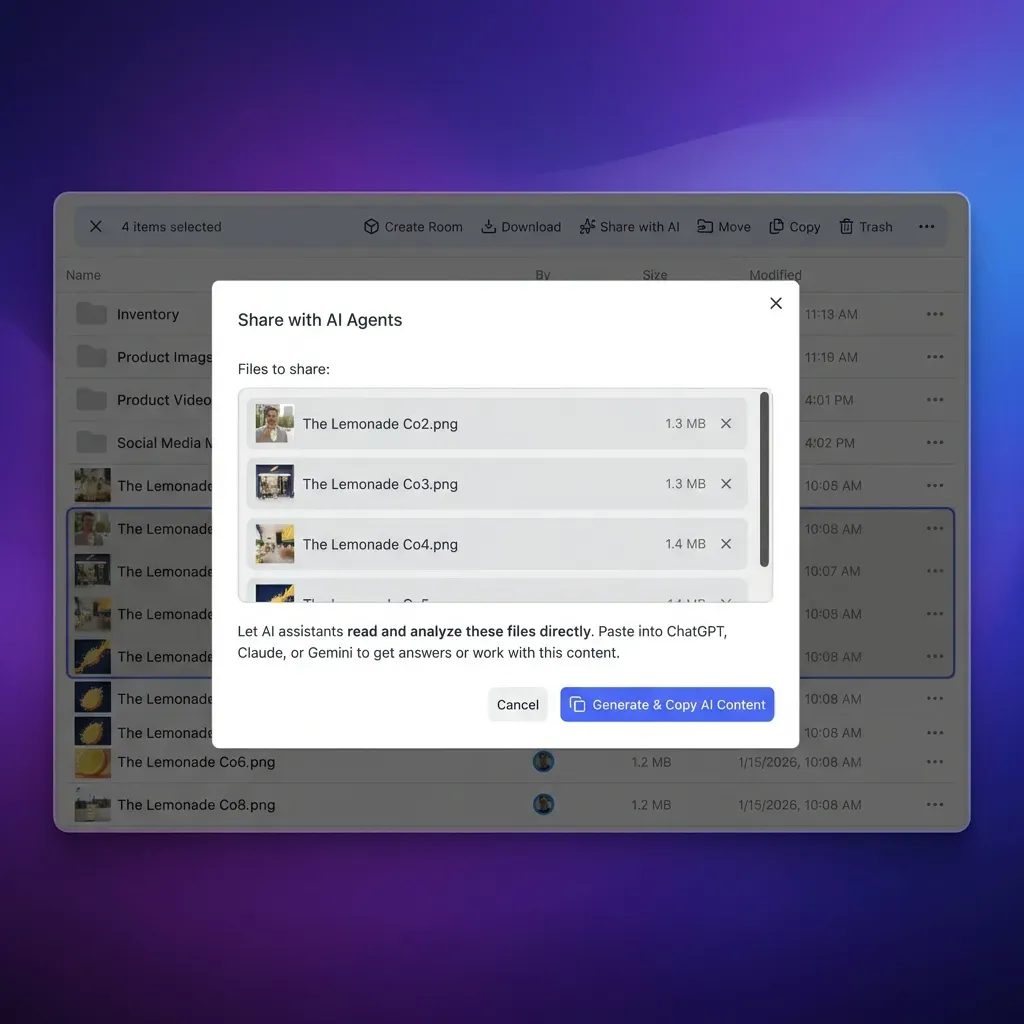
How Model Context Protocol Works
MCP uses a client-server architecture where AI applications (clients) connect to data sources and tools (servers) through a standard protocol.
MCP Architecture Components
MCP Servers expose capabilities through three core primitives:
- Resources: Information retrieval from internal or external databases. Resources provide read-only access to structured data that the AI can query.
- Tools: Information exchange with systems that can perform side effects, such as calculations, API calls, or database writes.
- Prompts: Reusable templates and workflows for LLM-server communication that standardize common interaction patterns.
MCP Clients sit within the host application (like Claude Desktop, VS Code, or Cursor) and manage communication between the LLM and MCP servers. When an LLM needs external data or tools, the client translates requests into JSON-RPC format and routes them to the right server.
MCP Hosts are AI applications or environments that contain both the LLM and the MCP client. The host uses the LLM to process requests that require external data or tools, while the MCP client handles the server communication.
How Data Flows Through MCP
When you ask an AI assistant a question that requires external data:
- The LLM determines it needs information from an external source
- The MCP client discovers available tools and resources from connected servers
- The client sends a JSON-RPC request to the appropriate MCP server
- The server retrieves data or executes the tool
- The response flows back through the client to the LLM
- The LLM incorporates the external data into its response
This architecture keeps the LLM separate from direct system access, adding a security layer while maintaining flexibility.
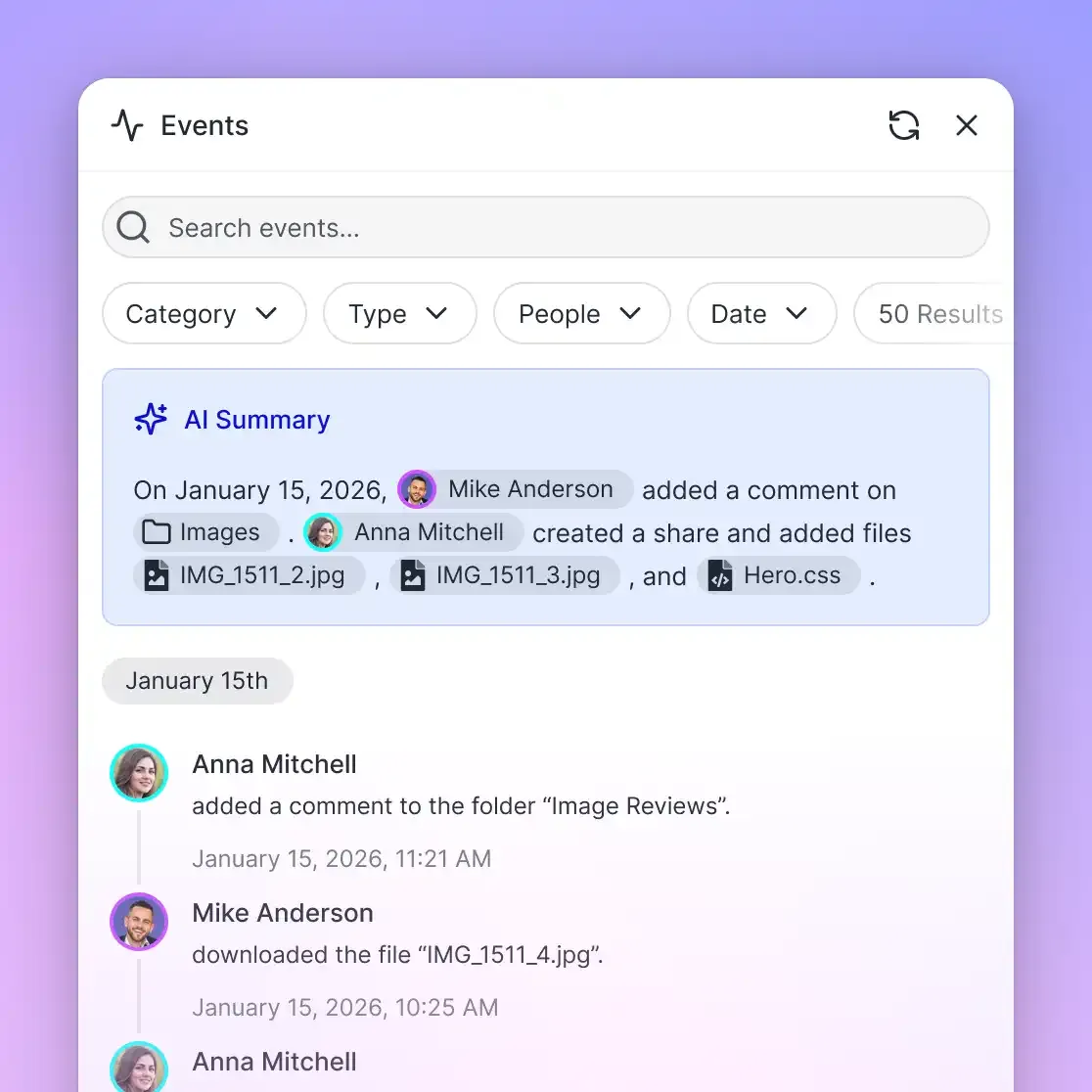
MCP vs Function Calling: Key Differences
MCP and function calling both connect AI models to external tools, but they take fundamentally different approaches.
Function Calling: The Traditional Approach
Function calling, introduced by OpenAI in June 2023, has been the standard way to connect models with external systems. You define functions in the prompt, the model outputs structured JSON to call them, and your application executes the logic within the model's environment or a linked backend. Function calling works well for simple, single-model setups. It's fast, lightweight, and easy to implement. The downside is that it's vendor-specific (OpenAI's implementation differs from Google's), requires code changes for new tools, and gets harder to scale as complexity grows.
MCP: The Universal Standard
MCP takes a different approach by standardizing tool access across models and vendors. Instead of defining tools in your prompt, tools are hosted on separate MCP servers that any compatible client can discover and use. This means you can add new tools without changing your agent code. You can switch between Claude, GPT-4, and Gemini without rewriting integrations. You can share tool servers across teams and projects.
When to Use Each
Use native function calling for quick, simple projects with one model. The setup is faster, and you don't need to run separate servers. Use MCP for complex, scalable systems needing many tools, cross-model compatibility, or independent tool updates. MCP shines in enterprise AI agents, multi-model applications, and scenarios where tools need to be shared across teams. Both approaches work, and many production systems use them together. Function calling for simple internal operations, MCP for external integrations and shared tooling.


Give Your AI Agents Persistent Storage
Fast.io provides 251 MCP tools for file operations, the most comprehensive MCP server for cloud storage. Free agent tier with 50GB storage, no credit card required.
Benefits of Using MCP
MCP addresses real problems for AI developers and organizations deploying agentic systems.
Universal Compatibility
Build once, use everywhere. An MCP server works with Claude, ChatGPT, Gemini, local models, and any future LLM that adopts the standard. You're not locked into a single AI provider.
Fewer Hallucinations
MCP provides a clear path for LLMs to access external, reliable data sources. Instead of relying on outdated training data, models can fetch current information from authoritative sources, making their responses more accurate.
Modular Tool Management
Add, update, or remove tools without touching your agent code. Each MCP server operates independently, so you can deploy new capabilities by spinning up additional servers. No more monolithic tool definitions that require coordinated deployments.
Better Governance and Security
Because tools live on separate servers, you can apply different security policies to different tool categories. File access tools can run with strict permissions, while read-only data sources can be more permissive. Audit logs track exactly which tools accessed which data.
Ecosystem and Reusability
The MCP community has built thousands of ready-made servers. Need database access? There's an MCP server. Need web scraping? Multiple options exist. Use community-built servers instead of building everything from scratch.
Enterprise Scalability
MCP servers can be load-balanced, cached, and deployed across regions. As your AI application grows, your tool infrastructure can scale independently from your LLM hosting.
Implementing MCP in Your AI Application
Setting up MCP depends on whether you're building a client (consuming tools) or a server (providing tools).
Setting Up an MCP Client
Most popular AI development environments support MCP natively. Claude Desktop, Cursor, VS Code with extensions, and frameworks like LangChain offer built-in MCP client support. For Claude Desktop, you configure MCP servers in a JSON config file:
- Open your Claude Desktop config (location varies by OS)
- Add server definitions with connection details
- Restart Claude Desktop
- The client auto-discovers available tools
For custom applications, use one of the official SDKs (TypeScript, Python, Rust, Go, Java) to build a client that:
- Discovers available servers
- Lists their capabilities (resources, tools, prompts)
- Routes LLM requests to appropriate servers
- Handles responses and error states
Building an MCP Server
Creating a server is simple with the official SDKs. A basic Python server using the MCP SDK:
- Install the SDK:
pip install mcp - Define your tools as Python functions with type annotations
- Register tools with the MCP server
- Start the server on a transport (stdio, HTTP, SSE)
The SDK handles JSON-RPC serialization, capability negotiation, and transport details. You focus on implementing your tool logic.
Transport Options
MCP supports multiple transport mechanisms:
- Stdio: Simple for local development and single-user scenarios
- HTTP: Standard for web-based integrations
- SSE (Server-Sent Events): Enables real-time updates and streaming responses
- Streamable HTTP: Combines HTTP's simplicity with streaming capabilities
Choose based on your deployment needs. Local tools work fine with stdio. Production services typically use HTTP or SSE for better scalability.
Production Considerations
When deploying MCP servers at scale:
- Implement rate limiting to prevent abuse
- Add caching for expensive operations
- Use load balancing for high-traffic servers
- Monitor server health and response times
- Version your tool APIs for backward compatibility
- Document tool capabilities for client developers
Real-World MCP Use Cases
MCP enables practical applications across industries.
AI-Powered File Management
Fast.io provides an MCP server with 251 tools for file operations, the most comprehensive MCP server for cloud storage. AI agents can create workspaces, upload files, manage permissions, and transfer ownership to humans, all through natural language interactions. Developers use this to build AI assistants that organize project files, deliver assets to clients, and maintain collaborative workspaces without writing custom file handling code.
Database Access and Querying
MCP servers provide controlled database access for AI agents. Instead of giving an LLM direct SQL access (dangerous), an MCP server exposes safe, parameterized queries as tools. An agent can query customer data, generate reports, and analyze trends without risk of SQL injection or accidental data deletion.
Web Browsing and Research
Browser automation through MCP lets AI agents navigate websites, fill forms, extract data, and perform multi-step research workflows. Agents can gather competitive intelligence, monitor pricing changes, or aggregate information from multiple sources.
Document Processing
OCR, PDF parsing, and document analysis tools exposed through MCP enable agents to process invoices, extract contract terms, and organize scanned documents. The agent coordinates multiple tools (OCR for scanning, NLP for extraction, storage for results) through a unified MCP interface.
Multi-Agent Collaboration
In systems with multiple specialized agents (one for research, one for writing, one for coding), MCP provides the communication layer. Agents share files, pass context, and coordinate through shared MCP resources.
Fast.io's MCP Integration
Fast.io offers native MCP support with 251 tools, making cloud file storage accessible to any AI agent through a standardized interface.
Why 251 Tools Matter
Most MCP servers provide 5-20 tools focused on basic operations. Fast.io's 251 tools cover the full spectrum of file management: uploads, downloads, permissions, workspaces, sharing, webhooks, RAG queries, ownership transfers, and more. Agents can handle complex file workflows without switching between multiple storage providers.
Built-in RAG with Intelligence Mode
Toggle Intelligence Mode on any workspace, and files are automatically indexed for semantic search. Agents can ask questions like "Show me contracts from Q3 with Acme" and get cited answers. No separate vector database required. The MCP tools include RAG query capabilities, so your agent can search across documents, get summaries, and extract metadata through the same interface it uses for file operations.
Ownership Transfer for Human-Agent Workflows
Agents can build complete data rooms, client portals, and project workspaces, then transfer ownership to a human user while keeping admin access. This lets AI do the heavy lifting, then hand off the finished product to a person.
Free Agent Tier
Fast.io provides a free tier specifically for AI agents: 50GB storage, 5,000 monthly credits, no credit card required. Agents sign up like human users, create their own workspaces, and manage files independently.
Works with Any LLM
Because Fast.io uses the standard MCP protocol, it works with Claude, GPT-4, Gemini, LLaMA, and local models. You're not locked into a single AI provider. Connect through MCP at /storage-for-agents/ or use the OpenClaw skill for zero-config setup with natural language file management.
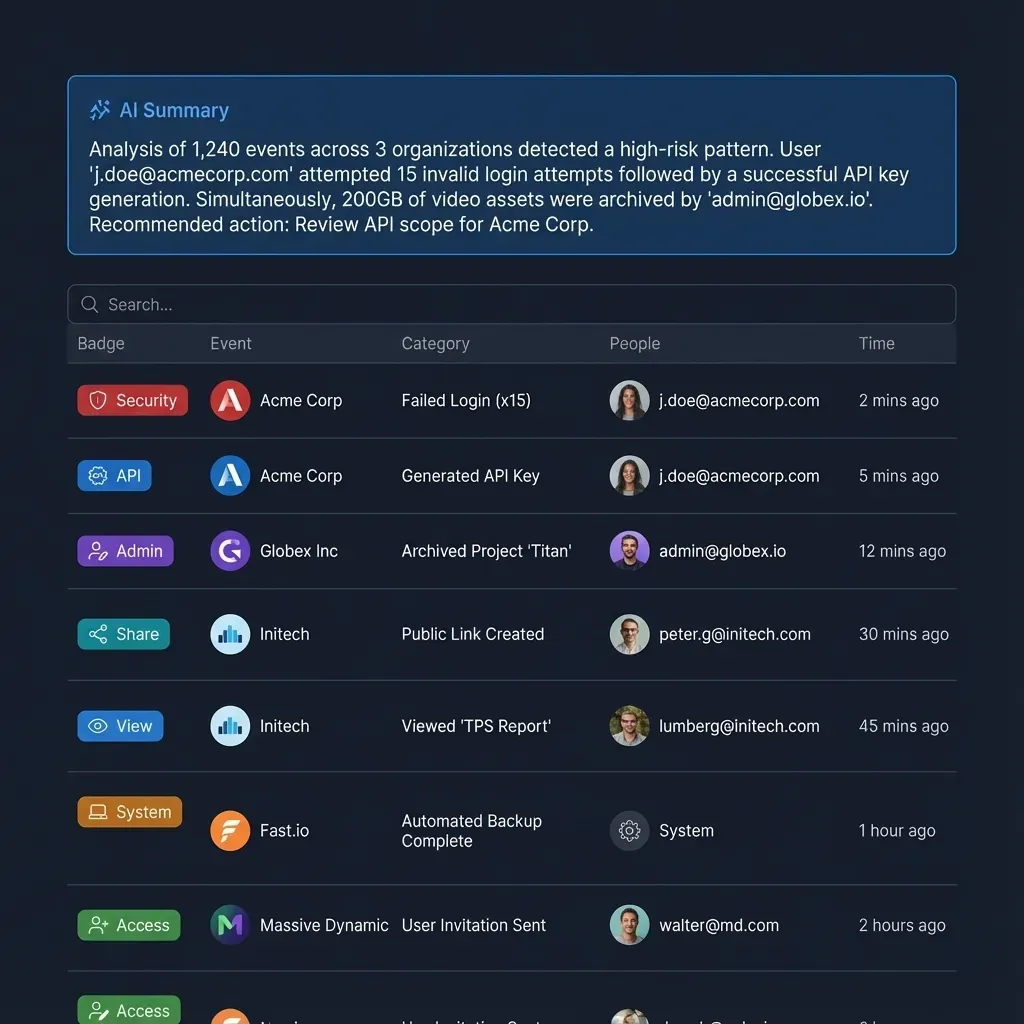
Common MCP Implementation Challenges
Developers face common issues when adopting MCP. Here's how to solve them.
Server Discovery and Configuration
Problem: Clients need to know which servers are available and how to connect.
Solution: Use environment variables or config files for server URLs. For production, implement a service registry where clients can discover available servers automatically. Document connection details for each server.
Authentication and Authorization
Problem: MCP servers need to verify client identity and enforce permissions.
Solution: Implement OAuth2 flows for user-level access, or use API keys for service accounts. The MCP protocol supports authentication extensions, use them to pass credentials securely during connection setup.
Error Handling and Retries
Problem: Network issues, server downtime, and rate limits cause tool calls to fail.
Solution: Build retry logic with exponential backoff into your client. Distinguish between retryable errors (503 Service Unavailable) and permanent failures (404 Not Found). Show clear error messages to the LLM so it can explain issues to users.
Schema Versioning
Problem: Tool schemas change over time, breaking existing clients.
Solution: Version your tools explicitly (for example, /api/v1/upload, /api/v2/upload). Support multiple versions at the same time during transitions. Use semantic versioning to signal breaking changes.
Performance and Latency
Problem: External tool calls add latency to LLM responses.
Solution: Cache frequently accessed resources on the server side. Use streaming responses (SSE) for long-running operations so users see progress. Run servers close to your AI infrastructure to minimize network hops.
Debugging Tool Interactions
Problem: When something goes wrong, it's hard to see what the LLM requested and what the server returned.
Solution: Enable verbose logging during development. Use tools like the MCP Inspector to trace request and response cycles. Add correlation IDs to track requests across client and server logs.
Frequently Asked Questions
What is MCP in AI?
MCP (Model Context Protocol) is an open standard that enables AI models to connect to external data sources and tools through a unified interface. Instead of building custom integrations for each tool, developers can use MCP servers that work with any compatible AI application.
How does Model Context Protocol work?
MCP uses a client-server architecture. AI applications act as clients that connect to MCP servers exposing tools, resources, and prompts. When an AI needs external data, the client sends a JSON-RPC request to the appropriate server, which retrieves data or executes the tool and returns the result.
Is MCP the same as function calling?
No. Function calling requires defining tools in your prompt for each specific LLM, while MCP standardizes tool access through separate servers. MCP is universal (works across all compatible LLMs), modular (add tools without code changes), and better for scaling. Function calling is simpler for basic single-model setups.
What are the benefits of using MCP over custom integrations?
MCP provides universal compatibility across AI models, modular tool management without code changes, better security through separate server processes, fewer hallucinations via authoritative data sources, and access to a growing ecosystem of pre-built servers. You build once and use everywhere.
Which AI models support MCP?
Claude (via Claude Desktop and API), ChatGPT (through compatible clients), Gemini, local models through frameworks like LangChain, and any LLM with MCP client integration. The protocol is model-agnostic and works with any AI that implements the client specification.
How do I get started with MCP?
Start by using an MCP-compatible AI application like Claude Desktop and connect to existing MCP servers. The official documentation at modelcontextprotocol.io provides SDKs for TypeScript, Python, Rust, Go, and Java. Build a simple server exposing one tool to understand the basics, then expand from there.
Can I use MCP with local AI models?
Yes. MCP is protocol-based and works with any LLM. Local models running through frameworks like LangChain, Ollama, or LlamaIndex can use MCP clients to connect to servers. The protocol doesn't require cloud services or specific AI providers.
What's the difference between MCP resources, tools, and prompts?
Resources provide read-only access to data (databases, file contents). Tools perform actions with side effects (API calls, file uploads). Prompts are reusable templates for LLM interactions. Resources query, tools act, prompts standardize.
How many MCP servers are available?
Over 500 MCP servers are publicly available as of 2026, covering databases, file storage, web scraping, document processing, APIs, and more. The community continues adding new servers weekly. Check the official MCP registry or GitHub for current listings.
Is MCP production-ready?
Yes. Major companies and open-source projects have adopted MCP for production AI applications. The protocol is stable, with official SDKs in multiple languages. Thousands of developers use MCP servers daily. Standard production practices (load balancing, monitoring, rate limiting) apply.
Related Resources

Give Your AI Agents Persistent Storage
Fast.io provides 251 MCP tools for file operations, the most comprehensive MCP server for cloud storage. Free agent tier with 50GB storage, no credit card required.