How to Implement Zero Trust File Access with Fastio API
Implement zero trust file access with Fastio API by validating tokens and applying RBAC to every file operation. No implicit permissions exist, so each request proves authorization. This prevents unauthorized access even after network perimeter breaches. Over 60% of data breaches start with compromised credentials, but zero trust cuts average breach costs by $1.76 million.


What is Zero Trust File Access?
Zero trust file access treats every request as potentially hostile. Users and devices must authenticate and authorize for specific files, regardless of location.
Fastio API enforces this through Bearer tokens, scoped OAuth, and role-based controls at organization, workspace, folder, and file levels. Requests without valid permissions fail immediately.
This model assumes breach is inevitable. Instead of trusting insiders, it verifies each action.
Related guides
- How to Implement Generative UI File Uploads with Fastio APIGenerative UI file uploads use LLMs to dynamically render interactive upload components backed by the Fastio API based...
- How to Implement API File Versioning: A Complete Developer TutorialFile versioning with the Fastio API lets applications programmatically store, track, and roll back document iterations...
- How to Implement Fastio API Large File Chunked UploadsChunked uploading in the Fastio API splits large files into manageable segments, ensuring reliable transmission over...
- How to Implement Fastio API Real-Time File Event NotificationsFile sharing is the practice of distributing digital files between users over a network, but when AI agents...
- How to Implement File Locks with the Fastio APIGuide to implementing file locks with the Fastio API: learn how to acquire, heartbeat, and release advisory file locks...
- How to Upload Files: Fastio API File Upload TutorialFollowing a Fastio API file upload tutorial is the fast way to get your applications talking to intelligent agent...
More on this subject: Agent File and Document Workflows (325 guides)
Why Use Zero Trust for Fastio API File Operations?
Compromised credentials factor into nearly half of breaches. Verizon's 2024 DBIR found them in 49% of cases where initial access was known.
Zero trust limits damage. IBM's Cost of a Data Breach Report notes mature zero trust saves $1.76 million per incident on average.
Fastio fills gaps in other APIs. Many grant broad access without file-level checks. Fastio requires explicit permissions for uploads, lists, downloads, and deletes.



Secure File Access Now
Explore Fastio with a 14-day Business Trial (card required; see /pricing/) and build with granular permissions.
Fastio Features Supporting Zero Trust
Fastio provides tools for zero trust out of the box.
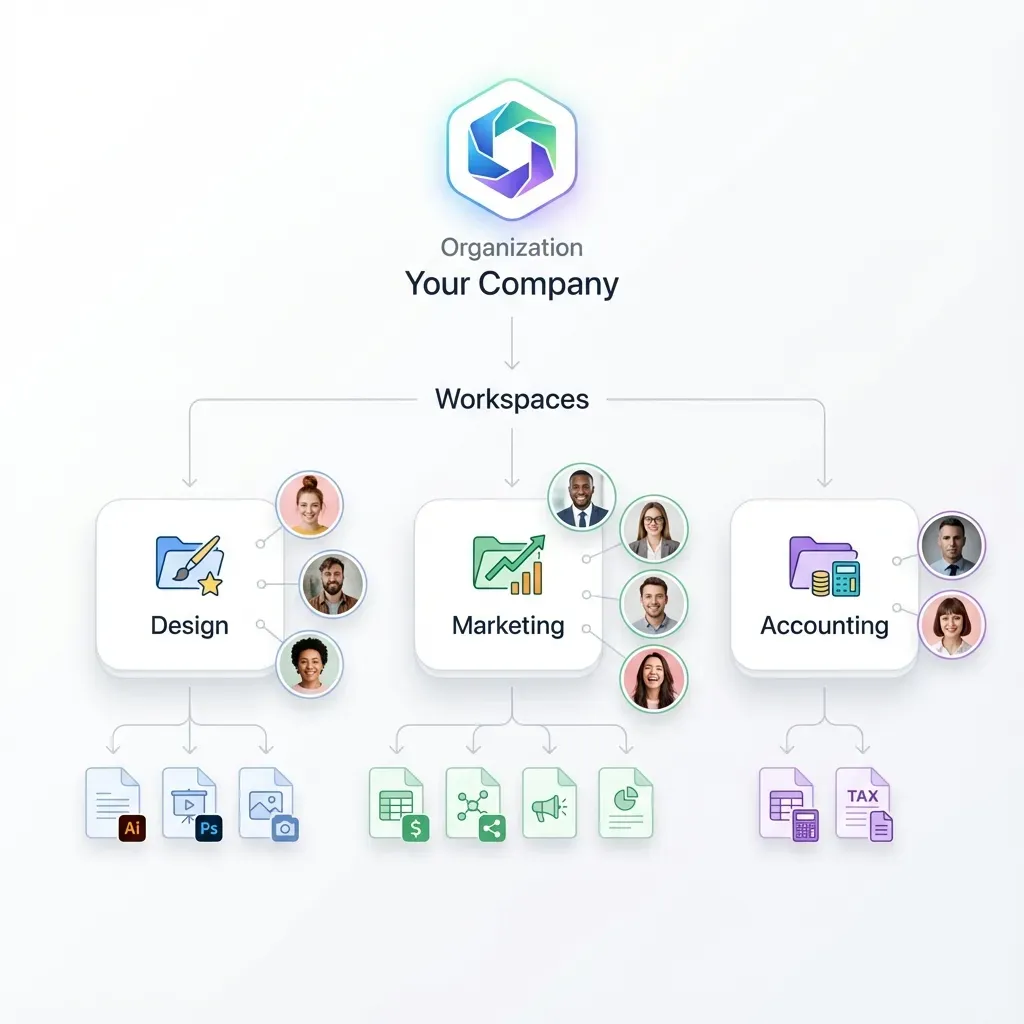
Granular permissions operate at four levels: organization for billing and members, workspace for projects, folders for teams, files for individuals. Roles include owner, admin, member, guest, view-only.
Authentication uses JWT from basic auth, OAuth PKCE with scopes (user, org, workspace), API keys, and MFA.
All data encrypts at rest and in transit. Audit logs capture views, downloads, permission changes.
No implicit access. External users get shares with controls like passwords and expiration.
Prerequisites for Setup
Sign up for a Fastio account (Fastio offers a 14-day Business Trial; see /pricing/).
Create an organization via POST /current/org/.
Enable MFA in settings.
Generate an API key from user settings or POST /current/user/auth/key/.
5 Steps to Establish Zero Trust Boundary
Follow these steps for secure Fastio API access.
- Generate Scoped Tokens: Use OAuth PKCE for short-lived JWTs limited to workspaces or orgs. Avoid full user scopes. Example curl for token:
curl -X POST https://api.fast.io/current/oauth/token/ \
  -d "grant_type=authorization_code&code=AUTH_CODE&code_verifier=CODE_VERIFIER&client_id=CLIENT_ID&redirect_uri=REDIRECT_URI"
Assign Least Privilege Roles: Add members with specific roles. POST /current/workspace/{workspace_id}/members/{email_or_user_id}/ with permissions=guest.
Validate Every Request: Include Bearer token on all calls. Fastio rejects unauthorized ops with 401/403.
Example list files:
curl -H "Authorization: Bearer YOUR_JWT" https://api.fast.io/current/workspace/{id}/storage/root/list/
Monitor Audit Logs: Poll GET /current/events/search/ or listen on the WebSocket events feed for real-time alerts.
Rotate and Revoke: Use 1-hour JWTs. Rotate via re-auth. Revoke keys with DELETE /current/user/auth/key/{key_id}/.
These steps create explicit boundaries. Test by attempting over-privileged actions - they fail.
Step 1 Details
OAuth scopes: user (full), org (specific orgs), workspace (specific). PKCE avoids password sharing.
Step 3 Code Example
In Node.js:
fetch('https://api.fast.io/current/workspace/123/storage/root/list/', {
  headers: { Authorization: `Bearer ${token}` }
}).then(r => r.json());
Secure Common File Operations
Uploads require workspace member role. Chunked for >4MB: POST /current/upload/init/, then parts.
Downloads check view perm: GET /current/workspace/{id}/storage/{node_id}/download/.
Deletes move to trash: POST /current/workspace/{id}/storage/{node_id}/delete/.
Version history tracks updates and allows restoring prior revisions.
Every op logs to audit trail.
Troubleshooting and Best Practices
Error 1680 (DENIED): Insufficient perms. Check role and scopes.
Token expiry (1650): Rotate automatically.
Practices: Client-side validate responses, use HTTPS only, store keys securely, review logs weekly.
For agents, connect to the remote MCP server at https://mcp.fast.io/mcp/tools over Streamable HTTP, following the setup documentation. Interactive clients sign in with OAuth in the browser, while headless code sends an Authorization: Bearer <api key> header on the connection.
Sources
References used to verify factual claims in this guide.
-
Zero trust architectures reduce breach costs by an average of $1.76M
-
Compromised credentials factor into nearly half of data breaches
Frequently Asked Questions
What is zero trust file access?
It verifies every file request for identity and authorization, even from trusted networks. Fastio API applies RBAC per operation.
How do I secure Fastio API requests?
Use Bearer JWT or API keys from OAuth. Enable MFA. Assign minimal roles. Monitor logs.
Does Fastio support scoped API access?
Yes, OAuth scopes limit to orgs or workspaces. API keys inherit user perms.
What permissions exist in Fastio?
Owner, admin, member, guest, view at org/workspace/folder/file levels.
How to audit file access?
Query events via API. Logs track all views, downloads, changes.
Related Resources

Secure File Access Now
Explore Fastio with a 14-day Business Trial (card required; see /pricing/) and build with granular permissions.