How to Implement Fast.io SSE Streaming for MCP Tools
SSE (Server-Sent Events) streaming over MCP allows Fast.io to push real-time file updates, extraction progress, and tool execution states directly to connected AI agents. While most documentation focuses on basic stdio transport, implementing HTTP with SSE is required for production cloud deployments. This guide explains how to configure the SSE transport layer, handle the client-server handshake, and build reactive agent workflows without the performance penalty of constant API polling.

What is MCP SSE Transport?
MCP SSE Transport is a communication layer that uses Server-Sent Events to maintain a persistent, unidirectional connection between an AI agent and a Model Context Protocol (MCP) server. It lets the server push real-time updates, such as file processing states, built-in RAG indexing progress, or long-running tool results, directly to the client. This model changes the traditional HTTP request-response pattern into a continuous data stream.
For developers building AI applications on Fast.io, moving from standard I/O (stdio) to an HTTP-based SSE transport is a required step for scalable, multi-agent environments. Standard I/O relies on operating system pipes. This works well for local development, local script execution, and single-agent setups where the server and client run on the exact same machine. However, when you deploy your AI agent to the cloud, or when you need multiple remote agents to collaborate within the same Fast.io workspace, standard I/O becomes a major limit because it lacks network capability.
SSE solves this routing and scalability challenge by allowing a single Fast.io MCP server endpoint to serve hundreds of concurrent agent connections over standard web protocols. Because the HTTP connection stays open, the server can notify the client the millisecond an asynchronous task completes. Whether it is a large video transcoding job, an automated URL import process pulling assets from Google Drive, or a complex metadata extraction, the agent receives the update instantly. This removes the need for the agent to manage complex local states and allows it to rely entirely on the Fast.io workspace as its source of truth.
Why SSE Over HTTP is Important for Fast.io Workspaces
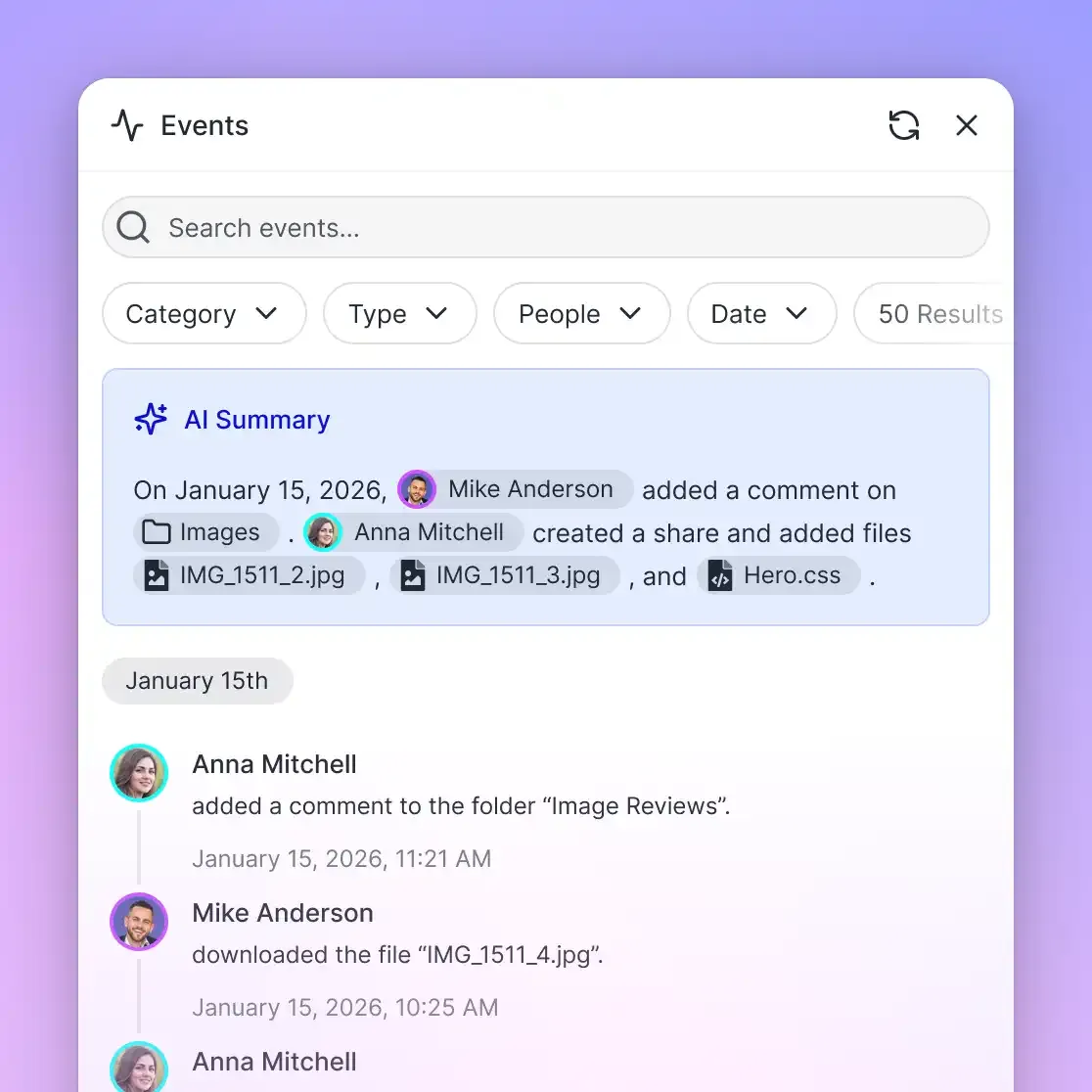
Polling for updates wastes network bandwidth, burns through compute cycles, and introduces latency into agent workflows. SSE transport reduces agent polling overhead in long-running tool executions, ensuring your AI systems respond faster and cost less to operate. When an agent requests a complex file transformation, it doesn't need to waste resources asking the server "Are you done yet?" every two seconds.
Here are the primary advantages of using SSE with the Fast.io MCP server:
- Elimination of HTTP Request Overhead: Establishing a new HTTP connection for every polling request involves costly TLS handshakes, DNS resolutions, and network routing delays. SSE maintains a single, persistent TLS connection, bypassing these frequent setup requests.
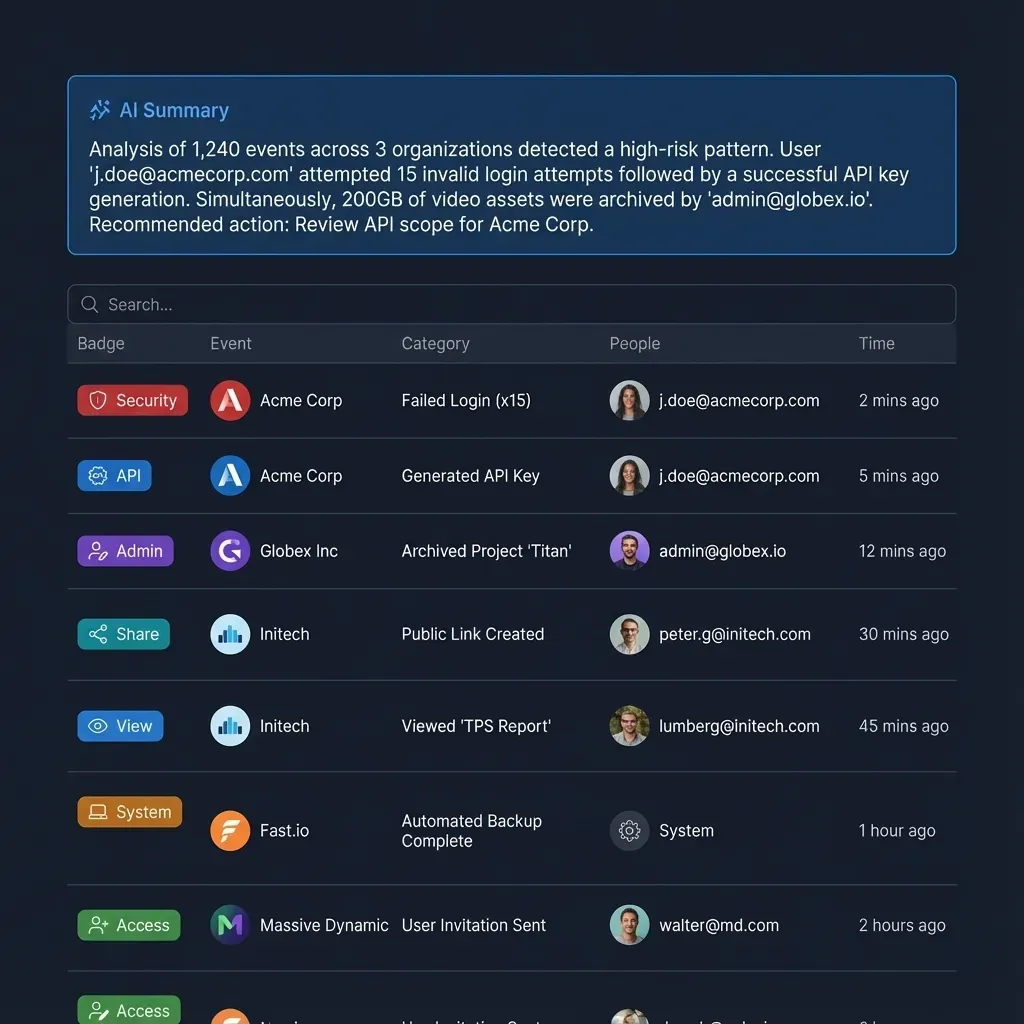
- Reactive and Event-Driven Workflows: Agents can natively subscribe to workspace events. If a human user uploads a new design document to a shared folder, the agent receives an immediate event trigger, allowing it to start analyzing, summarizing, or indexing the file without delay. This bridges the gap between human actions and agent reactions.
- Consistent Session State Management: Fast.io manages multiple distinct MCP tools via Streamable HTTP or SSE, using Durable Objects for backend session state. This architectural choice ensures that even if an agent briefly drops its network connection, its session state remains intact upon reconnection.
For example, consider toggling Intelligence Mode on a Fast.io workspace to automatically index files for Built-in RAG. You want your AI agent to know exactly when the indexing process has completed so it can immediately begin answering complex user queries with accurate citations. SSE provides this instant confirmation, creating a reliable experience where the agent never serves outdated information or stalls waiting for a timeout.


Give Your AI Agents Persistent Storage
Connect your agents to Fast.io using SSE transport. Get 50GB of free storage, 251 built-in MCP tools, and zero-config workspace intelligence. Built for fast sse streaming guide mcp tools workflows.
The SSE Handshake Process: Step-by-Step
The initial connection sequence between an MCP client and the Fast.io server requires a specific handshake protocol defined by the MCP specification. Understanding this flow is required for implementing a stable, reliable client integration.
Here is how the SSE handshake works between the MCP client and the Fast.io server:
- Client initiates the SSE stream connection. The AI agent starts the handshake by sending an HTTP
GETrequest to the Fast.io MCP/sseendpoint. This request must include theAccept: text/event-streamheader to signal that the client expects a continuous stream of events rather than a standard JSON response. - Server acknowledges and opens the stream. Fast.io authenticates the request, responds with an HTTP multiple OK status, and deliberately keeps the TCP connection open. The server immediately pushes an
endpointevent down the stream. This payload contains a unique session identifier and the specific URL route the client must use for posting subsequent tool execution requests. - Client sends tool requests via POST. With the stream established, the agent uses the specific URL provided in the
endpointevent to send standard JSON-RPC multiple.multiple requests via an HTTPPOSTcall. This is handled on a separate HTTP connection. - Server streams the execution response. As the Fast.io tool executes on the backend, it pushes JSON-RPC responses, execution logs, and progress updates back through the established SSE connection.
This separation of the inbound command channel (the HTTP POST requests) and the outbound update channel (the SSE stream) is what makes the MCP HTTP transport so resilient. It handles long-running jobs well and is easy to scale across modern serverless architectures.
Implementing the Fast.io MCP Client with SSE
Setting up the SSE client requires configuring your underlying HTTP networking library to handle continuous event streams rather than waiting for a single response closure. If you are developing your agent using Node.js or TypeScript, the official @modelcontextprotocol/sdk handles most of this low-level complexity for you.
First, you need to initialize the SSE client transport with your specific Fast.io endpoint and authentication credentials:
import { Client } from "@modelcontextprotocol/sdk/client/index.js";
import { SSEClientTransport } from "@modelcontextprotocol/sdk/client/sse.js";

// Initialize the transport with the Fast.io SSE endpoint
const transport = new SSEClientTransport(
  new URL("/storage-for-agents/"),
  {
    headers: {
      "Authorization": "Bearer YOUR_FAST_IO_API_KEY"
    }
  }
);

// Create the MCP client instance
const client = new Client({
  name: "fastio-cloud-agent",
  version: "1.0.0"
}, {
  capabilities: {
    prompts: {},
    resources: {},
    tools: {}
  }
});

// Connect to the server
await client.connect(transport);
console.log("Agent successfully connected to Fast.io via SSE!");
Once connected, the client instance will automatically handle the initial handshake, store the session ID, and route all your subsequent tool POST requests to the correct endpoint. You can now execute any of the multiple Fast.io MCP tools.
For example, triggering a file format conversion, requesting an ownership transfer of a workspace, or asking for a direct file download link will return an immediate job acknowledgment. The server will then push granular progress updates down the SSE stream until the backend job finishes. If you are building a custom HTTP client from scratch in another language like Python or Go, you must ensure your HTTP library does not aggressively buffer the response body. It must emit chunks exactly as they arrive over the wire so the JSON-RPC messages can be parsed in real-time.
Security, Authentication, and Multi-Agent Workspaces
When moving an agent from local standard I/O to a network-based HTTP transport, security becomes an important architectural concern. Your Fast.io MCP endpoint is exposed to the public internet and must be protected against unauthorized access and data breaches.
Fast.io secures all SSE endpoints using Bearer token authentication. Ensure you follow the agent onboarding guidelines when provisioning keys. Your AI agent must include a valid API key in both the initial GET request to establish the stream, and all subsequent POST requests used to execute tools. This ensures that every action is fully authenticated and logged.
Because multiple diverse agents might be operating concurrently within the same workspace, Fast.io enforces strict, granular permissions. An agent can only receive events and access files for workspaces it has been explicitly granted access to. If a rogue agent attempts to listen to events outside its defined scope, the connection will be terminated by the server with an error payload.
This architecture is especially important when implementing File Locks. In multi-agent systems, file conflicts are a common issue. Fast.io allows agents to acquire and release file locks using MCP tools. Because of the SSE connection, when one agent releases a lock, other connected agents can be notified via an event. This allows them to proceed with their queued tasks without checking the lock status repeatedly.
Troubleshooting Common SSE Connection Issues
Implementing SSE over HTTP can occasionally introduce network-level complexities that developers must handle. Here are the most common infrastructure issues developers face when connecting to the Fast.io MCP server in production, and how to resolve them quickly.
Handling Silent Disconnections
Corporate load balancers, enterprise firewalls, and cloud ingress controllers often drop idle HTTP connections after multiple to multiple seconds of inactivity. To prevent this from severing your agent's connection, Fast.io sends periodic "ping" events down the SSE stream. However, if your specific client library or cloud provider automatically drops the connection anyway, you must configure your network infrastructure to explicitly allow long-lived, persistent connections for the mcp.fast.io domain.
Missed Events During Reconnection Windows If an agent briefly disconnects due to a network blip and then reconnects, it might miss important events that occurred during the few seconds of downtime. To handle this gracefully, your agent should always execute a tool to query the current workspace state upon establishing a fresh connection, rather than relying exclusively on the event stream. Fast.io's backend Durable Objects ensure the actual file state is always consistent, so a quick synchronization check prevents race conditions.
Disabling Proxy Buffering
If you are routing your agent's outbound traffic through a reverse proxy (like Nginx or HAProxy), you must ensure that proxy buffering is explicitly disabled for the SSE endpoint. If buffering is enabled, the proxy server will intercept and hold the Fast.io server's events until its internal buffer fills up. This defeats the purpose of real-time streaming and introduces artificial latency. If you are using Nginx, set proxy_buffering off; in your location block configuration for the MCP routes.
Frequently Asked Questions
How does MCP use SSE?
MCP uses Server-Sent Events (SSE) to maintain a persistent, unidirectional HTTP connection from the server to the client. This allows the server to push real-time updates, event notifications, and JSON-RPC responses directly to the AI agent without requiring the agent to constantly poll for new data.
How to stream responses from MCP tools?
To stream responses, configure your MCP client to use the SSE transport layer instead of standard I/O. Once connected, execute the tool using the provided POST endpoint. The server will stream progress chunks and the final result back through the established SSE connection as they become available.
Is standard I/O or SSE better for MCP?
Standard I/O is best for local, single-agent development because of its simplicity and zero network configuration. SSE over HTTP is essential for production cloud deployments and scenarios where multiple agents need to connect to a centralized Fast.io workspace remotely.
Does Fast.io's free agent tier support SSE?
Yes, Fast.io's free agent tier includes full access to the HTTP and SSE transport layers, along with multiple of storage and multiple MCP tools. You can connect your agents securely without a credit card and begin streaming real-time workspace events.
Related Resources

Give Your AI Agents Persistent Storage
Connect your agents to Fast.io using SSE transport. Get 50GB of free storage, 251 built-in MCP tools, and zero-config workspace intelligence. Built for fast sse streaming guide mcp tools workflows.