How to Deploy a Fastio MCP Server on Render
Deploying a Fastio MCP server on Render requires configuring environment variables and web services to expose tools. Render simplifies PaaS deployments, making it an excellent platform for hosting Model Context Protocol servers that need secure external exposure. This guide provides the specific environment configs missing from most generic tutorials.

Understanding the Fastio MCP Server and Render
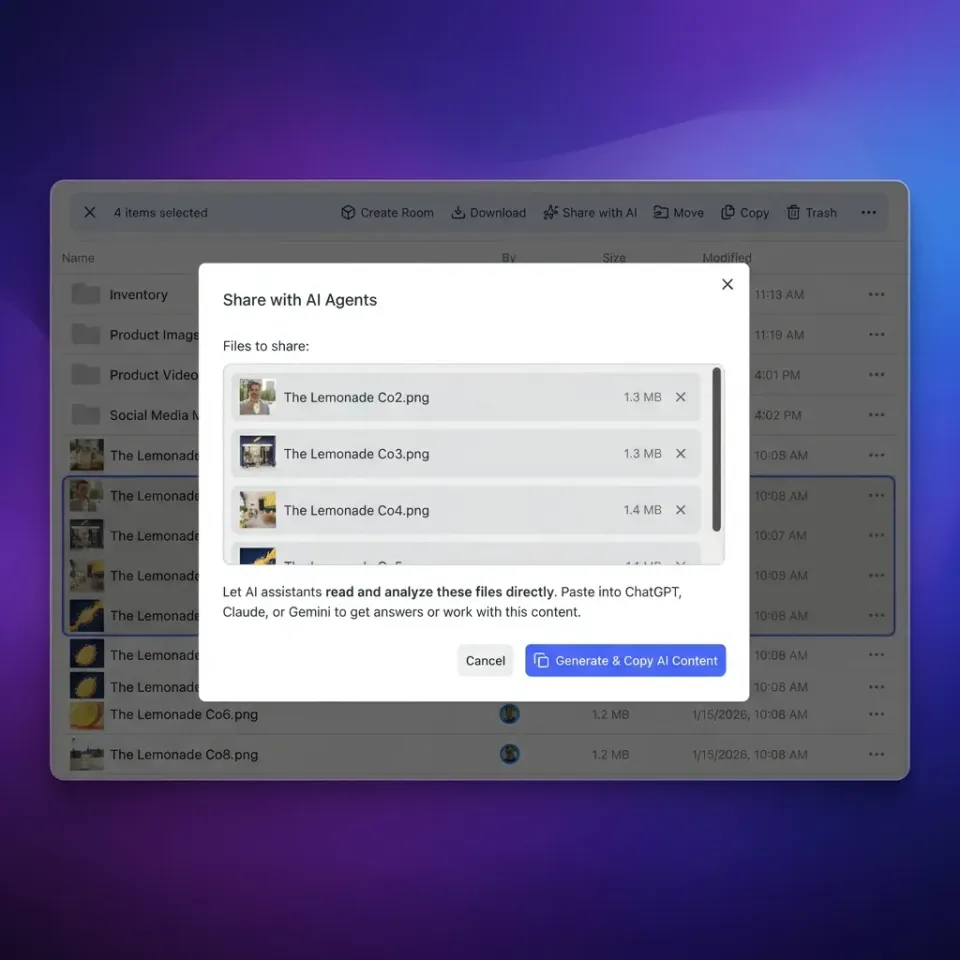
Deploying a Fastio MCP server on Render requires configuring environment variables and web services to expose tools. Model Context Protocol serves as the connective tissue between your AI agents and your Fastio workspaces. By deploying this server, you give your agents the ability to read, write, and manage files dynamically. Fastio provides a consolidated MCP toolset out of the box, covering everything from basic file uploads to complex, multi-agent workspace coordination.
Render simplifies PaaS deployments by handling the underlying infrastructure, TLS certificates, and continuous integration. For an MCP server, which often relies on persistent connections like Server-Sent Events, Render provides a stable environment that easily scales. Most deployment guides lack specific environment configs for Render MCP, leaving developers to guess the correct port mapping and health check paths. This article fills that gap with a concrete, step-by-step approach.
When you connect an LLM to Fastio through this server, the agent gains direct access to the built-in RAG capabilities. Files are indexed and searchable once Intelligence is enabled for the workspace. You do not need a separate vector database; the workspace itself is intelligent. The agent simply calls the relevant search tool, and the Fastio backend handles the semantic matching and citation generation. Render is the ideal host for this middleware, ensuring the connection remains fast and secure.
Related guides
- How to Deploy Fastio MCP Server on VercelDeploying the Fastio MCP server on Vercel enables scalable, serverless access to your agent's file tools without...
- How to Connect Azure Container Apps to the Fastio MCP ServerConnecting agent runtimes on Azure Container Apps to the Fastio remote MCP server provides a secure, serverless...
- How to Deploy and Host an MCP ServerMoving an MCP server from localhost to a production environment gives remote access to AI agents across your...
- How to Deploy Your Agent on Kubernetes with Fastio MCPFastio hosts and operates its MCP server, so Kubernetes runs your agent rather than the Fastio server. This guide shows...
- How to Deploy Fastio MCP Server on AWS LambdaConnecting serverless agents on AWS Lambda to the Fastio remote MCP server gives your AI workflows persistent file...
- How to Deploy the Fastio MCP Server on Fly.ioDeploying the Fastio MCP server on Fly.io gives your AI agents faster access to their file workspaces. Moving your...
More on this subject: MCP and Model Context Protocol (238 guides)
Prerequisites for a Successful Deployment
Before you write any configuration code, gather your necessary credentials and repository access. You need a GitHub repository containing your Fastio MCP server codebase. This application should expose an HTTP server configured for Server-Sent Events, as this is the standard protocol for web-based MCP communication.
You also need an active Fastio account with an API key. Fastio provides a 14-day Business Trial requiring a credit card, which allows teams to test collaborative workspaces and agent integrations. Generate a new API key specifically for this Render deployment to maintain tight security boundaries.
Finally, create a Render account if you do not already have one. We will use Render's web service offering, which automatically provisions an HTTPS subdomain for secure external exposure. Having these three elements ready ensures your deployment process goes smoothly without unexpected interruptions.
Step-by-Step render.yaml Configuration
The most reliable way to deploy on Render is through Infrastructure as Code using a render.yaml file. This file lives in the root of your repository and defines exactly how Render should build and run your service.
Here is a clean step-by-step checklist for your render.yaml setup:
- Define the service type as
web. - Specify the runtime environment, typically
node. - Set the build command to install dependencies and compile TypeScript if necessary.
- Provide the start command to launch your Express or Node application.
An example configuration looks like this:
services:
  - type: web
    name: fastio-mcp-server
    env: node
    buildCommand: npm install && npm run build
    startCommand: npm start
    envVars:
      - key: NODE_ENV
        value: production
      - key: PORT
        value: 10000
      - key: FASTIO_API_KEY
        sync: false
Notice that the FASTIO_API_KEY uses sync: false. This tells Render to expect the value to be set manually in the dashboard, preventing your secret key from being committed to version control. This approach keeps your infrastructure definitions public while protecting your sensitive agent credentials.
Configuring Environment Variables Securely
Environment variables control how your MCP server connects to Fastio and how it exposes its endpoints to your agents. MCP servers need secure external exposure because they act as the gateway to your sensitive workspace data.
When deploying on Render, you must configure the PORT variable. Render automatically maps external traffic to the port your application listens on, but explicitly setting it (the example above uses 10000) ensures your Node application binds correctly. You also need to configure the FASTIO_API_KEY through the Render dashboard's environment settings page. Never hardcode this key in your application source.
For advanced setups, you might also define a BEARER_TOKEN environment variable. Your MCP server can require this token in the Authorization header of incoming requests, ensuring only your approved AI agents can trigger the Fastio tools. Without this authentication layer, anyone who discovers your Render URL could potentially interact with your agent workspaces.


Ready to build agentic workflows?
Start your 14-day Business Trial to explore collaborative workspaces and the consolidated MCP toolset.
Testing and Exposing Your Deployed Server
Once Render finishes building and deploying your code, it assigns a unique onrender.com URL to your web service. This URL is your server's public endpoint. Because Render provisions a TLS certificate automatically, your endpoint is secured with HTTPS out of the box.
To test the deployment, configure your local agent or OpenClaw instance to point to this new URL. Point your agent client configuration to this new URL as the server endpoint. Watch the Render logs dashboard during your first few requests. You should see the SSE connection open, followed by the specific Fastio tool invocations, such as listing files or creating a new workspace.
If the connection drops immediately, check your CORS configuration. Your Express server must allow cross-origin requests if your agents operate from different domains. Properly configured headers are essential for the streamable HTTP endpoints to function correctly in production environments.
Can Render Listen to Fastio Event Feeds?
A common question from developers is how to trigger actions on Render when files change in Fastio. Fastio does not offer webhooks; instead, it provides a realtime activity feed you can poll and a WebSocket events feed for real-time notifications.
Render can host services that subscribe to Fastio's WebSocket events feed or poll the activity feed. When a human or agent uploads a file to a shared workspace, your service receives the event notification from the WebSocket connection or polling cycle and triggers an agent to process the new file.
To implement this, add an event listener worker or background polling task to the Node application running on Render. Render maintains persistent network connections effectively, allowing your service to listen for workspace updates and invoke MCP tools accordingly without relying on inbound webhooks.
Handling Long-Running Operations and Timeouts
AI agent workflows occasionally involve long-running operations, such as generating massive intelligence summaries or transferring large datasets via URL import. Render enforces a timeout on HTTP requests for its web services.
If an MCP tool execution exceeds this timeout, the connection will drop, and the agent might assume the task failed even if it continues processing in the background. To mitigate this, design your MCP server to return early with a job ID for long-running Fastio tasks. The agent can then use a separate tool to check the status of that job ID later.
For standard file operations and workspace queries, the response is usually immediate. Fastio's native intelligence mode auto-indexes files once Intelligence is enabled for the workspace, meaning your agent's search queries execute rapidly without hitting Render's timeout limits. The built-in RAG capabilities handle the heavy lifting on the Fastio backend, keeping your Render server lightweight and responsive.
Production Best Practices for Agent Workspaces
When moving from testing to production, consider how ownership transfer works in the Fastio ecosystem. Your Render-hosted MCP server typically operates under an administrative agent account. This agent builds workspaces, uploads initial files, and configures the environment.
Once the workspace is ready, the agent can transfer ownership to a human client while retaining administrative access. This pattern works beautifully with Render, as the MCP server maintains its elevated privileges regardless of who currently owns the specific workspace.
Monitor your application's memory usage in the Render dashboard. SSE connections keep the Node event loop active, and a high volume of concurrent agent connections might require scaling your Render instance size. However, for most teams and standard agent workflows, Render's base tiers provide more than enough capacity to keep your Fastio integration running smoothly.
Troubleshooting Common Deployment Issues
Even with a perfect render.yaml configuration, you might encounter issues during your initial deployment. The most frequent problem involves port binding. If your Node server listens on a hardcoded port rather than the PORT environment variable provided by Render, the health check will fail, and the deployment will stall. Always use process.env.PORT in your Express listen function.
Another common issue relates to the Fastio API rate limits. Fastio plans include monthly AI credits, and buggy agent loops that repeat AI requests can use them up quickly. If your Render logs show HTTP 429 Too Many Requests errors, implement exponential backoff in your tool handlers and leverage the WebSocket events feed instead of tight polling loops.
Finally, verify your Node version. Render defaults to an older Node.js version unless you specify otherwise. Modern MCP libraries and Node runtimes often require Node 18 or higher. Add a node engine specification to your package.json to force Render to use the correct runtime environment for your application.
Frequently Asked Questions
How do I deploy an MCP server on Render?
You can deploy an MCP server on Render by connecting your GitHub repository and defining a web service. Use a render.yaml file to configure your build commands and set process.env.PORT in your application code.
How does Render integrate with Fastio for real-time events?
Fastio does not offer webhooks. Instead, your Render service can listen to Fastio's WebSocket events feed or poll the realtime activity feed to react to file changes and agent updates.
What is the best way to secure an MCP server on Render?
The best way to secure your server is to require a Bearer token in the Authorization header for all incoming requests. Store this token as a secure environment variable in your Render dashboard.
Why does my Render MCP deployment fail the health check?
Health check failures usually occur because the application is not listening on the correct port. Ensure your Express server binds to the PORT environment variable provided automatically by Render.
What tools does the Fastio MCP server provide?
Fastio provides a consolidated MCP toolset covering file management, workspace permissions, ownership transfer, and document queries using built-in intelligence.
Related Resources

Ready to build agentic workflows?
Start your 14-day Business Trial to explore collaborative workspaces and the consolidated MCP toolset.