How to Set Up a Client Portal for Your Accounting Firm
A client portal for accountants is a secure, branded workspace where accounting firms and their clients exchange tax documents, financial statements, and engagement letters year-round. This guide covers what to look for, how standalone portals compare to all-in-one practice management suites, and how to get your firm set up without overhauling your existing tools.

What Is a Client Portal for Accountants?
A client portal is a private, web-based workspace where your firm and its clients share documents, sign engagement letters, and communicate without relying on email. Clients log in, see exactly what you need from them, upload their files, and download whatever you've prepared for them.
For accounting firms, this matters because the volume of sensitive documents is enormous. Tax returns, W-2s, bank statements, payroll records, K-1s, 1099s. Every engagement season, you're collecting dozens of documents from each client, and most of that exchange still happens over email.
The problem with email isn't just security (though sending Social Security numbers as PDF attachments should keep anyone up). It's the operational cost. Your staff spends hours chasing missing documents, clients send files to the wrong address, and nobody can find the version of the return that was actually signed. According to a 2024 CPA Practice Advisor survey, 64% of accounting firms now use client portals, making it the third most-adopted technology category behind payroll software.
A portal solves this by giving each client a single place to go. They see what's pending, what's complete, and what needs their attention. Your team sees a dashboard of who's submitted what and who hasn't, so you can follow up selectively instead of blasting reminder emails.
Why Email Falls Short for Accounting Firms
Most firms start with email because it's familiar. Every client already has it, there's no onboarding, and it works well enough for small practices. The problems compound as you grow.
No audit trail. When a client emails you their bank statements, there's no centralized record of when you received them, who accessed them, or whether they were the final version. If the IRS asks for documentation of your process, email threads don't hold up well.
Version confusion. Clients send updated documents without clear naming conventions. You end up with "tax_return_v2_FINAL.pdf" and "tax_return_v2_FINAL_revised.pdf" in the same inbox thread. Staff waste time confirming which file to use.
Missing documents bottleneck. During tax season, a single missing K-1 can hold up an entire return. With email, you're manually tracking which clients have sent what. SmartVault reports that firms using portals reduce document collection time by roughly 40% compared to email-based workflows, largely because automated checklists replace manual follow-up.
Security gaps. Email wasn't designed for transmitting financial PII. Even with TLS encryption in transit, attachments sit unencrypted in inboxes, get forwarded accidentally, and persist in sent folders indefinitely. A 2024 survey by SuiteFiles found that 58% of accountants have accidentally shared the wrong file with a client, a risk that increases with every unencrypted attachment.
Client friction. Your clients don't want to dig through their inbox to find last year's return. They want a single link where everything lives, organized by year and engagement type.
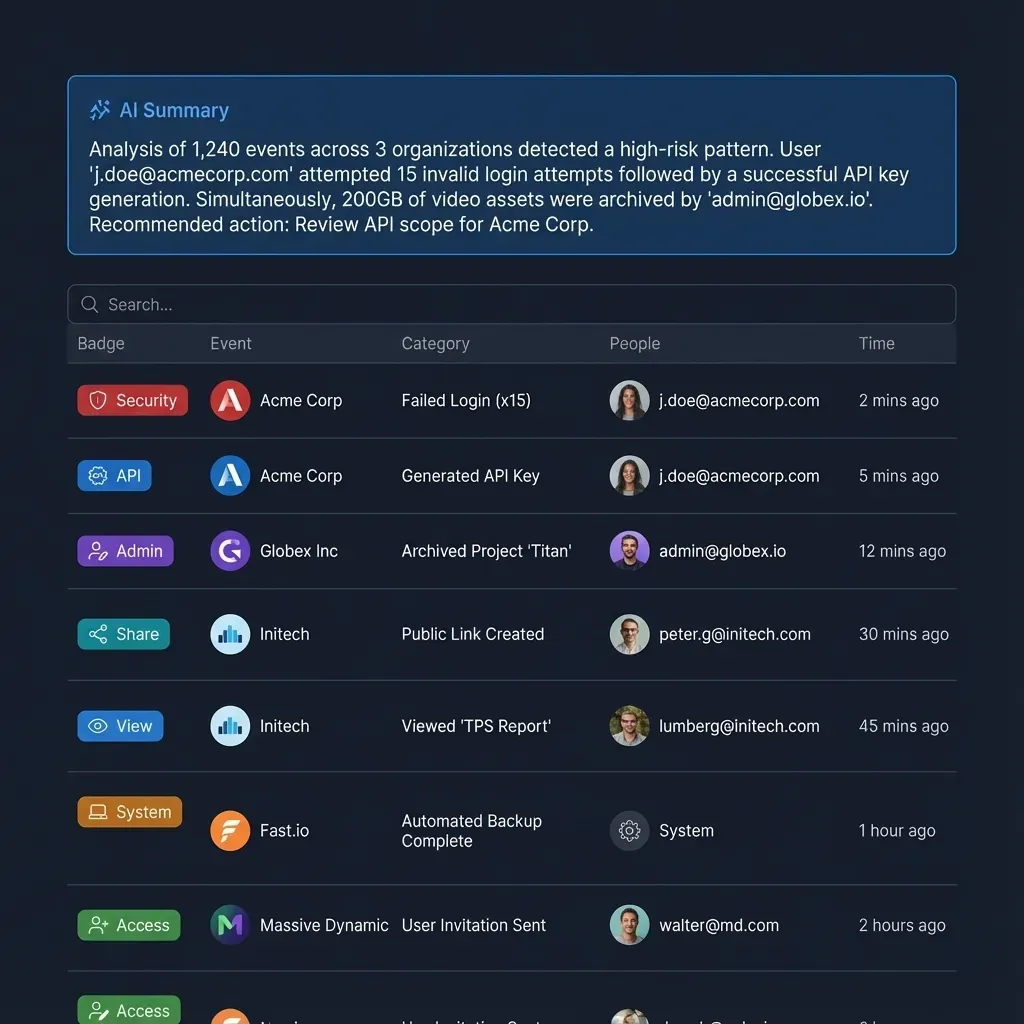
Features to Look for in an Accounting Client Portal
Not every portal is built for accounting workflows. Here's what matters most, ranked by how directly it affects your firm's day-to-day operations.
Secure document exchange with access controls
The baseline requirement. Clients should be able to upload and download documents through an encrypted connection, and you should control who sees what. Look for granular permissions at the folder level, not just "view" or "edit" on the entire portal. Tax documents for one spouse shouldn't be visible to a business partner who shares the same client folder.
Automated document requests
The highest-impact feature for tax season. You create a checklist of required documents (W-2, 1099-INT, mortgage interest statement, charitable receipts), and the portal shows the client exactly what's missing. Good portals send automatic reminders on your behalf so your staff isn't writing follow-up emails.
E-signatures
Engagement letters, 8879 forms, and authorization documents all need signatures. If your portal includes e-signatures, you eliminate the DocuSign subscription and the friction of switching between tools. TaxDome and Canopy both include this natively.
Branded experience
Your portal should look like your firm, not like a generic file sharing tool. Custom logo, colors, and domain name. This matters more than it seems. Clients who trust the portal's appearance are more likely to use it instead of falling back to email.
In-portal messaging
Replaces the scattered email threads with organized, trackable conversations tied to specific documents or engagements. When a client asks "which version of the depreciation schedule should I sign?", the answer lives right next to the document.
Audit trails
Every file upload, download, view, and signature should be logged with timestamps and user identification. This protects your firm in disputes and supports quality control during peer reviews.
Mobile access
Clients will photograph receipts and W-2s on their phone. If your portal doesn't have a clean mobile experience (or at minimum, a mobile-optimized upload flow), they'll email the photos instead.


Give Your Clients a Better Way to Share Documents
Set up a branded client portal with secure document exchange, automatic indexing, and no per-seat pricing. 50 GB free, no credit card required.
Standalone Portals vs. All-in-One Practice Management
This is the most important decision you'll make, and most comparison articles skip it because they're selling all-in-one suites.
All-in-one platforms like TaxDome, Canopy, and Karbon bundle the client portal with CRM, billing, workflow management, e-signatures, and sometimes tax prep integrations. TaxDome charges $50-100 per user per month depending on the tier. Canopy starts at $49 per user per month with document management as a separate $36 add-on.
The appeal is obvious: one platform, one login, everything connected. But the trade-off is that you're locked into their ecosystem. If you already use QuickBooks for billing, Ignition for engagement letters, and a workflow tool you like, replacing all of that to get a client portal is expensive and disruptive.
Standalone portal solutions like SmartVault ($25-65 per user per month), Citrix ShareFile, and Fast.io take a different approach. They handle the document exchange and client-facing experience without touching your practice management stack. You keep your existing tools and add a portal layer on top.
This approach works well when your firm already has a workflow it likes and just needs a better way to collect and deliver documents. It's also the right choice for firms that serve multiple client types (tax, audit, advisory) where a single all-in-one platform can't accommodate every workflow.
The cost difference is significant. A 10-person firm on TaxDome's Pro plan pays around $8,400 per year. The same firm using SmartVault's Accounting Pro tier pays about $5,400. A standalone portal like Fast.io uses usage-based pricing instead of per-seat billing, which can reduce costs further for firms where most users are clients accessing the portal, not staff managing it.
When all-in-one makes sense: You're a tax-focused firm with fewer than 20 staff, you don't have strong preferences about your current tools, and you want to simplify vendor management.
When standalone makes sense: You already have tools you like for billing, workflow, and tax prep, you serve diverse client types, or you need to control costs by avoiding per-seat pricing for a tool that's primarily client-facing.
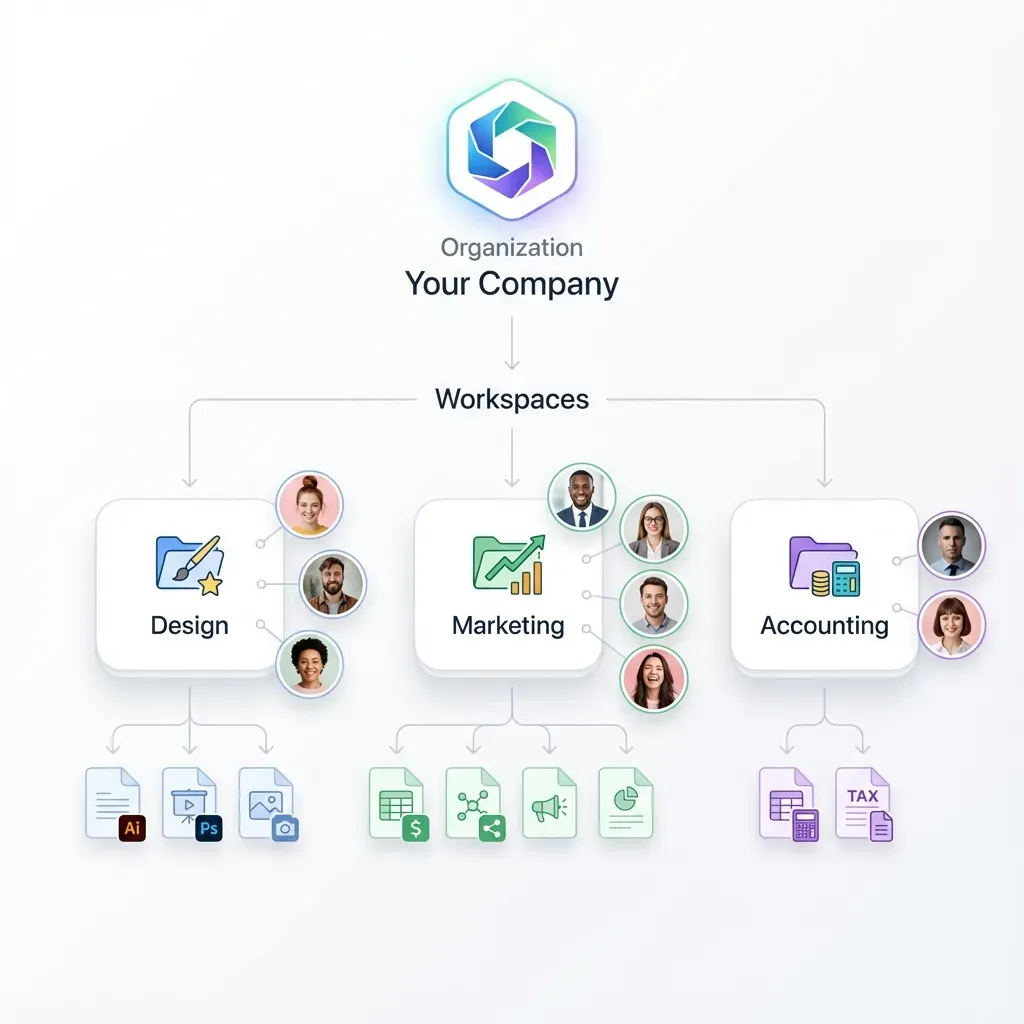
How to Set Up a Client Portal for Your Firm
Setting up a portal doesn't require a months-long implementation. Here's a practical roadmap.
1. Audit your current document flow
Before choosing a tool, map how documents actually move through your firm today. Track a single client engagement from start to finish: where do they send documents, who processes them, where do finished returns go, and how does the client get the final product? This audit reveals which parts of the workflow a portal needs to handle and which parts your existing tools already cover.
2. Choose your portal approach
Based on your audit, decide between standalone and all-in-one. If document collection and delivery are your primary pain points, a standalone portal is faster to deploy and cheaper to run. If you're also struggling with billing, CRM, and workflow management, an all-in-one might justify the higher cost.
3. Set up your folder structure
Organize by client, then by engagement type and year. A typical structure looks like this:
- Client Name
- 2026 Tax Return
- Documents from Client (upload folder)
- Prepared Returns (download folder)
- Signed Documents
- 2026 Advisory
- Permanent Files (entity documents, prior year carryforwards)
- 2026 Tax Return
Consistency matters more than cleverness. Every client should see the same structure so they know where to look.
4. Configure branding and access
Upload your firm's logo, set your brand colors, and configure the portal URL. Set default permissions so new client folders inherit the right access levels. Clients should be able to upload to their designated folders and download from the returns folder, but not see other clients' files or access internal working papers.
5. Onboard your first client cohort
Don't roll out to everyone at once. Pick 10-15 clients who are comfortable with technology, send them a branded invitation, and walk them through first use. Collect feedback on what confused them. Most portal adoption failures happen because the firm sends a generic email with a login link and hopes for the best.
6. Create document request templates
Build reusable checklists for your common engagement types: individual tax return, business tax return, bookkeeping onboarding, audit document request. These templates save hours during busy season because you're not recreating the same checklist for every client.
7. Migrate active engagements
Move your current in-progress work into the portal so clients see immediate value. Upload any documents you've already received and mark them as complete on the checklist. The client's first experience should show progress, not an empty folder.
Getting More From Your Portal With Workspace Intelligence
Once your documents are organized in a portal, there's a second layer of value most firms miss: making those documents searchable and queryable.
Traditional portals store files. You upload a PDF, the client downloads it, end of story. Newer workspace platforms like Fast.io add intelligence on top of storage. When you enable Intelligence Mode on a workspace, every uploaded document gets automatically indexed. Your team can then search across all client documents by meaning, not just filename, and ask natural language questions like "which clients have submitted their K-1s?" or "what was the depreciation method used in the 2025 return for Smith LLC?".
This matters most during review season, when a senior partner needs to quickly find a specific detail across dozens of client files. Instead of opening each PDF individually, they can search the workspace or ask the built-in AI assistant. Responses come back with citations pointing to the exact page and document.
Fast.io also supports branded content portals with custom logos, colors, and guest access links that expire automatically. Clients access their portal without creating an account, which removes the biggest adoption barrier. For firms that want to reduce per-seat costs, Fast.io's usage-based model means you pay for storage and activity rather than per-user licenses.
The platform includes review and approval workflows that work well for accounting firms. Route a prepared return through a review step before releasing it to the client's portal. The approval trail logs who reviewed, when they approved, and what changed since the last version.
For firms already using other tools, Fast.io supports importing from Google Drive, Dropbox, OneDrive, and Box with folder structure preserved, so migration doesn't mean starting from scratch.
Frequently Asked Questions
What is the best client portal for accountants?
It depends on whether you want an all-in-one practice management platform or a standalone portal. TaxDome is the most popular all-in-one option, combining portals with CRM, billing, and workflow management at $50-100 per user per month. For standalone portals, SmartVault ($25-65 per user per month) is the most established in the accounting space. Fast.io offers a usage-based alternative with branded portals, AI-powered document search, and no per-seat pricing. The right choice depends on which tools your firm already uses and whether you want to consolidate or add a focused portal layer.
How do accountants share documents securely with clients?
The most secure method is a client portal with encrypted file transfer, access controls, and audit trails. Clients log into a branded portal, upload documents to designated folders, and download prepared returns from a separate area. This replaces email attachments, which lack encryption at rest, have no access controls, and leave sensitive documents in inboxes indefinitely. Good portals also support auto-expiring access links for time-sensitive documents like engagement letters.
What should an accounting client portal include?
At minimum, a portal should include secure document upload and download, folder-level access controls, an audit trail of all activity, branding with your firm's logo and colors, and mobile-optimized access for clients uploading from their phone. High-value additions include automated document request checklists with reminders, e-signatures, in-portal messaging, and a search function that works across document contents rather than just filenames.
How much does a client portal for accountants cost?
Pricing varies widely by approach. All-in-one platforms like TaxDome range from $50-100 per user per month. Standalone portals like SmartVault run $25-65 per user per month. Modular platforms like Canopy start at $49 per user per month with document management as a separate add-on. Usage-based platforms like Fast.io price by storage and activity rather than per seat, which can reduce costs for firms where most portal users are clients, not staff.
Can clients access an accounting portal without creating an account?
Some portals support guest access, where clients use an emailed link to access their documents without registering for an account. Fast.io's content portals work this way, with auto-expiring access links and optional password protection. This removes the biggest adoption barrier, since asking clients to create yet another account with a username and password is the most common reason portal rollouts fail.
How long does it take to set up a client portal for an accounting firm?
A standalone portal can be operational within a day. You configure branding, set up your folder structure, create document request templates, and invite your first clients. The longer timeline is adoption, not setup. Plan two to four weeks to onboard your first cohort of clients, collect feedback, and refine your templates before rolling out firm-wide.
Related Resources

Give Your Clients a Better Way to Share Documents
Set up a branded client portal with secure document exchange, automatic indexing, and no per-seat pricing. 50 GB free, no credit card required.