How to Build a File Sharing Portal with Fast.io API
Building a custom file sharing portal gives your team control over the user experience without managing backend storage. A custom portal uses the Fast.io API as the storage engine while you design the interface. This guide covers how to create a fast and secure client portal, handle authentication, and add AI agent integrations directly.

What is a Custom File Sharing Portal?
A custom file sharing portal uses the Fast.io API as the backend storage engine while you control the user experience. Many organizations outgrow basic shared drives because they need specific branding, custom user management, or direct integration with internal tools. By building your own portal, you design the exact interface your clients see. Fast.io handles the storage, indexing, and security.
Developers often struggle with the complexity of secure file storage when building custom solutions. Managing servers, handling multipart uploads for large files, and setting up data redundancy take time away from the core product. The API approach separates the presentation layer from the storage infrastructure. This lets frontend teams focus entirely on what the user sees and does.
Helpful references: Fast.io Workspaces, Fast.io Collaboration, and Fast.io AI.
The Core Fast.io API Endpoints for File Sharing
To build a functional file sharing portal, you need to integrate the essential Fast.io API endpoints. These routes manage the full lifecycle of a user session.
- POST /api/workspaces: Create a dedicated workspace for a new client or project. This isolates data in your application.
- POST /api/files/upload: Transmit local files from your frontend to Fast.io storage. This endpoint supports both direct uploads and streamable HTTP.
- GET /api/files: Retrieve an indexed list of files within a specific workspace. You use this data to render the file browser in your interface.
- GET /api/files/{id}/download: Generate temporary download URLs for specific assets. This prevents unauthorized sharing of permanent storage links.
- POST /api/shares: Create public or password-protected sharing links for external review. This helps with workflows that require guest access.
Mapping these backend routes to your frontend creates a white-labeled file management experience that feels native to your clients.
Designing the Full-Stack Architecture
Developers sometimes wonder how the frontend, backend, and Fast.io fit together. A standard architecture uses React or Next.js for the user interface and Node.js for the backend API.
The frontend never talks to Fast.io directly. Your React application sends requests to your Node.js server instead. Your server authenticates the user, applies your business logic, and makes the official request to the Fast.io API using your secret keys. This pattern keeps your credentials secure and lets you enforce custom permissions before any file operations happen.
For example, when a user logs in, your system checks a PostgreSQL database to verify their subscription tier. If they have an active account, your Node.js server queries Fast.io to retrieve their workspace contents. Centralized control protects your infrastructure while giving the user a fast, reliable experience.
Why Fast.io is the Ideal Backend Engine
Fast.io operates as an intelligent workspace rather than basic storage. Using it as your backend adds features that go beyond standard file hosting.
Intelligence Mode provides built-in RAG. When a user uploads a file through your portal, Fast.io automatically indexes it. Users can search for files by meaning or query their contents through chat interfaces. You skip setting up a separate vector database.
The platform also supports complex automation. You can build workflows where an AI agent processes uploaded files, applies locks to prevent concurrent edits, and uses webhooks to notify your application when changes happen.
Finally, the cost structure supports scaling. You can start building your portal immediately without a credit card.


Give Your AI Agents Persistent Storage
Start building with the Fast.io API today. The free agent tier includes generous storage and a wide range of MCP tools. Built for how build file sharing portal with fast api workflows.
Prerequisites for Building Your Portal
You need to configure your development environment before writing code. Install Node.js for the backend server and a React framework like Next.js for the frontend interface. You also need a Fast.io developer account.
Go to the Fast.io dashboard and generate new API keys. Keep your secret key secure, since it grants full access to your organization's storage. Store this key in an .env file on your Node.js server. Never expose this key in your React frontend code.
If you plan to use AI agent integrations, familiarize yourself with the Model Context Protocol (MCP). Fast.io exposes its capabilities through MCP so you can connect intelligent agents to your storage backend.
Setting up the Fast.io Workspace
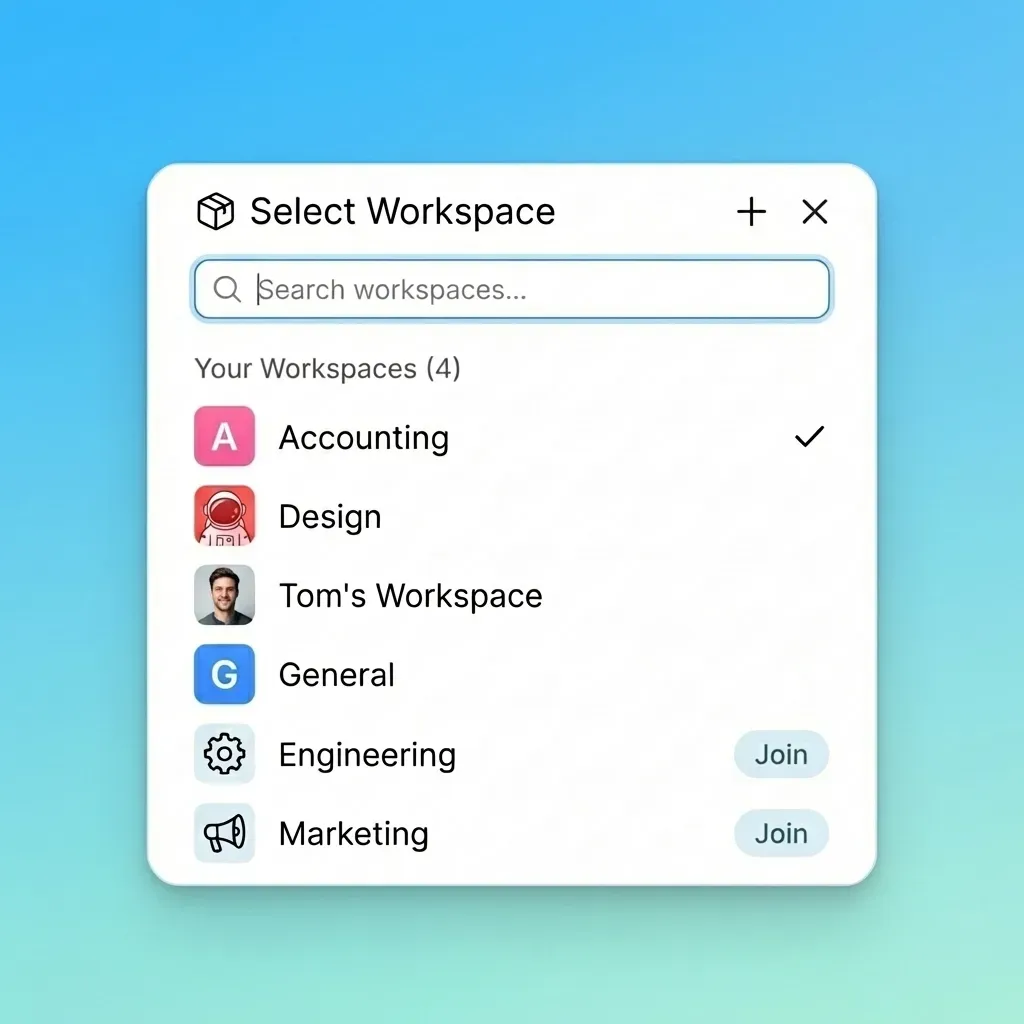
The workspace acts as the foundation of your portal. You should create a distinct workspace for each client or major project to isolate data and manage permissions easily.
Here is how you might create a workspace using Node.js:
async function createClientWorkspace(clientName) {
  const response = await fetch('https://api.fast.io/api/workspaces', {
    method: 'POST',
    headers: {
      'Authorization': `Bearer ${process.env.FASTIO_API_KEY}`,
      'Content-Type': 'application/json'
    },
    body: JSON.stringify({ name: clientName })
  });
  const data = await response.json();
  return data.workspaceId;
}
Store this workspaceId in your PostgreSQL database alongside the client's profile. Whenever that client logs in, your portal knows exactly which Fast.io workspace to query. This ensures a clean separation of data, reduces the risk of cross-client data leaks, and provides a scalable foundation for your portal's architecture.
Implementing Secure Authentication
Your portal handles all user authentication. You can use services like Auth providers, NextAuth, or a custom PostgreSQL setup. Fast.io never needs to know about your individual end users.
When a user logs into your React frontend, they receive a session token. They request to view their files, and your Next.js API route verifies that token. If the token is valid, your server looks up the user's assigned Fast.io workspace ID and makes the API call on their behalf.
Separating these concerns gives you flexibility. You can restrict access based on billing status or require multi-factor authentication before you ever interact with the Fast.io storage layer.
Handling File Uploads via API
Uploading files requires coordination between your React frontend and Node.js backend. The best approach depends on the size of the files your users upload.
For files under a specific size limit, you can pass the data directly through your Node.js server. Your React frontend creates a FormData object, appends the file, and posts it to your custom API route. Your server then forwards that payload to the Fast.io API using your secret credentials.
Here is a complete Next.js API route for handling a direct file upload:
import { NextResponse } from 'next/server';

export async function POST(request) {
  try {
    const formData = await request.formData();
    const file = formData.get('file');
    const workspaceId = formData.get('workspaceId');

if (!file || !workspaceId) {
      return NextResponse.json(
        { error: 'Missing file or workspace ID' },
        { status: 'Bad Request' }
      );
    }

const uploadResponse = await fetch(`https://api.fast.io/api/workspaces/${workspaceId}/files/upload`, {
      method: 'POST',
      headers: {
        'Authorization': `Bearer ${process.env.FASTIO_API_KEY}`
      },
      body: formData
    });

const data = await uploadResponse.json();
    return NextResponse.json(data);
  } catch (error) {
    return NextResponse.json({ error: 'Upload failed' }, { status: 'Internal Error' });
  }
}
On the frontend, your React component captures the file input and posts it to this local endpoint. Fast.io handles the durable storage and automatic AI indexing immediately.
For larger files, passing data through your server wastes bandwidth and adds latency. Your server should request a presigned upload URL from Fast.io instead. It sends this temporary URL back to the React frontend. The frontend then uploads the large file directly to Fast.io storage, bypassing your Node.js server entirely while maintaining strict security.
Listing and Downloading Files
Displaying files to your users involves querying the workspace and rendering the results in React. Call the file listing endpoint to retrieve an array of file objects.
async function listFiles(workspaceId) {
  const response = await fetch(`https://api.fast.io/api/workspaces/${workspaceId}/files`, {
    headers: { 'Authorization': `Bearer ${process.env.FASTIO_API_KEY}` }
  });
  return await response.json();
}
When a user clicks a file to download it, do not expose the raw storage URL permanently. Use the download endpoint to generate a temporary link instead. If a user shares the link, it will expire and protect your client's data.
You can also use URL Import to pull files from Google Drive, OneDrive, or Box via OAuth without running local I/O on your server.
Implementing Advanced Search with RAG
Intelligence Mode gives you a major advantage when using Fast.io as your backend. Traditional file sharing portals force users to remember exact file names or dig through folders. Fast.io provides built-in RAG capabilities instead.
Toggle Intelligence Mode on a workspace, and Fast.io automatically indexes every uploaded document. You avoid configuring a separate vector database or managing text embeddings. Your Node.js server passes user search queries to the Fast.io API, and the system returns relevant files based on their actual contents.
You can also add chat capabilities to your portal. Using the available agent tools, clients can ask questions about their files directly. The AI agent reads the indexed documents, synthesizes an answer, and provides specific citations linking back to the source files.
Automating Workflows with Webhooks and Agent Tools
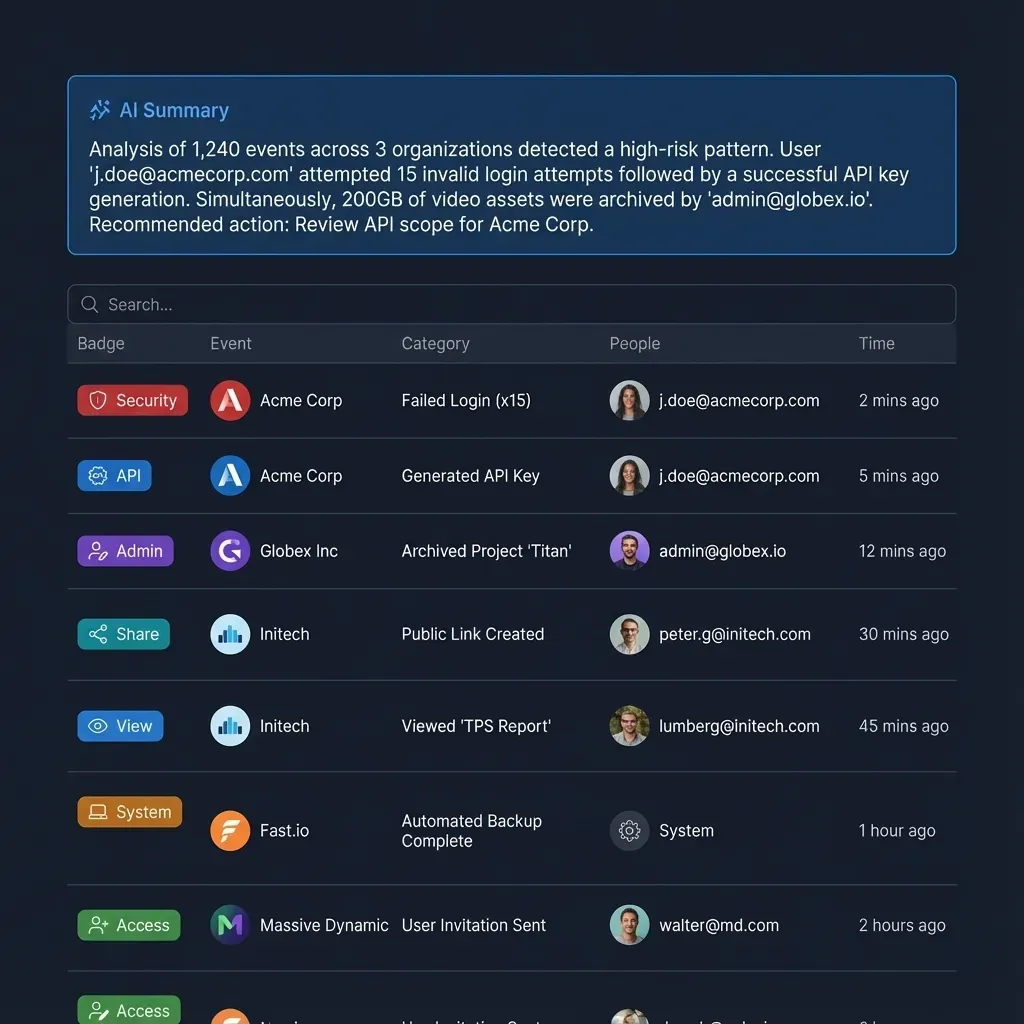
A modern client portal should be proactive rather than a static repository. Fast.io provides automation features to help you build reactive workflows.
Webhooks keep your application synchronized with the storage layer. Instead of constantly polling the API to see if a client uploaded a document, you configure Fast.io to send a webhook to your Node.js server the moment the file arrives. Your server can then trigger an email, notify an account manager via Slack, or update a database record.
File locks prevent conflicts in multi-agent systems. If an AI agent processes a newly uploaded video file, it acquires a lock on that file. This stops other agents or human users from modifying the asset until the processing finishes.
For complex client handoffs, you can use ownership transfer. An internal AI agent creates an organization, builds the necessary workspaces, populates them with onboarding materials, and transfers ownership to the human client. The agent retains admin access to provide ongoing support without holding the primary ownership rights.
Evidence and Benchmarks
Building a custom portal requires reliable performance metrics. Fast.io offers specific guarantees for developers building on the platform.
According to the Fast.io Documentation, Fast.io provides 14 MCP tools for developers to integrate. This surface area ensures that any action possible in the UI can also be automated via the API.
The platform supports session state in Durable Objects and handles streamable HTTP and SSE. According to the Fast.io Documentation, the free agent tier includes 50GB storage and 5,000 credits per month. Engineering teams can build, test, and deploy prototypes before committing to paid tiers. This predictable pricing model allows organizations to experiment with advanced features like AI indexing and automated workflows without unexpected costs.
Best Practices for Deploying Your Portal
Moving your portal from local development to production requires attention to security and performance.
Deploy your Node.js backend behind a secure HTTPS connection to protect session tokens and file data. Implement rate limiting on your API routes to prevent abuse, especially for bandwidth-heavy operations like file uploads and downloads.
Ensure your database properly maps users to their specific Fast.io workspace IDs. A vulnerability in your mapping logic could expose a client's files to another. Keeping the Fast.io API key on the server and relying on workspace-level isolation minimizes the risk of cross-client data leaks.
Document access rules, audit trails, and retention policies before rollout so staging results are repeatable in production. This avoids late surprises and helps teams debug issues with confidence.
Extending Functionality with OpenClaw Integration
Fast.io is designed for human-agent collaboration, which lets you add agentic features once your basic file sharing portal is functional. For example, you can implement OpenClaw integration by running clawhub install dbalve/fast-io to add natural language file management. This command gives you several tools with minimal configuration.
Connecting OpenClaw to your portal's backend lets users manage their files through conversational interfaces. A client could type out a request to organize their invoices from last month. The underlying agent then locates the files, creates a new folder, and moves the documents. This turns a traditional file repository into an active, intelligent workspace.
Frequently Asked Questions
Can I white-label Fast.io?
Yes, you can completely white-label the experience by using the Fast.io API as a headless backend. Your custom frontend handles all the branding, user interface, and authentication, while Fast.io manages the secure storage and file indexing behind the scenes.
How to make a custom client portal with Fast.io?
To build a custom client portal, you need to set up a frontend framework like React and a backend server like Node.js. Your backend will securely communicate with the Fast.io API to handle workspace creation, file uploads, and generating download links for your users.
What is the maximum file size for uploads?
Fast.io supports massive file transfers, allowing individual files up to massive sizes. For large files, developers should implement presigned upload URLs to route data directly to the storage layer and bypass their own application servers.
Do I need a vector database for AI search?
No, you do not need a separate vector database when using Fast.io. The platform features an Intelligence Mode that automatically indexes files upon upload, providing built-in RAG capabilities for semantic search and AI chat directly through the API.
How does the free agent tier work?
The free agent tier provides developers with generous storage and monthly credits at no cost. You do not need a credit card to sign up, making it easy to build and test your custom portal prototypes before scaling to production.
Related Resources

Give Your AI Agents Persistent Storage
Start building with the Fast.io API today. The free agent tier includes generous storage and a wide range of MCP tools. Built for how build file sharing portal with fast api workflows.