Best Tools for LangChain Development in 2026
The LangChain ecosystem has expanded beyond the core library to include specialized tools for observability, deployment, and testing.

How to implement best tools for langchain reliably
Building with LangChain has evolved . While the core framework remains the "glue" for LLM applications, serious development now requires a suite of specialized tools. In 2026, the focus has shifted from simple chains to complex, stateful agents that can reason, remember, and act over long periods. The "best" stack isn't just about picking a model. You need orchestration, observability, and persistent memory. Developers are now integrating tools that handle:
- Observability: Tracing execution paths in complex agent loops.
- State Management: Keeping track of conversation history and agent "thought" processes.
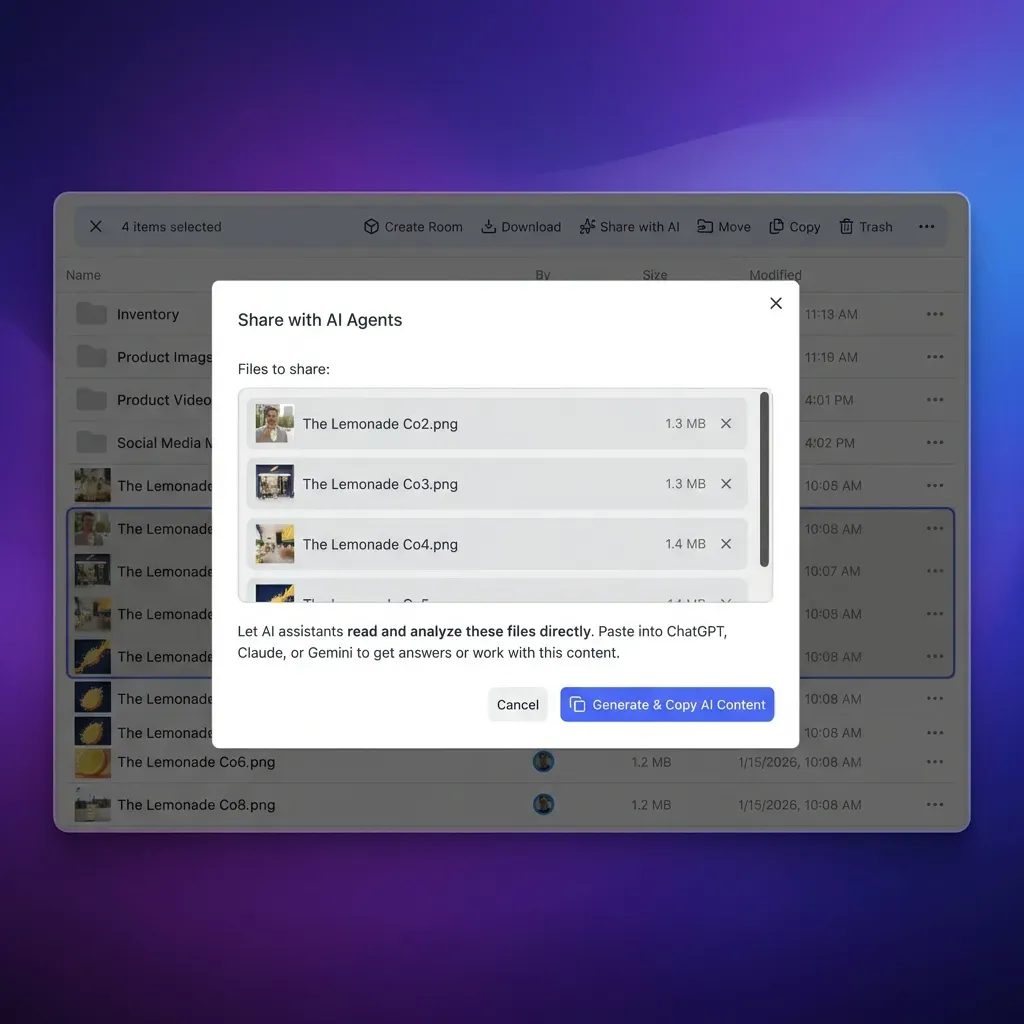
- File I/O: Giving agents long-term memory and the ability to manipulate real files.
- Deployment: Turning Python scripts into scalable, production-ready APIs. This list covers the essential tools that fill these gaps, moving beyond the basics to the utilities used by top AI engineers.
Helpful references: Fast.io Workspaces, Fast.io Collaboration, and Fast.io AI.
What to check before scaling best tools for langchain
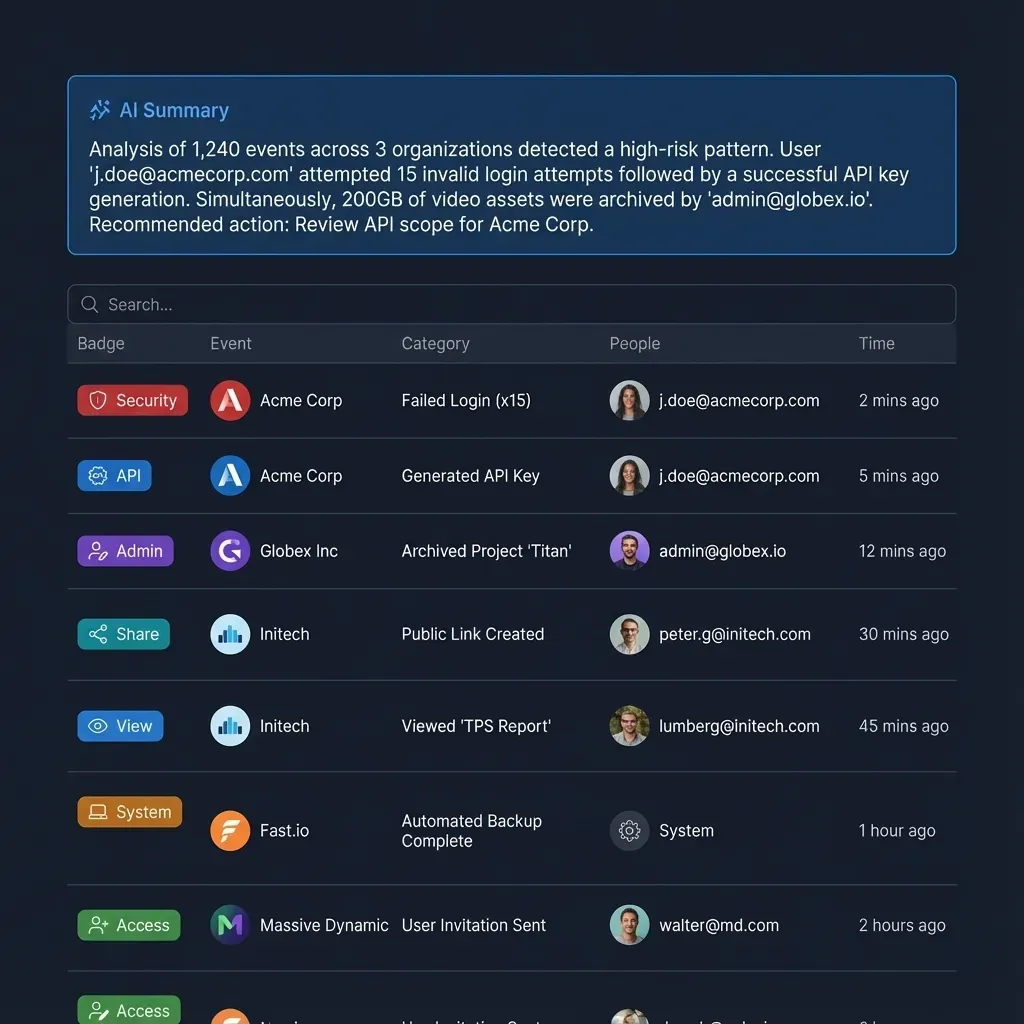
Best for: Debugging and monitoring complex agent workflows. LangSmith has become the standard for observability within the LangChain ecosystem. When an agent enters an infinite loop or hallucinates an answer, traditional print statements fail. LangSmith provides a visual trace of every step, token usage, and latency metric.
Key Strengths:
- Visual Tracing: See the exact input and output of every chain step.
- Dataset Management: Create test sets from production logs to prevent regressions.
- Prompt Hub: Version and manage prompts collaboratively.
Limitations:
- Can become expensive at high production volumes. * Tight coupling with the LangChain ecosystem (though usable independently).
Pricing: Free tier available; paid plans start around $39/seat/month.
2. LangGraph: Stateful Agent Orchestration
Best for: Building cyclic, stateful multi-agent systems. If you're still using legacy AgentExecutor, it's time to upgrade. LangGraph is the engine for building reliable agents in 2026. Unlike linear chains, LangGraph allows for loops, branching logic, and persistent state. This is essential for agents that need to retry failed actions or ask humans for clarification.
Key Strengths:
- Cyclic Graphs: Define workflows with loops (e.g., "plan -> execute -> critique -> plan").
- Persistence: Built-in checkpointers save agent state, allowing you to pause and resume workflows.
- Control: Low-level control over flow compared to higher-level abstractions.
Limitations:
- Steeper learning curve than standard chains. * Requires a shift in mental model from DAGs (Directed Acyclic Graphs) to cyclic graphs.
Pricing: Open source (Apache 2.0).
3. Fast.io: Persistent Storage & MCP Server
Best for: Agent file storage, long-term memory, and human-agent collaboration. Most LangChain tutorials store files locally or in ephemeral containers. Real-world agents need persistent, cloud-native storage. Fast.io provides a dedicated file system for agents with an official Model Context Protocol (MCP) server, giving agents instant access to 251 file operations. Unlike S3, which requires complex boto3 setup, Fast.io connects directly to LLMs. Its "Intelligence Mode" also creates an automatic semantic index of all files, providing built-in RAG without needing a separate vector database.
Key Strengths:
- MCP-Native: Connects to Claude Desktop or any MCP client with zero configuration.
- Built-in RAG: "Intelligence Mode" auto-indexes files for semantic search and citations.
- Ownership Transfer: Agents can build a workspace and transfer full ownership to a human client.
- Free Agent Tier: 50GB storage and 5,000 credits/month for free.
Limitations:
- Focuses on file-based memory rather than raw vector embeddings.
Pricing: Free (50GB storage, no credit card required). Pro plans for larger teams.


Give Your AI Agents Persistent Storage
Stop relying on ephemeral storage. Give your agents a real file system with 50GB free, built-in RAG, and 251 MCP tools.
4. Pinecone: Managed Vector Database
Best for: High-scale vector storage and retrieval. For applications that rely on semantic search over massive datasets (millions of vectors), Pinecone remains the industry leader. It offloads the complexity of managing vector indices, providing low-latency retrieval for RAG applications.
Key Strengths:
- Serverless: No infrastructure to manage; scales automatically.
- Filtering: Advanced metadata filtering for precise retrieval.
- Hybrid Search: Combines keyword search (sparse) with semantic search (dense).
Limitations:
- Can get expensive at scale compared to self-hosted solutions. * Separate system to manage outside of your primary data store.
Pricing: Free tier available; usage-based serverless pricing. Consider how this fits into your broader workflow and what matters most for your team. The right choice depends on your specific requirements: file types, team size, security needs, and how you collaborate with external partners. Testing with a free account is the fast way to know if a tool works for you.

5. Pydantic: Data Validation & Extraction
Best for: Structured output parsing and data validation. While not strictly an "AI tool," Pydantic is the backbone of reliable LangChain development. It forces LLMs to output structured JSON that matches strict schemas. In 2026, "chatting" with models is less common than asking them to populate Pydantic models for downstream code execution.
Key Strengths:
- Type Safety: Ensures data extracted by LLMs matches your code's requirements.
- LangChain Integration: Native support via
PydanticOutputParser. - Validation: Automatically catches and rejects malformed LLM outputs.
Limitations:
- Requires Python proficiency (not a low-code tool).
Pricing: Open source (MIT). Consider how this fits into your broader workflow and what matters most for your team. The right choice depends on your specific requirements: file types, team size, security needs, and how you collaborate with external partners. Testing with a free account is the fast way to know if a tool works for you.
6. LangServe: Production Deployment
Best for: Deploying chains as REST APIs. Moving from a Jupyter notebook to a production API is a common bottleneck. LangServe automates this by wrapping LangChain runnables in a FastAPI server. It automatically generates endpoints for invoking, streaming, and batch processing, along with a playground for testing.
Key Strengths:
- Auto-Generated APIs: Get
/invoke,/stream, and/batchendpoints instantly. - Playground: Built-in UI for testing chains with different inputs.
- Streaming Support: Native support for streaming tokens to the client.
Limitations:
- Tied specifically to the FastAPI ecosystem.
Pricing: Open source (MIT). Consider how this fits into your broader workflow and what matters most for your team. The right choice depends on your specific requirements: file types, team size, security needs, and how you collaborate with external partners. Testing with a free account is the fast way to know if a tool works for you.
7. Tavily: Search API for Agents
Best for: Giving agents real-time internet access. General-purpose search engines like Google are designed for humans (lots of ads, HTML clutter). Tavily is a search API built for AI agents. It returns clean, parsed text, answers, and source URLs, optimized for RAG context windows.
Key Strengths:
- LLM-Optimized: Returns clean JSON, not raw HTML.
- Fact-Checking: Designed to reduce hallucinations by providing sourced content.
- Context Control: Allows specifying search depth and domain filters.
Limitations:
- Paid API (unlike scraping Google yourself, which is brittle).
Pricing: Free tier for testing; paid plans based on request volume. As your file library grows, finding what you need becomes the bottleneck. Folder hierarchies help, but they break down at scale. AI-powered semantic search lets you describe what you are looking for in plain language rather than remembering exact filenames or folder paths.
Comparison Summary
Frequently Asked Questions
What is the best vector DB for LangChain?
For pure vector scale, Pinecone or Weaviate are top choices. However, for document-heavy workflows where you want to store the actual file alongside the index, Fast.io is a better choice. Its Intelligence Mode handles the embedding and indexing automatically, so you don't need to manage a separate vector database.
Is LangSmith worth the cost?
For production applications, yes. The time saved debugging complex agent loops pays for the seat cost quickly. For hobbyists or simple linear chains, the free tier or simple logging might suffice, but LangSmith's trace visualization is unmatched for deep debugging.
Can I use LangChain without LangGraph?
Yes, for simple 'input -> output' chains, the core LangChain library is sufficient. However, if your application involves loops, retries, or maintaining state across multiple turns (like a customer support bot), LangGraph is recommended to avoid 'spaghetti code'.
Related Resources

Give Your AI Agents Persistent Storage
Stop relying on ephemeral storage. Give your agents a real file system with 50GB free, built-in RAG, and 251 MCP tools.