Best Prompt Management Tools for Teams (2025)
Guide to prompt management tools teams: Pasting prompts into Slack doesn't work. We compare the best tools to help your team version, test, and collaborate.
Why You Need a Prompt Management System
Building AI apps requires managing prompts like code. Managing prompts in spreadsheets or codebases often causes errors and hidden changes.
A dedicated tool gives you one place to manage your AI logic. Engineers and product managers can update prompts without changing the app's code. This keeps projects organized as they grow.
These tools fix the mess. They handle versioning, testing, and connecting to your AI models.
Helpful references: Fast.io Workspaces, Fast.io Collaboration, and Fast.io AI.
What to check before scaling best prompt management tools for teams
Know the difference between a logging tool and a full management system before you choose. We looked at five key features:
multiple. Collaboration and Role-Based Access
The person writing the prompt often isn't the one deploying code. Good tools offer a simple editor. Non-coders can change prompts safely. Look for comments, approvals, and access controls. This stops bad changes from breaking your live app.
2. Observability and Tracing
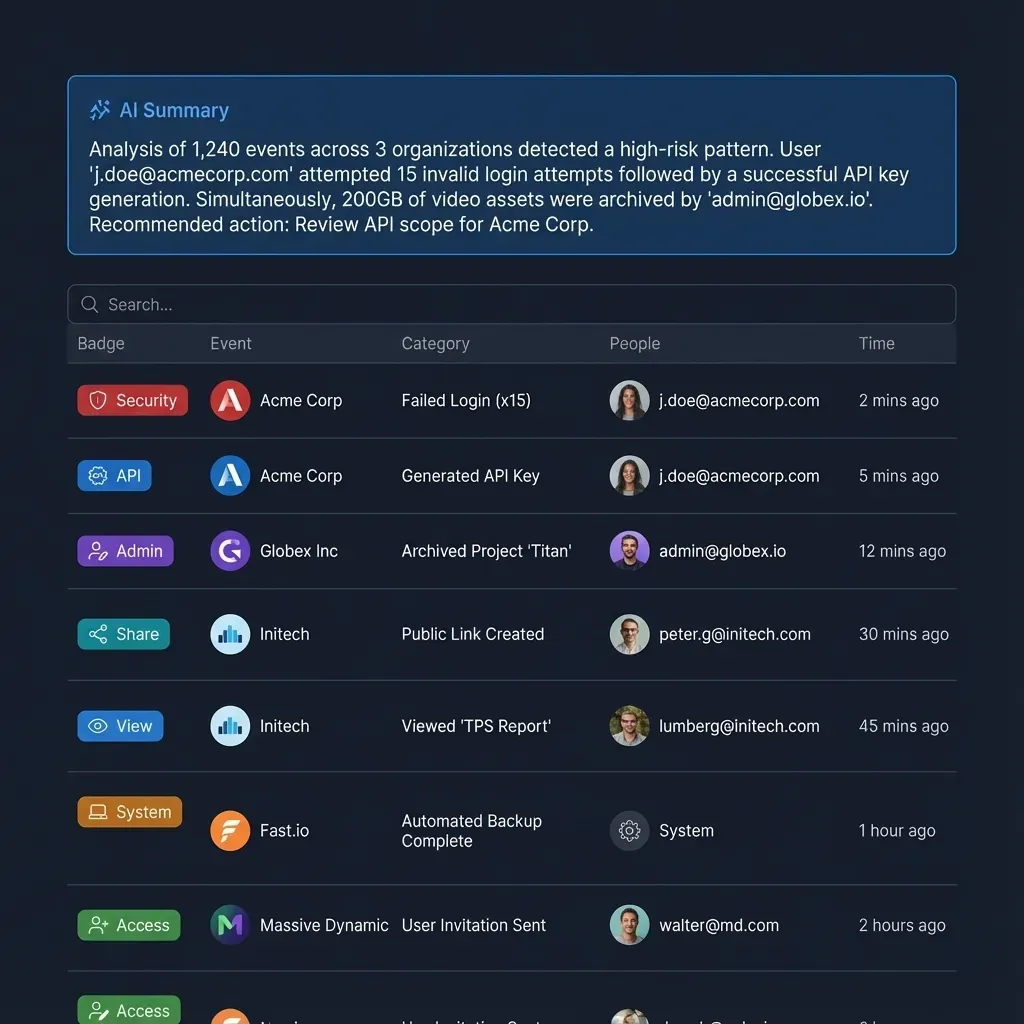
You need to see what users send to your model. Top tools track everything. They show inputs, outputs, speed, tokens, and cost. For agents, "chain tracing" matters. It reveals the steps an agent took to find an answer.
3. Version Control and Rollbacks
Prompts act like code. Treat them that way. You need versioning. If a new prompt fails, you can roll back instantly. Some tools sync with Git; others keep their own history.
4. Evaluation and Testing (Evals)
How do you know a change is better? Guessing doesn't work for production. Good tools let you run automated tests against example data. This can be exact matching or using a model like GPT-multiple to grade the output.
5. Vendor Independence
Avoid vendor lock-in. Use tools that act as a neutral layer. This lets you switch models, OpenAI, Anthropic, or Google, without rewriting code. An "AI Gateway" can also route traffic to a backup provider if the main one fails.
Comparison of Top Prompt Tools
Here is a quick overview of how the top platforms compare by primary focus.
1. PromptLayer
The Middleware Standard for Request Logging
PromptLayer helps teams track and debug prompts. It sits between your code and the LLM provider. It logs, visualizes, and indexes every request.
It was an early tool in this space. It works well for teams wanting quick visibility without big code changes. The history view helps debug issues. You can search by user ID to see what the model said.
Key Strengths:
- Visual History: View prompts, outputs, speed, and cost.
- Prompt Registry: Edit prompts in a dashboard and pull them via API.
- Metadata Tagging: Tag requests by user, feature, or error.
Pros:
- Easy setup (often one line of code).
- Good UI for browsing history.
- Works with Python, JS, and REST.
Cons:
- Focuses on logging rather than deep testing.
- Traffic goes through their library.
Best For: Teams wanting quick visibility into LLM traffic.
Pricing: Free tier available; paid plans start around published pricing.

2. Fast.io
Workspace for Agents & Context
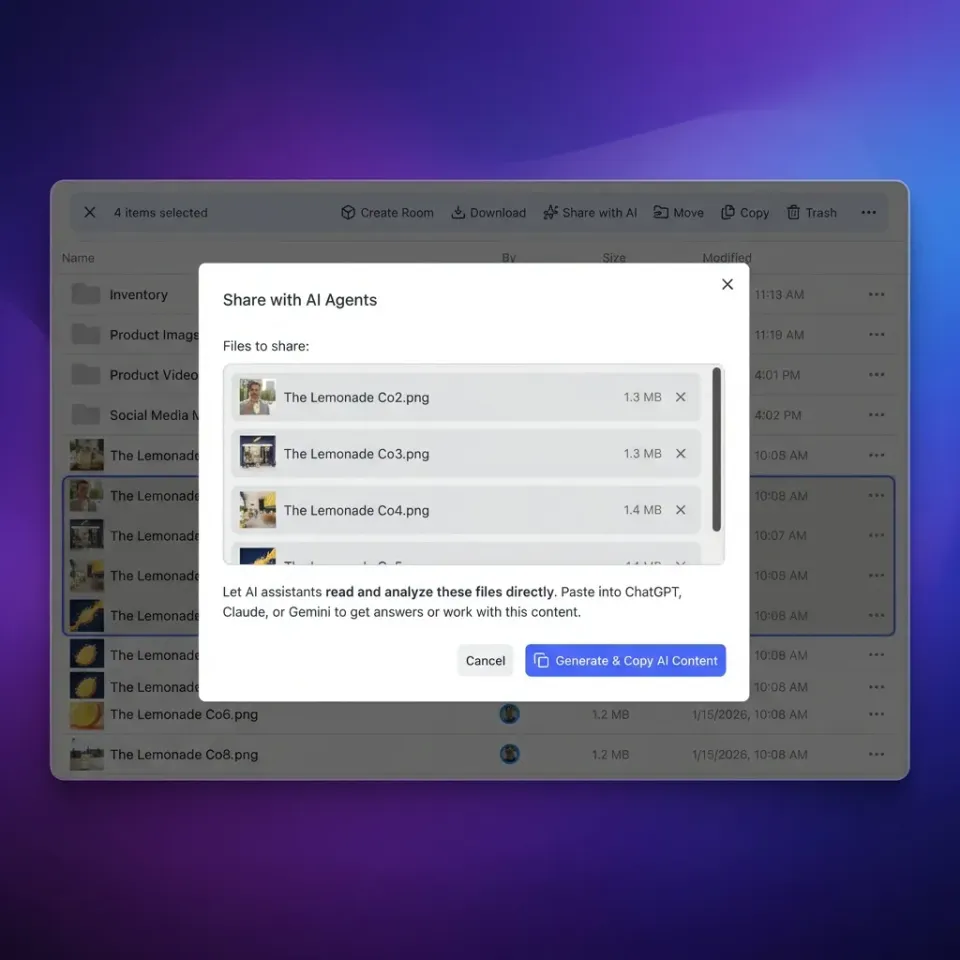
Most tools store prompts as text in a database. Fast.io manages them as files. This suits agents where the prompt isn't just instructions. It's often a collection of PDFs, data files, and docs.
Fast.io has a free tier for AI agents with an official Model Context Protocol (MCP) server. Agents can connect to the workspace to read prompts, search files, and save outputs. Using files gives you standard operations plus search.
Key Strengths:
- File-Based Management: Version prompts with standard file tools; sync with GitHub.
- Intelligence Mode: Indexes files (PDFs, docs, CSVs). Agents query the context, not just the prompt.
- MCP Server: Offers tools for file use, search, and memory to MCP agents.
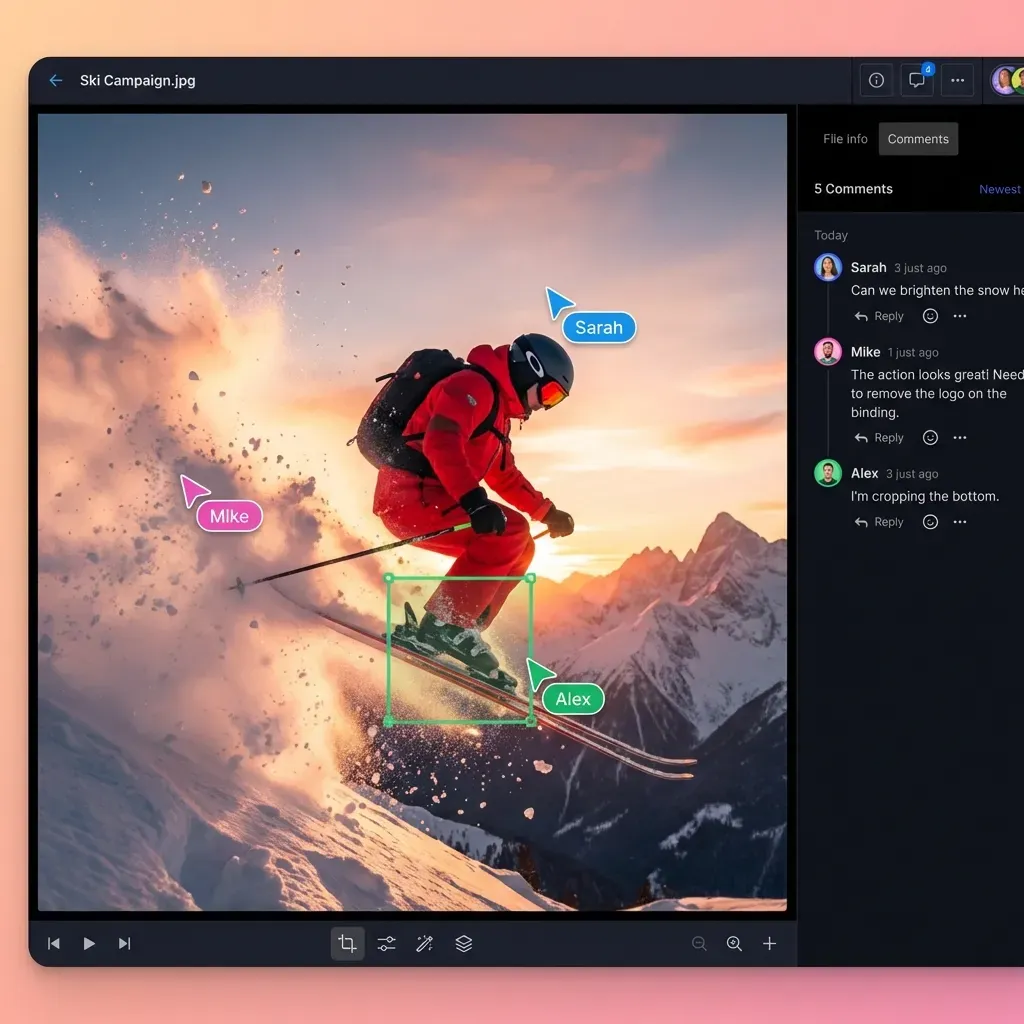
- Collaboration: Humans and agents share the workspace. Upload a prompt, and the agent sees it.
Pros:
- Handles large context files (up to multiple free).
- Built-in RAG replaces separate vector databases.
- Works with OpenClaw and other frameworks.
Cons:
- No GUI editor; uses your text editor.
- You build your own evaluation logic.
Best For: Teams building autonomous agents or managing large context.
Pricing: Free Agent Tier includes 50GB storage and 5,000 monthly credits. No credit card required.



Give Your Agents a Real Workspace
Stop managing prompts alone. Give agents a workspace with built-in RAG, 50GB storage, and 251 MCP tools. Built for teams. Built for prompt management tools teams workflows.
3. LangSmith
The Native Choice for LangChain Developers
LangSmith is from the LangChain team. It helps move prototypes to production. It gives LangChain users full visibility into the "chain of thought."
AI apps often have steps: retrieving docs, summarizing, then answering. The "trace" view shows this sequence. You can see where things failed or lagged. It's like DevTools for LLMs.
Key Strengths:
- Deep Tracing: See every step of a chain, not just the result.
- Dataset Evaluation: Tools to run tests and measure accuracy.
- Hub Integration: Connects to LangChain Hub for community prompts.
Pros:
- Great debugging for chains.
- Active community and updates.
- Finds bottlenecks in workflows.
Cons:
- Tied to LangChain (but usable without it).
- Information density can be hard for non-engineers.
Best For: Engineers building chains with LangChain.
Pricing: Generous free tier for developers; pay-as-you-go for teams.
4. Helicone
Open-Source LLM Observability
Developers like Helicone's open-source approach. Its proxy logs your requests. You see costs, speed, and errors across providers.
Its caching system is a key feature. Caching identical requests saves money and time. This helps when running the same prompts repeatedly.
Key Strengths:
- Caching: Caching cuts costs for repeated prompts.
- Open Source: Self-host for data privacy.
- Rate Limit Handling: Retries and rate limits are built in.
Pros:
- Open-source code.
- Saves money.
- Works with most providers.
Cons:
- UI is simpler than PromptHub's.
- Must change your API base URL.
Best For: Developers who want full control, self-hosting options, and cost reduction via caching.
Pricing: Free tier available; Pro plan adds advanced features.
5. Portkey
The Resilient AI Gateway
Portkey is an "operating system" for AI apps. Its main feature is the AI Gateway. It routes prompts to different models without code changes. For example, falling back to Claude if GPT-multiple fails.
This helps apps that need high availability. If OpenAI goes down, Portkey reroutes to Azure or Anthropic.
Key Strengths:
- Universal API: Write one prompt and route to multiple+ LLMs.
- Resilience: Retries, fallbacks, and load balancing.
- Prompt Management: Registry to manage templates.
Pros:
- Switch providers easily.
- Improves reliability.
- Guardrails for PII.
Cons:
- May be overkill for simple needs.
- Adds a dependency.
Best For: Production apps that need high availability and model flexibility.
Pricing: Free developer tier; usage-based pricing for teams.
6. PromptHub
Git-Style Versioning for Teams
PromptHub brings structure to prompt engineering. It's easy for non-technical users. It uses a "commit" model. You track changes and reasons.
It's good for comparisons. You can test prompts against new models (like GPT-4o vs. Turbo) to check for differences.
Key Strengths:
- Side-by-Side Comparison: Compare prompt versions.
- Collaboration: Comments and approvals.
- Client SDKs: Easy integration to fetch deployed prompts.
Pros:
- Interface works for non-tech teams.
- Focus on versions and diffs.
- Prevents "silent changes."
Cons:
- Less focus on tracing than LangSmith.
- Smaller ecosystem.
Best For: Teams with non-technical editors.
Pricing: Paid plans with a trial period.

7. Humanloop
Enterprise Evaluation & Feedback
Humanloop handles evaluation and improvement. It bridges development and production. It integrates human feedback.
It captures feedback like thumbs up/down or copy events. It builds datasets of good and bad outputs. Use these to test prompts or fine-tune models.
Key Strengths:
- Interactive Editor: Test prompts against multiple models at once.
- Feedback Integration: Link user feedback to prompt versions.
- Fine-Tuning: Export data to fine-tune models.
Pros:
- Closes the data loop.
- Tools for dataset management.
- Enterprise security.
Cons:
- Enterprise focus means higher cost and complexity.
- Needs traffic to generate feedback data.
Best For: Enterprise teams serious about rigorous evaluation and fine-tuning.
Pricing: Custom enterprise pricing; demo required.
The Future of Prompt Engineering
Prompt management is moving from manual writing to automated optimization. Tools like DSPy let developers define goals, then the system compiles the prompt.
Management tools might become behavior compilers. You'll manage datasets and goals, not text strings. For now, versioning and collaboration remain necessary.
Choose the tool that fits your team. Code-heavy teams should try LangSmith or Helicone. Content-heavy teams should try PromptHub. For autonomous agents, look at workspace solutions like Fast.io.
Recommendation: Which Tool is Right for You?
The right tool depends on your team and stack.
- For Agentic Teams: Choose Fast.io if your agents need file context.
- For LangChain Devs: Choose LangSmith for tracing complex chains.
- For Visibility: Choose PromptLayer or Helicone to track inputs fast.
- For Reliability: Choose Portkey to keep apps running during outages.
Start with the tool that fixes your biggest problem.
Frequently Asked Questions
What is a prompt management tool?
A prompt management tool is software that helps teams store, version, test, and deploy AI prompts. It's a library for prompts, allowing developers and product managers to collaborate on AI logic without modifying code.
Why do I need a specialized tool for prompts?
Storing prompts in code or spreadsheets causes conflicts and hides changes. Tools provide versioning and testing so changes don't break your app.
Does Fast.io replace tools like LangSmith?
Not necessarily. Fast.io handles storage and context for agents. LangSmith handles tracing and debugging. Teams often use both: Fast.io for memory, LangSmith for tracing.
Can I manage prompts in Git?
Yes, many teams start with text files in Git. But this excludes non-tech members and lacks testing features. Tools like PromptHub or Fast.io fix this by offering a UI while often syncing with Git.
What is the difference between prompt management and LLM observability?
Prompt management handles the *input*, creating and versioning prompts. Observability tracks the *output*, latency, cost, and errors. Platforms like Helicone combine both.
How do these tools handle data privacy?
Most tools offer data redaction or self-hosting. Helicone and LangSmith have self-hosted options for compliance.
Related Resources

Give Your Agents a Real Workspace
Stop managing prompts alone. Give agents a workspace with built-in RAG, 50GB storage, and 251 MCP tools. Built for teams. Built for prompt management tools teams workflows.