How to Choose the Best Payment APIs for AI Agents (2025)
Payment APIs for AI agents enable autonomous software to send and receive funds programmatically without human intervention. As the agentic economy grows, specialized tools from Stripe, Coinbase, and new Web3 protocols are replacing traditional checkout flows. Here are the top multiple payment solutions for autonomous agents in multiple.

Why AI Agents Need Specialized Payment APIs
The rise of autonomous agents has created a new economic model: Agentic Commerce. Unlike traditional ecommerce, where a human clicks a "Buy" button, agentic commerce involves software negotiating, purchasing, and selling services directly to other software.
Standard payment gateways are built for humans. They require CAPTCHAs, two-factor authentication (2FA) via SMS, and visual checkout forms. These barriers break automated workflows. AI agents need APIs that offer:
- Programmatic Access: Pure JSON/gRPC interfaces with no UI requirements.
- Identity Verification: "Know Your Agent" (KYA) protocols instead of just KYC.
- Micro-transaction Support: The ability to pay fractions of a cent for API calls or data packets.
- Smart Spend Limits: Hard caps on spending to prevent runaway loops draining a wallet.
According to Fintech News Hong Kong, Alipay's new AI Pay service processed over 120 million transactions in a single week in early 2025. This signals the massive scale of this new economy. Agents aren't just the future. They are already transacting at scale.
The Friction Problem
Imagine an AI agent trying to buy a subscription to a data service. If the checkout page requires a CAPTCHA, the agent fails. If the bank sends an SMS code to a human's phone, the agent times out. Specialized payment APIs solve this by authenticating the agent itself (via API keys or cryptographic signatures) rather than the human owner. This allows for smooth, high-speed transactions that happen in milliseconds.
Helpful references: Fast.io Workspaces, Fast.io Collaboration, and Fast.io AI.

What to check before scaling best payment apis for ai agents
We evaluated the leading payment solutions based on developer experience, security, and agent-specific features. Here are the best APIs for enabling agentic commerce.
1. Stripe Agent Toolkit
Best for: SaaS subscriptions, traditional fiat payments, and global compliance.
Stripe adapted its infrastructure for the agent era with the Agentic Commerce Suite. This toolkit allows agents to generate virtual cards, manage metered billing, and execute payments via function calls compatible with frameworks like LangChain and CrewAI.
- Key Feature: Issue single-use virtual cards for specific transactions to limit risk.
- Use Case: An agent booking flights or hotels where a credit card number is required.
- Integration: Works natively with Vercel AI SDK and LangChain tools.
- Pros: Massive global coverage, familiar API, strong documentation.
- Cons: Higher fees for small transactions; strict KYC requirements for the human operator.
2. Coinbase Agentic Wallets
Best for: Crypto-native payments, stablecoins, and decentralized finance (DeFi).
Coinbase's Agentic Wallets use the x402 protocol to enable machine-to-machine payments. These wallets are designed for AI control, supporting USDC stablecoin transfers on low-cost networks like Base and Polygon.
- Key Feature: Built-in integration with the Coinbase Developer Platform (CDP) for easy key management.
- Use Case: An agent paying another agent for a dataset or API access in real-time.
- Integration: Python and Node.js SDKs that abstract away private key signing.
- Pros: Low transaction fees, instant global settlement, no chargebacks.
- Cons: Volatility of non-stablecoin assets; regulatory complexity in some regions.
3. Lightning Labs (L402)
Best for: High-frequency micropayments and streaming money.
The L402 protocol (formerly LSAT) combines payment and authentication. It allows API endpoints to charge specifically for access (e.g., "multiple satoshis for this data response"). This is ideal for agents buying data streams or compute power in real-time.
- Key Feature: Pay-per-request architecture with near-zero fees.
- Use Case: Paying for a single LLM inference or a premium weather forecast query.
- Integration: Requires a Lightning node or gateway (like Voltage or Alby).
- Pros: High speed, privacy-preserving, ideal for streaming money.
- Cons: Requires Bitcoin/Lightning knowledge; higher technical barrier to entry.
4. Skyfire
Best for: Identity, reputation, and "Know Your Agent" (KYA).
Skyfire handles the trust layer of agentic commerce. It provides a unique identifier for agents, allowing vendors to verify the reputation and spending history of an agent before accepting a transaction.
- Key Feature: "Agent Passports" that carry reputation scores across platforms.
- Use Case: A vendor allowing an unknown agent to make a purchase on credit based on its score.
- Integration: REST API that wraps standard payment rails with identity checks.
- Pros: Solves the "rogue agent" trust problem; enables credit-based transactions.
- Cons: Newer ecosystem with fewer integrations than Stripe.
5. Nevermined
Best for: Monetizing agent outputs and specialized services.
Nevermined provides a full "Payment-for-AI" stack. It allows agents to gate their own outputs behind a paywall. If you are building an agent that sells specialized analysis or code, Nevermined handles the access control and billing.
- Key Feature: Token-gated access to agent services via Smart Subscriptions.
- Use Case: An agent selling a proprietary market analysis report to other agents.
- Integration: Web3-native SDKs for automated access control.
- Pros: Turnkey solution for agent monetization; supports hybrid payment models.
- Cons: More focused on selling agent services than buying generic goods.
6. Payman
Best for: Controlled spending, compliance, and enterprise oversight.
Payman works as a spend management layer for AI. It allows developers to set granular budgets (e.g., "$multiple/day max", "only approve vendors X and Y") and integrates deeply with LangChain to pause execution if funds run low.
- Key Feature: Human-in-the-loop approval workflows for large transactions.
- Use Case: An enterprise coding agent that needs approval for server costs over $multiple.
- Integration: Middleware that sits between the agent and the payment provider.
- Pros: Great for enterprise teams worried about "runaway agent" costs.
- Cons: Adds an extra layer of orchestration.

Fast.io: The Workspace for Agent Commerce
Best for: Audit logs, receipt storage, and agent coordination.
While Fast.io is not a payment gateway, it is the central workspace where autonomous agents live and work. When an agent generates an invoice, downloads a receipt, or logs a transaction, it needs a secure, persistent place to store that record.
Why Agents Need a Workspace
Payment APIs handle the money, but they don't handle the context. Where does the invoice go? Where is the audit log stored? Who reviews the spending? Fast.io answers these questions.
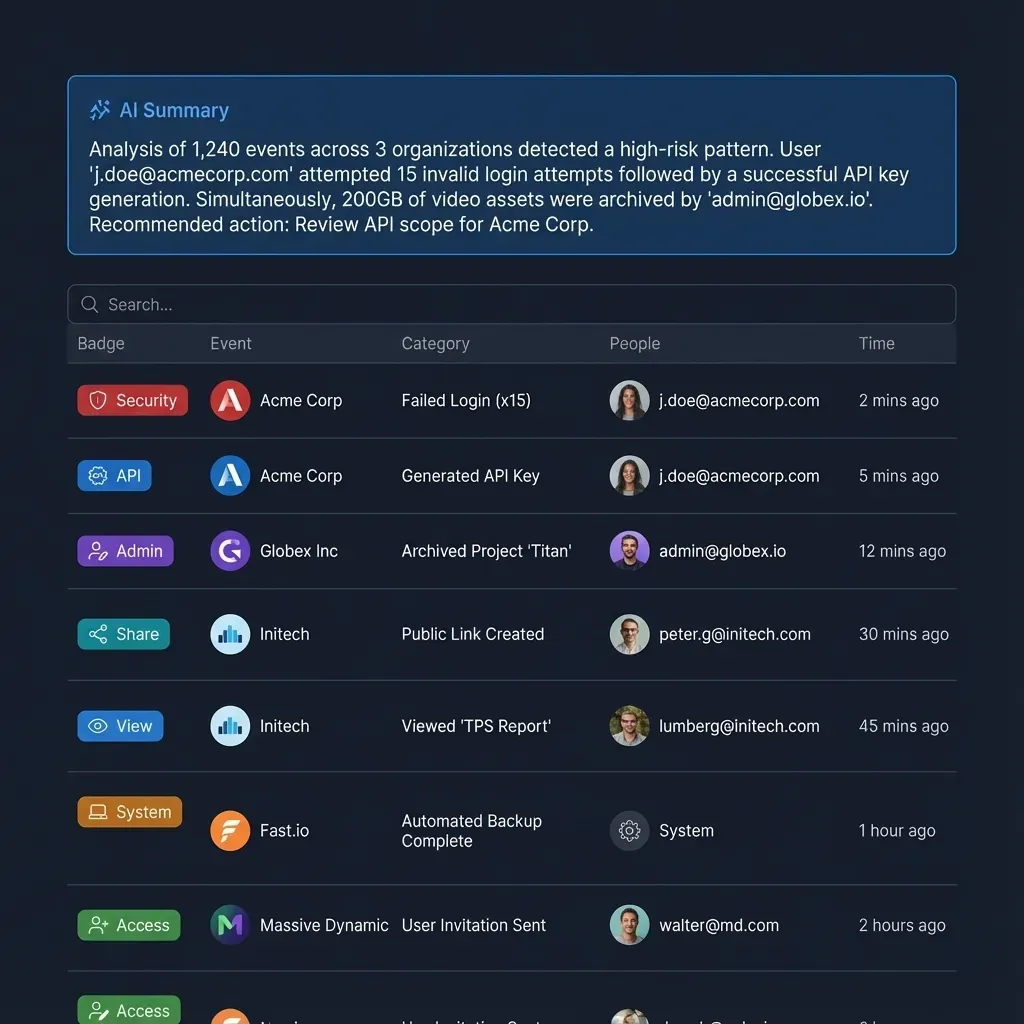
- Intelligence Mode: Fast.io automatically indexes every invoice and receipt uploaded by your agents. You can ask, "Show me all Stripe receipts from the 'Research Agent' last month," and get an instant answer with citations.
- multiple MCP Tools: Agents running on Fast.io have access to over multiple tools via the Model Context Protocol (MCP). This means your agent can use the 'Stripe' tool to pay, then use the 'Fast.io' tool to save the receipt, all in one workflow.
- Secure Environment: Store sensitive API keys (like
STRIPE_SECRET_KEY) in Fast.io's secure environment variables. This ensures your agents can sign transactions without exposing secrets in their code. - Human Oversight: Because Fast.io is a shared workspace, humans can log in and review the files your agents are creating. If an agent goes rogue and starts generating thousands of invoice files, you'll see it immediately in the activity feed.
Fast.io connects the payment API and the human accounting team. The agent pays via Stripe, but it saves the receipt to Fast.io, where the finance team can instantly see it, search it, and audit it.


Give Your Agents a Secure Home
Fast.io provides the secure storage and audit logging your agents need to operate safely. Store receipts, manage logs, and coordinate workflows in one intelligent workspace. Built for payment apis agents workflows.
Security & Risk Management for Autonomous Payments
Giving an AI agent a wallet is risky. Without proper guardrails, a bug in the agent's logic could drain your bank account in seconds. Here is how to secure your agentic commerce flows.
1. The 'Prepaid Card' Model Never connect an agent directly to your main corporate bank account. Instead, use a sub-account or a prepaid wallet with a limited balance (e.g., $100). If the agent is compromised, the loss is capped at the wallet balance.
2. Granular Spend Limits Use APIs like Payman or Stripe's issuance controls to set strict limits:
- Velocity Limits: Max multiple transactions per hour.
- Value Limits: Max $multiple per transaction.
- Vendor Limits: Only allow payments to specific merchant IDs (e.g., AWS, OpenAI).
3. Human-in-the-Loop for High Value For any transaction over a certain threshold (e.g., $multiple), require human approval. The agent can create a "pending" transaction and send a notification (via Slack or Email) to a human. Once the human approves, the agent executes the final capture.
4. Immutable Audit Trails Every financial action must be logged. Do not rely on the agent's internal logs, which can be wiped. Store transaction receipts and decision logs in an immutable storage system like Fast.io, where file versioning ensures that history cannot be rewritten.
Feature Comparison: Fiat vs. Crypto for Agents
Choosing the right rail depends on your agent's autonomy level and transaction size.
Our Recommendation:
- Use Stripe if your agents interact with traditional businesses (SaaS subscriptions, physical goods).
- Use Lightning/Coinbase if your agents are buying digital commodities (data, compute, bandwidth) from other agents.
Frequently Asked Questions
Common questions about setting up payments for autonomous agents.
Do AI agents need their own bank accounts?
Not usually. Most agents operate using sub-accounts or virtual wallets tied to a human or corporate parent account. However, "Agentic Wallets" on the blockchain can be owned directly by the agent's private key, giving them semi-autonomous financial status.
How do I prevent an agent from draining my funds?
Use APIs like Payman or Stripe's spend controls to set hard limits (e.g., daily caps, per-transaction limits). Never give an agent a credit card with an unlimited line of credit. Always sandbox financial tools in a test environment first.
What is the x402 protocol?
The x402 protocol is an emerging standard for "machine-payable web" requests. Derived from the HTTP multiple status code ("Payment Required"), it allows a server to reject a request until a micropayment (often via Lightning Network or stablecoin) is received, enabling pay-per-view APIs.
Can agents sign legal contracts for payments?
Currently, agents are not legal persons and cannot sign binding contracts. The human or entity deploying the agent retains liability. Tools like Skyfire and Nevermined are building reputation layers to create "soft" trust between agents in the absence of legal standing.
Frequently Asked Questions
How do AI agents make payments?
AI agents make payments using specialized APIs that allow them to trigger transactions programmatically. Unlike humans who use credit cards on a checkout page, agents use JSON requests to services like Stripe, Coinbase, or Lightning Network to transfer funds, often using virtual cards or crypto wallets.
What is the best payment gateway for bots?
For traditional transactions, Stripe is the best gateway due to its extensive documentation and 'Agentic Commerce' tools. For autonomous machine-to-machine micropayments, the Lightning Network (via L402) is better because of its near-zero fees and instant settlement.
Is it safe to give an AI agent a wallet?
It is safe only if you set strict limits. Use 'spend management' middleware like Payman to set daily limits, or use prepaid wallets with small balances. Never connect an agent directly to a main corporate bank account without spending controls.
Related Resources

Give Your Agents a Secure Home
Fast.io provides the secure storage and audit logging your agents need to operate safely. Store receipts, manage logs, and coordinate workflows in one intelligent workspace. Built for payment apis agents workflows.