Best Observability Tools for AI Agents: Monitor & Debug
AI agent observability tools provide visibility into agent reasoning, tool usage, and cost per run. Without them, developers face the "black box" problem, unable to explain why an agent loop failed or why costs spiked. This guide compares the top 7 tools for monitoring, tracing, and debugging autonomous agents in 2025.

Why AI Agents Need Specialized Observability
Traditional application performance monitoring (APM) tools like Datadog or New Relic are insufficient for AI agents. They track latency and errors, but they cannot interpret the intent or reasoning behind an agent's decisions. AI agent observability requires tracking:
- Execution Traces: The step-by-step chain of thought (CoT) and tool invocations.
- Token Usage & Cost: Accurate tracking of input/output tokens per step.
- Non-Deterministic Failures: Why an agent chose the wrong tool or got stuck in a loop.
- Artifact Generation: The actual files, code, or data produced by the agent. According to data from AI feedback platforms, nearly 30% of agent costs are often wasted on loops and retries caused by unmonitored failures. Specialized tools expose these inefficiencies, allowing developers to optimize prompts and logic.
Helpful references: Fast.io Workspaces, Fast.io Collaboration, and Fast.io AI.
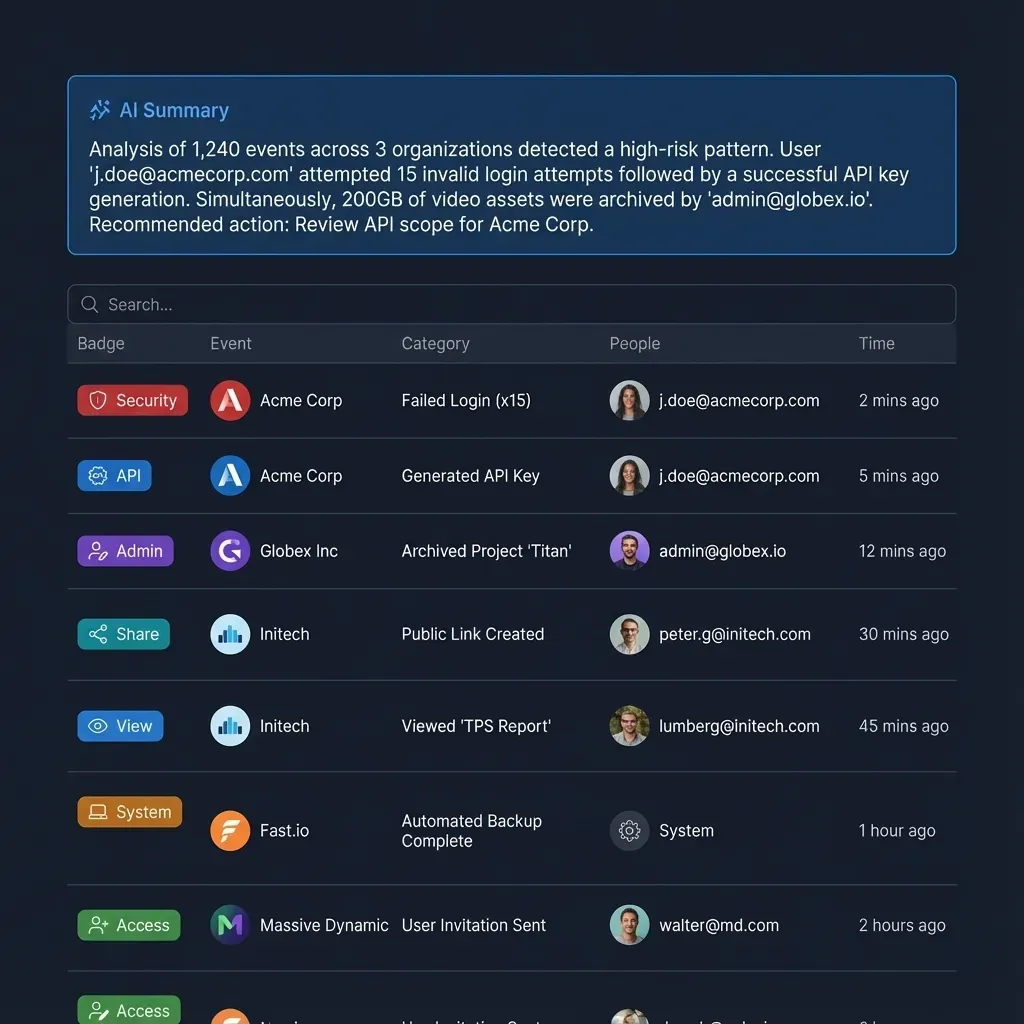
Top 7 Observability Tools for AI Agents
We evaluated these tools based on their tracing capabilities, integration ease, and support for agentic workflows.
1. LangSmith
LangSmith is the industry standard for developers already in the LangChain ecosystem. Created by the team behind LangChain, it offers deep integration for tracing complex agent chains.
Key Strengths:
- Native Integration: Works out-of-the-box with LangChain and LangGraph.
- Playground: Allows you to modify prompts and re-run traces directly in the UI to test fixes.
- Dataset Curation: Easily turn production traces into testing datasets for few-shot prompting.
Limitations:
- Can be expensive at scale for high-volume consumer apps. * Tight coupling with LangChain (though usable with SDKs) makes it less ideal for custom frameworks.
Best For: Teams building complex agents with LangGraph who need deep debugging capabilities.
2. Arize Phoenix
Arize Phoenix focuses on AI quality and evaluation, built on open standards. It is particularly strong for those committed to OpenTelemetry (OTEL).
Key Strengths:
- OpenTelemetry Native: Built on OTEL, making it easy to works alongside existing infrastructure.
- Local-First: Run the Phoenix server locally for private development without sending data to the cloud.
- Embedding Analysis: Visualizes retrieval (RAG) performance to debug why an agent retrieved irrelevant context.
Limitations:
- The UI is functional but less polished than hosted competitors like LangSmith. * Setup can be more complex for teams unfamiliar with OTEL.
Best For: Engineering teams who prefer open standards and need deep insight into RAG retrieval quality.
3. Helicone
Helicone takes a different approach by acting as a proxy. You change your API base URL, and Helicone intercepts requests to provide logging, caching, and monitoring.
Key Strengths:
- Zero-Code Integration: Just change one line of configuration (the base URL).
- Smart Caching: Saves money by caching identical requests, reducing API bills by up to 90% for repetitive tasks.
- Rate Limit Handling: Automatic retries and queuing prevent agents from crashing due to provider limits.
Limitations:
- Proxy-based architecture introduces a single point of failure (though they have high uptime). * Less visibility into internal agent logic (loops/thoughts) compared to trace-based tools.
Best For: Startups and developers focused on reducing API costs and latency via caching.
4. Langfuse
Langfuse is a popular open-source choice for teams that want full control over their observability data. It can be self-hosted or used as a managed cloud service.
- Model Agnostic: SDKs for Python and JavaScript work with any LLM framework.
- Prompt Management: Includes a CMS for managing prompt versions alongside traces.
Limitations:
- Self-hosting requires maintenance and infrastructure resources. * The managed cloud version has usage limits on the free tier.
Best For: Privacy-conscious teams in regulated industries (healthcare, finance) who need to self-host. Consider how this fits into your broader workflow and what matters most for your team. The right choice depends on your specific requirements: file types, team size, security needs, and how you collaborate with external partners. Testing with a free account is the fast way to know if a tool works for you.
5. Fast.io
While not a traditional tracing tool, Fast.io provides artifact observability and audit logging for agentic workflows. Agents use Fast.io to store logs, outputs, and intermediate files, creating a persistent record of their work.
Key Strengths:
- File-Based Logging: Agents can write logs, code, and thoughts to persistent files, which are legally easier to manage than ephemeral DB traces.
- MCP Audit Trails: The Fast.io MCP server logs every file interaction (read, write, delete), providing a forensic trail of agent behavior.
- Webhooks: Trigger alerts or human reviews immediately when an agent modifies a critical file.
- Smart Summaries: Automatically generates digests of agent log files, helping humans understand 1,000 lines of logs in seconds.
Limitations:
- Does not provide token-level latency tracing or prompt engineering playgrounds. * Designed to complement trace tools (like LangSmith), not replace them for prompt optimization.
Pricing: Free Agent Tier includes 50GB storage, 5,000 credits/month, and 251 MCP tools.
Best For: Agents that produce files (code, reports, media) and require persistent audit trails of their file system interactions.


Give Your AI Agents Persistent Storage
Stop losing agent outputs to ephemeral logs. Give your AI agents a persistent file system with built-in audit trails and 50GB of free storage.
6. Weights & Biases (W&B)
Weights & Biases is the heavyweight champion of traditional Machine Learning operations (MLOps). Their "Prompts" product brings this enterprise rigor to LLM development.
Key Strengths:
- Unified Platform: Monitor LLM agents alongside traditional ML model training experiments.
- Visualizations: Best-in-class charts and comparison tools for evaluating agent performance over time.
- Collaboration: Excellent features for teams to comment on and review traces together.
Limitations:
- Can be overkill for simple agent projects. * The interface is dense and geared towards data scientists rather than application developers.
Best For: Enterprise data science teams already using W&B for model training. Consider how this fits into your broader workflow and what matters most for your team. The right choice depends on your specific requirements: file types, team size, security needs, and how you collaborate with external partners. Testing with a free account is the fast way to know if a tool works for you.
7. Portkey
Portkey acts as a gateway and observability platform combined. It routes your agent's requests to different providers to ensure reliability and optimal cost.
Key Strengths:
- AI Gateway: Automatically falls back to Azure OpenAI if GPT-4 is down, or routes to a cheaper model for simple tasks.
- Virtual Keys: Manage API keys centrally without hardcoding them into agents.
- Comprehensive Logs: Captures full request/response bodies for every interaction.
Limitations:
- Gateway architecture requires routing all traffic through Portkey. * Focus is more on the "LLM call" layer than the "agent loop" layer.
Best For: Production applications requiring high availability and multi-provider redundancy. Consider how this fits into your broader workflow and what matters most for your team. The right choice depends on your specific requirements: file types, team size, security needs, and how you collaborate with external partners. Testing with a free account is the fast way to know if a tool works for you.
How to Choose the Right Tool
Selecting the right observability tool depends on your primary bottleneck.
Choose LangSmith or Langfuse if: You are debugging complex reasoning loops and need to see the "chain of thought" step-by-step. These tools visualize the tree of reasoning best.
Choose Helicone or Portkey if: Your main concern is cost or reliability. Their proxy/gateway approach offers immediate ROI via caching and fallback routing.
Choose Fast.io if: Your agents generate files or work with long-term memory. Fast.io ensures you have a permanent, searchable record of what the agent created and how it manipulated the file system. Getting started should be straightforward. A good platform lets you create an account, invite your team, and start uploading files within minutes, not days. Avoid tools that require complex server configuration or IT department involvement just to get running.
Frequently Asked Questions
What is the difference between APM and AI observability?
APM tools (like Datadog) monitor infrastructure metrics like CPU, RAM, and request latency. AI observability tools monitor the *content* and *logic* of the application, tracking prompts, token usage, agent reasoning loops, and model outputs.
Can I monitor AI agents locally?
Yes. Tools like Arize Phoenix and Langfuse offer local or self-hosted versions. This allows you to trace agent execution on your laptop or private server without sending sensitive data to a third-party cloud.
How do I reduce the cost of AI agent monitoring?
Use sampling. Instead of tracing 100% of production runs, trace only 1-5% to get representative data. Also, tools like Helicone use caching to serve repeat requests for free, directly lowering your API bill.
Related Resources

Give Your AI Agents Persistent Storage
Stop losing agent outputs to ephemeral logs. Give your AI agents a persistent file system with built-in audit trails and 50GB of free storage.