7 Best Observability Stacks for Multi-Agent Systems (2026)
Multi-agent observability stacks help you track how agents interact and where they fail by looking into the reasoning loops of autonomous systems. As teams move from simple chatbots to complex agent fleets, traditional logging often fails to capture the "why" behind an agent's decision. This guide evaluates the top tools for monitoring agent health, tracing tool calls, and correlating file events in multi-agent workflows.

What is Multi-Agent Observability?
Multi-agent observability is the practice of monitoring, tracing, and evaluating the interactions between multiple autonomous AI agents as they collaborate on complex tasks. Unlike single-model monitoring, which focuses on input and output, multi-agent observability tracks the "trajectories" or the series of steps an agent takes through various tools and sub-agents.
Effective observability in these systems requires three core pillars: distributed tracing for cross-agent calls, evaluation frameworks to score reasoning quality, and real-time logs for immediate debugging. Without these, identifying the root cause of a failure in a recursive agent loop becomes nearly impossible.
Helpful references: Fast.io Workspaces, Fast.io Collaboration, and Fast.io AI.
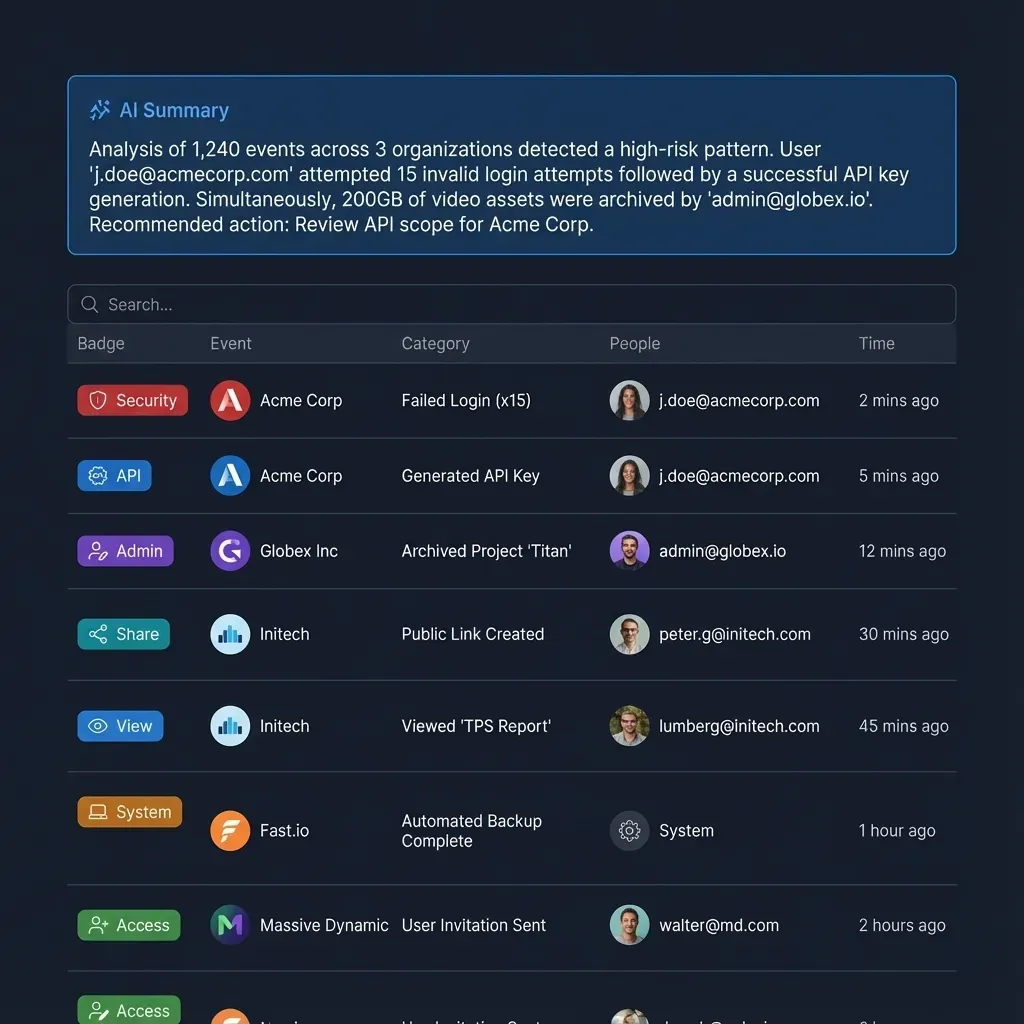
The Cost of Monitoring Gaps in Agent Fleets
The complexity of multi-agent systems introduces unique failure modes that traditional APM tools don't always handle well. When agents share state or pass tasks to one another, a single logic error can cascade through the entire fleet, leading to "infinite loops" or hallucinated tool parameters.
According to industry benchmarks, the time required to triage multi-agent errors triples when developers lack access to distributed traces. Gartner predicts that over 40% of agentic AI projects will be canceled by 2027 due to escalating costs and inadequate risk controls. Real-time logs are a must for catching these issues before they consume thousands of dollars in token costs.


Give Your AI Agents Persistent Storage
Get 50GB of free storage and 251 MCP tools to build, trace, and scale your multi-agent systems with full file-event correlation. Built for observability stacks multi agent systems workflows.
1. Arize Phoenix: The Open-Source Gold Standard
Arize Phoenix has emerged as the leading open-source choice for teams that prioritize data privacy and OpenTelemetry (OTel) compatibility. It excels at visualizing agent trajectories, allowing developers to see exactly how a prompt was refined across multiple agent turns.
- Key Strengths: Native OTel support, local-first development, and deep integration with RAG evaluation frameworks.
- Best For: Teams that want full ownership of their observability data and a vendor-neutral foundation.
- Pricing: Open-source and free, with enterprise hosting available via Arize.
2. LangSmith: The Native LangChain Powerhouse
For organizations built on the LangChain or LangGraph ecosystems, LangSmith provides a smooth workflow. Its "thread" view is particularly useful for multi-agent systems, as it allows you to visualize how memory and state evolve as tasks move between agents.
- Key Strengths: Zero-config setup for LangChain users, advanced prompt playground for debugging, and automated testing suites.
- Best For: Developers heavily invested in the LangChain orchestration library.
- Pricing: Free tier available, with usage-based pricing for professional teams.
3. AgentOps: Purpose-Built for Autonomous Fleets
AgentOps is designed specifically for agents rather than just LLMs. It focuses on agent health and tool usage, providing a dashboard that works like a management console for a digital workforce. It is especially strong at tracking tool success rates across hundreds of agents.
- Key Strengths: Session-based tracking, agent-specific health metrics, and easy integration with CrewAI and AutoGen.
- Best For: Scaling autonomous agent fleets where tool reliability is the primary concern.
- Pricing: Tiered pricing based on the number of monitored agent sessions.
Define clear tool contracts and fallback behavior so agents fail safely when dependencies are unavailable. This improves reliability in production workflows.
4. Langfuse: Collaborative Trace Analysis
Langfuse stands out for its clean UI and collaborative features. It lets non-technical team members review agent traces, leave feedback, and help refine prompt templates without touching the codebase.
- Key Strengths: Excellent prompt management, collaborative evaluation tools, and cost tracking by model.
- Best For: Product teams that need a shared workspace for engineers and domain experts.
- Pricing: Open-source self-hosting or a managed cloud version with a generous free tier.
5. Maxim AI: Enterprise-Grade Lifecycle Management
Maxim AI unifies simulation, evaluation, and observability into one platform. It allows teams to test agent fleets in a sandbox environment before deployment, which is critical for safety-conscious industries like finance and healthcare.
- Key Strengths: Pre-deployment simulation, advanced evaluation metrics, and enterprise-grade security.
- Best For: Large enterprises that need to validate agent behavior against strict compliance standards.
- Pricing: Enterprise-focused pricing with custom tiers.
Document access rules, audit trails, and retention policies before rollout so staging results are repeatable in production. This avoids late surprises and helps teams debug issues with confidence.
6. Weights & Biases Weave: Observability for ML Teams
Weights & Biases (W&B) Weave treats agent traces like experimental data. For teams coming from a traditional machine learning background, this tool makes it easy to compare how different model versions or prompt templates affect overall agent performance.
- Key Strengths: Versioned traces, deep integration with the W&B ecosystem, and lightweight SDK.
- Best For: ML engineering teams already using W&B for model training and experiment tracking.
- Pricing: Integrated into the W&B platform pricing model.
7. Fast.io: Closing the File-Event Gap
One of the biggest gaps in traditional observability stacks is the lack of file-event correlation. In many multi-agent workflows, agents are reading, writing, and modifying files in a shared workspace. While Langfuse might tell you that an agent called a "write_file" tool, it won't tell you if that file actually synced or if another agent immediately overrode it.
Fast.io closes this gap by providing an intelligent workspace where agent tool calls are directly linked to file system events. When an agent uses one of the multiple MCP tools provided by Fast.io, the platform indexes the resulting file changes automatically. This allows you to trace a logic failure not just in the code, but in the actual output the agents are producing.
- Key Strengths: Automatic indexing of agent output, file-level audit logs, and native support for multiple MCP tools.
- Best For: Data-heavy agent workflows where file integrity and cross-agent collaboration are important.
- Pricing: Free forever tier with multiple storage and multiple monthly credits.
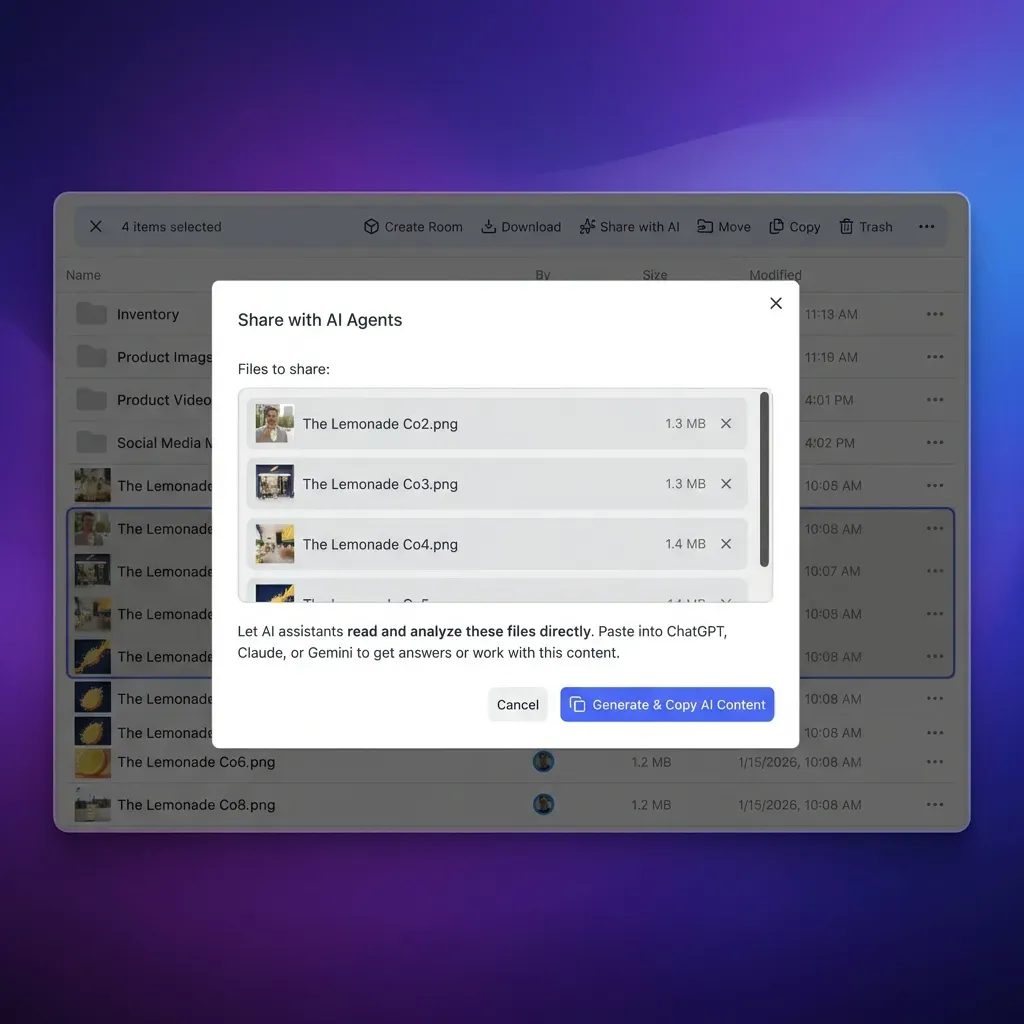
Evidence and Industry Benchmarks
As the agentic AI market grows toward an estimated $15 billion by the end of 2026, the demand for specialized observability is skyrocketing. Gartner reports that by 2026, 40% of enterprise software applications will embed task-specific AI agents. This shift requires a move away from simple input-output monitoring.
Data from early adopters suggests that organizations using dedicated observability stacks reduce their time-to-resolution for agent failures by over multiple%. Along with this, IDC predicts that 70% of G2000 CEOs will shift their AI ROI focus toward revenue growth by 2026, making the reliability of autonomous agents a top-tier business priority.
Top Observability Stacks Comparison
How to Implement Multi-Agent Tracing
Setting up a reliable observability stack for your agent fleet involves more than just installing an SDK. You must instrument your agents to emit data that reflects their internal reasoning.
Standardize on OpenTelemetry: Use OTel semantic conventions for GenAI to ensure your traces are portable between different backends. 2.
Capture Hierarchical Spans: Ensure that sub-agent calls are nested under the parent agent's trace. This allows you to see the delegation chain. 3.
Track Tool Inputs and Outputs: Log the exact arguments passed to tools and the raw output returned. This is where most reasoning errors occur. 4.
Correlate with Infrastructure: Link your agent traces to file system events or database logs. Using an intelligent workspace like Fast.io ensures that file writes are automatically indexed and searchable. 5. Implement LLM-as-a-Judge: Use smaller, faster models to automatically evaluate the faithfulness and relevance of agent outputs in real-time.
Frequently Asked Questions
What is multi-agent observability?
Multi-agent observability is the practice of tracking and evaluating the interactions between multiple autonomous AI agents. It involves monitoring reasoning steps, tool calls, and cross-agent tasks to identify where a collaborative workflow has failed or become inefficient.
Why do agents need different tools than traditional apps?
Traditional applications follow deterministic code paths, while agents are non-deterministic. Agents can loop, hallucinate tool parameters, or fail in ways that standard error logs don't capture. Specialized stacks provide visibility into the agent's internal thought process and tool interactions.
What is the best observability tool for a small team?
For small teams, Langfuse or Arize Phoenix are excellent choices. They offer generous free tiers and easy-to-use UIs that allow developers to start tracing agent calls with just a few lines of code.
How does Fast.io improve agent observability?
Fast.io provides file-event correlation. It links agent tool calls, such as writing a document, to actual file system actions. This allows teams to see not just that an agent tried to do something, but the actual result in the shared workspace, complete with automatic indexing and versioning.
What are the most important metrics for an agent fleet?
The most important metrics include tool success rate, reasoning depth, token cost per successful outcome, and faithfulness. Faithfulness is a measure of how well the agent stuck to its instructions without hallucinating.
Related Resources

Give Your AI Agents Persistent Storage
Get 50GB of free storage and 251 MCP tools to build, trace, and scale your multi-agent systems with full file-event correlation. Built for observability stacks multi agent systems workflows.