Best MCP Servers for Education and EdTech: Top 7 Tools for 2026
MCP servers in education enable AI tutors and admin agents to access learning management systems securely. By connecting AI models to tools like Canvas and Google Classroom via the Model Context Protocol, educators can automate grading, personalize tutoring, and simplify administrative workflows. This guide covers the top multiple MCP servers transforming EdTech in multiple, complete with installation tips and use cases.
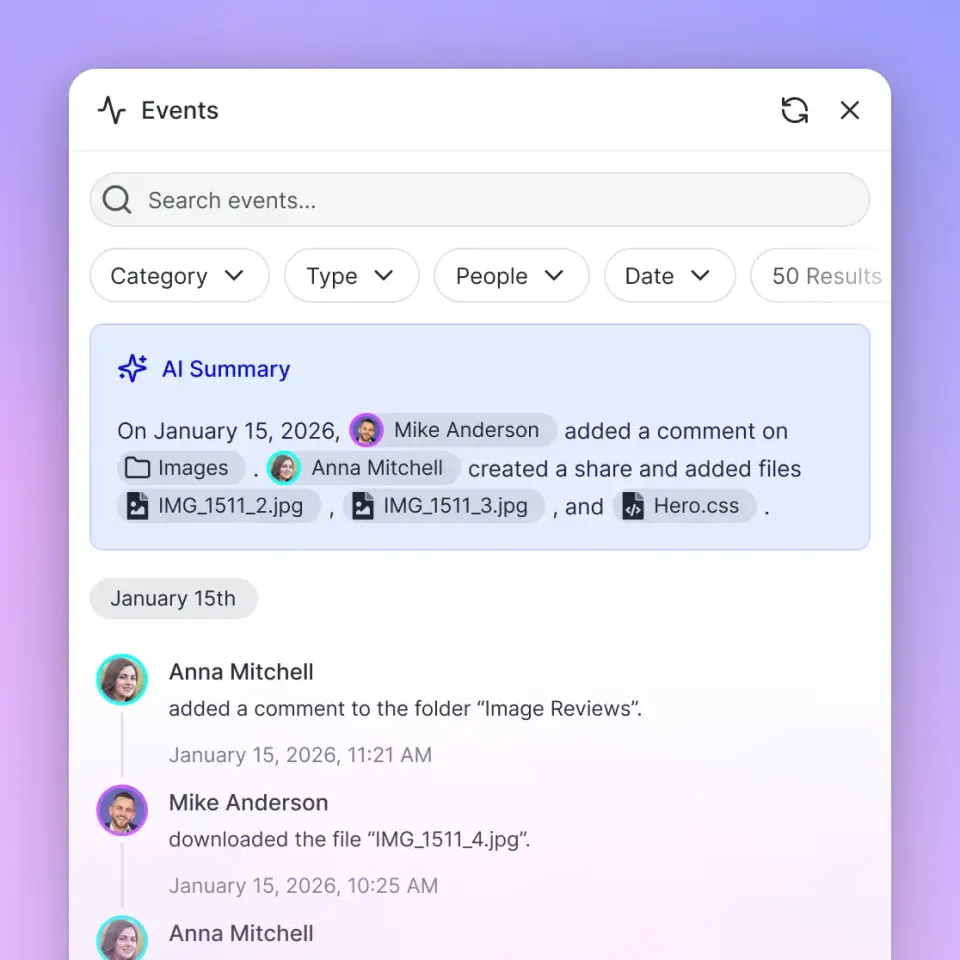
What Are MCP Servers in Education?
MCP servers are the standardized bridges that allow AI agents to "speak" to educational software. Just as a driver allows your computer to talk to a printer, an MCP (Model Context Protocol) server allows an AI model (like Claude, GPT-multiple, or local Llama models) to talk to your Learning Management System (LMS), student database, or research tools. In an educational context, this means an AI agent isn't just a chatbot, it becomes a functional assistant that can:
- Read assignment details directly from Canvas or Google Classroom.
- Write feedback on student submissions.
- Search academic databases for credible sources.
- Store and retrieve lesson plans securely. Without MCP servers, AI is isolated from your data. With them, AI becomes an integrated part of the classroom workflow, solving the "silo problem" that plagues EdTech. > Pro Tip: Security is paramount. MCP servers run locally or in secure environments, meaning your student data doesn't have to be trained into the public model to be accessible to your private agents. This local execution model is critical for compliance with regulations like FERPA and COPPA.
Helpful references: Fast.io Workspaces, Fast.io Collaboration, and Fast.io AI.
Why EdTech Needs the Model Context Protocol
The adoption of AI in education is accelerating, but integration remains a major hurdle. Educators are often forced to copy-paste student essays into ChatGPT to grade them, which is both inefficient and a privacy nightmare.
According to eSchool News, multiple% of educators cite a lack of integration between systems as their primary difficulty with digital tools. Teachers waste hours moving data manually between their LMS, grading tools, and email.
MCP servers solve this by creating a universal standard for tool connection. Instead of building a custom integration for every new AI tool, developers build one MCP server for an LMS, and any MCP-compliant agent can use it. This decoupling allows schools to swap out AI models (e.g., moving from GPT-multiple to Claude multiple.multiple Sonnet) without breaking their integrations.
This interoperability is driving massive growth. The global AI in education market is projected to grow at a CAGR of 31.2% from 2025 to 2030, fueled largely by these new capabilities to automate administrative burden and personalize learning at scale.
1. Fast.io MCP Server
Best For: Secure storage, long-term agent memory, and intelligent search.
The Fast.io MCP server acts as the "long-term memory" and "workspace" for educational agents. While other servers connect to external apps, Fast.io provides the secure environment where agents store files, share lesson plans, and collaborate with humans. It serves as the central "brain" where all other data is aggregated.
Key Features:
- Intelligence Mode: Automatically indexes every PDF, textbook, and research paper you upload. Agents can ask "What does the syllabus say about late policies?" and get a cited answer.
- Universal File Storage: multiple free storage for agents to keep student portfolios, lecture videos, and datasets.
- Multi-Agent Coordination: Supports file locking, allowing multiple grading agents to work on a batch of papers without overwriting each other.
- Ownership Transfer: An agent can build a "Course Material" workspace and transfer full ownership to a human professor.
How to Use It:
Fast.io integrates directly via the openclaw ecosystem or standard MCP clients.
### Install via ClawHub
clawhub install dbalve/fast-io
Example Agent Prompt:
"Search the 'History multiple' workspace for the lecture notes on the French Revolution and summarize the key dates for my study guide."
Pros:
- Built-in RAG (Retrieval-Augmented Generation) means no vector database setup.
- Free tier is generous (multiple).
- Secure sharing allows easy handoff to students.
Cons:
- Requires an internet connection (cloud-based storage).
Verdict: Fast.io is the essential foundational layer for any agentic education workflow, providing the storage and intelligence backend that other tools lack.
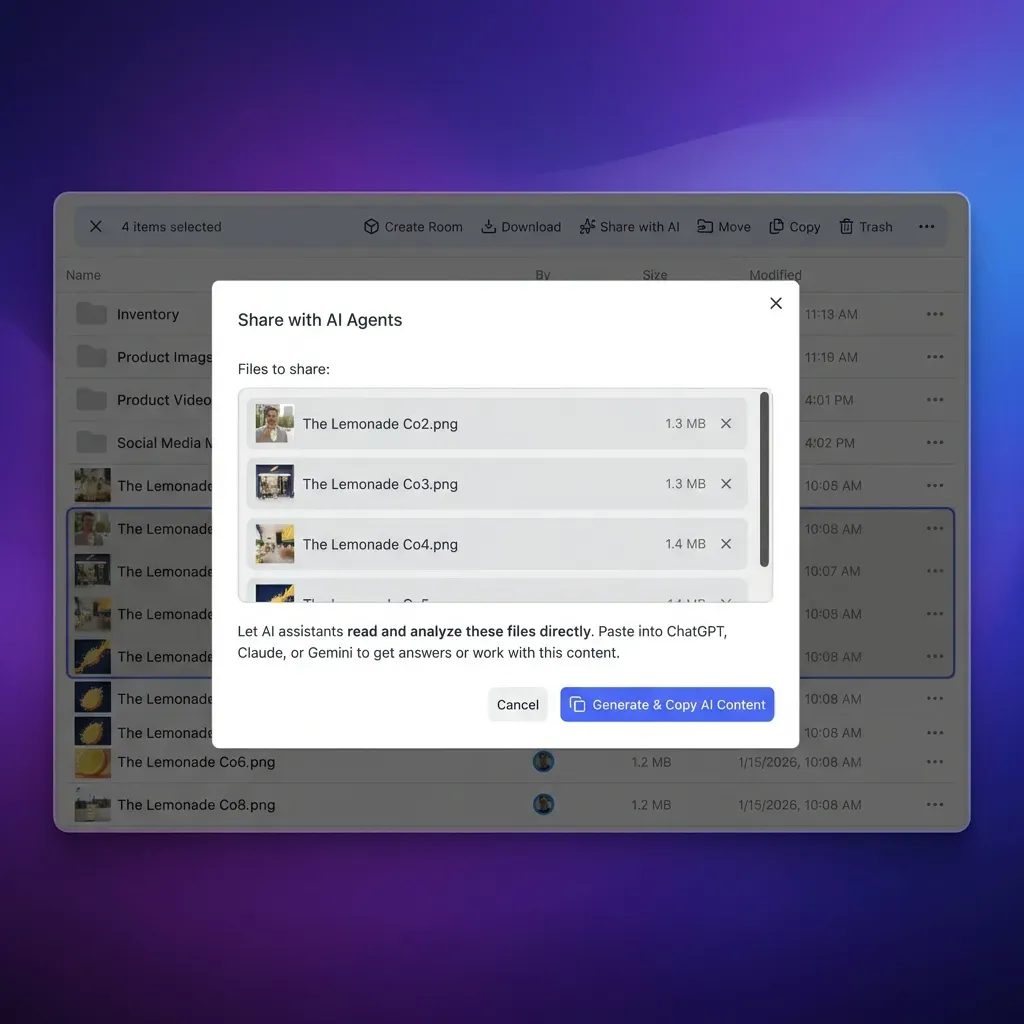


Give your educational agents a workspace
Fast.io provides the secure storage and intelligence layer for your EdTech agents. Store lesson plans, index research, and share safely. Built for mcp servers education workflows.
2. Canvas LMS MCP Server
Best For: Higher education course management and assignment automation.
The Canvas LMS MCP Server is a critical tool for universities and high schools using Instructure's Canvas. It exposes the Canvas API to AI agents, allowing them to act as teaching assistants. It transforms Canvas from a static repository into an interactive system.
What Agents Can Do:
- List Planner Items: Agents can check upcoming deadlines for students and send personalized reminders.
- Retrieve Course Content: An agent can read modules, pages, and files to answer student questions about course material.
- Grade Management: Agents can draft feedback for assignments (requiring human review) and sync grades directly to the gradebook.
Technical Setup: You'll need a Canvas API token generated from your user settings.
{
  "mcpServers": {
    "canvas": {
      "command": "npx",
      "args": ["-y", "@modelcontextprotocol/server-canvas"],
      "env": {
        "CANVAS_API_TOKEN": "your-token-here",
        "CANVAS_DOMAIN": "your-school.instructure.com"
      }
    }
  }
}
Example Agent Prompt:
"Check my Canvas dashboard for any assignments due this week in 'Biology multiple' and list them by priority."
Pros:
- Deep integration with the most popular Higher Ed LMS.
- Read/Write capabilities allow for full automation.
- Respects Canvas permission scopes (agents act as the user).
Cons:
- Setup requires generating an API token, which might be restricted for students at some institutions.
Use Case: A "Syllabus Bot" that uses the Canvas MCP server to answer student questions by looking up the actual course policies in real-time.
3. Google Classroom MCP Server
Best For: K-12 classroom orchestration and Google Workspace integration.
For K-multiple districts heavily invested in the Google ecosystem, the Google Classroom MCP Server is the bridge between AI and the daily classroom workflow. It allows agents to interact with streams, coursework, and student rosters, automating the "busy work" of teaching.
Key Features:
- Announcement Automation: Agents can draft and post announcements based on daily schedules.
- Assignment Distribution: AI can create personalized variations of an assignment and distribute them to specific students via Classroom.
- Material Organization: Agents can organize Drive files attached to Classroom topics, keeping the digital classroom tidy.
Example Agent Prompt:
"Draft an announcement for my 'Grade multiple Math' class reminding them about the field trip on Friday and post it to the stream."
Pros:
- Native integration with Google Drive and Docs.
- Familiar interface for K-multiple educators.
- Simplifies roster management.
Cons:
- Google API quotas can be restrictive for large-scale automated usage.
Verdict: Essential for K-multiple teachers looking to offload the repetitive administrative tasks of managing a digital classroom.
4. EduChain MCP Server
Best For: Automating quiz and lesson plan generation.
EduChain is a specialized MCP server designed for generative educational content. While an LLM can write a quiz, EduChain structures it specifically for educational standards (like QTI format for LMS import) and pedagogical frameworks.
Capabilities:
- MCQ Generation: Generates multiple-choice questions from any text topic, formatted for direct import into LMS platforms.
- Lesson Planning: Creates structured lesson plans that align with specific learning objectives (e.g., Bloom's Taxonomy).
- Flashcard Creation: Automatically generates study aids from source material.
Example Agent Prompt:
"Read the attached PDF on 'Photosynthesis' and use EduChain to generate multiple-choice questions suitable for 9th graders."
Pros:
- Produces structured output (JSON/XML) ready for LMS import.
- Focuses on pedagogical quality, not just text generation.
- Open-source and customizable.
Cons:
- Requires high-quality source text to generate good questions.
Why It Matters: It standardizes the output of AI into formats that educators actually use, rather than just raw text blocks that need reformatting.
5. Educational Tutor MCP Server
Best For: Computer science and technical education.
This unique server uses documentation repositories (like GitHub) to create interactive tutoring experiences. It transforms static technical documentation into a "tutor" that can guide a student through learning a codebase or a new programming language.
How It Works:
- Index: The server reads a GitHub repository or documentation site.
- Challenge: It generates structured "challenges" or "prompts" for the student based on that documentation.
- Validate: It validates student answers against the technical source of truth.
Example Agent Prompt:
"I want to learn the React Hooks API. Use the documentation to give me a progressive series of coding challenges."
Pros:
- Creates active learning experiences from passive docs.
- Always up-to-date with the latest version of the software.
- Great for self-paced learning.
Cons:
- Currently focused heavily on technical/developer topics.
Verdict: A powerful tool for coding bootcamps and CS departments to provide personalized, documentation-based mentorship.
6. Brave Search MCP Server
Best For: Academic research and source verification.
Hallucination is the enemy of education. The Brave Search MCP Server gives agents the ability to perform live web searches to verify facts, find citations, and retrieve up-to-date information without tracking student behavior.
Educational Application:
- Fact-Checking: An agent can review a student's essay and use Brave Search to verify their claims.
- Current Events: In a civics class, an agent can pull the latest news articles to generate discussion prompts.
- Source Discovery: Helps students find primary sources for their research papers without getting lost in ad-heavy search results.
Privacy Benefit: Unlike Google Search, Brave Search API does not build a profile of the user, making it a safer choice for student-facing agents.
Example Agent Prompt:
"Find three recent academic sources discussing the impact of remote work on urban planning and summarize their abstracts."
Verdict: The "research librarian" for your AI agent team, ensuring that agent outputs are grounded in reality.
7. Filesystem MCP Server
Best For: Local project management and STEM labs. Sometimes, education happens on the local machine, especially in engineering, design, and computer science. The Filesystem MCP Server allows agents to read and write files on a local computer securely. This is crucial for workflows where data cannot leave the lab or where large datasets are involved.
Use Cases:
- Code Review: An agent can read a student's local code project, run tests, and write a feedback file directly into the project folder.
- Lab Data Processing: In science labs, agents can watch a folder for new data files from instruments and automatically generate analysis reports.
- Portfolio Management: Agents can organize local folders of student artwork or video projects.
Security Note: This server requires careful permission management. You should restrict the agent's access to specific directories (e.g., /Users/student/projects) to prevent it from modifying system files. json "args": ["/Users/student/projects", "/Users/student/downloads"] Verdict: Unlocks powerful local workflows that cloud-only tools cannot touch, bridging the gap between desktop software and AI.
Building Your Own School MCP Server
If the tools above don't meet your specific needs (e.g., you need to connect to a legacy Student Information System or a proprietary library database), the Model Context Protocol makes it easy to build your own.
Using the TypeScript SDK or Python SDK, your IT team can wrap any internal API in an MCP server.
Simple Python Example:
from mcp.server.fastmcp import FastMCP

mcp = FastMCP("SchoolLunchMenu")

@mcp.tool()
def get_lunch_menu(day: str) -> str:
    """Returns the cafeteria menu for a specific day."""
    ### Connect to internal database here
    return "Pizza and Salad"
This simple script allows any AI agent to answer the question, "What's for lunch on Tuesday?" This democratization of tool creation is why MCP is revolutionizing EdTech custom integration.
Privacy and Compliance in EdTech Agents
When deploying MCP servers in education, privacy is the top priority. Schools must navigate FERPA (Family Educational Rights and Privacy Act) and COPPA (Children's Online Privacy Protection Act).
Best Practices:
- Local Execution: Prefer running agents locally (using tools like Ollama) connected to local MCP servers for sensitive data. This ensures student records never leave the school's network.
- Least Privilege: Configure MCP servers to only access the specific folders or courses needed. Do not give an agent global admin access to Canvas.
- Human in the Loop: Always require human review for agent actions that impact grades or communication with parents. Use the "draft" mode in MCP servers (e.g., drafting an email but not sending it) to enforce this.
Conclusion
The future of EdTech isn't just about having "AI", it's about having connected AI. MCP servers are the cables that connect the intelligence to the classroom.
For Administrators: Focus on Canvas or Google Classroom servers to solve systemic integration issues. These yield the highest ROI by saving faculty time across the board.
For Teachers: Start with EduChain for content creation and Fast.io for organizing your materials. These tools don't require complex IT approval and deliver immediate value in lesson preparation.
For Students: Brave Search and Educational Tutor servers provide the most direct learning support, acting as personalized study buddies that are grounded in reality. By adopting these standardized protocols today, educational institutions are future-proofing their infrastructure for the agentic age.
Frequently Asked Questions
What is an MCP server in education?
An MCP (Model Context Protocol) server is a software bridge that allows AI agents to connect to educational tools like Canvas, Google Classroom, or student databases. It enables AI to read assignments, update grades, and manage course content securely.
Is student data safe when using MCP servers?
Yes, generally safer than pasting data into a chatbot. MCP servers can run locally or within your private infrastructure, meaning student data can be processed by an agent without necessarily being used to train public AI models, depending on your LLM provider's privacy policy.
Can AI agents access Canvas directly?
Yes, using the Canvas LMS MCP Server. This server uses the Canvas API to allow authorized agents to list courses, retrieve assignments, and even draft grades, automating much of the administrative work for teachers.
Do I need to be a programmer to use MCP servers?
Currently, some technical setup is often required to install and configure MCP servers. However, platforms like Fast.io and OpenClaw are making these tools accessible via simple 'one-click' installations for non-technical users.
How much do MCP servers cost?
Most MCP servers, like the Canvas and Google Classroom implementations, are open-source and free to use. However, you may pay for the hosting (if not running locally) and for the API usage of the LLM (like Claude or GPT-multiple) that connects to them.
Does Fast.io replace Canvas?
No, Fast.io complements Canvas. Canvas is for course administration and grading; Fast.io is for storing the actual files (videos, huge datasets, archives) and making them intelligent/searchable for agents.
Related Resources

Give your educational agents a workspace
Fast.io provides the secure storage and intelligence layer for your EdTech agents. Store lesson plans, index research, and share safely. Built for mcp servers education workflows.