6 Best Debugging Tools for Multi-Agent Systems in 2026
Multi-agent systems fail in ways that single-agent setups never do.
Why Multi-Agent Debugging Is Different
Single-agent debugging is straightforward: one LLM call, one tool invocation, one response. Multi-agent systems break that mental model completely.
When you have three or four agents coordinating on a task, failures hide in the spaces between them. An orchestrator passes the wrong context to a sub-agent. Two agents try to write the same file at the same time. A handoff drops state that the next agent needs. Most multi-agent failures occur at these communication boundaries rather than inside individual agent logic.
Standard logging and print statements won't cut it here. You need tools that understand distributed traces, can visualize agent-to-agent message flows, and let you replay specific execution paths. Fortunately, the tooling has gotten much better over the past year.
How We Evaluated These Tools
We tested each tool against five criteria specific to multi-agent debugging:
- Distributed tracing: Can it capture parent-child relationships across multiple agents?
- Message visibility: Does it show the actual payloads agents send each other?
- Latency attribution: Can you tell which agent or tool call is the bottleneck?
- Error propagation: When one agent fails, can you trace the downstream impact?
- Framework support: Does it work with LangChain, LlamaIndex, CrewAI, custom setups, or all of the above?
We also considered cost (especially free tiers), setup time, and whether the tool assumes you're using a specific framework.
1. LangSmith
LangSmith is the debugging companion for LangChain and LangGraph. If you're already in the LangChain ecosystem, it's the obvious first choice.
What it does well:
- Captures full reasoning traces for multi-agent chains, including prompts, retrieved context, tool selection logic, and outputs
- Parent-child span relationships let you drill from an orchestrator call down to individual sub-agent invocations
- Near-zero performance overhead. Independent benchmarks show virtually no measurable latency impact in production
- Custom dashboards track token usage, latency (P50, P99), error rates, cost breakdowns, and feedback scores
Limitations:
- Designed for LangChain first. If you're using CrewAI, AutoGen, or a custom framework, the integration requires more manual instrumentation
- The free tier caps at 5,000 traces per month, which fills up fast in multi-agent workflows where a single user request might generate 20+ traces
- No built-in support for debugging MCP tool calls across different servers
Best for: Teams already using LangChain or LangGraph who want deep, automatic tracing without writing instrumentation code.
Pricing: Free tier with 5,000 traces/month. Paid plans start at published pricing for 50,000 traces.
2. Arize Phoenix
Phoenix takes an OpenTelemetry-first approach. That means it works with any framework, any LLM provider, and any orchestration pattern, because it speaks a standard tracing protocol rather than hooking into a specific SDK.
What it does well:
- Framework-agnostic tracing via OpenTelemetry. Works with LangChain, LlamaIndex, CrewAI, and custom code
- Span-level evaluations let you attach quality scores to individual steps within a multi-agent trace
- You can run it locally during development (open-source) and switch to their hosted platform for production
- Strong visualization for retrieval-augmented generation (RAG) steps, which matters when agents query knowledge bases
Limitations:
- OpenTelemetry setup adds some boilerplate to your codebase
- The self-hosted version requires more ops work than a fully managed SaaS
- Less polished UI compared to LangSmith for LangChain-specific workflows
Best for: Teams running multi-framework setups or custom orchestration who want a standard-based approach they won't outgrow.
Pricing: Open source for self-hosting. Hosted plans available with a free tier.


Give Your AI Agents Persistent Storage
Fast.io gives every agent its own storage with full audit trails, file locks, and 251 MCP tools. Free 50GB tier, no credit card.
3. Langfuse
Langfuse is the open-source alternative that's gained serious traction. It combines tracing, prompt management, and evaluation in one platform, and you can self-host or use their cloud.
What it does well:
- Full trace capture with nested spans. You can see the exact sequence of LLM calls, tool invocations, and agent handoffs
- Prompt versioning built in, so you can track which prompt version a specific trace used
- Scores and annotations let teams manually label traces as "good" or "bad" for later analysis
- Active open-source community with fast iteration (weekly releases)
Limitations:
- Self-hosting means managing a PostgreSQL database and a web service
- The UI for comparing traces across different agent configurations is less developed than LangSmith's
- Real-time streaming traces can lag a few seconds behind execution
Best for: Teams who want full control over their debugging data and don't mind self-hosting, or who need prompt management alongside tracing.
Pricing: Free self-hosted. Cloud free tier includes 50,000 observations/month. Paid plans from published pricing.
4. Helicone
Helicone takes a different approach from the other tools on this list. Instead of requiring SDK integration, it works as a proxy between your agents and your LLM provider. Change one URL, and every request flows through Helicone's logging layer.
What it does well:
- Zero-code setup. Point your API calls at Helicone's proxy URL instead of the LLM provider directly, and logging starts automatically
- Cost tracking across multiple agents and models. When you're running four agents that each make dozens of LLM calls, knowing which agent burns the most tokens matters right away
- Request caching reduces costs when agents make repetitive queries
- Works across all major LLM providers (OpenAI, Anthropic, Google, etc.)
Limitations:
- Basic tracing compared to dedicated platforms. Helicone logs requests and responses but doesn't build parent-child trace trees automatically
- No timeline replay, chain-of-thought visualization, or step-level tracing
- Better as a cost and usage dashboard than a full debugging tool
Best for: Teams who want cost visibility and request logging across multiple agents without changing their application code. Pair it with a deeper tracing tool for full debugging coverage.
Pricing: Free tier with 100,000 requests/month. Pro at published pricing.
5. AgentOps
AgentOps is built specifically for agent observability, not retrofitted from general LLM monitoring. That focus shows in features designed around multi-agent workflows.
What it does well:
- Session-based tracing groups all agent activity within a single user request or task, even when multiple agents collaborate
- Agent-specific dashboards show per-agent success rates, latency, and cost
- Replay mode lets you step through a multi-agent execution after the fact, seeing exactly what each agent did and when
- Built-in support for CrewAI, AutoGen, and custom agent frameworks
Limitations:
- Smaller community than LangSmith or Langfuse, which means fewer tutorials and examples
- The free tier is more restrictive than competitors
- Some advanced features (like custom evaluators) require the paid plan
Best for: Teams using CrewAI or AutoGen who want agent-focused monitoring rather than adapted LLM observability.
Pricing: Free tier available. Paid plans from published pricing.
6. MCP-Based Debugging with Fast.io
When your agents communicate through the Model Context Protocol (MCP), you get a natural debugging surface that the other tools on this list don't cover: file-level audit trails.
Multi-agent systems often fail at the data layer. One agent writes a file that another agent can't parse. Two agents try to update the same resource simultaneously. An agent's output gets lost between handoffs. These problems don't show up in LLM traces because they happen at the storage level.
Fast.io's MCP server provides 251 tools for file operations, and every operation is logged with full audit trails. That gives you:
- File lock tracking: See which agent holds a lock and whether another agent is blocked waiting. File locks prevent conflicts in multi-agent systems where several agents need to read and write shared files
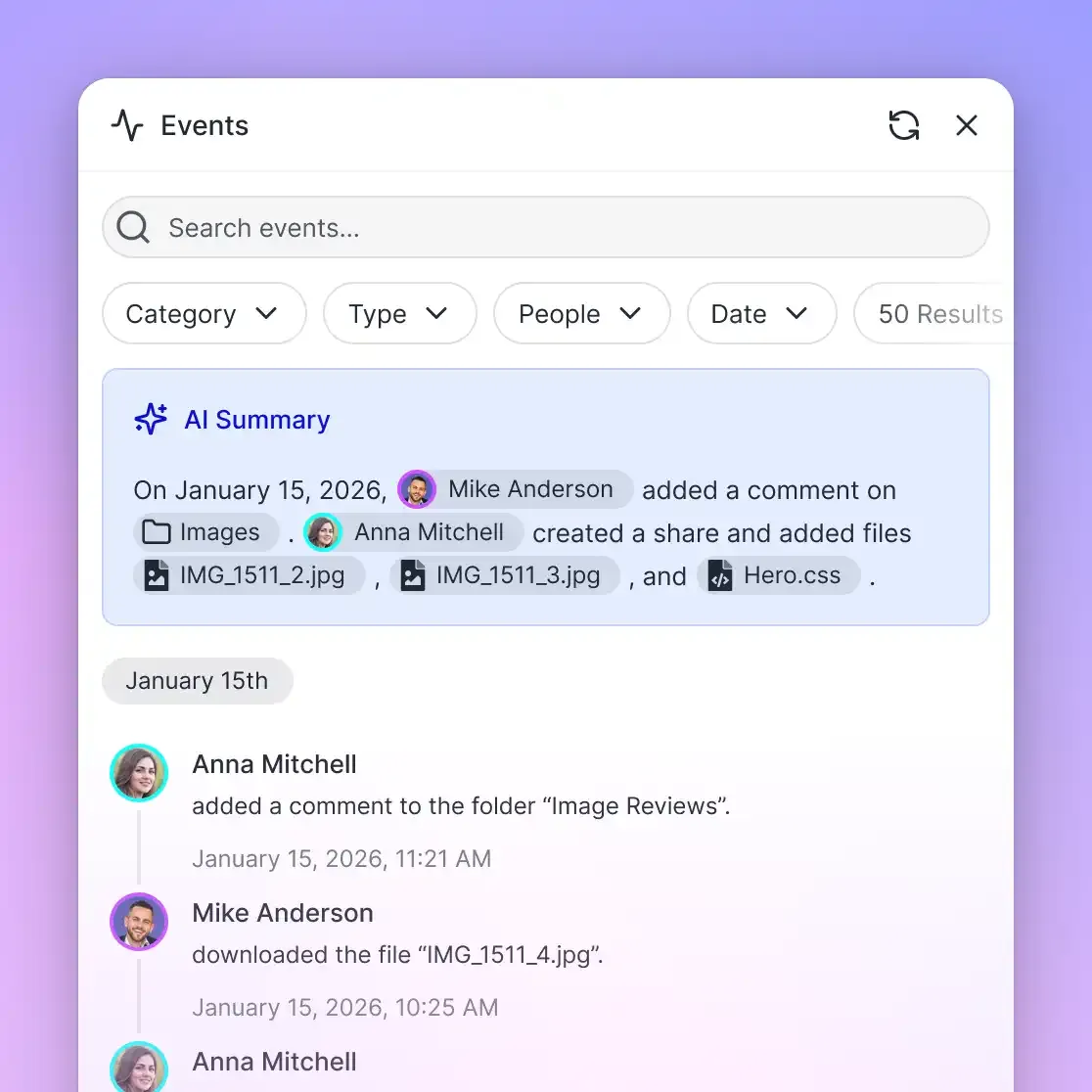
- Event-driven debugging: Webhooks notify you when files change, so you can trace exactly when Agent A's output became available to Agent B
- Version history: Every file version is preserved. When an agent produces unexpected output, compare it against previous versions to find where things went wrong
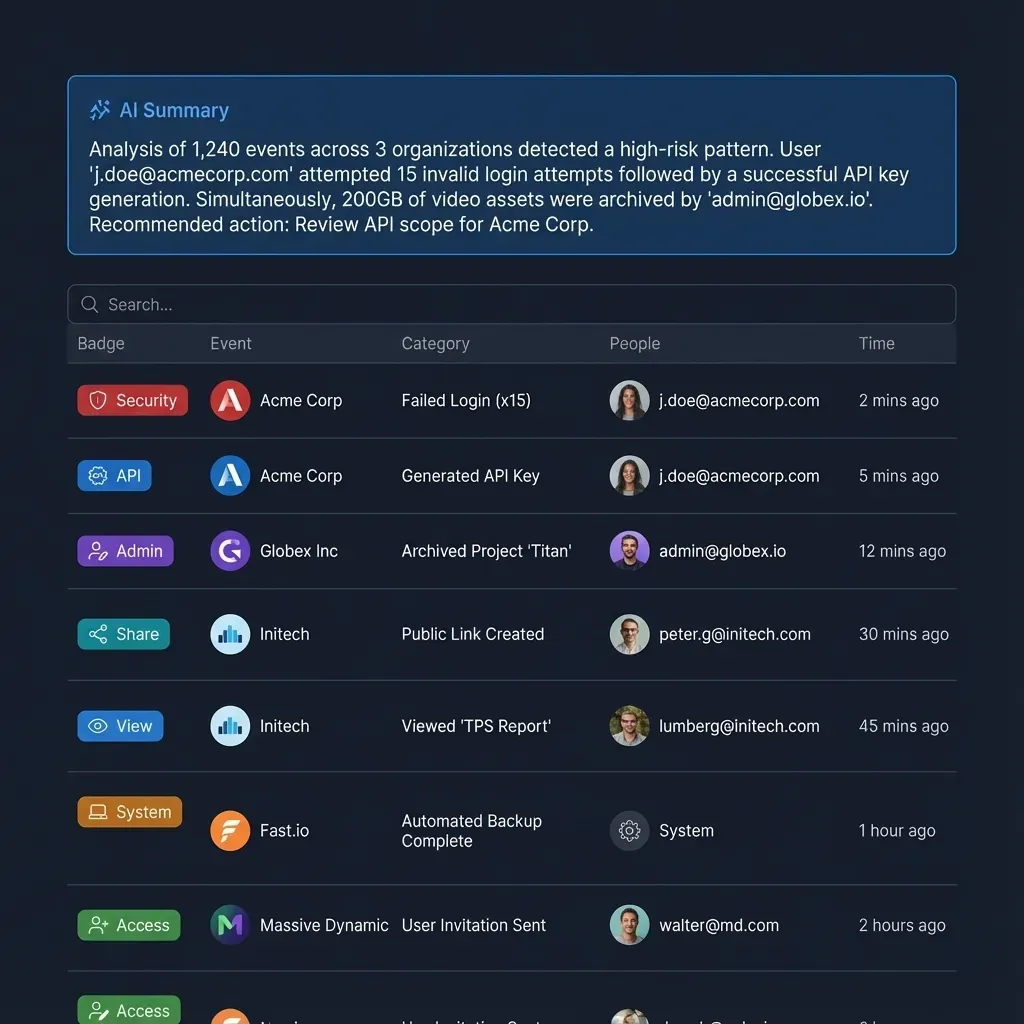
- Activity logs: Complete audit trail of which agent accessed which file, when, and what they did with it
This is especially useful for debugging handoff failures. If Agent A writes a report and Agent B should process it but doesn't, the audit log shows whether B ever accessed the file, and the webhook timeline shows exactly when the file became available.
Best for: Multi-agent systems that share files, documents, or structured data between agents. Complements LLM-level tracing tools like LangSmith or Phoenix.
Pricing: Free agent tier with 50GB storage, 5,000 credits/month, no credit card required.
Comparison Summary
Here's how each tool fits into a multi-agent debugging stack:
- LangSmith: Best LLM-level tracing for LangChain/LangGraph teams. Deep automatic instrumentation, but framework-specific
- Arize Phoenix: Best framework-agnostic option via OpenTelemetry. Works with any stack, open source
- Langfuse: Best open-source all-in-one (tracing + prompt management + evaluation). Self-host or cloud
- Helicone: Best for cost tracking and request logging. Zero-code proxy setup, but shallow tracing
- AgentOps: Best for CrewAI/AutoGen teams who want agent-specific dashboards and replay
- Fast.io MCP: Best for debugging file handoffs and data-layer failures in MCP-based systems
Most production multi-agent systems benefit from layering two tools: one for LLM-level tracing (LangSmith, Phoenix, or Langfuse) and one for data-layer visibility (Fast.io MCP audit logs or similar). Once you have proper tracing in place, debugging gets much faster because you can pinpoint failures at the exact agent, step, and handoff where things went wrong.
Which Tool Should You Choose?
Start with your framework and work outward.
LangChain or LangGraph teams should start with LangSmith. The automatic instrumentation means you get full traces with minimal setup, and the playground lets you re-run individual agent steps with modified inputs.
CrewAI or AutoGen teams will get the most from AgentOps. It understands agent sessions and roles natively, so the dashboards are useful without custom configuration.
Running a custom framework or mixing multiple frameworks? Arize Phoenix or Langfuse are your best bets. Both use OpenTelemetry, which means you instrument once and can switch tools later.
For cost tracking, add Helicone as a proxy layer. It requires zero code changes and gives you clear visibility into which agents and which models are driving costs.
When agents share files or documents, add Fast.io for data-layer debugging. The audit logs and file locks solve a category of bugs that LLM tracing tools can't see. The free agent tier gives you 50GB of storage and 251 MCP tools to start with, no credit card needed.
The best debugging setup is rarely a single tool. Layer LLM tracing with data-layer observability, and you'll catch problems that either approach would miss alone.
Frequently Asked Questions
How do you debug agent-to-agent communication?
Use a distributed tracing tool like LangSmith, Phoenix, or Langfuse to capture the full message flow between agents. Look for parent-child span relationships that show what each agent sent and received. For file-based communication, audit logs from your storage layer show exactly when files were written and read by each agent.
What tools trace multi-agent workflows?
LangSmith, Arize Phoenix, Langfuse, and AgentOps all support multi-agent workflow tracing. LangSmith works best with LangChain, while Phoenix and Langfuse use OpenTelemetry for framework-agnostic tracing. AgentOps is purpose-built for agent sessions in CrewAI and AutoGen.
How do you find bottlenecks in agent orchestration?
Enable latency tracking in your tracing tool and look at P50 and P99 latency per agent span. The slowest spans show your bottlenecks. Common culprits include agents waiting for tool responses, redundant LLM calls, or lock contention when multiple agents access shared resources.
Can you debug multi-agent systems without changing code?
Helicone works as a proxy that requires zero code changes; you just change the API URL. For deeper tracing, most tools require adding a few lines of SDK initialization code. OpenTelemetry-based tools like Phoenix let you add instrumentation gradually.
What causes most failures in multi-agent systems?
Communication boundaries cause roughly 70% of multi-agent failures. Specific patterns include dropped context during handoffs, agents sending malformed data to other agents, race conditions when two agents access the same resource, and state inconsistency when agents have different views of shared data.
How does MCP help with debugging multi-agent systems?
The Model Context Protocol standardizes how agents interact with external tools and data. When agents use an MCP server like Fast.io for file operations, every action is logged with timestamps and agent identity. This creates an audit trail that shows exactly which agent accessed which file and when, so you can trace data-layer failures directly.
Related Resources

Give Your AI Agents Persistent Storage
Fast.io gives every agent its own storage with full audit trails, file locks, and 251 MCP tools. Free 50GB tier, no credit card.