How to Build an AI Agent Notion Integration for File Management
AI agent Notion integration enables autonomous agents to read, create, and manage pages, databases, and file attachments in Notion workspaces. This guide explains how to use Notion as a shared knowledge base and delivery surface for agent workflows while overcoming common API limitations.

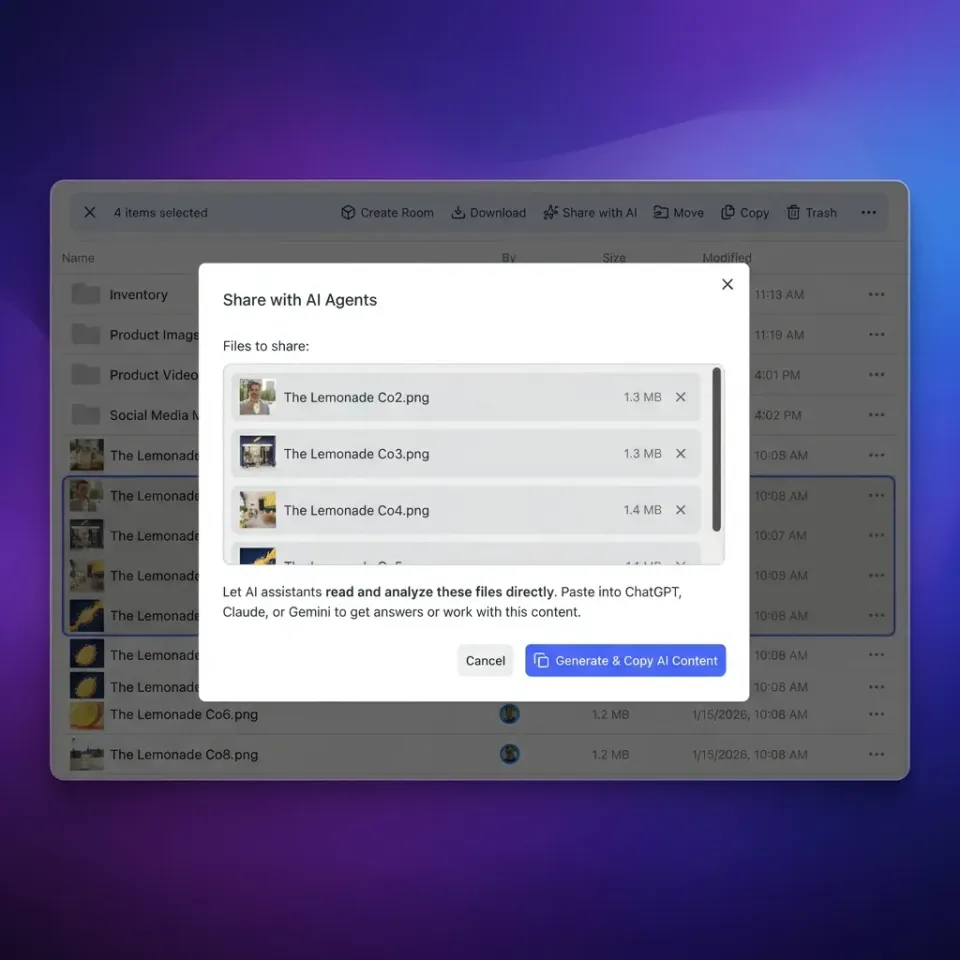
Why Integrate AI Agents with Notion?
Notion serves as the central nervous system for over 100 million users and thousands of modern teams. With an API that handles more than 1 billion requests monthly, it is the most logical place for AI agents to reside alongside their human counterparts. Integrating an AI agent with Notion transforms a static document repository into an active, intelligent workspace.
For developers, the goal is often more than simple text generation. Agents need to manage project files, update task statuses, and deliver formatted reports. By connecting an agent to Notion, you create a shared environment where humans can monitor agent progress and agents can access the context they need to work autonomously.
The integration patterns generally fall into four categories. First, Notion acts as a knowledge source where agents perform retrieval augmented generation (RAG) against your existing pages. Second, it serves as an output destination for reports and artifacts. Third, it functions as a task queue where humans assign work through database entries. Finally, it acts as a shared workspace for real-time collaboration between agents and humans.
Helpful references: Fastio Workspaces, Fastio Collaboration, and Fastio AI.
Related guides
- How to Connect AI Agents to APIs: Integration GuideAI agent API integration connects autonomous agents to external services through REST APIs, MCP servers, or SDKs,...
- How to Integrate Prefect with AI AgentsPrefect integrates AI agents into reliable data pipelines. Use Prefect to run AI agent workflows with retries, caching,...
- Notion AI Review 2026: Features, Pricing, and What WorksNotion now ties its full AI suite to the $20/user/month Business plan, covering agents, workspace Q&A, and model...
- How to Connect AI Agents to WebhooksWebhooks let AI agents react instantly to real-world events. Instead of checking for updates every minute, agents wait...
- How to Build Event-Driven Agent Workflows with Fastio EventsFastio enables event-driven agent workflows the moment a file changes through real-time WebSocket event feeds and...
- How to Automate File Ownership Transfer with Fastio APIAutomating file ownership transfer with the Fastio API lets AI agents securely deliver finished assets to human clients...
More on this subject: Agent Integrations and APIs (191 guides)
What to check before scaling ai agent notion integration files
The most efficient way to connect an AI agent to Notion today is through the Model Context Protocol (MCP). Instead of writing custom REST API calls for every interaction, you can use a standardized Notion MCP server. This allows any MCP-compatible agent, such as those running on Fastio or OpenClaw, to discover and use Notion tools automatically.
To get started, you will need a Notion Internal Integration Secret. Visit the Notion My Integrations page and create a new integration. Ensure you grant it permissions to insert content, update content, and read user information. Once you have the secret, you must share specific pages or databases with the integration for it to access them.
Connect a Notion MCP server separately using your Notion integration secret. Fastio's remote MCP server provides a consolidated MCP toolset for Fastio workspaces; it does not manage Notion pages, blocks, or databases.

Managing Files and Large Attachments
A significant challenge in Notion agent development is file management. The Notion API has a strict 5MB limit for file uploads and often struggles with high-volume binary data. For agents processing high-resolution images, video files, or large datasets, a secondary storage layer is necessary.
Fastio provides a workspace that agents and humans can share. Instead of uploading large files directly to a Notion page, your agent can store them in a Fastio workspace and link the file URL in a Notion database property. See /pricing/ for current Fastio plan limits.
You can use the URL Import feature to pull files directly from Google Drive or Dropbox into your workspace without any local I/O. Once the file is in Fastio, the agent can generate a public or private share link and write that link back to the corresponding Notion record. This keeps your Notion workspace clean and fast while ensuring all project assets are accessible.


Start with ai agent notion integration files on Fastio
Fastio gives teams shared workspaces, MCP tools, and searchable file context to run ai agent notion integration workflows with reliable agent and human handoffs.
Multi-Agent Coordination and Database Locking
In sophisticated workflows, multiple agents might access the same Notion database simultaneously. This can lead to race conditions where agents overwrite each others work or create duplicate entries. To prevent this, implement a coordination layer using Fastio advisory file locks.
Before an agent begins updating a Notion record, it can acquire an advisory lock on a corresponding control file in the Fastio workspace. Other agents will see this lock (or receive an HTTP 409 if trying to lock it) and wait until the lock is released or expires before attempting their own updates. This pattern coordinates access across your entire agent fleet, while Fastio's automatic version history protects against data loss.
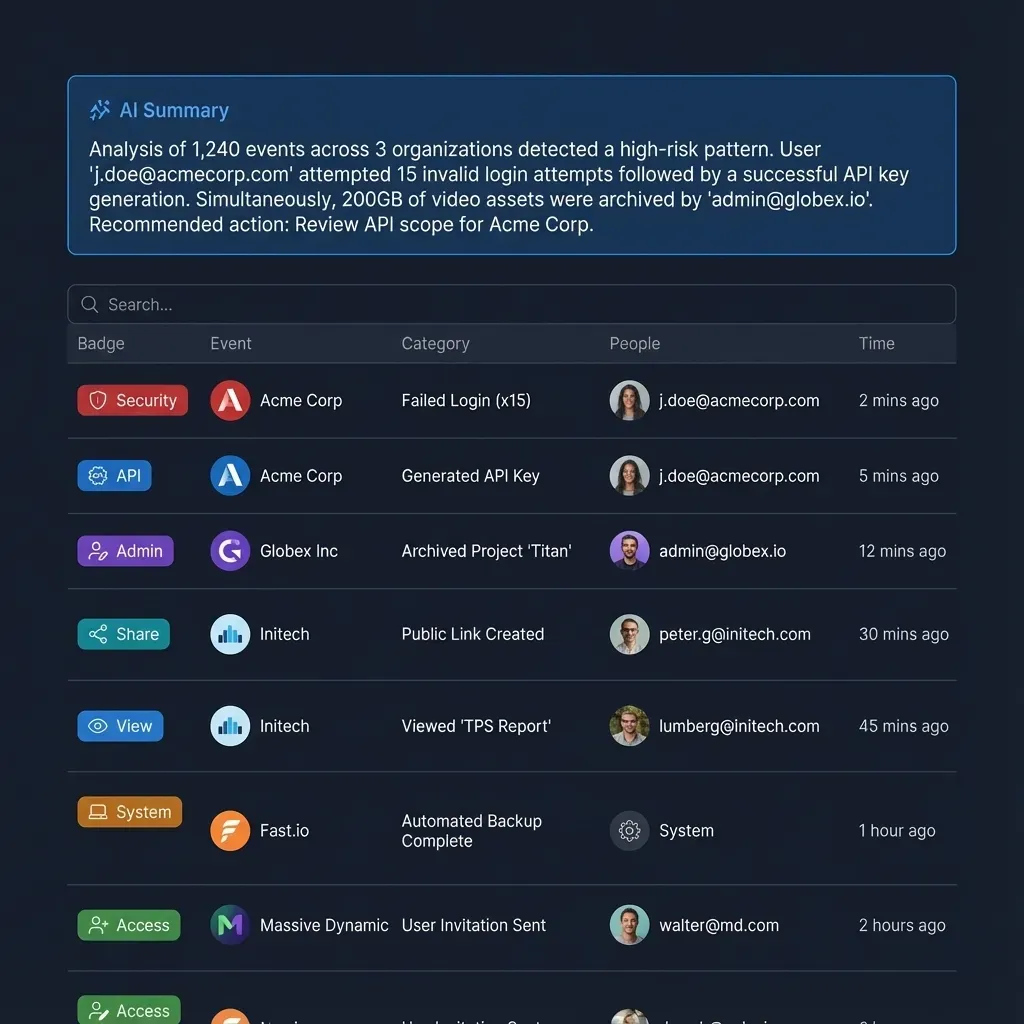
Structure your Notion databases with "Agent Status" properties. Use these to track which agent is currently handling a task. When an agent finishes its work, it can update the status to "Pending Human Review." Use Fastio's activity feed or events feed to monitor workspace file activity during the handoff.
Best Practices for Agentic Notion Workspaces
To maximize the effectiveness of your AI agent Notion integration, follow these organizational principles. First, use database templates. When an agent creates a new page, it should apply a template that includes the necessary properties and layout for human consumption. This makes agent-generated content feel like a native part of your workflow.
Second, implement structured output. Agents should write to database properties rather than dumping everything into the page body. This allows you to filter, sort, and visualize agent output using Notions built-in tools. For example, use a "Confidence Score" property to let humans know which agent outputs might require closer inspection.
Finally, use Intelligence Mode. Once enabled for your Fastio workspace, its files are indexed for RAG. Your agent can then answer questions about those files with citations, providing a level of depth that Notion's native search cannot match.
Sources
References used to verify factual claims in this guide.
-
Notion serves over 100 million users
-
More than 1 billion API requests monthly
-
Notion API has a strict 5MB limit for file uploads Notion has a 5MB upload limit, agents manage larger files
-
Integration works with any modern LLM including Claude, GPT-4, and Gemini using standard API calls or MCP
Frequently Asked Questions
How do I connect an AI agent to Notion?
You can connect an AI agent to Notion by creating an internal integration in the Notion developer portal to get an API secret. Then, use an MCP server or a platform like Fastio to give your agent access to your Notion databases and pages.
Can AI agents create Notion pages?
Yes, AI agents can create Notion pages using the Notion API or MCP tools. They can specify page titles, icons, and even populate complex block structures or database properties automatically based on their task requirements.
Is there an MCP server for Notion?
There are several open-source MCP servers for Notion. Fastio provides a remote MCP server for Fastio workspaces; configure a Notion MCP server separately for Notion access.
How do AI agents manage files in Notion?
While Notion has a 5MB upload limit, AI agents can manage larger files by using Fastio as a storage layer. The agent stores the file in Fastio and places a link in the Notion database. See /pricing/ for current Fastio limits.
Does this integration work with any LLM?
Yes, because the integration uses the Model Context Protocol (MCP) or standard API calls, it works with any modern LLM including Claude, GPT-4, and Gemini. The agent needs to be able to call the provided tools.
Related Resources

Start with ai agent notion integration files on Fastio
Fastio gives teams shared workspaces, MCP tools, and searchable file context to run ai agent notion integration workflows with reliable agent and human handoffs.