How to Give AI Agents Secure Cloud File Storage
Autonomous agents need more than vector memory. They need actual file storage to read documents, generate reports, and process media. Here's how to give your AI agents persistent, secure cloud storage that works with any LLM.
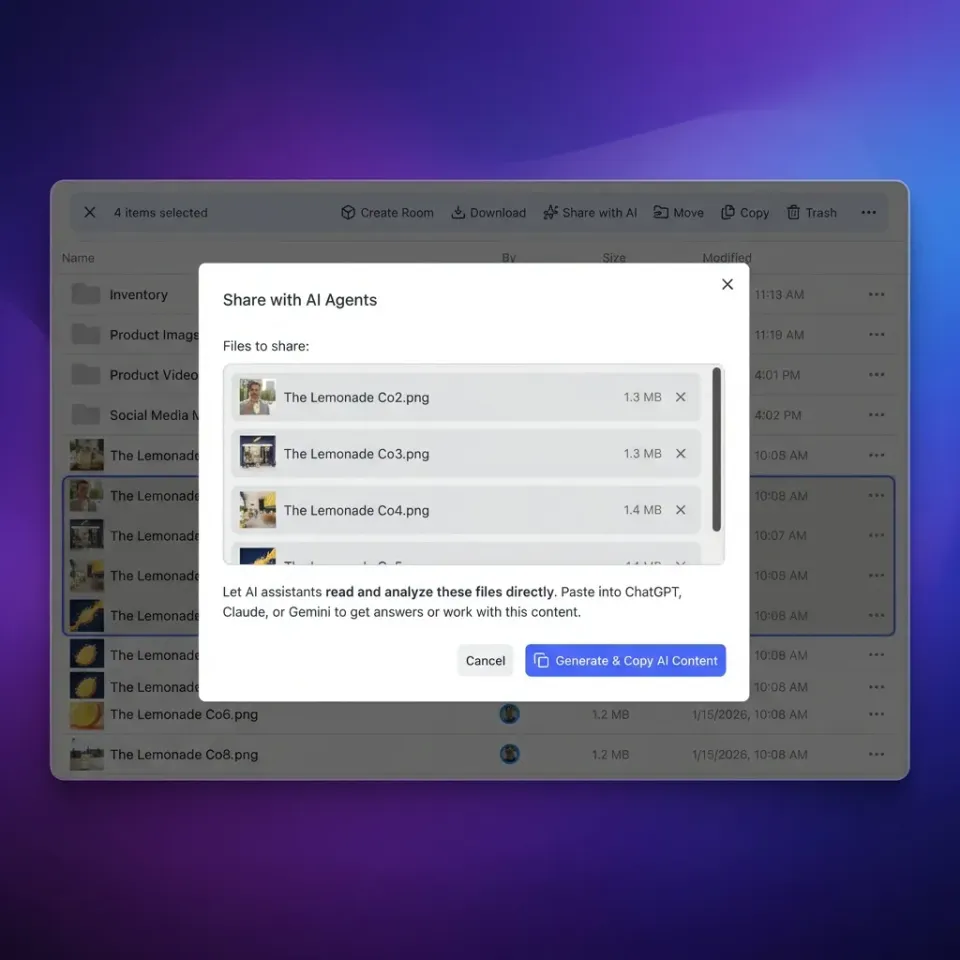
What is AI Agent File Storage?
AI agent file storage gives autonomous systems a persistent file system where they can read, write, and organize unstructured data like PDFs, images, and code repositories. Unlike vector databases (which store semantic meaning) or context windows (which are temporary), file storage gives agents a long-term "hard drive" to manage assets across multiple sessions and tasks. According to recent market analysis, the AI agent market is projected to reach $65 billion by 2030, with autonomous file operations identified as a top-three capability gap. Most agents today suffer from "amnesia" about files. Once a session ends, the generated chart or analyzed report is often lost. Dedicated file storage fixes this gap, treating agents as first-class users with their own workspaces, permissions, and directory structures. This architectural shift moves AI from being a simple chat interface to a functional digital employee that can maintain complex project states. A dedicated storage layer lets developers build stateful workflows where an agent starts a task in the morning and another agent, or the same agent later, can resume it with full context of the physical files produced. This persistent memory matters for multi-step projects like software development, video editing, or complex data analysis where results are built incrementally.
Helpful references: Fast.io Workspaces, Fast.io Collaboration, and Fast.io AI.

Why Agents Need Files, Not Just Vectors
While vector databases like Pinecone or Weaviate are excellent for semantic recall ("What did we discuss about pricing?"), they are poor solutions for file management. You cannot "store" a 4K video or a compiled binary in a vector database. Autonomous agents require standard file operations for three important reasons:
- Persistence: Agents need to save their work (code, drafts, renders) to a location that survives the current context window.
- Collaboration: Agents often need to hand off files to humans or other agents. A shared file system acts as the collaboration layer.
- Processing: Many tasks involve processing existing files (e.g., "Take these raw images and convert them to WebP"). This requires direct read/write access to source files. Standard file storage lets agents use existing software ecosystems. For example, if an agent generates a CSV file, a human can immediately open it in Excel, or another automation can pick it up for a database import. Vectors are a black box to traditional software, but files are the universal language of computing. This means AI work remains accessible and useful to the rest of your tech stack. This interoperability lets AI agents integrate into existing business processes without requiring a complete overhaul of how data is stored or shared.


Give Your AI Agents Persistent Storage
Stop building custom storage backends. Get a complete file system for your agents with 251 MCP tools, built-in RAG, and zero credit card required.
The 5 Essential Storage Operations for Agents
To be autonomous, an AI agent must be able to perform these five core file operations without human intervention:
- Read/Ingest: The ability to open and parse different file formats (PDF, DOCX, MP4, JSON) from a remote source.
- Write/Create: The ability to generate new files and save them to a persistent path.
- List/Traverse: Agents need to "look around" a directory to understand what files are available, much like a human using
lsor Finder. - Organize/Move: The ability to restructure data, creating folders and moving files to keep projects tidy.
- Share/Transfer: The ability to generate secure links or modify permissions to deliver work to a human client. These operations let an agent move beyond simple text generation. For instance, a research agent could download a set of academic papers, organize them into topical folders, extract key data into a new spreadsheet, and then provide a secure download link to the user, all without leaving the autonomous loop. This level of autonomy requires a storage backend that is fast and supports standard file system protocols.
Using MCP for Native Agent Storage
The Model Context Protocol (MCP) has emerged as the standard for connecting LLMs to external tools. Instead of writing custom API wrappers for every storage provider, developers can now use an MCP Server to give agents standardized file access. Fast.io provides an official MCP server with 251 pre-built tools, allowing agents to interact with cloud storage using natural language commands like "Create a folder for the Q3 report" or "Save this summary to the Client Portal." This eliminates the need for complex authentication flows or custom Python scripts. Cloud storage architecture matters more than most people realize. Sync-based platforms require local copies of every file, consuming disk space and creating version conflicts. Cloud-native platforms stream files on demand, so your team accesses what they need without downloading entire folder trees.
Built-in RAG and Intelligence
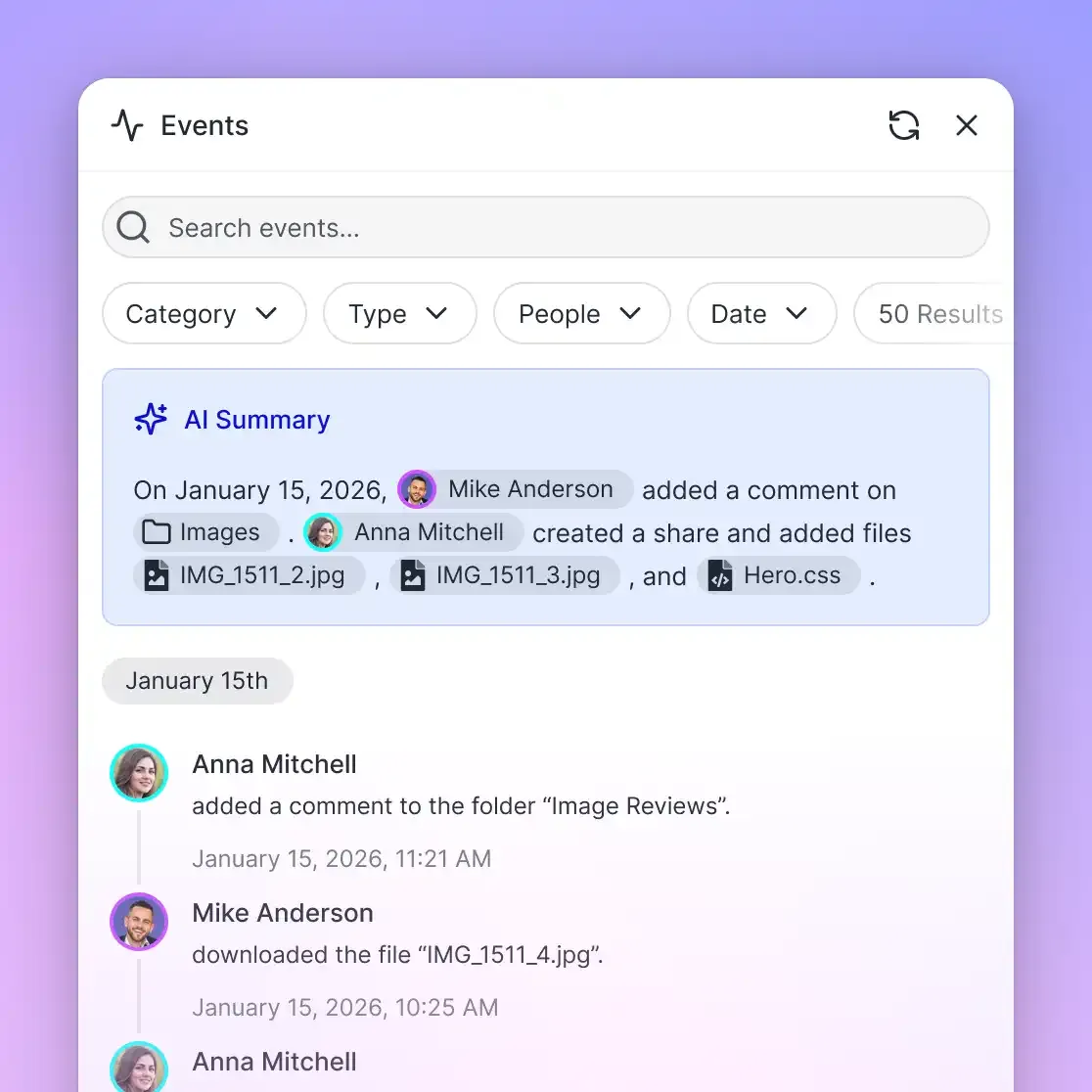
Storage for agents should be "smart." Dumping files into a basic bucket means the agent has to download and parse every file to understand it. Modern agent storage includes built-in Retrieval-Augmented Generation (RAG). With Fast.io's Intelligence Mode, every file uploaded to a workspace is automatically indexed. Your agent can then ask questions like "Find the contract with the indemnity clause" and receive a specific citation without ever downloading the file. This reduces token usage and latency. Consider how this fits into your broader workflow and what matters most for your team. The right choice depends on your specific requirements: file types, team size, security needs, and how you collaborate with external partners. Testing with a free account is the fast way to know if a tool works for you.
Security: The Human-in-the-Loop Model
Giving an autonomous agent "write" access to your cloud storage sounds risky. What if it deletes the wrong folder? Secure agent storage handles this through granular permissions and audit trails. * Scoped Access: Give agents access only to specific workspaces, not your entire drive. * File Locks: Use file locking APIs to prevent agents from overwriting files humans are currently editing. * Audit Logs: Keep a complete record of every file the agent touched, read, or modified. * Ownership Transfer: Agents can build an entire project structure and then programmatically transfer ownership to a human, putting the final assets permanently under human control. Security is not just about checking boxes on a features list. It requires encryption at rest and in transit, granular access controls, and comprehensive audit logging. Look for platforms that build security into the architecture rather than bolting it on as an afterthought.
Frequently Asked Questions
How do AI agents access cloud storage?
AI agents access cloud storage through APIs (like REST or S3-compatible endpoints) or via the Model Context Protocol (MCP). MCP is becoming the preferred method as it allows agents to use standardized tools for reading, writing, and organizing files without custom code.
Can AI agents use Google Drive or Dropbox?
Yes, agents can use Google Drive or Dropbox via their APIs, but these platforms are designed for humans. They often have strict rate limits, complex OAuth flows (requiring browser interaction), and lack agent-specific features like built-in RAG or programmatic ownership transfer.
What is the best storage for autonomous coding agents?
For coding agents, the best storage offers low-latency file access, support for complex directory structures, and file locking to prevent conflicts. Fast.io is ideal because it provides a free 50GB tier for agents, extensive MCP tools, and direct URL import capabilities.
Do I need a vector database for agent file storage?
No, vector databases store embeddings (numbers representing meaning), not the actual files. You need a standard file storage system (like Fast.io) to store the actual documents and images, while the vector database (or a built-in RAG feature) handles the search and retrieval logic.
Related Resources

Give Your AI Agents Persistent Storage
Stop building custom storage backends. Get a complete file system for your agents with 251 MCP tools, built-in RAG, and zero credit card required.