How to Set Up Storage for Agent Testing Environments
Agent testing environment storage provides isolated workspaces for developing, testing, and staging AI agents before production deployment. This guide walks through setting up separate storage layers for dev, staging, and production agent environments, with practical patterns for test data, access controls, and promotion workflows.
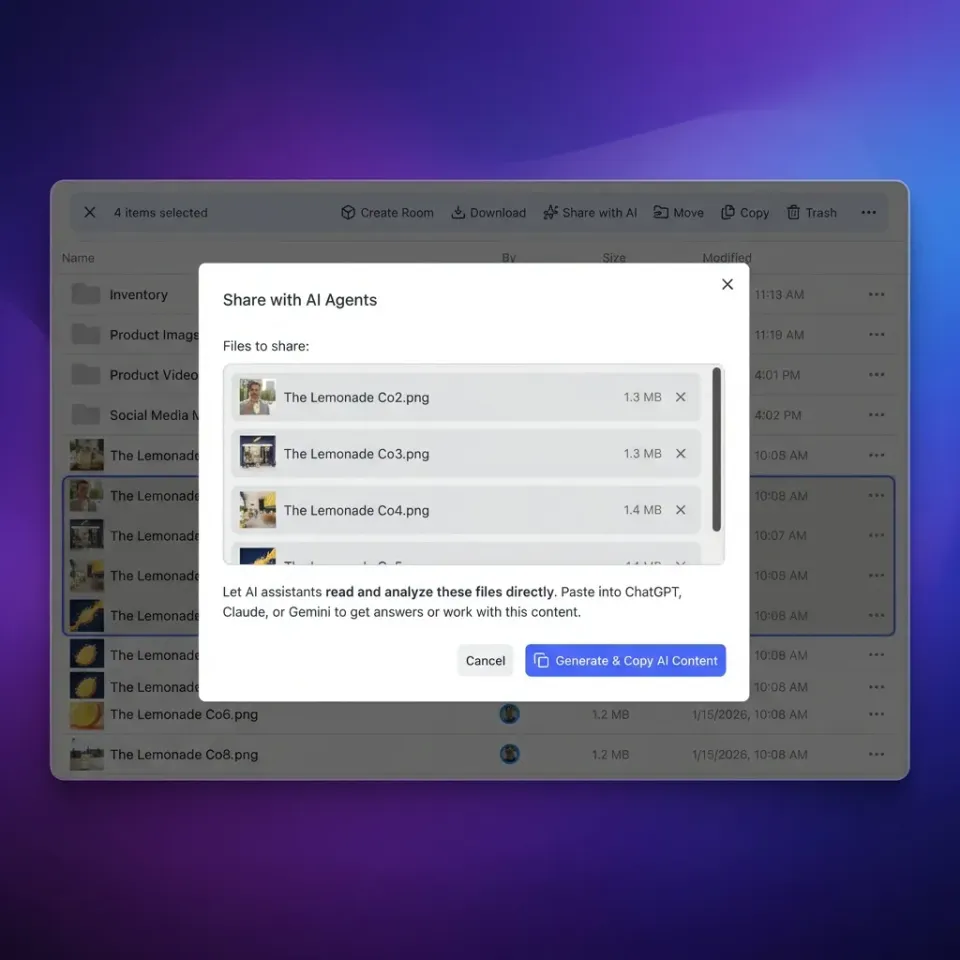
What Is Agent Testing Environment Storage?
Agent testing environment storage is a set of isolated workspaces and data stores that separate agent development from production. Each environment (dev, staging, production) gets its own storage boundary so that test runs, experimental prompts, and debugging artifacts never bleed into live systems.
Traditional software uses environment separation as a standard practice. But AI agents introduce problems that typical DevOps pipelines miss:
- RAG data isolation: Test documents indexed in one environment should not appear in another environment's search results
- Tool permission boundaries: An agent testing file uploads in dev should not accidentally write to a production workspace
- Multi-agent coordination: When multiple agents share storage during testing, you need consistent baselines that can be reset between runs
- Output versioning: Agent outputs are non-deterministic, so you need to track which version of the agent produced which files
According to Stack-AI's agentic development lifecycle research, teams that implement environment segregation for agents see significantly fewer production incidents tied to data contamination or misconfigured storage.
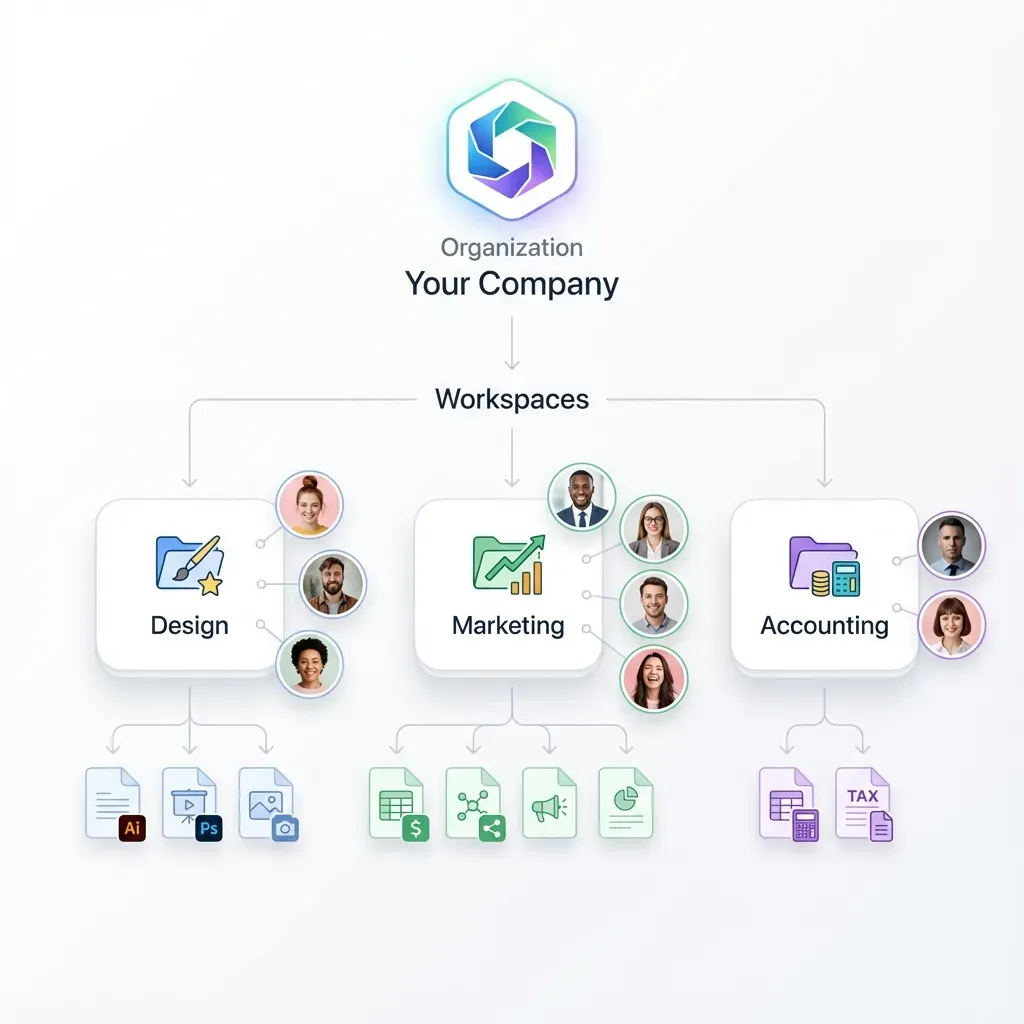
Why Standard Dev Environments Fall Short for Agents
A typical dev/staging/prod setup handles code deployment well, but agent storage has different requirements. Here is where the standard model breaks down.
Non-deterministic outputs: Traditional tests expect the same input to produce the same output. Agents produce different files, different summaries, and different API call sequences on every run. Your storage layer needs to handle versioned outputs without treating variation as failure.
Stateful tool interactions: When an agent creates a folder, uploads a file, and then queries that file through RAG, each step depends on the previous one. The storage environment needs to maintain this state within a test session while still being resettable.
Data dependency chains: Agents that process documents need realistic test data, not empty directories. But copying production data into test environments creates security risks and compliance headaches. You need synthetic or anonymized datasets that exercise the same code paths.
Credential scoping: An agent with production API keys in a test environment is a security incident waiting to happen. Each environment needs its own credentials, and the agent framework must enforce which credentials load in which context.
According to AWS Well-Architected's staging best practices, provisioning a staging environment with known and unchanging datasets is the foundation of reproducible test results. This applies directly to agent testing, where you need to compare outputs across agent versions against the same input data.


Set up your agent testing environments
Fast.io gives each agent account 50GB of free storage, 5 workspaces, and 251 MCP tools. Create separate dev, staging, and production environments at no cost.
Three-Tier Storage Architecture for Agent Testing
The proven pattern is three tiers: development, staging, and production. Each tier has its own storage boundaries, access controls, and data policies.
Development Environment
The development tier is where you build and experiment. Storage here is disposable.
- Purpose: Rapid iteration on agent prompts, tool configurations, and workflow logic
- Storage policy: Ephemeral. Tear down and rebuild between sessions
- Data: Synthetic or minimal test datasets (10-50 files)
- Access: Individual developer accounts only
- RAG indexing: On, with a small document set for testing search and chat
- Reset cadence: After each development session or daily
In Fast.io, create a dedicated workspace per developer with Intelligence Mode enabled. Each workspace gets its own RAG index, so one developer's test documents do not pollute another's search results. The free agent tier gives each developer account 50GB of storage and 5 workspaces at no cost.
Staging Environment
Staging mirrors production configuration but uses controlled test data.
- Purpose: Validate agent behavior before promotion to production
- Storage policy: Persistent within a release cycle, reset between cycles
- Data: Production-like volumes with anonymized content (100-500 files)
- Access: CI/CD service accounts plus QA team members
- RAG indexing: On, with production-scale document sets
- Reset cadence: Before each release candidate
Use a shared workspace with granular permissions. CI/CD agents get member-level access to upload test outputs, while QA reviewers get admin access to inspect and approve results.
Production Environment
Production is the live environment where agents serve real users and process real data.
- Purpose: Serve end users, process real documents, deliver outputs
- Storage policy: Persistent with versioning and audit trails
- Data: Real production data with full access controls
- Access: Production service accounts with least-privilege permissions
- RAG indexing: On, with full document corpus
- Reset cadence: Never (use versioning instead)
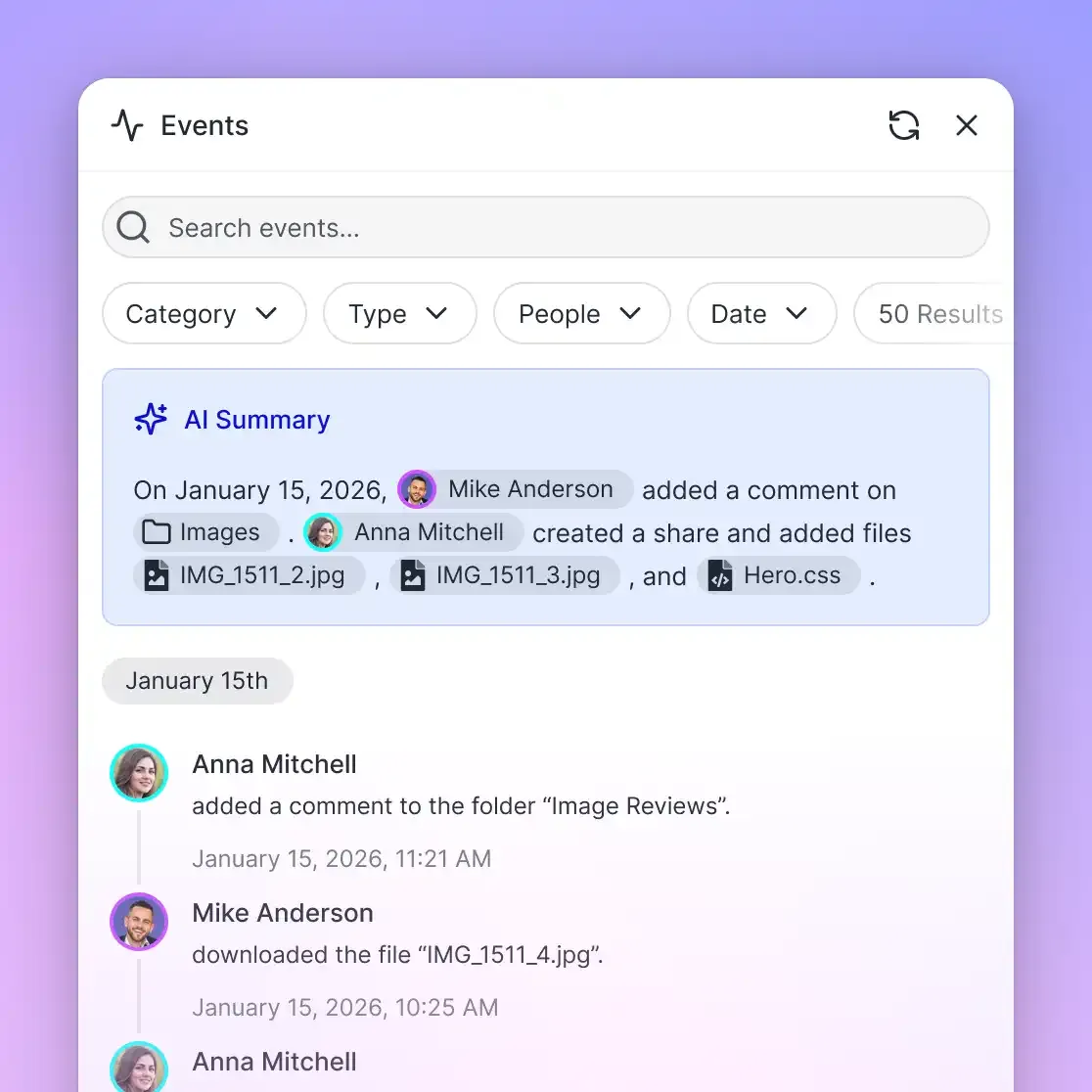
Fast.io's audit logs track every file access, upload, and permission change across environments. When something goes wrong in production, you can trace exactly which agent accessed which file and when.
Setting Up Test Data Storage
Test data management is the hardest part of agent environment setup. You need data realistic enough to test RAG queries and file processing, but isolated enough that test runs do not leak into production.
Synthetic Data Generation
Build a seed dataset that covers your agent's common operations. For a document processing agent, that means:
- Create template documents in the formats your agent handles (PDF, DOCX, spreadsheets)
Include edge cases: empty files, very large files (close to the 1GB limit), files with unusual characters in names 3. Add RAG-testable content: documents with known answers so you can validate search accuracy 4.
Version the seed data: Store it in a separate workspace or repository so it can be loaded consistently
Data Fixtures Pattern
import requests
from datetime import datetime

def setup_test_workspace(api_key, org_id):
    workspace = create_workspace(
        org_id=org_id,
        name=f"test-run-{datetime.now().isoformat()}",
        intelligence=True
    )

for fixture in FIXTURE_FILES:
        upload_file(
            workspace_id=workspace["id"],
            file_path=fixture,
            parent="root"
        )

wait_for_indexing(workspace["id"])
    return workspace
Production Data Sampling
When synthetic data is not sufficient, sample production data with these safeguards:
- Strip PII before copying to staging. Names, emails, and account numbers should be replaced with realistic fakes
- Maintain file structure: Keep the folder hierarchy and file naming patterns identical to production
- Preserve metadata: File types, sizes, and creation dates should match production distributions
- Document the sample: Record which production files were sampled and when, so you can refresh the dataset periodically
According to TechTarget's staging environment research, staging environments should feel uncomfortable, with real data volumes, realistic failure scenarios, and near-production configuration. Half-populated test environments catch half the bugs.
Access Controls and Credential Management
Each environment needs its own identity boundary. An agent authenticated against production should never accidentally run in staging, and vice versa.
Per-Environment API Keys
Create separate agent accounts for each environment. With Fast.io's MCP server, each account gets its own credentials and workspace access:
.env.development
FASTIO_API_KEY=dev_key_here
FASTIO_WORKSPACE_ID=dev_workspace_id

.env.staging
FASTIO_API_KEY=staging_key_here
FASTIO_WORKSPACE_ID=staging_workspace_id

.env.production
FASTIO_API_KEY=prod_key_here
FASTIO_WORKSPACE_ID=prod_workspace_id
Permission Tiers
Not every environment needs the same permissions. Development agents should have broad access for experimentation, while production agents operate under least-privilege constraints.
- Development: Full access. Upload, delete, create workspaces, admin actions. Speed matters more than restrictions here.
- Staging: Production-like restrictions. Upload and query, but no workspace creation or admin actions. This catches permission-related bugs before production.
- Production: Least privilege. Agents can upload and query but not delete files or change permissions. Soft deletes only, with audit trails on every operation.
Workspace Isolation with MCP
Fast.io's 251 MCP tools operate within workspace boundaries. An agent connected to a staging workspace cannot access production files, even if the same underlying MCP server handles both. Each workspace is its own security boundary with independent file trees, RAG indexes, and permission sets.
For multi-agent setups, use file locks to prevent concurrent write conflicts during test runs. One agent acquires a lock, performs its operation, and releases it before the next agent proceeds.
Environment Promotion Workflow
Moving an agent from development to staging to production requires a structured promotion process. Storage plays a central role because agent configurations, prompt templates, and reference data all need to move with the agent.
Step 1: Validate in Development
Run your agent against the development workspace's seed data. Check that:
- All expected output files are created in the correct workspace folders
- RAG queries return relevant results from indexed test documents
- File versioning tracks each output correctly
- No files are created outside the designated output directory
Step 2: Promote to Staging
Copy the agent's configuration (not its data) to the staging environment:
Export agent config: Prompt templates, tool permissions, workspace mappings 2.
Verify staging data: Confirm the staging workspace has production-like test data loaded 3.
Run regression tests: Execute the full test suite against staging storage 4.
Compare outputs: Diff staging outputs against baseline results from previous releases
Step 3: Production Deployment
After staging validation passes:
Switch credentials: Point the agent to production workspace credentials 2.
Enable monitoring: Set up webhooks to track file events in production 3.
Gradual rollout: Route a percentage of traffic to the new agent version 4.
Watch for anomalies: Monitor file creation rates, RAG query patterns, and error rates
Rollback Strategy
If production behavior deviates from staging results, roll back quickly. With Fast.io's file versioning, you can restore any file to a previous version without losing the current state. The audit log shows exactly which files the new agent version touched, making targeted rollbacks practical.
Use ownership transfer when handing off verified agent workspaces to human stakeholders. The agent builds the workspace, validates it through the promotion pipeline, and transfers ownership to a human team lead who manages it from there.
Evidence and Benchmarks
Setting up agent testing storage is an investment. Here is what you should measure to confirm it is working.
The typical setup timeline varies by complexity. A basic setup with a single agent and three environments usually takes a few hours including data fixture creation. Multi-agent setups with shared storage can take a day or two for access control configuration. Enterprise setups with CI/CD integration may need several days including pipeline automation.
Key metrics to track once your environments are running:
- Test-to-production parity: How closely staging results match production behavior. Aim for high consistency between staging and production outputs
- Environment reset time: How long it takes to tear down and rebuild a test workspace. Keep this as short as possible so developers actually reset between runs
- Data freshness: How recently staging test data was refreshed from production samples. Stale test data leads to false confidence
- Credential rotation: How frequently per-environment API keys are rotated. Follow your organization's security policy
According to n8n's best practices for deploying AI agents in production, monitoring queue metrics (jobs waiting, active, and failed) and setting up health check endpoints are baseline requirements for production agent deployments. These same monitoring patterns should run in staging first.
Fast.io's free agent tier handles the storage side without cost overhead. Each agent account gets 50GB of storage, 5,000 monthly credits, and 5 workspaces, enough for a full dev/staging/prod setup on a single account. For teams needing more isolation, create separate agent accounts per environment at no cost.
Frequently Asked Questions
How do I set up agent testing storage?
Create separate workspaces for each environment (development, staging, production). Each workspace gets its own file tree, RAG index, and access controls. Load development workspaces with synthetic test data, staging with anonymized production samples, and production with real data. Use per-environment API keys to prevent cross-contamination.
What are best practices for agent dev environments?
Keep development environments ephemeral and rebuildable. Use synthetic data fixtures that can be loaded in under a minute. Enable Intelligence Mode for RAG testing with a small document set. Give each developer their own workspace to avoid conflicts. Reset the environment after each testing session or daily at minimum.
Should I use separate storage for test agents?
Yes. Shared storage between test and production agents is a common source of bugs and data leaks. At minimum, use separate workspaces within the same platform. For stronger isolation, use separate agent accounts with their own credentials. Fast.io's free agent tier makes this practical since each account costs nothing.
How do I manage test data for AI agents?
Build a seed dataset of synthetic documents that covers your agent's typical operations and edge cases. Include files with known content so you can validate RAG query accuracy. Version your seed data so tests are reproducible. When synthetic data is not sufficient, sample production data with PII stripped and structure preserved.
How do I promote an agent from staging to production?
Move the agent's configuration (prompts, tool permissions, workspace mappings) to the production environment. Do not copy test data. Run regression tests in staging first, compare outputs against baselines, then switch to production credentials. Use gradual rollout and monitor file creation rates and error patterns for the first 24-48 hours.
What storage does Fast.io's free agent tier include?
The free agent tier provides 50GB of storage, 1GB maximum file size, 5,000 monthly credits, and 5 workspaces per account. Credits cover storage, bandwidth, AI tokens, and document ingestion. There is no credit card required, no trial period, and no expiration. You can create multiple free accounts for environment isolation.
Related Resources

Set up your agent testing environments
Fast.io gives each agent account 50GB of free storage, 5 workspaces, and 251 MCP tools. Create separate dev, staging, and production environments at no cost.