Intralinks Data Room: Features, Pricing, and Alternatives for 2026
Intralinks is one of the oldest virtual data room platforms, now owned by SS&C Technologies. It has facilitated over $35 trillion in financial transactions. But enterprise pricing, a dated interface, and slow onboarding push many deal teams toward alternatives. This guide breaks down what Intralinks does well, where it falls short, and which alternatives are worth evaluating.

What Is Intralinks and Who Owns It?
Intralinks is a virtual data room (VDR) platform used primarily for M&A due diligence, debt capital markets, fund administration, and corporate development. It was founded in 1996 as one of the first dedicated VDR providers and has since become a fixture in enterprise dealmaking.
SS&C Technologies acquired Intralinks in November 2018 for $1.5 billion. At the time of acquisition, Intralinks had roughly 800 employees, 4,000 clients, and $325 million in trailing revenue. Under SS&C, the product continues as "SS&C Intralinks" and serves as the company's VDR and deal lifecycle management offering.
The numbers are impressive on paper. Intralinks claims to have facilitated more than $35 trillion in financial transactions since its founding, handles over 10,000 M&A deals per year, and serves the majority of the Fortune 1000. For large-cap, cross-border transactions, it remains one of the default choices alongside Datasite.
But "established" and "best fit" are different things. The platform's strengths in enterprise security and complex deal workflows come with tradeoffs in pricing transparency, user experience, and setup speed that matter for many teams.
What to check before scaling intralinks data room
Intralinks earns its reputation in a few specific areas.
Information Rights Management (IRM). This is Intralinks' signature differentiator. IRM controls persist after a document is downloaded, letting administrators revoke access, prevent printing, and restrict copying even on files that live on someone else's machine. For deals where document control after distribution is critical, this feature has real value.
Permission granularity. The platform offers 16 distinct user permission roles. That is more than most competitors provide. For complex transactions involving dozens of counterparties with different access requirements, this depth of role configuration handles edge cases that simpler platforms cannot.
Multilingual support. Intralinks supports 140+ languages, which matters for cross-border deals where counterparties operate in different jurisdictions. Combined with regional data hosting, this makes it a natural choice for global investment banks.
AI-powered document classification. More recent additions include automated document indexing and AI-assisted redaction. These features help organize large document sets faster than manual tagging, though they are newer additions rather than core to the platform's architecture.
Dynamic watermarking. Every viewed page can display user-specific watermarks, creating a forensic trail if documents are leaked. Combined with detailed audit logs that track every view, download, and print action, this gives deal administrators strong visibility into document access.
Q&A workflows. Built-in question-and-answer management routes buyer inquiries to the right subject matter experts, with deadline tracking and escalation rules. This keeps due diligence questions organized in one place rather than scattered across email threads.
Intralinks Pricing and Cost Structure
Intralinks does not publish pricing. You must contact sales for a custom quote, which is one of the most common complaints about the platform. Here is what users and reviewers report.
Per-page pricing model. Intralinks charges approximately $0.60 per page uploaded. This sounds manageable until you consider that a typical M&A data room can contain tens of thousands of pages. A 10,000-page room costs roughly $6,000 in upload fees alone, before accounting for storage, users, or duration.
Starting costs. Small implementations reportedly start around published pricing. Enterprise deployments routinely exceed published pricing. The final price depends on page volume, number of users, deal duration, and add-on features.
Hidden fees. Users report several costs that are not immediately obvious during the sales process:
- Overage charges when page or storage limits are exceeded
- Data export and archive fees when deals close (downloading your own documents can cost extra)
- Extension fees if a deal runs longer than the contracted term
- Setup and onboarding fees
Video and large files are expensive. The per-page model penalizes media-heavy data rooms. A 500 MB video upload can cost roughly $3,000 under this model, which is prohibitive for teams sharing presentations, facility walkthroughs, or product demos as part of due diligence.
For comparison, several modern VDR platforms use flat-rate or storage-based pricing that eliminates per-page math entirely. Fast.io, for example, offers a free plan with 50 GB of storage and usage-based credits with no per-page fees.


Need a data room without the per-page pricing?
Fast.io gives you 50 GB of storage, AI-powered document search, and branded client portals on a free plan. No per-page fees, no credit card, no sales call required. Built for intralinks data room workflows.
Common Pain Points and User Complaints
Intralinks scores 3.6 on G2 and 4.1 on Capterra. While some users praise its security capabilities, several issues appear repeatedly across review platforms.
Dated user interface. The most frequent complaint is that the interface feels outdated. Users describe it as "clunky," "click-heavy," and "non-intuitive." Navigation requires too many steps for basic tasks, and training external parties to use the platform consumes significant time. VentureBeat once described Intralinks as a "dinosaur" in the VDR space.
Slow setup. Getting a data room operational can take over a week. Between the custom quote process, contract negotiation, and room configuration, teams that need to move quickly on a deal often find this timeline frustrating. Several modern competitors offer same-day setup.
Plugin requirements. Intralinks requires browser plugins for certain features, which causes technical friction for external users. Plugins need regular updates, create compatibility issues, and add an extra barrier for deal participants who just want to review documents.
Android incompatibility. The platform reportedly does not work on Android devices, which limits accessibility for international deal participants and teams that are not exclusively on iOS or desktop.
Billing disputes. Some reviewers report rigid billing practices. One Capterra reviewer noted that Intralinks "insisted on amicable resolution" when disputing charges, effectively requiring payment in full regardless of the complaint. The lack of pricing transparency upfront makes these disputes harder to avoid.
No efficient bulk review. Each document must be opened individually. For data rooms with thousands of files, there is no efficient way to skim or batch-review content, which slows down the due diligence process for buy-side teams.
Intralinks vs Firmex
Firmex is a name that frequently comes up when teams evaluate Intralinks alternatives, so it deserves a direct comparison. However, there is an important caveat: Datasite acquired Firmex in July 2021, and the platform appears to be winding down. A February 2026 employee review stated that the "company got liquidated." If you are evaluating Firmex today, factor in this uncertainty about its long-term roadmap.
Pricing. Firmex offers two models: a per-project fee for single deals, or an annual subscription for unlimited projects. Typical costs range from $3,000 to $7,000 for small deals and $15,000 to $60,000 for mid-market M&A. While still quote-based, Firmex pricing is generally more predictable than Intralinks and does not use a per-page model.
Ease of use. Firmex consistently earns higher marks for usability. The interface is cleaner, setup is faster, and external users need less training. For teams that do not need 16 permission roles, this simplicity is a feature.
Security. Firmex holds enterprise security standards, privacy requirements, and strict security requirements certifications, along with AES encryption and two-factor authentication. Intralinks counters with IRM post-download controls and ISO 27701 certification for data privacy. Both are enterprise-grade, but they emphasize different security models.
AI capabilities. Firmex offers full-text search but lacks AI-powered document analysis. Intralinks has added AI classification and redaction tools. Neither platform offers the kind of built-in semantic search or RAG-based Q&A that newer platforms provide.
User base. Firmex serves mid-market firms well, while Intralinks targets enterprise mega-deals. If your deals typically run $50 million to $500 million, Firmex was often the better value. For billion-dollar cross-border transactions, Intralinks has deeper infrastructure.
The bottom line on Firmex. If you are specifically searching for a "Firmex alternative" or evaluating "Firmex VDR pricing," the acquisition by Datasite means you are likely better served looking at platforms with a clear independent roadmap rather than betting on a product whose parent company already has its own VDR.
Modern Alternatives Worth Evaluating
The VDR market is projected to reach $5.6 billion by 2029, according to MarketsandMarkets, growing at an 18.1% CAGR. Much of that growth comes from newer platforms that address the pain points legacy providers have not solved.
iDeals Virtual Data Room
iDeals holds G2's highest VDR satisfaction scores, earning a 4.7 out of 5 rating. It offers full-text OCR search, built-in Q&A workflows, and granular permissions with an in-browser spreadsheet viewer. Pricing is storage-based, starting around published list pricing, which is far more predictable than per-page models. Best for mid-market M&A and legal due diligence where ease of use matters.
Datasite
Datasite (formerly Merrill Corporation) is Intralinks' closest enterprise competitor. It has invested heavily in AI, offering automated document classification with reported 90% accuracy on mixed document sets, plus generative AI summaries. Per-page pricing similar to Intralinks, but with stronger analytics dashboards. Best for large-cap transactions with heavy document volumes.
Ansarada Ansarada differentiates with AI-powered deal prediction and readiness scoring. It offers a free preparation phase before deals go live, letting teams organize documents without incurring costs until the room is active. Storage-tiered pricing starts at published rates. Best for teams that value deal analytics and want a clean, modern interface.
Fast.io
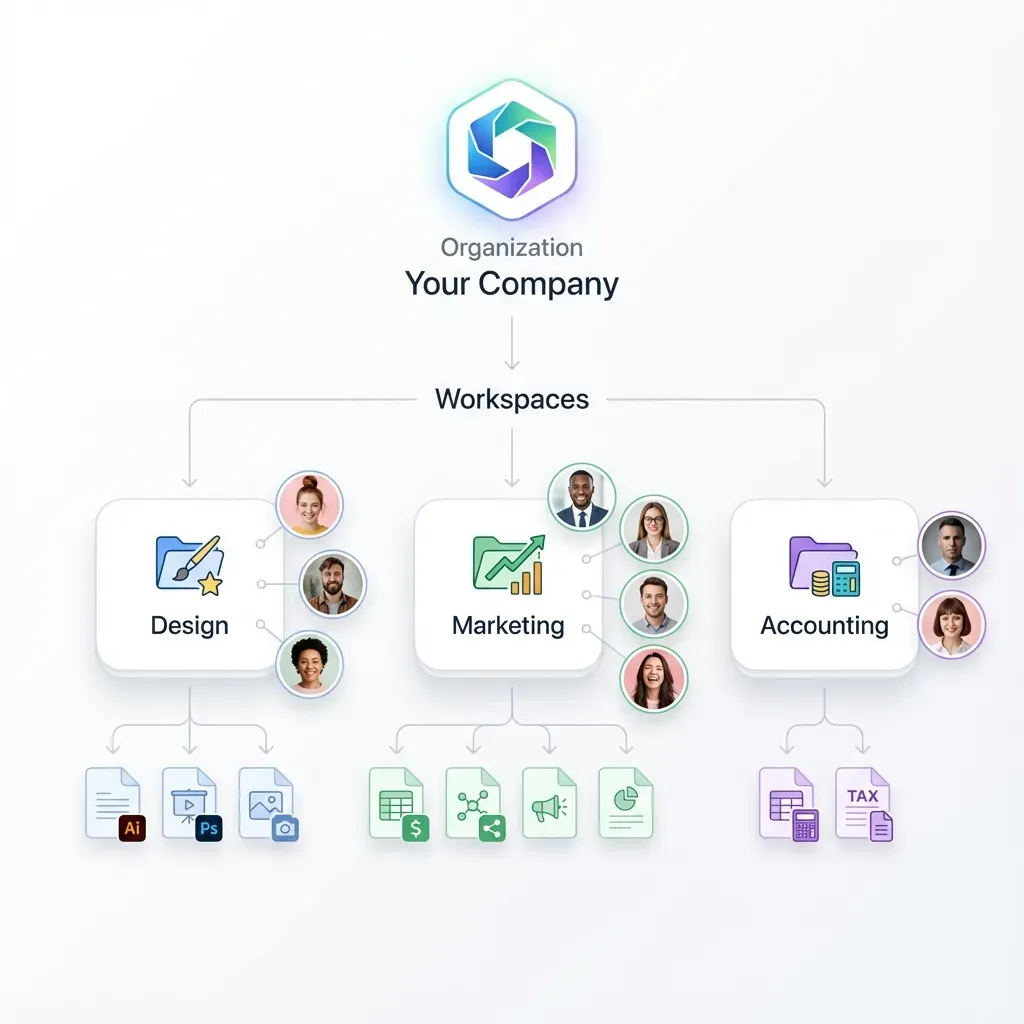
Fast.io takes a different approach entirely. Rather than a traditional VDR with per-deal pricing, it provides persistent workspaces where files are automatically indexed for semantic search and AI-powered Q&A with citations. Branded content portals give clients access to documents through a white-labeled interface with analytics on viewer engagement.
What sets it apart from legacy VDRs:
- Intelligence Mode auto-indexes every uploaded file for semantic search, summarization, and citation-backed chat, no manual tagging required
- Granular permissions at the org, workspace, share, folder, and file level
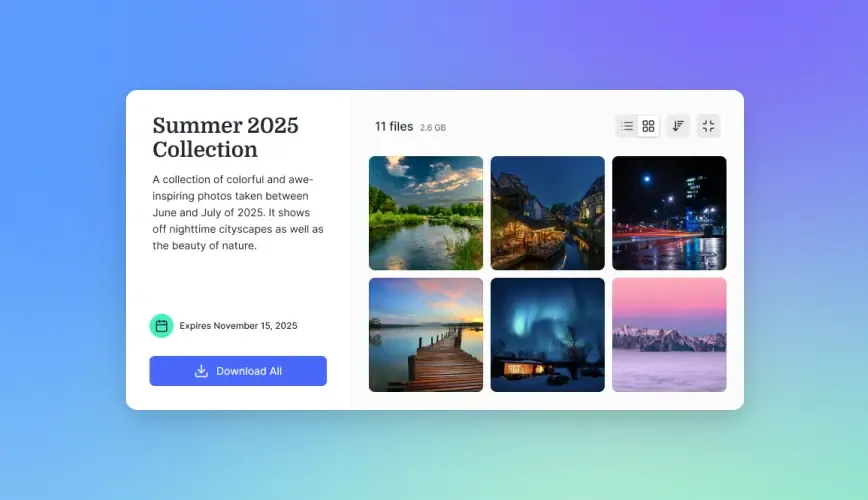
- Branded shares with download controls, guest access, and expiration settings
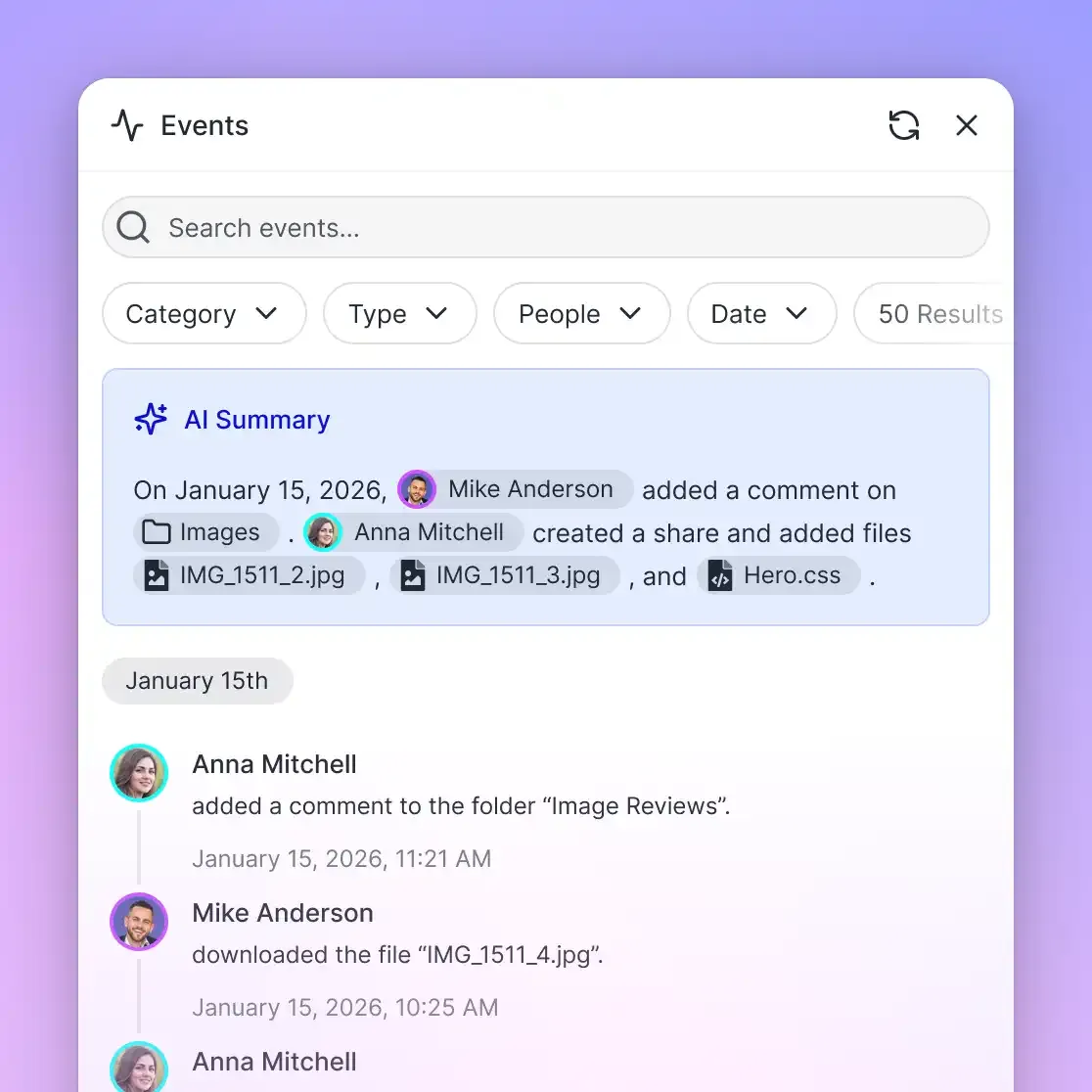
- Full audit trails covering file operations, memberships, comments, and AI activity
- Usage-based pricing with a free plan: 50 GB storage, 5,000 monthly credits, no credit card, no expiration
Fast.io does not currently hold compliance certifications like enterprise security standards or security requirements, which matters for regulated industries. But for teams that want AI-first document intelligence, ongoing collaboration beyond a single deal, or a free environment to evaluate before committing, it fills a gap that legacy platforms leave open.
For deal teams already using AI agents in their workflows, Fast.io also provides an MCP server and API that lets agents read, search, and manage data room contents programmatically. That is a capability that traditional VDRs were not built to support.
Frequently Asked Questions
How much does Intralinks cost?
Intralinks does not publish pricing. Small implementations reportedly start around published pricing, while enterprise deployments can exceed published pricing. The platform uses a per-page pricing model at roughly $0.60 per page uploaded, plus potential fees for overages, data exports, and contract extensions. You must contact SS&C sales for a custom quote.
Is Intralinks a good data room?
Intralinks is a strong choice for large enterprise M&A transactions, cross-border deals, and complex multi-party workflows. Its IRM technology, 16 permission roles, and multilingual support are genuine differentiators. However, it scores lower on user experience (3.6 on G2), has opaque pricing, and setup can take over a week. For mid-market deals or teams that prioritize speed and cost transparency, alternatives like iDeals or Fast.io may be a better fit.
What are the best alternatives to Intralinks?
The strongest Intralinks alternatives depend on your priorities. iDeals offers the best user satisfaction scores and storage-based pricing. Datasite matches Intralinks on enterprise scale with stronger AI features. Ansarada provides deal prediction analytics and a free preparation phase. Fast.io offers AI-first document intelligence with a free 50 GB plan and usage-based pricing. For mid-market deals, iDeals or Ansarada typically offer better value than Intralinks.
Who owns Intralinks?
SS&C Technologies acquired Intralinks in November 2018 for $1.5 billion. SS&C is a financial technology company with over $6 billion in annual revenue. Intralinks now operates as "SS&C Intralinks" within SS&C's product portfolio.
Is Firmex still available as a data room provider?
Firmex was acquired by Datasite in July 2021. As of early 2026, the platform appears to be winding down, with employee reviews indicating the company was liquidated. Teams currently evaluating Firmex should consider alternatives with a clear independent product roadmap.
Does Intralinks work on mobile devices?
Intralinks has limited mobile support. Users report that the platform is incompatible with Android devices. iOS and desktop access work through the browser-based interface, though some features require browser plugins that create compatibility friction on certain devices and browsers.
Related Resources

Need a data room without the per-page pricing?
Fast.io gives you 50 GB of storage, AI-powered document search, and branded client portals on a free plan. No per-page fees, no credit card, no sales call required. Built for intralinks data room workflows.