Best Client Portal Apps for Teams and Agencies
A client portal app is a mobile or web application that gives clients a dedicated space to access files, track project progress, and communicate with service providers. This guide compares seven client portal apps across different categories, from lightweight file-delivery tools to full-featured CRM platforms, so you can pick the one that fits how your team actually works.

Why Teams Need a Client Portal App
Email was never built for client collaboration. Files get buried in threads, version confusion creates rework, and clients end up asking "where's the latest file?" more than you'd like.
A client portal app solves this by giving each client a dedicated space to find files, leave feedback, and track project status. For agencies managing 10 or more active clients, the difference is significant. Instead of maintaining parallel email chains with every stakeholder, you point clients to one place where everything lives.
The practical benefits break down into three areas:
- Fewer support requests. Clients can self-serve instead of emailing you for file access. Self-service portals reduce routine file-request emails by cutting out the back-and-forth entirely.
- Faster approvals. When deliverables, comments, and sign-offs live in the same place, approval cycles shrink.
- Better first impressions. A branded portal with your logo and colors signals professionalism in ways a Google Drive link never will.
Mobile access matters more than most teams expect. Portal usage from phones and tablets has grown steadily in professional services, as clients increasingly want to review deliverables and approve work from wherever they happen to be. If your portal doesn't work on mobile, you're creating friction at the exact moment a client is ready to say yes.
Helpful references: Fast.io Workspaces, Fast.io Collaboration, and Fast.io AI.
How We Evaluated These Apps
Most "best client portal" lists rank heavyweight CRM platforms that bundle portals as a secondary feature. That works if you need a full business suite, but many agencies and freelancers need something simpler: a clean, branded space to share files and collect feedback without adopting an entire CRM.
We evaluated each app across five criteria:
- Portal experience. How polished is the client-facing interface? Can you brand it with your logo, colors, and domain?
- File handling. Upload limits, version control, preview support, and download options.
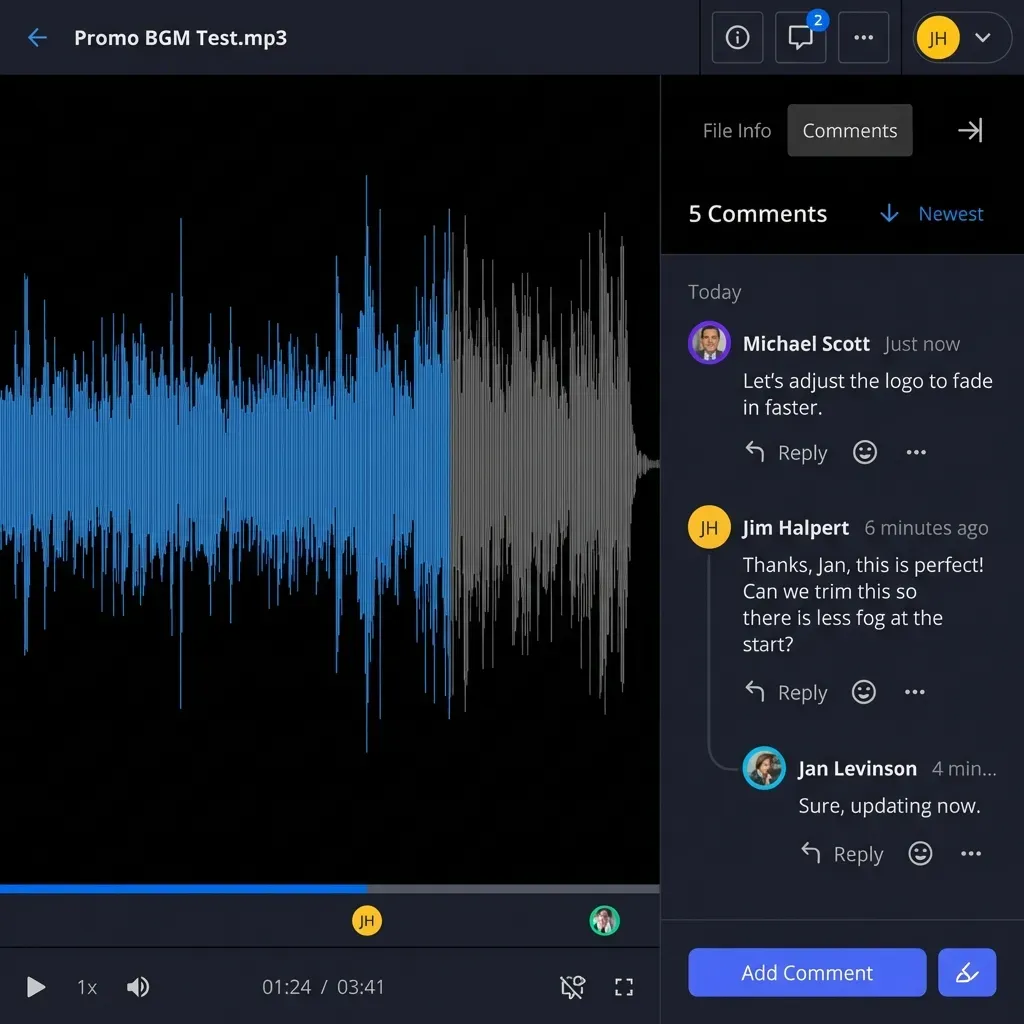
- Collaboration features. Comments, approvals, task tracking, and notification controls.
- Pricing structure. Per-seat vs. flat rate, free tiers, and what's included at each level.
- Mobile experience. Native apps or responsive web portal for on-the-go access.
We split the list into categories so you can jump to what matches your workflow: lightweight portals for file delivery, all-in-one platforms for full client management, and security-focused tools for regulated industries.
7 Best Client Portal Apps Compared
Here's a quick overview before the deep dives:
- Fast.io - Best for branded file delivery and AI-powered portals
- SuiteDash - Best all-in-one platform with unlimited users
- HoneyBook - Best for creative freelancers and small agencies
- Clinked - Best for security-focused industries
- SuperOkay - Best lightweight portal for designers
- ManyRequests - Best for productized service agencies
- FuseBase - Best free-tier collaboration workspace
The right choice depends on whether you need a full business platform or a focused file-sharing portal. Most agencies over-buy on features they never use, so start with what you need today and expand later.
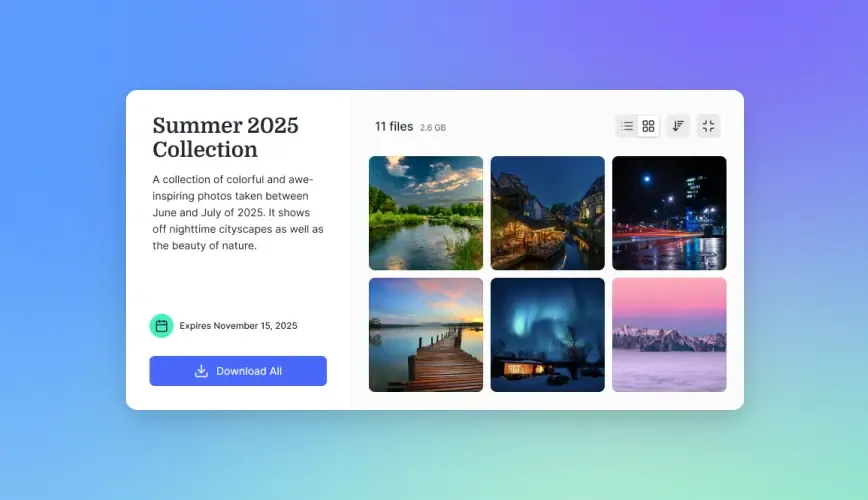


Try a Branded Client Portal for Free
Set up branded content portals with AI-powered search, file delivery, and guest access. 50 GB free storage, no credit card required. Built for client portal app workflows.
Deep Dive Into Each App
1. Fast.io
Fast.io is a workspace platform built around branded content portals. Rather than bolting a portal onto a CRM, portals are the core product. Each portal gets custom branding (logo, colors, background, vanity URL), password protection, and guest access without requiring clients to create accounts.
What sets Fast.io apart from other file-sharing portals is the built-in AI layer. When you enable Intelligence on a workspace, every uploaded file gets automatically indexed for semantic search and RAG-powered chat. Clients can ask questions about shared documents through an embedded AI assistant called Ripley, which returns answers with citations pointing to specific files and pages. That turns a static file dump into something clients can actually navigate.
Key features:
- Branded portals with custom logo, colors, background, and vanity URL
- Portal AI (Ripley) answers client questions about shared documents
- Send, Receive, and Exchange share types for different workflows
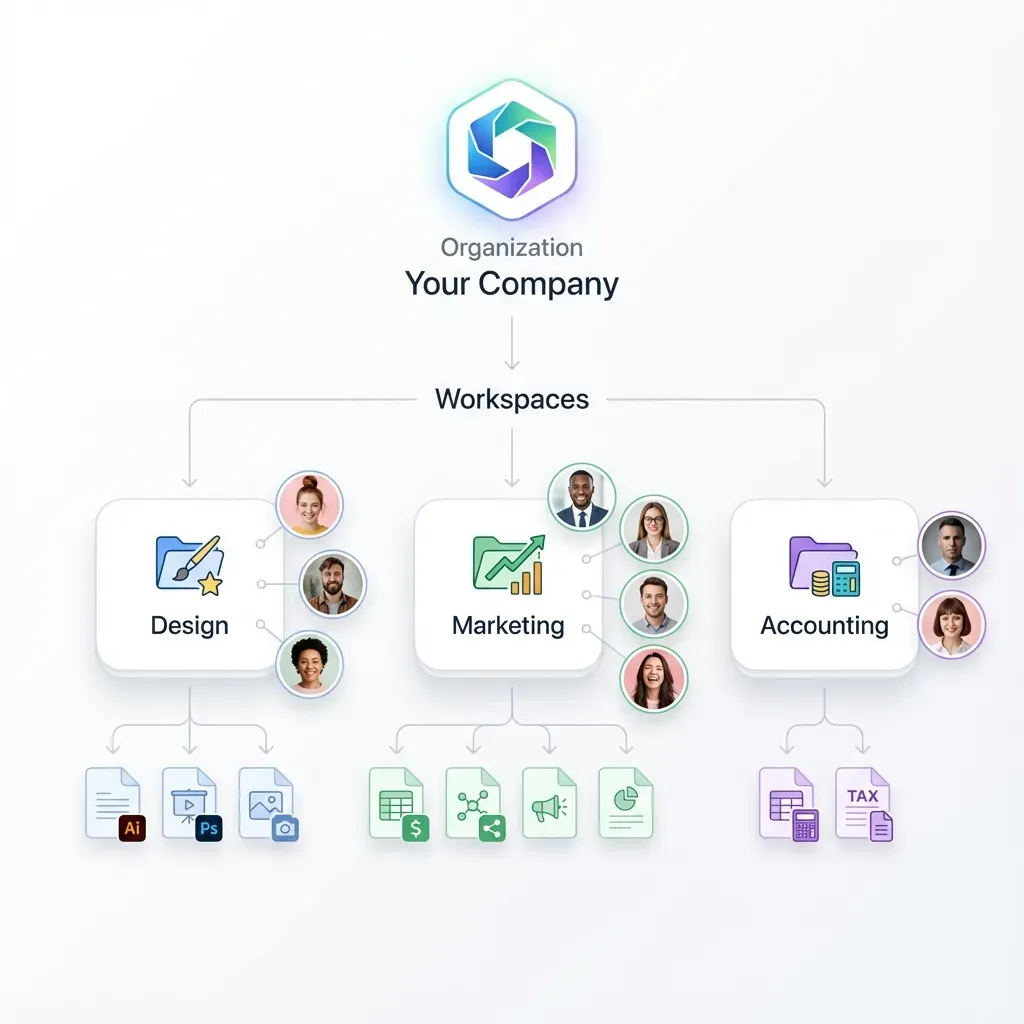
- Granular permissions at the org, workspace, folder, and file level
- Audit trails tracking every view, download, and comment
- Cloud import from Google Drive, Dropbox, OneDrive, and Box
- Review and approval workflows with 4-step sign-off process
- Desktop app with selective sync for Mac and Windows
Best for: Agencies that deliver files to clients and want portals that feel intelligent, not just organized.
Pricing: Free plan includes 50 GB storage, 5 workspaces, and 50 shares. No credit card required, no trial expiration.
2. SuiteDash
SuiteDash combines CRM, client portal, project management, and invoicing into a single white-labeled platform. Every plan includes unlimited users, which is unusual in this category and makes it cost-effective for growing teams.
The portal experience is solid. Clients get a branded login page, access to their projects, files, and invoices, and can communicate through built-in messaging. SuiteDash also includes appointment scheduling, learning management tools, and automated onboarding sequences.
Key features:
- Unlimited users on all plans (clients and team members)
- White-label branding with custom domain
- Built-in CRM, invoicing, and project management
- Automated client onboarding workflows
- Client-facing project dashboards
Best for: Agencies that want CRM, billing, and portal in one system without per-seat costs.
Pricing: Starts at published pricing (Start), published pricing (Thrive), published pricing (Pinnacle).
3. HoneyBook
HoneyBook targets creative professionals: photographers, designers, event planners, and consultants. The platform handles the full client lifecycle from inquiry to final payment, with a client portal included on every plan.
The portal lets clients view proposals, sign contracts, make payments, and access project files. Automated workflows can trigger actions based on client activity, like sending a follow-up when a proposal is viewed but not signed.
Key features:
- Proposals, contracts, and invoicing built into the portal
- Automated workflows triggered by client actions
- Scheduling and calendar integration
- Payment processing with installment plans
- Mobile app for iOS and Android
Best for: Solo creatives and small agencies managing the full client lifecycle from booking to delivery.
Pricing: Starts at published pricing (Starter), published pricing (Essentials), published pricing (Premium).
4. Clinked
Clinked is built for industries where security and compliance are non-negotiable: legal firms, financial services, and healthcare organizations. The platform provides virtual data rooms, granular access controls, and comprehensive audit logging.
The client-facing portal supports white-label branding, and the permission system lets you control access down to individual files. Clinked also offers unlimited guest access on its Standard plan, which matters for firms with large numbers of external stakeholders.
Key features:
- Virtual data rooms with fence-view watermarking
- Granular file-level permissions
- Comprehensive audit trails
- White-label branding with custom domain
- Unlimited guest access on Standard plan
Best for: Legal, financial, and healthcare teams that need strong access controls and audit capabilities.
Pricing: From published pricing (Lite) with per-user pricing; Standard from published pricing with 100 members and unlimited guests.
5. SuperOkay
SuperOkay focuses on one thing: creating beautiful, branded client dashboards. There's no CRM, no invoicing, no project management. You get a clean portal where you can share project links, files, embedded content, and status updates.
Setup takes minutes. You customize the branding (logo, colors, fonts, login page), create a project dashboard, and share the link. The simplicity is the selling point. If you're a designer or small creative studio that just needs a polished place to share work with clients, SuperOkay does that without the overhead of a full platform.
Key features:
- Custom branding including fonts and login page design
- Project dashboard with embedded links and assets
- Client-specific portals with unique URLs
- Quick setup with minimal configuration
- Clean, design-focused interface
Best for: Designers and small creative studios that want a polished client-facing dashboard without platform complexity.
Pricing: From published pricing for company-wide access.
6. ManyRequests
ManyRequests is purpose-built for productized service agencies, such as teams that sell design-as-a-service, content creation packages, or ongoing marketing retainers. The portal handles request intake, order management, communication, and file delivery.
Clients submit requests through customizable intake forms, track the status of their orders, and receive deliverables through the portal. For agencies running recurring service packages, ManyRequests replaces the ad-hoc combination of intake forms, project management tools, and email that most teams cobble together.
Key features:
- Customizable request intake forms
- Order management with status tracking
- White-label client portal
- File delivery and revision management
- Subscription and package management
Best for: Productized agencies selling repeatable services (design subscriptions, content packages, marketing retainers).
Pricing: From published pricing plus $20 per additional user.
7. FuseBase
FuseBase (formerly Nimbus) offers shared workspaces for notes, files, feedback, and embedded content. It sits between a simple file portal and a full project management suite, giving you flexible collaboration spaces without rigid structure.
The free tier makes it accessible for freelancers and small teams testing the waters. Workspaces can include nested pages, embedded videos, feedback forms, and file attachments, creating a knowledge-base-style experience for clients.
Key features:
- Flexible workspace structure with nested pages
- Embedded content (videos, forms, spreadsheets)
- Client feedback collection
- Free tier with core features
- White-label options on paid plans
Best for: Consultants and service teams that want flexible collaboration workspaces beyond just file sharing.
Pricing: Free tier available; paid plans from approximately published pricing/month.
Choosing the Right Portal for Your Workflow
The biggest mistake teams make is buying a full CRM platform when they only need a file portal. Here's how to think about the decision:
You need a lightweight portal if:
- Your main workflow is delivering files and collecting feedback
- You already have a CRM or project management tool you like
- You want something running in under an hour
- Branding and presentation matter more than workflow automation
In this case, look at Fast.io, SuperOkay, or FuseBase. Fast.io is the strongest option if you deliver lots of files and want clients to be able to search and ask questions about them. SuperOkay wins on pure design polish. FuseBase offers the most flexible free tier.
You need an all-in-one platform if:
- You want CRM, billing, and portal in one system
- You're managing the full client lifecycle from proposal to payment
- You need automated workflows triggered by client actions
- You'd rather maintain one tool than integrate three
SuiteDash and HoneyBook cover this well. SuiteDash's unlimited users make it better for growing teams. HoneyBook's polished client lifecycle management works better for solo creatives.
You need a security-focused portal if:
- You handle sensitive legal, financial, or healthcare documents
- Audit trails and access logs are compliance requirements
- You need granular file-level permissions and watermarking
Clinked is the clear choice here, with virtual data rooms and enterprise-grade access controls.
You need a service-delivery portal if:
- You sell productized services on a subscription model
- Client request intake and order tracking are core workflows
- You need to manage revisions and deliverable handoffs
ManyRequests was built specifically for this use case.
One thing worth considering for any portal: AI-powered features are changing what "good enough" looks like. Portals that index files for search and let clients ask questions about documents (like Fast.io's Ripley AI) reduce the support burden that comes with sharing large file collections. A client who can search across a hundred deliverables is a client who doesn't email you asking where to find something.
Getting Started With a Client Portal
Setting up a client portal doesn't need to be a multi-week project. Here's a practical approach:
Start with one client. Pick your most active client relationship and migrate it to a portal. This lets you test the workflow, gather feedback, and refine your setup before rolling it out broadly.
Set up branding first. Upload your logo, set your colors, and configure a custom domain if available. First impressions matter, and a branded portal immediately looks more professional than a shared folder link.
Organize by project, not by file type. Clients think in terms of projects and deliverables, not in terms of PSDs vs. PDFs. Structure your portal folders around the work, not the file formats.
Define permission levels before inviting anyone. Decide which stakeholders can view, download, or comment. It's easier to loosen permissions later than to explain why someone saw a file they shouldn't have.
Test the client experience yourself. Log in as a guest or use a separate email to see exactly what your client sees. Check that files load, downloads work, and the mobile experience is acceptable.
Set expectations with clients. Send a brief intro explaining where to find files, how to leave feedback, and who to contact with questions. Even the best portal fails if clients don't know it exists.
If you're starting from scratch and want to test the approach without committing to a paid plan, Fast.io's free tier (50 GB storage, 5 workspaces, 50 shares) gives you enough room to set up branded portals for several clients and evaluate whether the workflow fits. The content portals product page walks through the setup process.
Frequently Asked Questions
What is the best app for a client portal?
The best client portal app depends on your workflow. For branded file delivery with AI-powered search, Fast.io is a strong choice. For an all-in-one platform with CRM and billing, SuiteDash offers unlimited users at every tier. For creative freelancers managing the full client lifecycle, HoneyBook handles everything from proposals to payments. Start by identifying whether you need a lightweight file portal or a full business platform.
Do I need a client portal app?
If you regularly share files with clients, collect feedback, or manage approvals, a client portal saves time and reduces email clutter. Teams managing more than five active client relationships typically see the biggest benefit, since the alternative (scattered email threads and shared drive links) becomes harder to manage at scale. Even freelancers benefit from the professional appearance a branded portal provides.
What is the difference between a client portal and a CRM?
A CRM (Customer Relationship Management) tracks your entire sales pipeline: leads, deals, contacts, and revenue. A client portal is a dedicated space where existing clients access files, track projects, and communicate with your team. Some platforms like SuiteDash and HoneyBook combine both, but many agencies prefer a lightweight portal alongside their existing CRM rather than replacing both with one tool.
Can clients access a portal without creating an account?
Some portal apps offer guest access without requiring account creation. Fast.io, for example, lets you share auto-expiring access links so clients can view and download files without signing up. This reduces friction for one-time file deliveries or stakeholders who only need occasional access.
How much does client portal software cost?
Pricing ranges from free to over published pricing depending on the category. Lightweight portals like Fast.io offer free tiers with generous storage. Mid-range all-in-one platforms like SuiteDash and HoneyBook run $19 to published pricing. Security-focused tools like Clinked start at published pricing. Most apps offer annual billing discounts of 15 to 25 percent.
What features should I look for in a client portal app?
Prioritize branding (custom logo, colors, domain), file handling (upload limits, version control, previews), collaboration tools (comments, approvals), access controls (permission levels, audit trails), and mobile experience. If you handle large file collections, look for built-in search and AI features that help clients find what they need without emailing you.
Related Resources

Try a Branded Client Portal for Free
Set up branded content portals with AI-powered search, file delivery, and guest access. 50 GB free storage, no credit card required. Built for client portal app workflows.