How to Manage Large Files in Claude Cowork
Guide to claude cowork large file handling: Processing massive datasets in Claude gets difficult due to strict file upload limits. Claude Cowork solves this by adding dedicated backend storage with chunked retrieval. This lets AI agents analyze huge amounts of data without hitting constraints.

What to check before scaling claude cowork large file handling
Large file handling in Claude Cowork uses dedicated backend storage and chunked retrieval so agents can process heavy datasets. When building AI agent workflows, developers quickly hit a wall. AI models need lots of context to make accurate decisions, but passing massive logs or full codebases directly into a prompt often breaks upload and memory limits.
The usual fix involves writing custom splitting logic, managing temporary vector databases, and running multiple prompt injections. That creates fragile setups. A single error during file parsing can break the whole analysis pipeline. Temporary databases also lose their context the moment a session ends, which forces agents to reprocess the same data over and over.
Teams often need their AI assistants to examine historical financial records, read multi-year system logs, and review full product documentation libraries. They need a built-in solution. By moving file operations out of the prompt and into a persistent workspace, developers can skip these bottlenecks.
Helpful references: Fast.io Workspaces, Fast.io Collaboration, and Fast.io AI.
Understanding Claude Cowork's Architecture
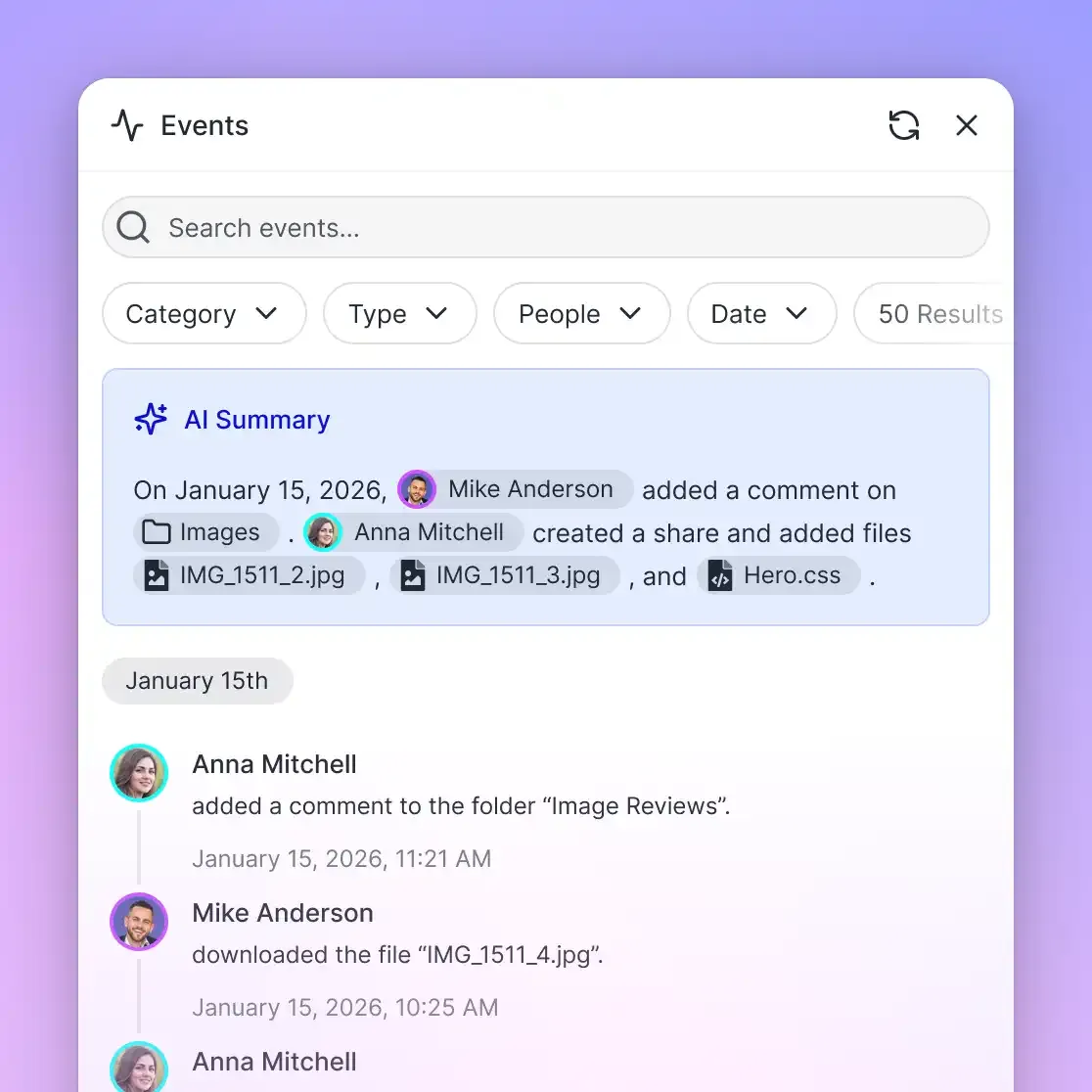
Claude Cowork works as an intelligent workspace rather than just a storage bucket. When you upload a huge dataset, the platform starts indexing the content right away.
This setup separates the storage layer from the reasoning layer. Instead of making an AI agent hold a multi-gigabyte log in its memory, the agent reads a searchable index. It can query specific sections, pull targeted chunks, and write answers without holding the original document in its context window.
For developers, this means no more manual document splitting. You provision a workspace, upload the raw data, and give your agent access. The built-in Retrieval-Augmented Generation system handles the background work. This prevents memory overflow errors and cuts API costs by reducing the extra text sent in each prompt.
Key Architectural Components
- Streamable HTTP Integration: The platform connects via HTTP or Server-Sent Events for real-time processing.
- Persistent Indexing: Files stay indexed across sessions, so agents can pick up exactly where they left off.
- Granular Access Control: Workspaces support specific permission boundaries so agents only see authorized datasets.
How to Ingest Massive Datasets Automatically
Manual uploads take too much time for ongoing data analysis. Claude Cowork provides automated ways to pull information directly from your existing infrastructure. This removes local input and output bottlenecks.
The fast method uses URL import capabilities. You can tell your agent to pull files directly from Google Drive, OneDrive, Box, or Dropbox. The platform handles the OAuth flows and data transfer. An agent can ingest a massive archive of sales reports without downloading a single byte to its local host environment.
Webhooks provide another important way to bring in data. You can configure your systems to alert a Cowork workspace whenever a new file is generated. A nightly database dump can trigger an automatic upload and immediate indexing. Your AI assistant begins analyzing fresh data the moment it becomes available.
Executing Complex Analysis with MCP Tools
Agents and humans share the same intelligent workspaces. While humans use the visual interface, AI agents interact via the Model Context Protocol. The Cowork platform provides MCP tools that let agents read, search, and edit files programmatically.
According to the Fast.io MCP Server documentation, agents access these capabilities through a simple protocol integration. Once connected, a Claude agent can perform specific searches across an entire workspace. If a developer asks the agent to find a security vulnerability in a large codebase, the agent uses a search tool to retrieve just the relevant code snippets.
This chunked retrieval is what makes massive file handling possible. The agent asks the workspace a question. The workspace finds the answer within the dataset and returns a focused response. The agent then formats that response for the user. It gets around normal file size barriers.


Give Your AI Agents Persistent Storage
Stop worrying about file size limits. Create a shared workspace where your AI agents can process gigabytes of data natively.
Collaborating on Large File Analysis
Agents and humans work better together when they share the same datasets. An agent might spend hours processing an archive of legal documents, tagging key clauses, and writing summaries. Once finished, a human attorney can log into the same workspace to review the findings.
This shared setup removes the need to export results or send email attachments. The agent builds the workspace, organizes the data, and can transfer ownership to a human client while keeping access for future updates. This ownership transfer model works well for agencies and consultancies delivering AI-powered analysis to customers.
When multiple agents need to access the same file at the same time, the platform uses a file lock system. This prevents conflicts during multi-agent workflows. One agent can lock a summary document to update it while another agent reads the previous version.
Evidence and Benchmarks for Native Indexing
Companies moving from manual document processing to intelligent workspace indexing see better reliability right away. By avoiding custom chunking logic, data loss drops to almost zero.
According to Fast.io Pricing information, developers can set up persistent agent storage with large limits. This capacity lets you test full datasets instead of relying on small samples. When you upload an unedited database export, the native RAG capabilities find the exact answer fast.
The system keeps the original metadata. Other retrieval systems often strip context during the splitting process, which leads to hallucinated answers. Cowork maintains the document structure within its index. When an agent reads a specific paragraph, it understands the surrounding context for accurate analysis.
Comparing Direct API vs Workspace Limits
Looking at the difference between direct Claude interactions and Cowork workspaces shows why this matters. When using a standard chat interface or a basic API, you hit strict limits on file count and individual file size.
In a Cowork workspace, those limits disappear. You can upload an unlimited number of files into a persistent environment. The workspace takes much larger individual files compared to the standard API. Because the agent only requests the specific text chunks it needs, the total size of your dataset doesn't affect the context window limit.
Instead of building applications limited by API rules, you build applications bounded only by your storage capacity. The intelligent workspace acts as a buffer, turning large storage capacity into focused API requests.
Troubleshooting Large File Uploads
Even with an intelligent workspace, developers sometimes hit problems when uploading massive archives. Knowing how to handle these issues keeps workflows moving.
If an import fails midway through a massive transfer, first check the source URL permissions. Expiring authentication tokens often interrupt long background operations. Reauthorizing the connection usually fixes the issue.
Another common problem is deeply nested archives. While Cowork handles flat files and standard folder structures, heavily compressed multi-layer ZIP files can slow down the initial indexing. We recommend extracting archives before ingestion or giving agents extraction tools via MCP. This lets the workspace focus on semantic indexing rather than decompression.
Security Boundaries for Massive Datasets
Handling huge amounts of data requires strong security. You cannot risk an agent accidentally exposing sensitive financial records while analyzing a public dataset.
Cowork uses permissions at the folder and file level. You can isolate public reference material from private codebases within the same organization. Agents get access tokens that respect these boundaries. If an agent tries to query a restricted folder, the system blocks the request.
Every action also leaves a clear trail. The platform generates audit logs tracking every file read, search query, and indexing event. This creates a chain of custody, showing exactly how an agent reached its conclusions from the dataset.
Rate Limits and Optimization Strategies
Efficient file handling means watching rate limits. While the workspace can hold large datasets, querying that data too fast can still trigger API rate limits on the LLM side.
The best way to speed this up is writing specific MCP search queries. Instead of asking an agent to summarize a gigabyte log file, tell it to search for specific error codes within a time range. This lowers the number of chunks the workspace returns, which reduces the token count sent to the LLM.
You should add exponential backoff in your agent's code. If a query hits a rate limit, the agent should pause before trying again. The Cowork platform provides clear status codes, so you can build retry logic directly into your agent's code.
Best Practices for Managing AI Storage
While Cowork handles the heavy lifting, following best practices keeps things running well and saves money. Good organization is still important even in an intelligent workspace.
First, keep folder structures organized. Even though the AI can search across the entire workspace, grouping related files into directories helps humans find the data later. It also lets you restrict an agent's search to a specific folder, improving query speed.
Second, use the built-in audit logs. When an agent processes a massive dataset, you need to see what it did. The workspace tracks every file read, write, and query. You can see exactly which parts of a document the AI referenced to reach a specific conclusion.
Finally, use the large storage limits. Fast.io provides a free agent tier with persistent storage, so you can test large datasets without immediate financial risk. Start by uploading a complete dataset rather than trying to pre-filter the information. Let the workspace's native indexing do the filtering for you.
Frequently Asked Questions
What is the maximum file size for Claude?
The direct maximum file size for Claude depends on the specific interface. But by using a Cowork workspace, agents bypass these limits and rely on the workspace's larger storage capacity.
How can an AI agent process a large file?
An AI agent processes a large file by querying a Cowork index instead of reading the file directly. The platform indexes the file, and the agent uses MCP search tools to pull just the paragraphs needed for a prompt.
How does Claude Cowork handle files that exceed standard upload limits?
Claude Cowork uses dedicated backend storage and native indexing. Instead of uploading the full file into the chat prompt, the agent queries the indexed workspace to get only the relevant chunks of information.
Can multiple AI agents access the same large file simultaneously?
Yes, the platform supports multi-agent workflows. It uses a file lock system to prevent data conflicts. One agent can read a file while another updates a different section.
Do I need to maintain a separate vector database?
No separate database is required. The Cowork workspace indexes files automatically upon upload, giving you built-in Retrieval-Augmented Generation capabilities right away.
How can I import data from my existing cloud storage?
You can use URL import to pull files directly from Google Drive, OneDrive, Box, or Dropbox. The platform handles the transfer directly, skipping local input and output steps.
Related Resources

Give Your AI Agents Persistent Storage
Stop worrying about file size limits. Create a shared workspace where your AI agents can process gigabytes of data natively.