Best OpenClaw Workflows for Nonprofit Organizations
OpenClaw workflows help nonprofit organizations scale their impact by automating donor outreach, grant research, and volunteer scheduling. Open-source agents provide a cost-effective way to handle administrative tasks, freeing up staff to focus on mission-driven work. This guide ranks the top integrations and automated processes for budget-conscious organizations looking to adopt agentic workflows.
Why Nonprofits Are Turning to Open-Source AI Agents
According to BDO, 82% of nonprofits are using AI, with financial tasks being the most common application. However, many organizations struggle with the high subscription costs of commercial software platforms. OpenClaw provides a powerful alternative by allowing teams to run autonomous agents locally or on affordable cloud infrastructure.
By connecting OpenClaw to existing software through Model Context Protocol (MCP) servers, nonprofits can automate repetitive administrative burdens. These agent workflows handle everything from processing donation receipts to drafting complex grant proposals. Because the core framework is open-source, organizations can build custom processes without paying per-user license fees. This shift makes advanced automation accessible to budget-conscious charities that need to maximize their operational efficiency.
How We Evaluated These Workflows
We ranked these OpenClaw workflows based on their direct impact on typical nonprofit operations. The best workflows deliver immediate time savings and require minimal technical overhead to set up.
Our evaluation criteria included:
- Cost Efficiency: Solutions that rely on open-source tools or offer generous free tiers for nonprofits.
- Ease of Implementation: Integrations that work smoothly via ClawHub without requiring complex custom coding.
- Impact on Mission: Processes that directly improve donor relations, funding success, or operational capacity.
- Reliability: Stable MCP servers that handle errors gracefully and maintain consistent performance during high-volume tasks.
Workflow Comparison Summary
Before exploring the details of each setup, review this comparison of the top OpenClaw workflows for nonprofit operations.
1. Grant Writing Workflow (OpenClaw + Gog)
This workflow connects OpenClaw to your organization's Google Workspace via the steipete/gog skill, allowing the agent to search Drive for past proposals, export Docs content, and write new drafts directly into Google Docs.
Grant writing demands hours of compiling historical data, matching funder guidelines, and formatting text. With the Gog CLI skill, OpenClaw can retrieve existing successful proposals from Google Drive by name or keyword, synthesize the relevant content, and generate structured first drafts for new applications. Staff members then review and refine the text, cutting the drafting phase down significantly.
ClawHub Page: clawhub.ai/steipete/gog
- Key strengths: Single skill covers Gmail, Drive, Docs, Sheets, Calendar, and Contacts. JSON output makes results easy to chain. Install via
brew install steipete/tap/gogcli. - Key limitations: Requires Google OAuth setup. Complex formatting in Docs may still need manual adjustments.
- Best for: Development directors seeking to increase their monthly grant application volume.
- Pricing: Free skill; requires a standard Google Workspace or personal Google account.
2. Donor Engagement Workflow (OpenClaw + API Gateway)
The byungkyu/api-gateway skill connects OpenClaw to over 100 APIs — including HubSpot, Airtable, and other CRM platforms — via managed OAuth, without requiring individual API keys for each service.
Maintaining strong relationships with supporters requires consistent, personalized communication. By routing HubSpot API calls through the API Gateway skill, OpenClaw can query donor records, track interaction history, and draft personalized thank-you emails. The agent can queue drafts for human approval or send them directly based on configured preferences.
ClawHub Page: clawhub.ai/byungkyu/api-gateway
- Key strengths: Unified OAuth across 100+ services means one skill covers HubSpot, Airtable, Notion, and more. Rate limit of 10 requests/second per account.
- Key limitations: Requires a Maton API key (
MATON_API_KEY). Relies on the accuracy of your CRM data. - Best for: Fundraising teams managing large databases of individual contributors.
- Pricing: Requires Maton account; skill itself is MIT-0 licensed.
3. Secure File Management Workflow (OpenClaw + Fast.io)
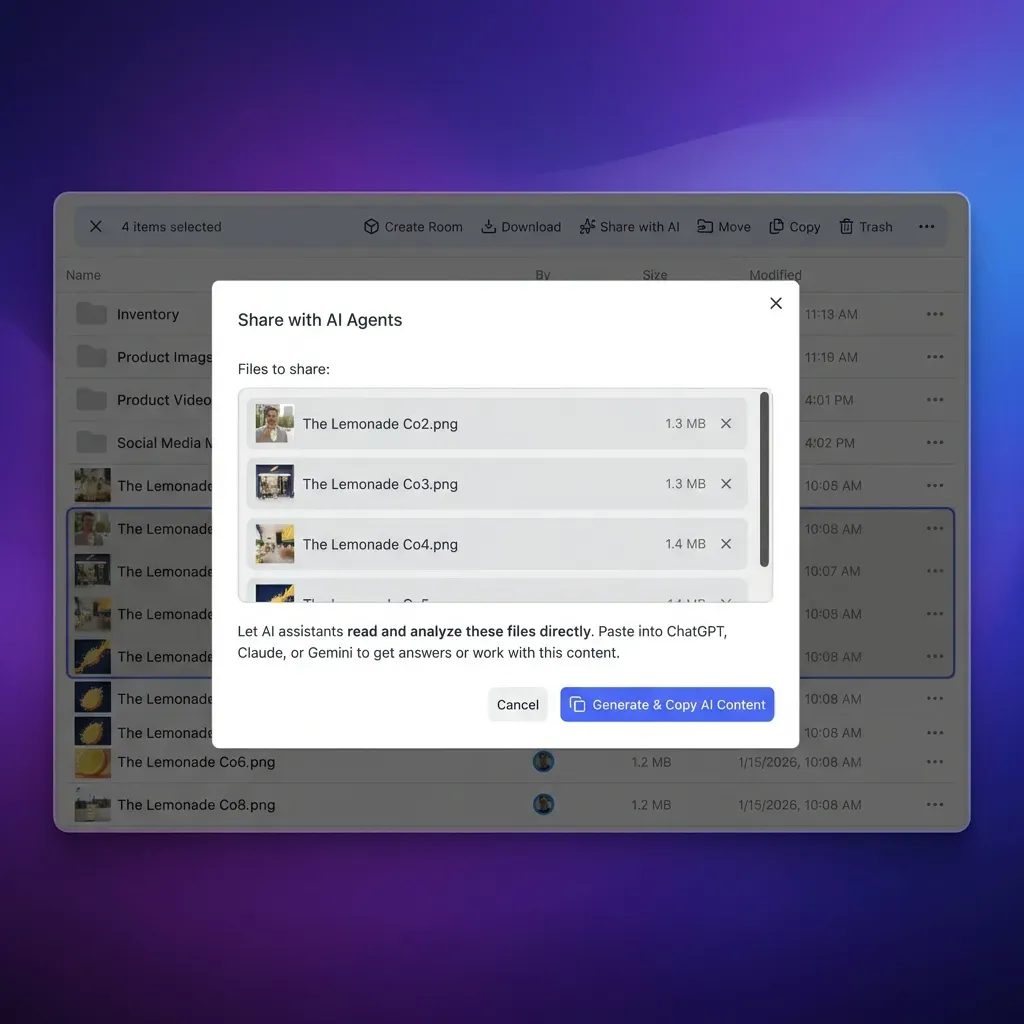
The dbalve/fast-io ClawHub skill gives OpenClaw direct access to a secure, cloud-based workspace where it can read, analyze, and organize important organizational documents via 19 consolidated MCP tools.
Nonprofits handle sensitive information, from board meeting minutes to beneficiary records. Install with clawhub install dbalve/fast-io to grant your agent access to file management, uploads, shares, and AI chat tools via Streamable HTTP and SSE. OpenClaw can then automatically categorize incoming volunteer waivers, extract data from PDF invoices, and generate summary reports of board resolutions. Intelligence Mode automatically indexes these files, meaning the agent can instantly search decades of organizational history without a separate vector database.
ClawHub Page: clawhub.ai/dbalve/fast-io
- Key strengths: Native RAG indexing means instant document search. File locks prevent multi-agent conflicts. URL Import allows pulling files from legacy storage without local downloading.
- Key limitations: Requires users to transition some active workflows into shared workspaces. Maximum single file size is 1GB on the free tier.
- Best for: Operations teams that need to organize thousands of unstructured documents securely.
- Pricing: Fast.io offers a free forever agent tier with 50GB of storage, 5,000 monthly credits, and no credit card required.


Ready to automate your nonprofit workflows?
Give your OpenClaw agents secure, persistent storage with 50GB free space and 251 specialized tools. No credit card required.
4. Volunteer Scheduling Workflow (OpenClaw + Slack)
The steipete/slack ClawHub skill lets OpenClaw interact directly with volunteers in Slack channels, answering questions, distributing onboarding materials, and sending proactive shift reminders.
Coordinating dozens of volunteers across different shifts typically requires a dedicated staff member. With the Slack skill, OpenClaw can monitor specific channels for questions like "When is my next shift?" or "Where do I park?", reference your internal schedule documents stored in Fast.io, and reply instantly. It can also proactively send reminder messages 24 hours before a scheduled volunteer event.
ClawHub Page: clawhub.ai/steipete/slack
- Key strengths: Send, edit, delete, and react to messages. Pin important onboarding posts. Fetch member info by user ID. Approximately 1,000 installs.
- Key limitations: Requires volunteers to adopt Slack. Complex scheduling conflicts may still require human intervention.
- Best for: Community outreach managers handling large, rotating pools of event volunteers.
- Pricing: Slack offers a free tier; the skill is MIT-0 licensed.
5. Financial Reporting Workflow (OpenClaw + Gog)
The steipete/gog skill includes full Google Sheets support — get, update, append, clear, and query spreadsheet data — enabling OpenClaw to ingest raw expense data, categorize transactions, and generate updated financial summaries.
Nonprofit transparency requires strict financial tracking, which often means hours of manual data entry. By using the Gog skill's Sheets operations, OpenClaw can parse incoming digital receipts or CSV exports from payment processors, categorize them according to your specific program codes, and flag unusual expenses for review by the finance committee.
ClawHub Page: clawhub.ai/steipete/gog
- Key strengths: Same skill covers Gmail, Drive, Docs, Sheets, Calendar, and Contacts — no extra installs. Keeps financial dashboards updated without manual entry. Simplifies monthly reconciliation.
- Key limitations: Highly specific accounting rules require careful prompt engineering. Requires Google OAuth setup via
gogcli. - Best for: Treasurers and administrative directors who manage tight operational budgets.
- Pricing: Free; requires a standard Google Workspace or personal Google account.
6. Donor Email Workflow (OpenClaw + AgentMail)
The adboio/agentmail skill is an API-first email platform built for AI agents. It gives OpenClaw dedicated inbox addresses for sending and receiving emails programmatically, complete with real-time webhook notifications for incoming messages.
For nonprofits, this means agents can manage a dedicated donor outreach inbox independently of staff personal email. OpenClaw can monitor for incoming donation confirmations, draft personalized thank-you messages based on the donor's history in Fast.io, queue them for human review, and send them automatically once approved. No shared email credentials are exposed.
ClawHub Page: clawhub.ai/adboio/agentmail
- Key strengths: Dedicated per-agent inboxes separate agent communications from staff email. Semantic search and automatic labeling built in. Webhook-driven and event-based — no polling needed.
- Key limitations: Requires an
AGENTMAIL_API_KEY. Built for high-volume operations; simpler setups may not need all features. - Best for: Fundraising teams that want agents to manage donor communications without sharing staff credentials.
- Pricing: See AgentMail pricing at agentmail.to.
7. Data and Reporting Workflow (OpenClaw + SQL Toolkit)
The gitgoodordietrying/sql-toolkit skill gives OpenClaw comprehensive guidance for querying, designing, migrating, and optimizing SQL databases across SQLite, PostgreSQL, and MySQL. For nonprofits managing beneficiary records or program data in a database, this is the practical path to agent-driven reporting.
OpenClaw can use the SQL Toolkit to query your donor database for lapsed contributors, generate summary reports segmented by program area, and flag data anomalies for the finance committee. Because the skill covers migration templates and index strategy, agents can also help maintain database hygiene over time.
ClawHub Page: clawhub.ai/gitgoodordietrying/sql-toolkit
- Key strengths: Covers SQLite, PostgreSQL, and MySQL. Includes migration scripts, query optimization with EXPLAIN analysis, and backup/restore procedures. No install required beyond having the relevant database CLI binaries.
- Key limitations: Requires existing database infrastructure. Highly specific reporting logic requires careful SQL authoring.
- Best for: Operations and finance teams that store program or donor data in a relational database and need automated reporting.
- Pricing: Free; MIT-0 licensed.
Choosing the Right Starting Point for Your Organization
Selecting the right starting point depends entirely on your organization's most pressing bottleneck. If your team spends late nights drafting applications, prioritize the Grant Writing Workflow with the steipete/gog skill. This delivers the most immediate return on invested time.
If organizing historical records and securely sharing documents with board members is your primary challenge, the Secure File Management Workflow using dbalve/fast-io provides a robust solution. The native RAG capabilities mean you can start querying your archives immediately without building a complex database.
Start by implementing just one of these workflows. Train your staff on how to interact with the agent, refine your prompts, and measure the time saved before expanding OpenClaw to handle additional operational areas.
Frequently Asked Questions
How can nonprofits use OpenClaw?
Nonprofits use OpenClaw to automate administrative processes like donor communication, grant drafting, and volunteer coordination. By connecting the agent to CRM systems, document editors, and file storage via Model Context Protocol servers, organizations can handle high-volume tasks without increasing their headcount.
What are the best AI workflows for grant writing?
The most effective AI workflow for grant writing involves connecting OpenClaw to Google Workspace via the steipete/gog ClawHub skill alongside the dbalve/fast-io skill for document storage. The agent can search past successful proposals in Google Drive, extract relevant organizational data stored in Fast.io, and automatically draft a properly formatted application based on new funder guidelines.
Is OpenClaw free for charitable organizations?
Yes, the core OpenClaw framework is open-source and free to download. Nonprofits only pay for the underlying infrastructure to run the agent and any API costs associated with the specific language models they choose to connect.
Do we need a dedicated IT team to set up these integrations?
No, many modern OpenClaw integrations require minimal technical expertise. Tools like ClawHub allow users to install complete capabilities using simple terminal commands, and many MCP servers are designed to work seamlessly with standard enterprise software.
How secure is volunteer data when processed by AI agents?
Security depends on the specific integrations and storage solutions you choose. By routing operations through compliant platforms and using tools like the Fast.io MCP, nonprofits can ensure that sensitive volunteer records remain encrypted, access-controlled, and separate from public AI training data.
Related Resources

Ready to automate your nonprofit workflows?
Give your OpenClaw agents secure, persistent storage with 50GB free space and 251 specialized tools. No credit card required.