How to Design Multi-Tenant Architecture for AI Agents
Multi-tenant architecture lets one system serve many customers while keeping their data and files separate. As more companies use AI, stopping data leaks between tenants is the main security challenge for platforms building agents.
What is Multi-Tenant AI Agent Architecture?
Multi-tenant architecture is a design where one agent system serves many customers (tenants). It keeps their data, files, and chats separate. Unlike standard SaaS apps where simple database security works, AI agents need deeper separation. They work with files, vector databases, and long-term memory. The OWASP Top 10 for LLM Applications lists improper access control as a core risk for agent systems.
In a multi-tenant system, Tenant A's agent must never access Tenant B's RAG index or history. They might share the same LLM and servers, but the data stays apart. This setup helps scale AI services while keeping enterprise security. Learn more about workspace isolation in our data rooms solution.
The Critical Challenge: Preventing Data Leakage
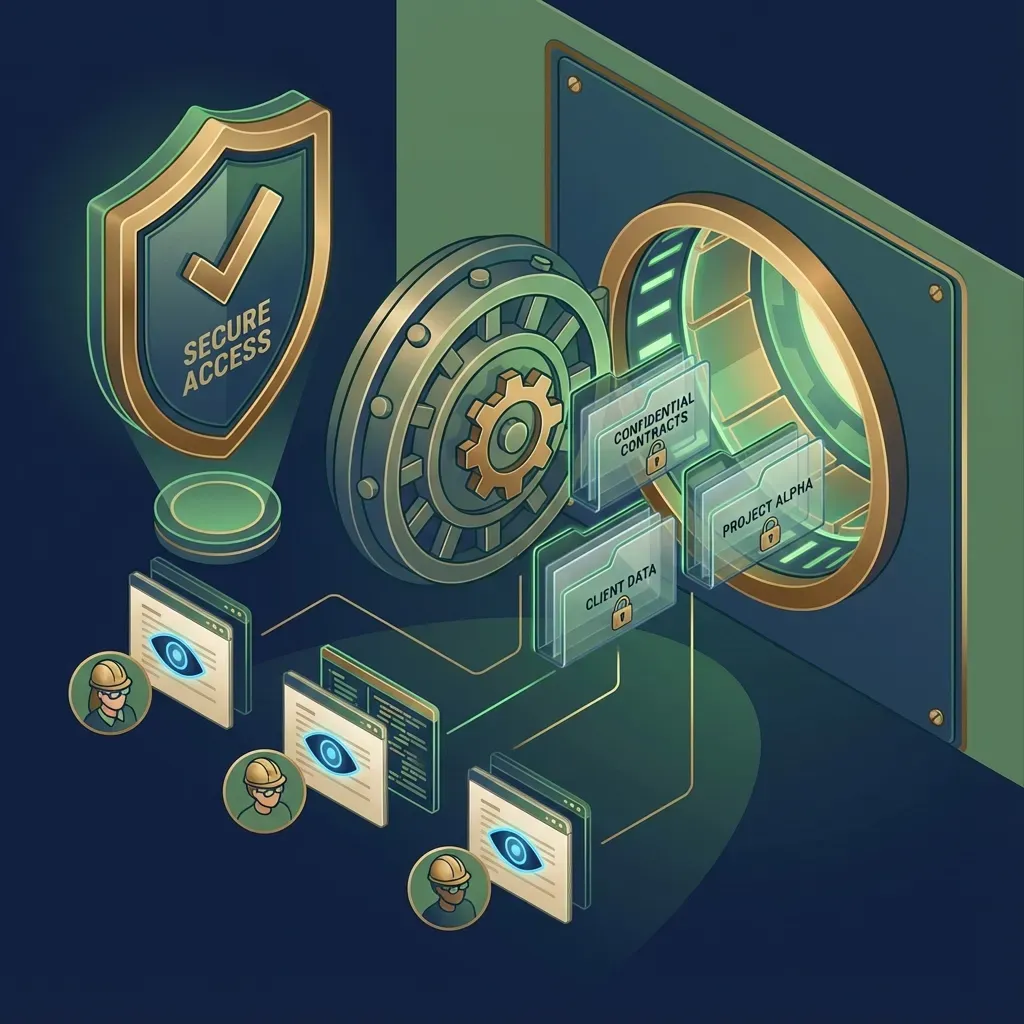
Data leakage is the biggest risk in multi-tenant AI systems. Agents access broad knowledge bases. A bad permission or a "jailbroken" prompt could let an agent find another tenant's data. This stops many enterprises from adopting AI.
Why File Isolation is Different Traditional web apps check permissions at the API. AI agents use tools to search file repositories. If the search tool isn't limited to the tenant's workspace, the agent has admin access to everything.
Security Magazine reports that 68% of organizations have had data leaks from employees sharing sensitive info with AI tools. For SaaS providers, stopping cross-tenant leakage is a requirement.


Secure Storage for Multi-Tenant Agents
Fast.io provides the isolated storage layer your agents need. Native workspace isolation, 251+ MCP tools, and built-in audit trails.
Core Architecture Patterns for AI Multi-Tenancy
Three main ways exist to structure a multi-tenant AI system. Each has trade-offs in cost, complexity, and isolation.
1. Fully Isolated (Siloed) Architecture Each tenant gets their own infrastructure. They have separate vector databases and file storage buckets.
- Pros: Best security; no risk of leaks.
- Cons: Very high cost and hard to manage updates.
2. Fully Shared (Logical Isolation) Architecture
All tenants share the same resources. Software logic separates them, usually by filtering queries with a tenant_id.
- Pros: Cheapest and easiest to scale.
- Cons: Higher risk of leaks from bugs; "noisy neighbor" performance problems.
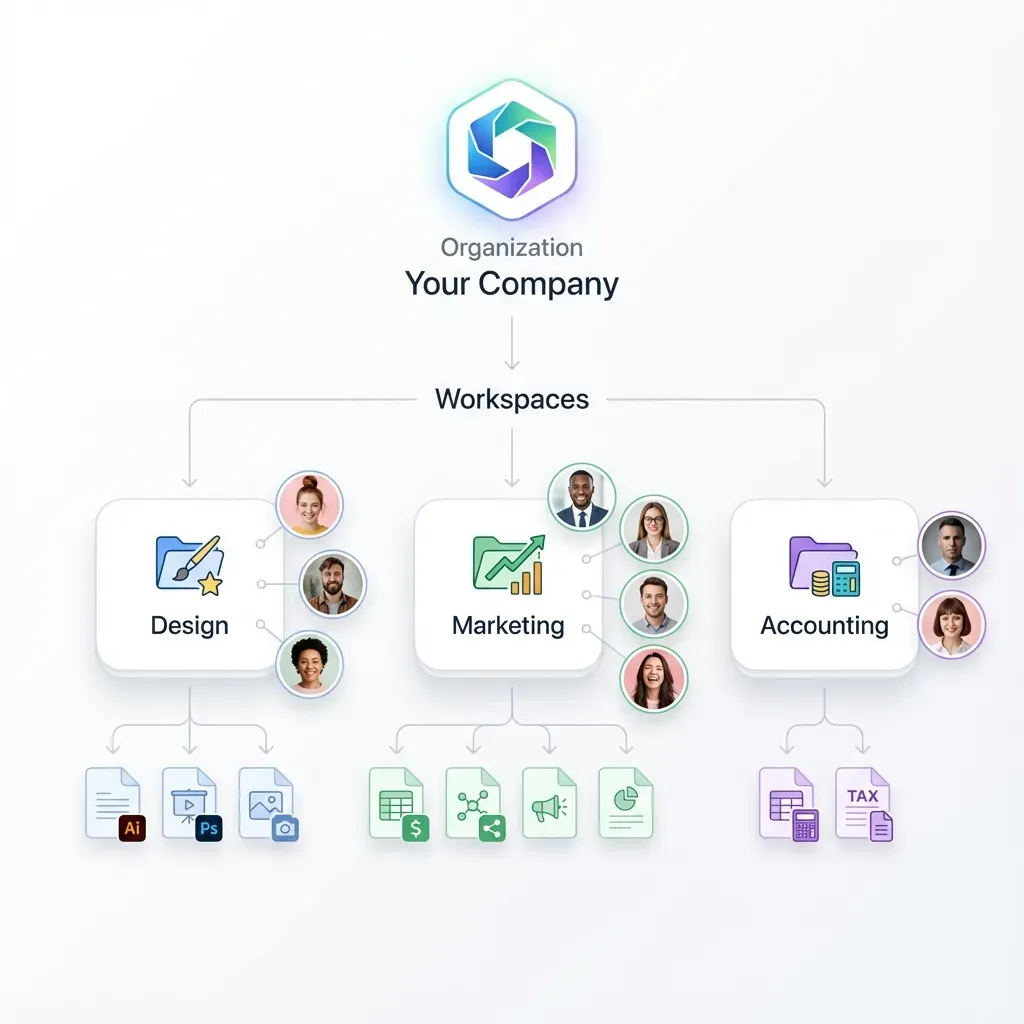
3. Hybrid Architecture (Namespace Isolation) This is the standard for modern platforms. Infrastructure is shared, but data is separated using logical boundaries like Namespaces in vector databases or Workspaces in file systems.
- Pros: Good balance of security and cost. Matches how modern vector DBs work.
- Cons: Needs strict access controls in the app.
Designing the Storage Layer for Agents
The file storage layer is often the weakest part of an agent architecture. Agents read, analyze, and make files. If you put all files in one S3 bucket and rely on app logic to separate them, a single bug causes a breach.
The Workspace Model A reliable pattern is the Workspace-per-Tenant model. Here, every file operation links to a specific Workspace ID.
- Ingestion: Uploaded files get a Workspace ID tag immediately.
- Indexing: The RAG pipeline processes the file and stores embeddings in a namespace for that Workspace.
- Retrieval: The agent's search tool only queries the namespace matching the current Workspace ID.
Fast.io uses this method. When you create a workspace, it acts as a secure container. Agents in that workspace only see and interact with its files and indexes. This gives strong isolation with the cost benefits of shared infrastructure. Explore how Fast.io workspaces provide this isolation out of the box.
Handling Vector Database Isolation
Vector databases act as the long-term memory for AI agents. They store semantic versions of tenant data. Mixing embeddings from multiple tenants in one index is risky. Semantic search is approximate. A query might return a match from the wrong tenant if you don't filter strictly.
Best Practices for Vector Isolation:
- Use Namespaces: Most vector databases support namespaces. Create a unique one for each tenant (e.g.
tenant_acme). - Metadata Filtering: Stamp every vector with
tenant_idand require a filter on every query. - Separate Indexes: For finance or healthcare customers, use separate indexes instead of just filtering. The Pinecone documentation on namespaces covers this pattern in detail.
Implementation Checklist for Developers
When building a multi-tenant platform, check for these controls:
- Identity Propagation: Does the agent carry the user's identity and tenant context in every tool call?
- Scoped Tools: Are MCP tools (like
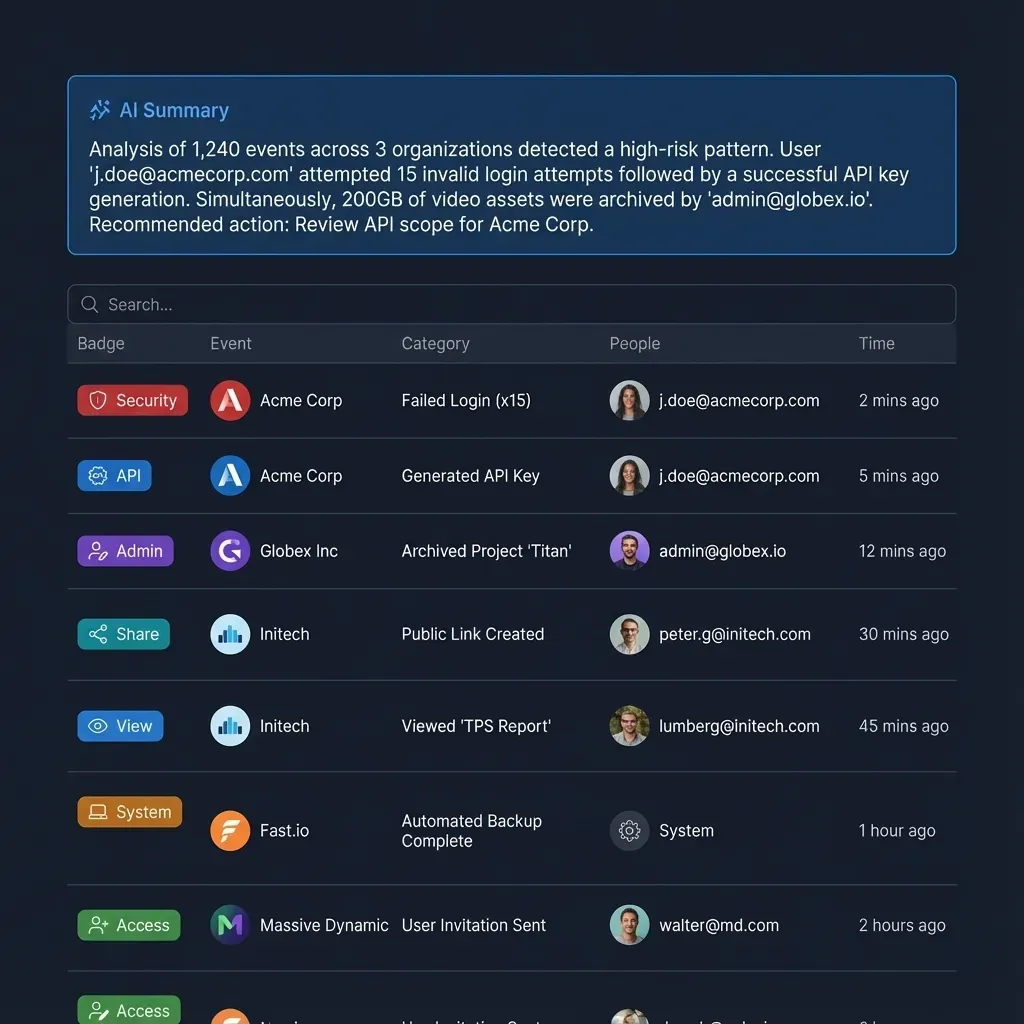
read_file) limited to the tenant's root directory? - Audit Logging: Do you log every file access and memory retrieval with the tenant ID?
- Rate Limiting: Can you limit API use per tenant to stop one user from taking all GPU resources?
- Data Deletion: Can you instantly wipe all data for a single tenant when they leave?
Fast.io handles storage, permissions, and audit logging. This lets you focus on the agent's logic instead of building file systems. See how our AI infrastructure supports multi-tenant agent deployments.
Frequently Asked Questions
How do you isolate AI agent data per customer?
The best way is a hybrid architecture with namespace isolation. Assign each customer a unique Tenant ID. Make this ID a mandatory filter on all database queries, vector search operations, and file access requests. Using separate namespaces in your vector database makes sure an agent never matches data from another customer.
What is the difference between multi-tenant and single-tenant AI?
Single-tenant AI gives a separate instance of the software and infrastructure to each customer. This offers maximum security but costs more. Multi-tenant AI serves many customers from shared infrastructure. It uses software controls to keep data separate, which cuts costs and simplifies maintenance.
How do I prevent data leakage in RAG systems?
To prevent leakage in RAG (Retrieval-Augmented Generation) systems, you must use strict access controls at the retrieval step. Ensure your vector database queries always include a `tenant_id` filter. Also, check that the document chunks returned to the context window belong to the correct user before sending them to the LLM.
Can I use a shared vector database for multiple tenants?
Yes, if it supports namespaces or metadata filtering. Most enterprise vector databases (like Pinecone, Weaviate, or Milvus) let you partition data logically. For highly sensitive use cases, physical separation (separate indexes) is better.
What is the 'noisy neighbor' problem in AI agents?
The noisy neighbor problem happens when one tenant's AI agent uses too many resources (CPU, GPU, or API rate limits). This slows down other tenants. To fix this, set strict rate limits and quotas at the tenant level.
Related Resources

Secure Storage for Multi-Tenant Agents
Fast.io provides the isolated storage layer your agents need. Native workspace isolation, 251+ MCP tools, and built-in audit trails.